 11

The landscape of artificial intelligence is currently witnessing an unprecedented surge in the voice AI sector, a domain where investors are channeling billions of dollars into innovative solutions. This significant capital influx is driven by the vast potential of voice AI to transform diverse applications, from streamlining customer support and automating sales calls to developing sophisticated meeting notetakers and pioneering AI smart glasses that primarily rely on voice for interaction. As AI laboratories rapidly advance and release new models, and hardware manufacturers strive to engineer optimal user experiences for interacting with these advanced devices, a critical need has emerged for robust testing and continuous feedback mechanisms to ensure ongoing improvement and refinement.
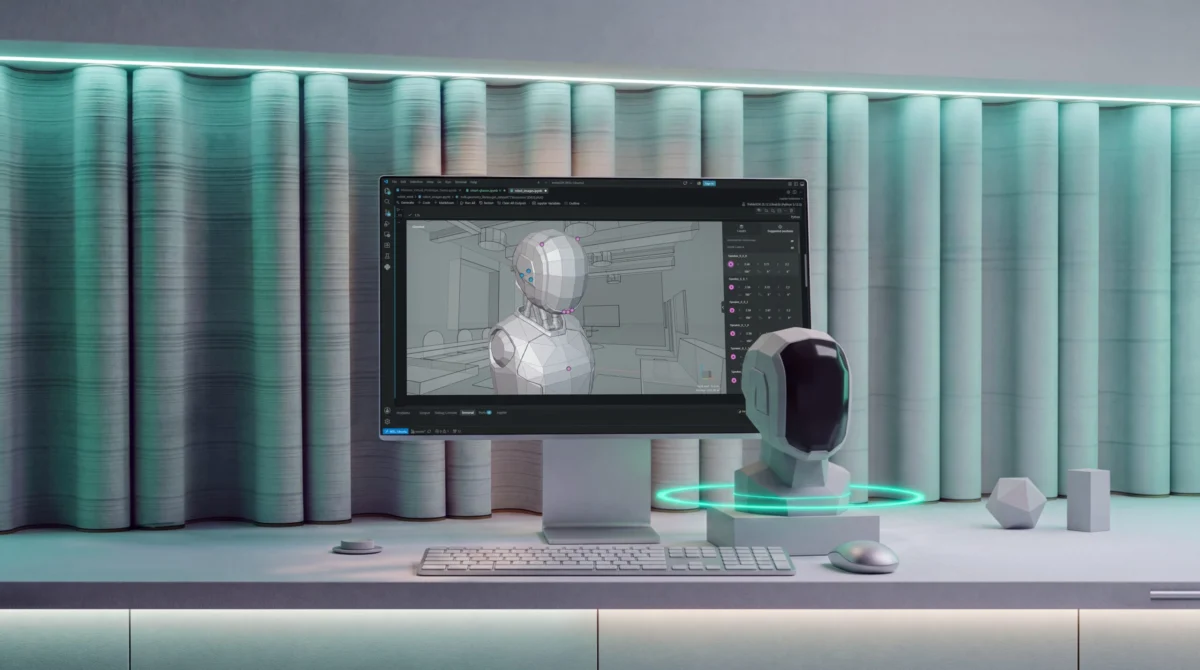
Addressing this foundational requirement, an Iceland-based startup named Treble is strategically positioning itself at the very heart of the burgeoning voice AI industry. Founded in 2020 by acoustic engineers Finnur Pind and Jesper Pedersen, Treble has developed a sophisticated simulation platform designed to cater to the exacting demands of model makers, robotics companies, and consumer hardware manufacturers. This innovative platform provides a crucial testing ground for the next generation of voice-activated technologies.
In a testament to its market potential and technological prowess, Treble recently announced an $18 million extension to its Series A funding round. This latest investment was led by Paladin Capital Group, with continued participation from existing investors including KOMPAS VC, Frumtak Ventures, EIC, and Omega ehf. The company had previously secured a $12 million investment in 2024, bringing its total capital raised to date to an impressive sum exceeding $40 million. Treble’s client roster already includes industry giants such as Amazon and Logitech, underscoring the relevance and efficacy of its simulation solutions for leading technology companies.
Treble’s comprehensive offerings span several critical verticals related to simulation and data generation for the audio AI ecosystem. For companies developing voice AI, Treble provides a cutting-edge synthetic data generation platform. This platform is invaluable for a variety of applications, including speech enhancement, noise suppression, and the rigorous training of advanced AI models. The ability to generate high-quality synthetic data is particularly crucial in voice AI, where real-world data can be scarce, privacy-sensitive, or difficult to control for specific acoustic conditions. Synthetic data allows developers to simulate an infinite array of scenarios, including varying accents, background noises, room acoustics, and microphone placements, ensuring models are robust and perform optimally across diverse environments.
Beyond data generation, Treble also specializes in the meticulous evaluation of voice AI models under a multitude of simulated conditions. This process provides invaluable feedback to AI labs, enabling them to identify weaknesses, optimize performance, and accelerate their development cycles. Earlier this year, demonstrating its commitment to industry-wide advancement, Treble partnered with Hugging Face, a prominent platform for machine learning, to launch a benchmark specifically designed for speech recognition models. This benchmark assesses model performance across different realistic conditions, providing a standardized and objective measure for comparison and improvement within the research community.

Finnur Pind, co-founder of Treble, articulated the core challenge and opportunity within the sector: “Audio AI is really a data challenge, and this is where the most opportunities to enable next-generation models and hardware lie. To date, pretty much all sound-related AI has been made from recordings and data scraped from the internet. We believe that accurate physics simulation can be an alternative way to create data for sound.” Pind’s insight highlights the limitations of relying solely on naturally occurring or scraped data, which often lacks the controlled variability and specific environmental conditions needed for comprehensive model training and testing. Physics-based simulation offers a powerful alternative, allowing for the precise generation of acoustic environments that are difficult or impossible to replicate in the real world.
The startup’s expertise extends significantly into hardware design and testing from an acoustic and voice perspective. For instance, Treble collaborates with leading headphone and speaker manufacturers, offering virtual prototyping services. This allows these companies to accurately predict and understand the acoustic performance and sound characteristics of their products even before physical prototypes are built. This virtual approach drastically reduces development time and costs, enabling faster iterations and optimized designs. Similarly, Treble can simulate how a smart speaker interacts with its environment and how its ability to understand commands is affected by its physical positioning within a room. This capability helps manufacturers optimize device placement recommendations and refine microphone arrays for superior voice command recognition. More recently, Treble has expanded its simulation and testing capabilities to address the unique challenges presented by emerging form factors such as smart glasses and other innovative AI-powered devices, which require seamless and highly accurate voice interaction in dynamic user environments.
Pind expressed particular excitement about the transformative potential of future wearable devices. He envisions a new generation of products, including advanced headphones and smart glasses, that could enable what he refers to as "superhuman hearing." This revolutionary capability would allow users to significantly enhance their auditory perception in challenging acoustic environments. Pind provided compelling examples: "I’m really excited about the next generation of these devices like headphones and smart glasses that can enable [a feature like] superhuman hearing. That’s an area where you can really just hear better in challenging acoustic environments. Maybe you are in a restaurant, and you only want to hear people within two meters of range, or you are in a seminar, and want to mute people around you." Such features could profoundly impact accessibility, personal productivity, and overall quality of life, offering unprecedented control over one’s acoustic surroundings.
Looking ahead, Treble aims to significantly increase its focus on the broader physical AI space. This includes extending its specialized simulation and testing services to robotics, automotive, and drone companies. The goal is to enable sophisticated sound-based functions for these industries, ranging from environmental awareness and diagnostic monitoring to advanced human-robot interaction through auditory cues. As autonomous systems become more prevalent, the ability to accurately perceive and interpret sound from their surroundings will be crucial for safe and effective operation, an area where Treble’s platform can provide immense value.
Francois Ruether, VP of Paladin Capital Group, the lead investor in Treble’s latest funding round, emphasized the strategic importance of the company’s platform. He told TechCrunch that Treble’s unique ability to simulate diverse models and devices stands out, and its significance is poised to grow exponentially as sound understanding becomes a critical component across an ever-widening array of technologies. "Our thesis is that, as more products depend on understanding sound, this infrastructure becomes increasingly valuable across voice AI, wearables, robotics, and physical AI," Ruether stated. He further highlighted the collaborative yet independent nature of Treble’s offering: "Customers retain ownership of their models, products, and development workflows, while benefiting from a shared foundation of a simulation-native acoustic infrastructure layer." This approach allows companies to leverage Treble’s advanced simulation capabilities without compromising their proprietary intellectual property, fostering innovation across the entire ecosystem.
Treble’s comprehensive simulation platform and its vision for the future of audio AI position it as a pivotal enabler for the next wave of technological innovation. By providing the essential testing and feedback mechanisms that complex voice AI models and hardware require, Treble is not only accelerating development cycles but also contributing to the creation of more reliable, efficient, and user-centric AI experiences across industries. Its focus on physics-based simulation represents a significant leap forward from traditional data collection methods, promising a future where sound-driven AI devices are seamlessly integrated into every aspect of daily life, from intelligent assistants to advanced sensory systems in autonomous machines.






