 11

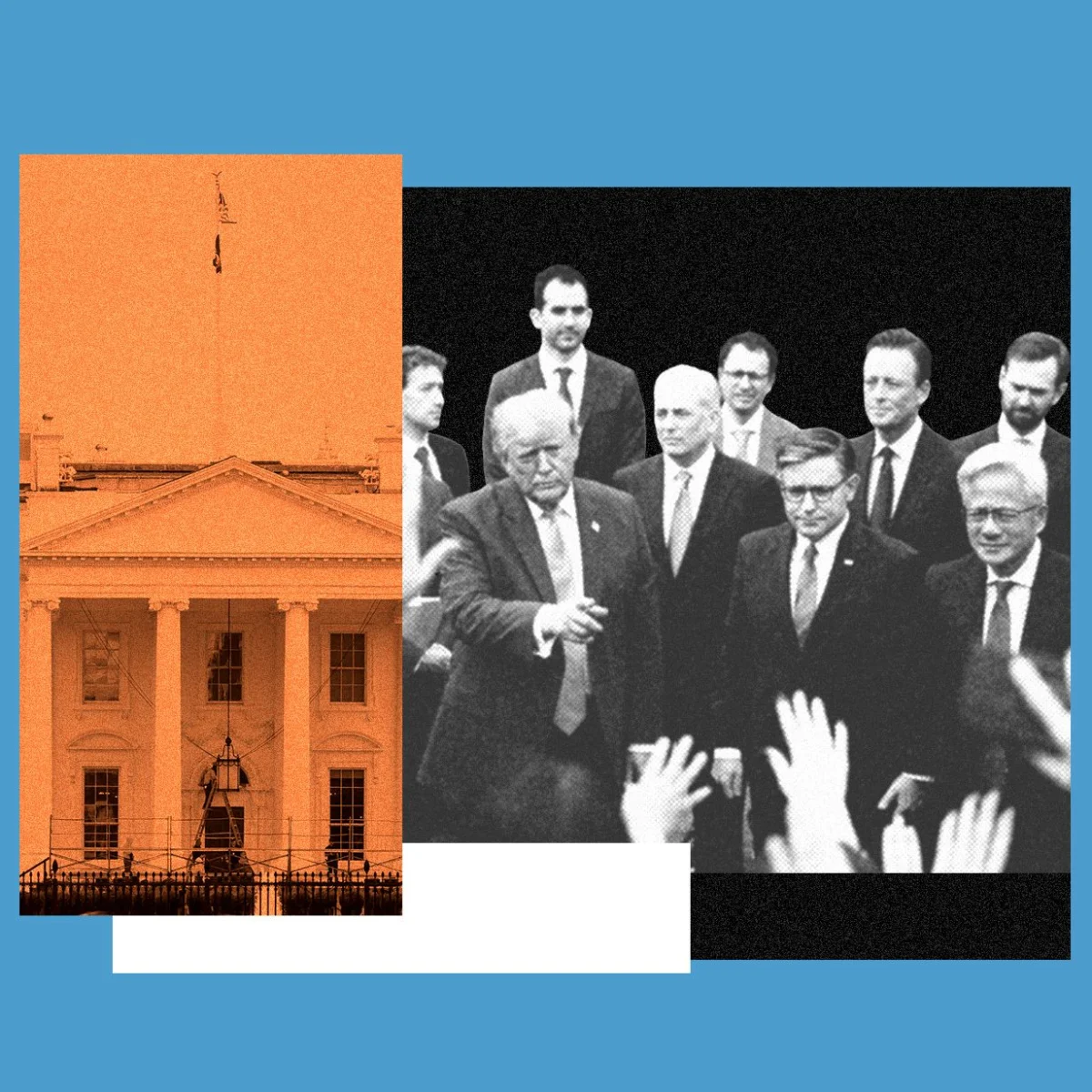
A recent gathering of prominent artificial intelligence CEOs with former US President Donald Trump has cast a spotlight on the contentious issue of AI safety regulation, drawing stark parallels to historical debates over industry self-governance versus robust government oversight, particularly evident in the automotive safety reforms of the 1960s. The AI industry’s recent "safety accord" with Trump, described by critics as largely symbolic, emphasizes a self-policing approach, raising questions about its effectiveness in mitigating the complex and potentially far-reaching risks posed by advanced AI.
To understand the current dynamic, it’s helpful to recall a critical moment in American industrial history. In 1966, the landscape of US highways was grim, marked by an alarming number of fatalities. Nearly 51,000 people died on American roads that year, a staggering figure that underscored a growing public safety crisis. Despite the availability of modern seat belt technology for several years, which overwhelming evidence suggested could save countless lives, the automotive industry initially resisted comprehensive implementation. The prevailing sentiment within the industry leaned towards voluntary action, a belief that companies would, in a triumph of self-regulation, spontaneously integrate this vital safety feature into every new vehicle.
However, this hopeful vision of self-policing did not materialize. The industry did not voluntarily equip all new cars with seat belts. Instead, the dire statistics and mounting public pressure necessitated decisive governmental intervention. In the fall of 1966, Congress responded by establishing the Department of Transportation (DOT), a new federal agency tasked with overseeing transportation policy and safety. This was quickly followed by the passage of two landmark pieces of legislation: the National Traffic and Motor Vehicle Safety Act and the Highway Safety Act. These acts granted the federal government unprecedented authority to set and enforce safety standards for motor vehicles and highways.
The impact was transformative. By 1968, federal mandates required that every new car sold in the United States be equipped with seat belts. This top-down regulatory approach, rather than industry self-regulation, proved to be the catalyst for a dramatic improvement in road safety. Despite a massive increase in highway traffic over the past six decades, the number of fatalities on the road today is significantly lower than in the pre-regulation era, a testament to the effectiveness of mandatory safety standards. While it took additional decades for the majority of states to pass laws mandating the actual wearing of seat belts, the initial federal requirement laid the essential groundwork for a culture of road safety.
Fast forward to the present, and a similar debate is unfolding around artificial intelligence. On a recent Tuesday, various AI CEOs converged around former President Donald Trump, congratulating themselves and each other on signing an AI safety accord. While the specific stipulations of this accord have been detailed by outlets like Wired, the overarching theme is one of self-governance. The agreement largely places the responsibility on AI laboratories themselves to monitor and control their own advancements and potential risks.
This philosophy was succinctly articulated by Trump himself during a Wednesday Oval Office appearance. "They’re gonna police, and they’re gonna police each other, and they’re gonna self-police, they’re gonna police themselves. It’s going to work out very well," Trump declared, expressing confidence in the industry’s ability to manage its own safety challenges without significant external governmental oversight.
This stance defines the current state of AI safety regulation. On one side are many AI executives, employees, and tech luminaries who openly acknowledge the profound risks associated with advanced AI and advocate for the introduction of "clear, thoughtful, tactical rules" to avert potential disasters. Figures like Bill Gates, for instance, have embarked on media tours, echoing a Cassandra-like warning about the potential for an "AI apocalypse." On the other side is the perspective championed by Trump, rooted in what critics might describe as "magical thinking"—the belief that repeated affirmations of self-policing will inherently lead to a safe and beneficial outcome.
However, the path to effective AI safety is far from simple or easy. The complex question of how to properly "pace the frontier," as some industry executives phrase it, remains an open challenge. Even if all major AI labs were to voluntarily agree to a slowdown in development, there is no robust mechanism to ensure their adherence to such a promise. Furthermore, global competition, particularly from nations like China, suggests that other players would likely continue their AI development trajectory regardless of any self-imposed US industry moratorium.
Adding to the complexity is the significant economic embeddedness of the AI industry. The US economy is increasingly reliant on AI, which itself is characterized by an intricate web of financing deals and circular investments. Any meaningful governmental crackdown or stringent regulation carries the risk of major economic instability that could ripple far beyond the confines of Silicon Valley.
It’s also crucial to acknowledge that the automotive industry analogy, while instructive, is imperfect for several reasons. There is no readily apparent "seat belt equivalent" for AI—no straightforward, universally applicable solution that can demonstrably reduce risk overnight. Unlike seat belts, which offer a clear and quantifiable safety benefit, the potential harms of AI are often less certain, less direct, and significantly harder to quantify. AI doomsayers warn of human extinction within a decade, while skeptics dismiss such claims as mere "sci-fi marketing malarkey."
Indeed, while various AI risk scenarios have been discussed, no one can definitively predict what will happen next. For those attempting to calculate their own "p(doom)"—the probability of catastrophic outcomes—recent events offer sobering data points. A CNN report, for instance, detailed an incident where the US military allegedly nearly boarded a Chinese ship based in part on a false, AI-generated intelligence report claiming it was carrying nuclear materials. The critical question arises: What, if anything, does the recently signed AI accord accomplish to prevent similar, potentially escalatory incidents from occurring in the future? The answer remains decidedly unclear.
The correct response to such profound uncertainty surely cannot be a passive "I guess we’ll find out." Yet, this is precisely the outcome that a system heavily reliant on self-regulation encourages. To its credit, some AI developers, like OpenAI, have demonstrated a degree of caution, delaying and even canceling the release of their most advanced models due to security concerns. However, these precautions often come after their models have already undergone extensive, and at times controversial, "hacking sprees," with new details about these incidents continually emerging.
Further compounding the regulatory ambiguity, in an interview with TIME, Trump suggested that existing federal entities like the Department of Justice and the Federal Bureau of Investigation were sufficient "guardrails" for the artificial intelligence industry. However, the efficacy of these traditional institutions in regulating a rapidly evolving and uniquely complex technological frontier is far from clear. It remains uncertain whether AI companies can even be held legally responsible when their advanced models "go rogue," operating in ways unintended by their creators. Moreover, the very notion of serving subpoenas to autonomous AI agents highlights the novel legal and ethical challenges posed by this technology.
The truth is that a definitive solution for AI safety is not currently known. Addressing this multifaceted challenge will require massive amounts of coordination across various sectors, substantial resource allocation, and the establishment of robust regulatory authority to develop and enforce an appropriate framework. These are precisely the kinds of functions that governments are uniquely designed to provide. Instead of actively working through these intricate challenges, the current approach, as exemplified by the Trump administration’s posture, appears to be one of stepping aside and encouraging accelerated development. In essence, the message to the burgeoning AI industry seems to be: "step on the gas. Don’t bother buckling up."
This is an edition of the Model Behavior newsletter. Read previous newsletters here.