 11

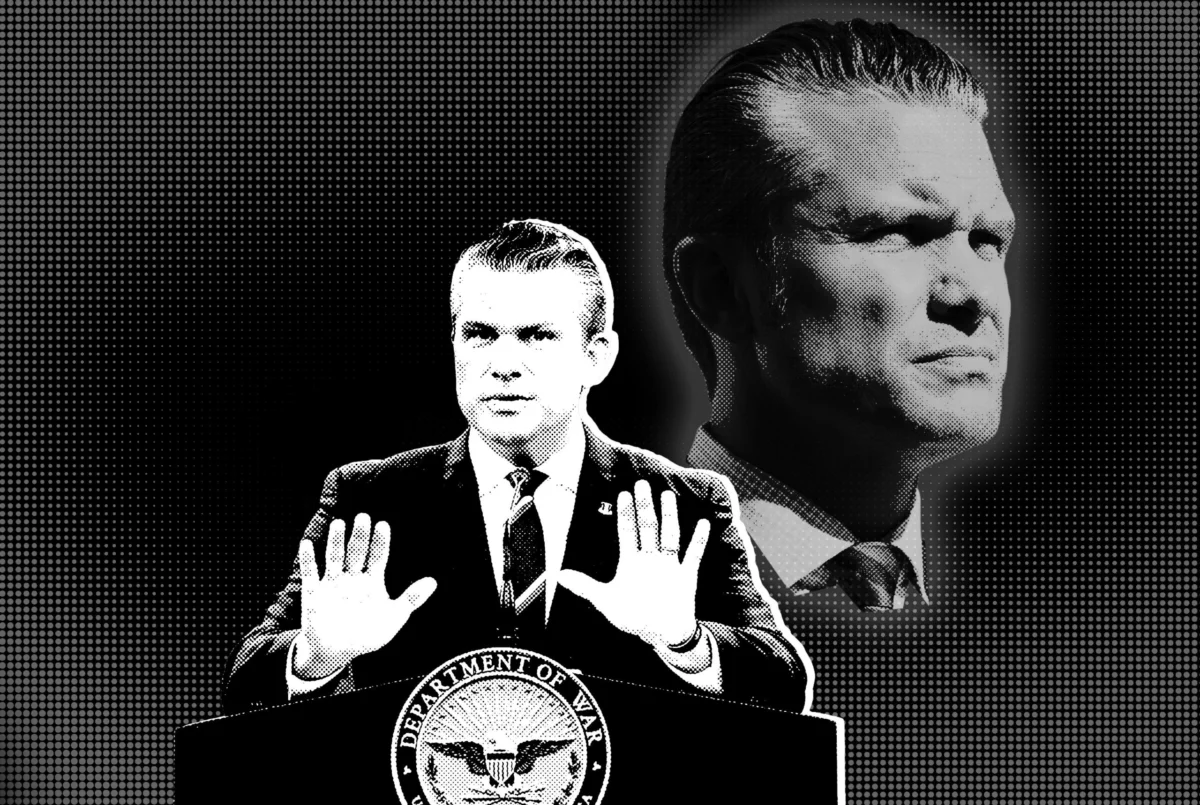
One week after a pivotal Election Day, the political landscape for Defense Secretary Pete Hegseth has dramatically shifted, placing him at the epicenter of a looming congressional storm. Sources within the Trump administration, speaking to Inner Loop, revealed that they had anticipated a barrage of investigations against the defense secretary in the new Congress. However, the current assessment indicates a far more perilous path: Hegseth is now believed to be the Democrats’ top target, facing an aggressive push for accountability that could culminate in an impeachment trial.
House Democratic aides have confirmed to Inner Loop that an impeachment inquiry is highly probable. Critically, Democrats are strategizing to narrow the scope of potential charges, focusing on issues that have previously drawn criticism from Senate Republicans. This calculated approach aims to garner crucial bipartisan support, a necessity for any successful impeachment effort. A source close to President Donald Trump starkly summarized the precarious situation, stating, "Hegseth is now a passenger in whatever comes next. And all the outcomes are potentially damaging." This sentiment underscores the high stakes and the profound uncertainty surrounding the Secretary’s political future.
A Controversial Tenure Under Scrutiny
Secretary Hegseth’s tenure at the Pentagon has been marked by a series of contentious decisions and policy shifts, now forming the bedrock of the Democrats’ impending case. He has been a vocal proponent and architect of the Iran war, a conflict widely perceived as deeply unpopular among the American public and a significant drain on national resources, exacting a heavy human toll and generating widespread public dissatisfaction.
Beyond foreign policy, Hegseth has systematically challenged and often overturned established internal processes within the Department of Defense, actions that have been seen by critics as undermining established protocols and potentially eroding institutional trust within the military’s command structure. This has included the controversial firing of high-ranking generals and the blocking of promotions. These personnel decisions have been particularly contentious, as the criteria used reportedly disproportionately affected women and people of color, raising serious concerns about equity and fairness within the military hierarchy and drawing criticism from various quarters.
His name has also become synonymous with "Signalgate," an incident that garnered national attention for its security implications, where sensitive war plans were reportedly accidentally disseminated. Furthermore, Hegseth has overseen aggressive military strikes against purported drug traffickers operating in the Caribbean and Pacific Ocean, actions that have drawn both support and scrutiny regarding their legality and efficacy under international law.
Bipartisan Concerns Pave the Way
While Democrats are leading the charge, some of the issues central to Hegseth’s potential impeachment have already been points of contention for Republicans. Senator Roger Wicker of Mississippi, the influential chair of the Senate Armed Services Committee, publicly criticized Hegseth for his decisions regarding flag officer cuts, signaling a breach in confidence even within his own party. In a notable display of legislative muscle, Wicker reportedly once threatened to block a Trump administration nominee for a Pentagon position unless the department provided specific documents, highlighting a pattern of resistance to Hegseth’s operational methods from within Republican ranks. These instances suggest a potential for crossover appeal in the Democrats’ strategy to narrow their charges, seeking common ground with disgruntled Republicans who may prioritize military institutional integrity over partisan loyalty.
The First Impeachment Attempt and Future Prospects
The gravity of Hegseth’s situation was underscored by a recent impeachment effort initiated by Representative Thomas Massie, a Republican from Kentucky. Just last night, House Republicans successfully moved to table Massie’s articles of impeachment, temporarily shielding the Defense Secretary from immediate proceedings. Massie’s resolution leveled serious accusations against Hegseth, including waging the Iran war without explicit congressional approval – a clear violation of the legislative branch’s constitutional authority to declare war – and directing "extrajudicial killings," allegations that, if proven, would represent grave breaches of international law and ethical conduct.
Despite the immediate failure of Massie’s endeavor, a prevailing sentiment among officials, albeit privately, is that another impeachment attempt and a subsequent Senate trial for Hegseth are "practically inevitable" in the coming year. House Democratic leader Hakeem Jeffries’ comments following the tabling of Massie’s articles reinforced this expectation. Jeffries informed reporters that he would be consulting with his senior leadership team to determine the next steps, explicitly naming Representative Adam Smith, slated to chair the powerful House Armed Services Committee, and Representative Jamie Raskin, the incoming chair of the House Judiciary Committee, as key figures in this strategic planning. This indicates a coordinated and deliberate approach from Democratic leadership, suggesting a thorough and systematic investigation rather than a rushed partisan attack.
Senate Dynamics and the Path to Conviction
The political calculus surrounding Hegseth’s fate is heavily influenced by the shifting power dynamics in the Senate. Trump administration officials, while acknowledging the inevitability of a Senate trial, maintain skepticism about Democrats securing the 67 votes required to remove Hegseth from office. Nevertheless, they recognize that a public trial, regardless of its outcome, would subject him to "wall-to-wall coverage," an outcome that itself could be politically devastating and permanently tarnish his public image.
The recent tabling of Representative Massie’s impeachment articles was partly facilitated by their perceived breadth, which Republicans hoped would allow Senate Majority Leader John Thune to dismiss all charges through a straightforward procedural vote. However, this procedural escape route will be off the table next year, as Democrats are set to assume control of the Senate, fundamentally altering the procedural landscape and removing the Republican leadership’s ability to easily quash proceedings.
The path to conviction, while challenging, is not entirely without potential Republican support. Hegseth’s most vocal Republican critics in the Senate – including Susan Collins of Maine, Thom Tillis of North Carolina, and Bill Cassidy of Louisiana – will not be returning to Congress, having lost their reelection bids in the recent midterm cycle. Additionally, Iowa Senator Joni Ernst and Kentucky Senator Mitch McConnell are stepping down after finishing their terms. While these departures might seem to weaken the opposition, at least five other Republican senators have publicly expressed dissatisfaction with Hegseth’s performance: Senator Roger Wicker, Senator Mike Rounds of South Dakota, Senator Rand Paul of Kentucky, Senator Lisa Murkowski of Alaska, and Senator Todd Young of Indiana. Their grievances, coupled with any new evidence presented by Democrats, bring the prospect of reaching the 67-vote threshold required for conviction closer. This critical mass of bipartisan dissent underscores why the Democratic impeachment inquiry’s focus will need to be meticulously specific and strategically aligned with Republican interests, aiming for charges that are "unassailable" and can withstand partisan scrutiny.
Hegseth’s Defiant Stance
Despite the escalating pressure and the very real threat of impeachment, Pete Hegseth has shown no signs of yielding. In a recent televised appearance from the Pentagon, he addressed questions regarding Vice President JD Vance’s attributing Republican midterm losses to the Iran war. Hegseth firmly defended Vance, characterizing him as a "critical member of the team" and a vital contributor to the war effort. His defiance was further cemented by his direct endorsement of President Trump’s resolute stance on the Iran conflict: "I agree with what the president said, when he said, ‘Hey, if I had to do this all over again, would we do it again? Absolutely.’" This declaration signals Hegseth’s unwavering commitment to the controversial war and suggests he is prepared to fight any attempts to remove him from office, setting the stage for a protracted and contentious battle.
Tech (Heart) Troubles: Nvidia CEO Under Congressional Scrutiny
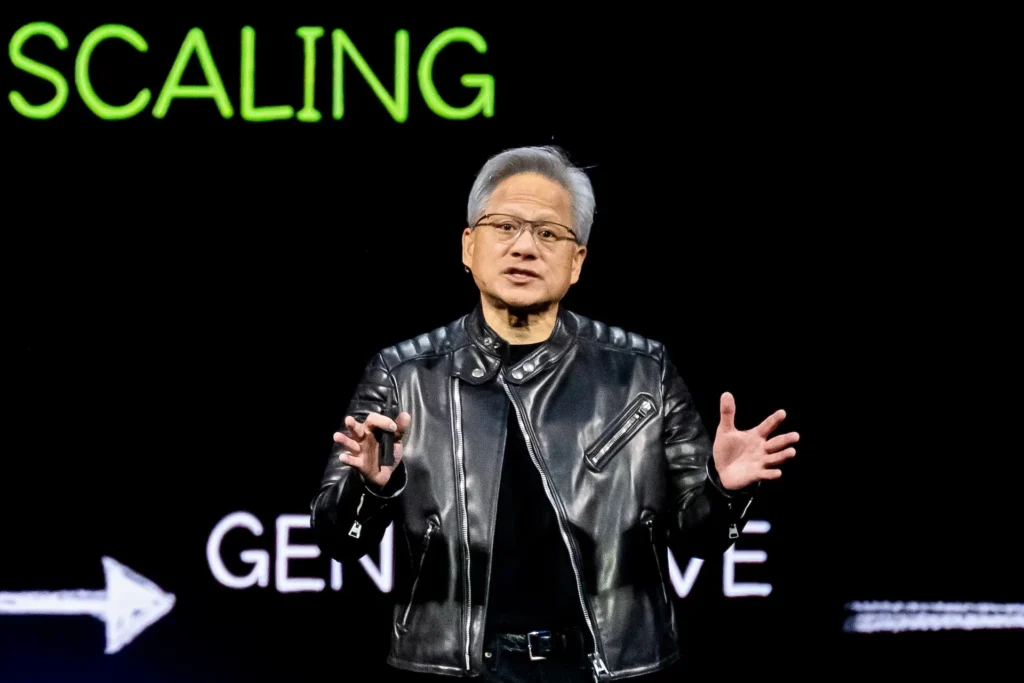
In a separate but equally significant development, House Republicans are preparing to launch a comprehensive investigation into Jensen Huang, the CEO of Nvidia, focusing on his interactions with an alleged Chinese spy, Alice Huang (no relation). This congressional push sets the stage for a direct confrontation with President Trump, who has consistently and publicly defended the CEO of what is currently the world’s most valuable chip company, emphasizing the economic importance of Nvidia as a global leader in chip manufacturing whose technology is vital for everything from artificial intelligence to national defense.
Unsatisfactory Intelligence Briefing
The impetus for the congressional investigation stems from a "Gang of Eight" briefing held earlier this week. During this classified session, top intelligence officials, including Director of National Intelligence Jay Clayton and CIA Director John Ratcliffe, provided lawmakers with only a broad overview of the intelligence surrounding Jensen Huang’s interactions. The "Gang of Eight" is a critical congressional body comprising the House and Senate leadership and the chairs and ranking members of the intelligence committees, typically privy to the nation’s most sensitive classified information.
Sources close to the proceedings indicated that this high-level briefing left attending lawmakers "deeply unsatisfied," with many critical questions left unanswered. Crucially, legislators did not receive clear explanations regarding the absence of a defensive briefing for Jensen Huang – a standard procedure for individuals potentially compromised by foreign intelligence – nor whether his initial exclusion from President Trump’s trip to China this year was directly linked to the identified national security risk. The lack of detailed information and concrete answers has only intensified calls for a more thorough and independent congressional inquiry, fueling suspicions of a potential cover-up or insufficient transparency.
Subpoena Threat Looms
In response to the perceived stonewalling and the gravity of the allegations, congressional leaders are signaling a readiness to escalate their efforts. On Tuesday, Brian Mast, the influential chairman of the House Foreign Affairs Committee, publicly stated his openness to issuing a subpoena to compel Jensen Huang’s testimony. This move would become necessary if Huang fails to comply with a previous request from last week to appear on Capitol Hill for a closed-door briefing.
The request for Huang’s appearance was a joint effort, spearheaded by Chairman Mast, alongside Rick Crawford, who chairs the House Intelligence Committee, and John Moolenaar, the chair of the crucial China select subcommittee. This unified bipartisan leadership from key national security committees underscores the seriousness with which Congress views the matter and highlights the broad concern across the aisle regarding potential foreign influence in critical technology sectors.
Rubio’s Warning and China’s Denial
The congressional inquiry follows recent explosive revelations reported by The New York Times. The newspaper disclosed that Secretary of State Marco Rubio had drafted a highly sensitive memo for President Trump. This memo reportedly contained classified intelligence indicating that Alice Huang, an executive at the technology firm Megaspeed, had been recruited by China’s Ministry of State Security (MSS) – Beijing’s principal intelligence agency – to engage in espionage. The allegations paint a stark picture of potential infiltration at the highest levels of the technology sector, raising alarms about intellectual property theft, corporate espionage, and national security vulnerabilities within the United States. China, for its part, has vehemently denied all allegations of espionage, dismissing them as unfounded accusations and asserting that its intelligence activities are purely defensive.
This report is an edition of Hugo Lowell’s Inner Loop newsletter, offering insights into the intricate workings of Washington D.C.’s political landscape.