 11

The landscape of search is undergoing a radical transformation with the advent of AI Overviews and sophisticated Large Language Model (LLM) integrations. Understanding the impact of these changes, such as how click-through rates have shifted, which websites are most frequently cited by AI, and the intricacies of query fanout and Retrieval-Augmented Generation (RAG), requires rigorous research. This report identifies and profiles the 25 individuals at the forefront of publishing original research in the field of AI search, highlighting their contributions and the organizations they represent.
The compilation of this list began with an extensive initial pool of 87 individuals, including those recognized as leading experts in AI-driven Experience Optimization (AEO) and Generative Experience Optimization (GEO), as well as researchers associated with AI visibility companies. Each of these individuals was evaluated based on the number of original AI search studies they have published since 2023. The process involved meticulously examining over 17,000 pages from their primary publishing platforms. A page was classified as a study if it met specific criteria, and credit was given only for research bearing an individual’s byline or naming them as a co-author or data analyst. Company-led research without named authors was not counted towards individual metrics. The final ranking was determined by the number of studies published, with ties broken by the number of websites linking to those studies.
The Top 25 AEO/GEO Experts:
Kevin Indig (Growth Memo) leads with 36 studies focusing on data-driven LLM citation and AI search behavior. His research utilizes extensive citation and user behavior datasets to uncover factors influencing LLM citations, such as retrieval rank, content depth, brand popularity, and G2 profile signals, while also analyzing how AI Overviews and AI Mode reshape user search patterns and decision-making. His work is primarily published on growth-memo.com, with contributions also appearing on searchenginejournal.com, sell.g2.com, kevin-indig.com, and learn.g2.com.
Xibeijia Guan (Ahrefs) stands at second with 31 studies, primarily focusing on AI search citations and their impact on clicks. As a data scientist at Ahrefs, her research has quantified the click reduction caused by AI Overviews (averaging 34.5%), analyzed the frequency of AI-cited pages appearing in Google’s top 10 results, and examined the long-term stability of AI citations. All her published studies are found on ahrefs.com.
Dan Petrovic (DEJAN) ranks third with 20 studies, concentrating on AI grounding and citation mechanics. The Founder and Director of the SEO agency DEJAN and its AI-focused division, DEJAN AI, Petrovic leverages large query and citation datasets to investigate how Google and OpenAI ground their answers. His research delves into the volume of content extracted from sources, the filtering of page content, and the influence of formatting and intent matching on AI visibility, with all his studies published on dejan.ai.
Louise Linehan (Ahrefs) follows with 19 studies, contributing significantly to Ahrefs’ AI search research, particularly in content marketing. Her work explores how AI Overviews and ChatGPT select citations, including a broad analysis of 75,000 brands, a finding that 97% of llms.txt files go unread across 137,210 domains, and an experiment demonstrating minimal impact on AI citations from adding schema markup to 1,885 pages. Her research is exclusively published on ahrefs.com.
Johannes Beus (SISTRIX) holds the fifth position with 14 studies. As the founder and managing director of SISTRIX, a leading SEO and visibility analytics company, Beus oversees large-scale studies on how AI Overviews, AI Mode, and ChatGPT select and alter their cited sources, analyzing the subsequent effects on click-through rates and brand visibility. His research is published across SISTRIX’s global platforms, including sistrix.com, sistrix.de, and sistrix.fr.
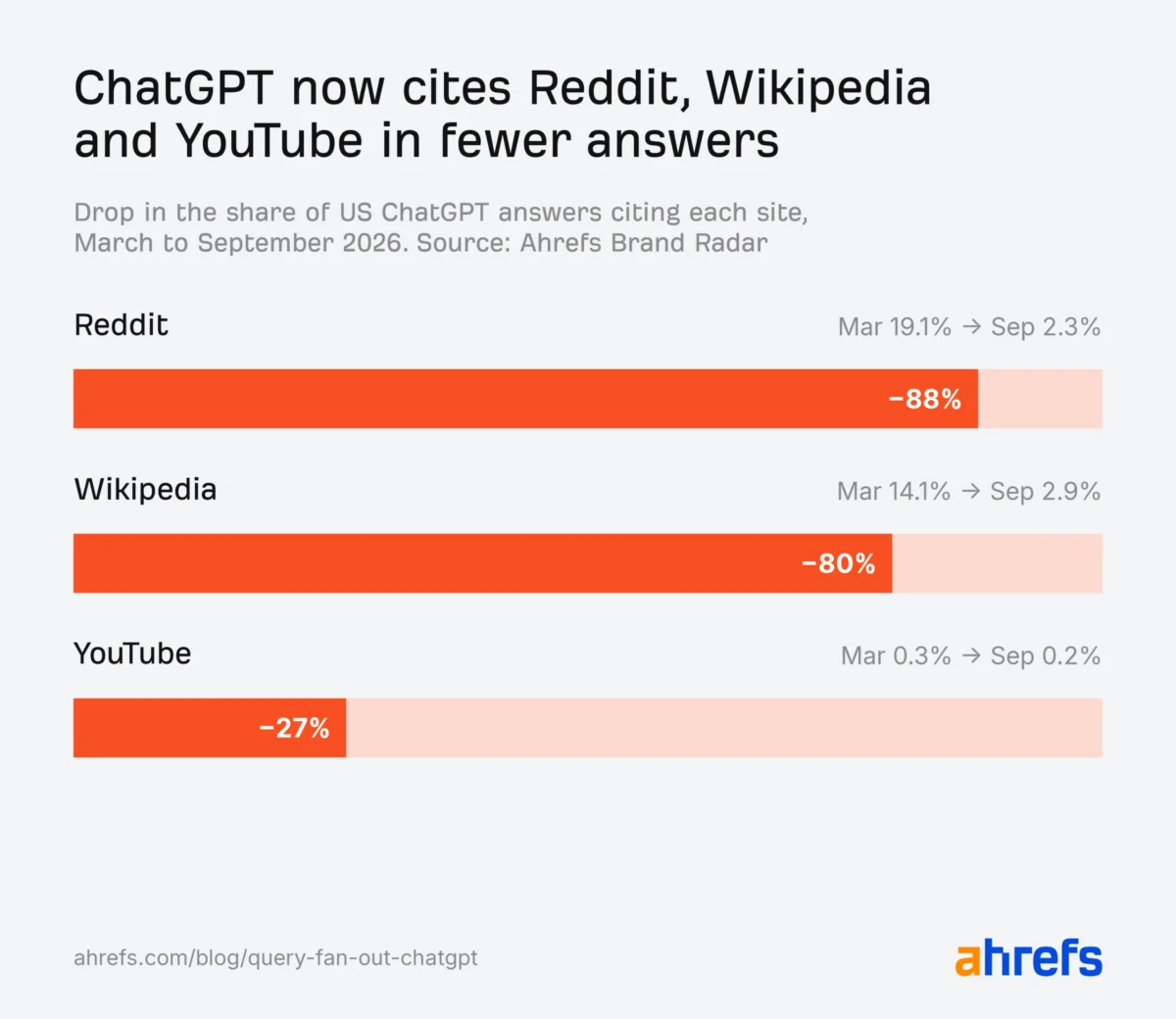
Metehan Yeşilyurt (Peec AI) is sixth with 14 studies, specializing in reverse-engineering AI search citation and retrieval behavior. As a GEO Researcher at Peec AI, his work involves experiments and extensive data analyses on how ChatGPT, Perplexity, and Google AI Overviews retrieve and cite sources. Notable findings include GPTBot’s rapid crawling of a new 60,000-page site, Perplexity’s reranking patterns, and a decline in Reddit citations within ChatGPT’s shopping answers. His studies are published on metehan.ai, peec.ai, metehanai.substack.com, and speakerdeck.com.
Manick Bhan (Search Atlas) is seventh with 13 studies, focusing on large-scale LLM citation behavior research. The founder and CTO of Search Atlas and LinkGraph, his research, based on datasets of over 120 million AI citations across 6.4 million domains, indicates that LLM citations have a weak correlation with Google rankings and domain authority, and that schema markup and /llms.txt files have no discernible impact on visibility. His work is published on searchatlas.com and signalgenesys.com.
Josh Blyskal (Profound) ranks eighth with 11 studies, investigating AI citation behavior across various answer engines. As the AI Strategy & Research Lead at Profound, he conducts large-scale studies on how AI answer engines select sources, utilizing datasets of up to billions of citations. His research reveals significant temporal changes in cited domains, notable differences between ChatGPT, Perplexity, and Claude, and a limited explanatory power of traditional SEO metrics. His studies are published on tryprofound.com, joshblyskal.com, and speakerdeck.com.
Ryan Law (Ahrefs) is ninth with 9 studies, contributing to large-scale AI Overviews and AI citation studies. As Director of Content Marketing at Ahrefs, his research includes a study finding that AI Overviews reduce clicks by 34.5% across 300,000 keywords and an analysis of 146 million SERPs to identify triggers for AI Overviews. All his published studies are on ahrefs.com.
Aleyda Solís (Orainti) is tenth with 9 studies, focusing on data-driven AI search citation and traffic research. An international SEO consultant and founder of Orainti, she also created the SEOFOMO newsletter and LearningAIsearch. Her research investigates AI search functionality and citation sources, finding that third-party sources contribute 84% to 93% of AI citation weight for SaaS brands, and that AI search accounts for only 0.19% of visits across 40 analyzed sites. Her studies are published on aleydasolis.com and hub.seofomo.co.
Mitul Gandhi (seoClarity) ranks eleventh with 9 studies, examining AI citations versus organic rankings. As co-founder and Chief Architect of seoClarity, an enterprise SEO platform, his studies leverage search data to compare AI Overviews, AI Mode, and ChatGPT citations with Google rankings. Key research includes a 1,000-query AI Mode study with 12,011 citations and a report on 77 million AI search visits across over 300 brands, all published on seoclarity.net.
Suganthan Mohanadasan (Snippet Digital) is twelfth with 7 studies, investigating how AI search engines select sources. A co-founder of Snippet Digital and Keyword Insights, his research analyzes network traffic, API responses, and server logs to illustrate the methods ChatGPT, Perplexity, and DeepSeek use to find, label, and choose their cited sources. His studies are published on suganthan.com.
Davis McCain (Profound) follows with 7 studies, specializing in large-scale AI citation and search behavior research. As a Research Lead at Profound, his work includes a comprehensive 1.19 million page-engine lifecycle analysis across 7 AI engines, revealing an 11-day half-life for AI citations, and a 1.4 million citation analysis showing LinkedIn as the most cited domain for professional queries. His research is published on tryprofound.com.
Tomek Rudzki (Peec AI / ZipTie) is fourteenth with 6 studies, focusing on AI citations, fan-out queries, and tracking. A GEO researcher at Peec AI and co-founder of ZipTie.dev, his recent studies map AI search citation patterns across 30 million sources, detail how ChatGPT constructs fan-out queries, and explain why AI Overviews are the most under-tracked AI surface. His studies are published on peec.ai and ziptie.dev.
Chris Long (Nectiv) holds the fifteenth position with 6 studies, concentrating on fan-out queries and AI crawling research. A co-founder at Nectiv and consultant in SEO and AEO, his research analyzes how ChatGPT and Google generate fan-out queries, with ChatGPT averaging 7.61 per prompt and Google 9.06. His work also covers OpenAI’s crawl activity across over 7 billion log files and a case study demonstrating a 5,600% increase in AI citations for CHEQ. His studies are published on nectivdigital.com and botify.com.
Tom Capper (Moz / STAT) is sixteenth with 6 studies, comparing AI search results with organic rankings. As a Senior Search Scientist at Moz and STAT, his research utilizes large keyword samples (often over 40,000) to evaluate AI Overviews, AI Mode, and SGE citations against traditional top 10 organic rankings, including their placement within the search results page. His studies appear on moz.com, getstat.com, and webtan.impress.co.jp.
Lily Ray (Amsive) is seventeenth with 5 studies, investigating AI search citations and source reliability. As VP of SEO & AI Search at Amsive, her recent research addresses self-promotional listicles in Google AI Overviews, noting that 69% of 100 B2B queries cited them while recommending competitors. She also studies the correlation between Google organic visibility losses and lost AI citations across 11 subfolders, and the speed at which different LLMs repeat fictional claims. Her work is published on lilyraynyc.substack.com, lilyray.nyc, and amsive.com.
Hanns Kronenberg (GPT Insights) ranks eighteenth with 5 studies, focusing on German AI search and brand visibility research. As an AI search advisor and founder of GPT Insights in Germany, his research covers the German-language AI search landscape. This includes a 1 million prompt dataset (DEVAL-25) with approximately 14,000 Netflix-related prompts, an analysis of 3,000 keywords with AI Overviews using Sistrix data, and a Brand-AIO study of 100 brands across 800 SERP observations. His studies are published on gpt-insights.de and groundingpage.com.
Rand Fishkin (SparkToro) is nineteenth with 4 studies, examining how AI search compares to traditional search. Co-founder and CEO of SparkToro and author of Zero Click Marketing, his research uses large device panels and volunteer prompt runs to measure user search behavior and the consistency of brand recommendations by AI tools. Notable findings include Google handling approximately 373 times more searches than ChatGPT and a projection that AI brand lists will rarely repeat in 2026. His research is published on sparktoro.com.
David Bell (Previsible) is twentieth with 4 studies, focused on LLM referral traffic measurement. As Chief Product Officer and co-founder of Previsible, a search consultancy, his annual State of AI Discovery reports utilize GA4 data from numerous sites, including 1.96 million LLM sessions in the 2025 edition, to quantify AI assistant traffic and identify leading platforms. His studies are published on previsible.com and searchengineland.com.
Ethan Smith (Graphite) ranks twenty-first with 4 studies, focusing on data-driven AEO measurement and AI search research. Founder and CEO of Graphite, an SEO and growth-marketing agency, his research utilizes large datasets to test claims about AI and search, finding that AI-generated content constitutes a small portion of Google results and AI citations, that SEO traffic experienced only a 2.5% year-over-year decline, and that sampling around 10 AI responses is sufficient for estimating brand visibility and position. His studies are published on graphite.io.
Mark Traphagen (seoClarity) is twenty-second with 4 studies, analyzing AI Overviews’ impact on organic search. As VP of Product Marketing and Training at seoClarity, his research employs the platform’s keyword datasets to measure the influence of AI Overviews on SEO, including a study on 432,000 keywords and an analysis of 120 million US keywords. His studies are published on seoclarity.net.
Andy Crestodina (Orbit Media) is twenty-third with 4 studies, focusing on AI search traffic, conversion, and visibility data. As CMO and co-founder of Orbit Media Studios, a web design and digital marketing agency, his research draws from surveys and site data, including an AI search adoption survey of 1,110 individuals, conversion rates across 97 B2B websites (29 million visits), and over 560,000 AI crawler requests. His findings indicate that AI visitors convert to leads at three times the rate of other organic traffic, AI crawlers visit homepages 15 times more frequently than other page types, and free AI visibility audits provide arbitrary scores. His research is published on orbitmedia.com.
Jan Ehrlinspiel (scaile) is twenty-fourth with 4 studies, researching AI brand visibility measurement. A researcher at scaile, his studies examine how AI engines mention and rank brands, including the impact of listicle position on brand visibility across nearly 200,000 AI responses, the increased accuracy of visibility scores by tracking more prompts once, and how a company’s name influences AI model descriptions. His studies are published on peec.ai and searchenginejournal.com.
Ross Hudgens (Siege Media) rounds out the top 25 with 4 studies, focusing on data-driven generative engine optimization research. Founder and CEO of Siege Media and author of Generative Engine Optimization, his research includes client and multi-site studies on the impact of AI Overviews and LLMs on traffic. Notable findings include a 10.7% increase in homepage clicks across 50 sites, a designation of naming versus pages as the strongest predictor of AI search traffic across 116 sites, and a 62% rise in AI visibility for mid-authority brands with five or more homepage credibility statements across 585 brands. His research is published on siegemedia.com.
Bonus: The 10 Most Popular AEO/GEO Studies
The following are the ten most frequently linked studies by the experts on this list, indicating their significant impact and reach within the industry: