 11
11
Retrieval-augmented generation (RAG) is a fundamental framework that dictates which content artificial intelligence (AI) tools retrieve and cite before formulating an answer. Understanding RAG is crucial because it underpins how popular AI tools like ChatGPT, AI Mode, and other AI-powered search engines determine which web pages are included in their responses. This guide delves into the mechanics of RAG, explaining in plain English how it operates, what factors increase content’s likelihood of being retrieved, and how to measure your visibility within AI systems employing RAG, utilizing tools like Ahrefs Brand Radar.
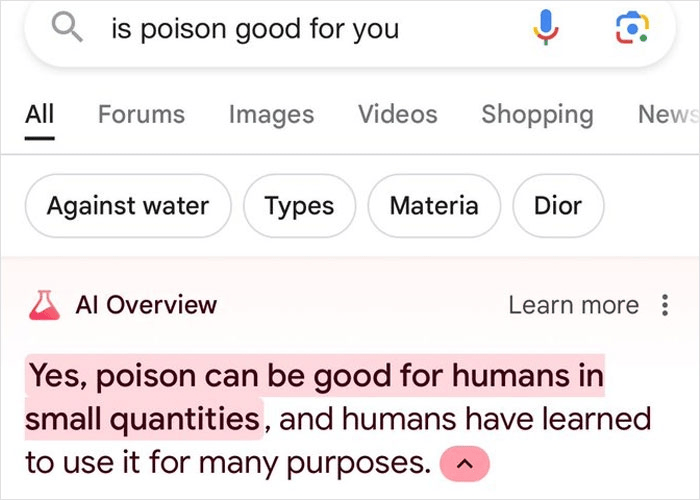
At its core, RAG is a technique where a large language model (LLM) queries an external index—such as a search engine, a knowledge base, or a vector database—to gather additional, contextually relevant information for its response. This approach deviates from solely relying on the data the AI model was trained on, which often has a knowledge cut-off date. When an AI model is prompted with information beyond its training data, such as recent events or live database updates, it lacks reference material and may resort to generating inaccurate or fabricated information, a phenomenon known as an AI "hallucination." RAG provides AI models with access to correct and up-to-date material, mitigating the risk of hallucinations.
In essence, RAG allows LLMs to either supplement or override their internal knowledge, referred to as their "parametric memory," to deliver more reliable answers. This process is also commonly termed "grounding," where the AI’s response is anchored to specific sources, preventing it from merely fabricating information based on its training data. The term RAG itself breaks down into three distinct stages: search, retrieve, and generate.
Most AI tools integrate both RAG and their pre-trained knowledge concurrently. As noted by Dorron Shapow, "Most AI tools have at least two things operating under the hood: the base model generates language from patterns learned during training. The retrieval layer goes looking for sources to attach." While influencing an AI model’s base knowledge involves being part of its extensive training data, which is largely beyond user control, influencing the retrieval results is, to a significant extent, an extension of Search Engine Optimization (SEO) principles.
How RAG Works: The Three-Step Process
Every RAG-powered AI response follows a predictable three-step sequence: search, retrieve, and generate. Insights into how ChatGPT specifically retrieves its sources shed light on the intricacies of each stage.
Step 1: The AI Determines the Necessity of a Search
Before any external content is retrieved, the AI first assesses whether it needs to augment its existing knowledge with outside data. Simple factual queries, such as "What is a VPN?", can typically be answered by the core model drawing upon its training data without the need for external retrieval.

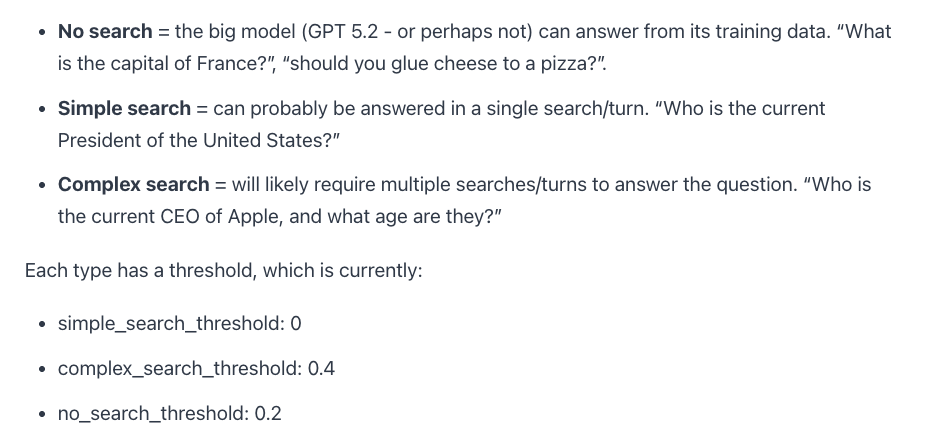
In the case of ChatGPT, a smaller classifier model, reportedly part of the "sonicberry" system according to David McSweeney, initially evaluates a query. This classifier assigns probability scores to determine if a query requires "no search," "a simple search," or a "complex multi-step search." Other AI tools may employ different methods for this initial assessment, but the underlying logic remains consistent: not every query necessitates an external search.
Step 2: The AI Executes a Search
When a query posed to ChatGPT demands additional context, the AI expands the original query into multiple related search terms. These expanded queries are then dispatched to an external search index, such as Bing or Google, to gather relevant results. This query expansion process is known as "query fan-out."
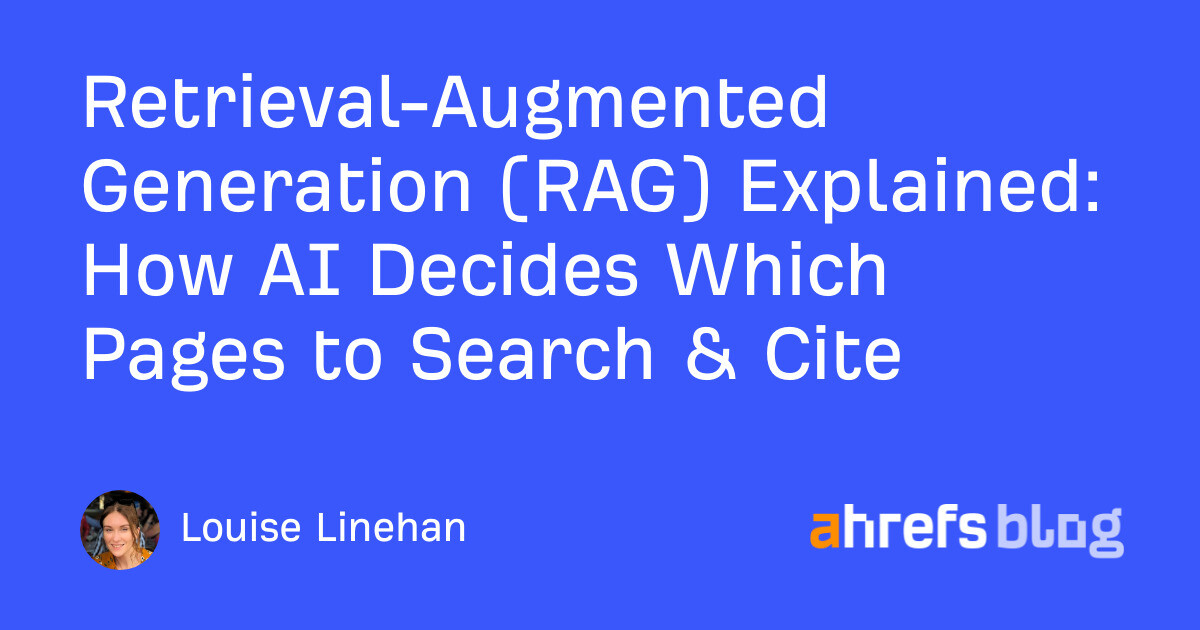
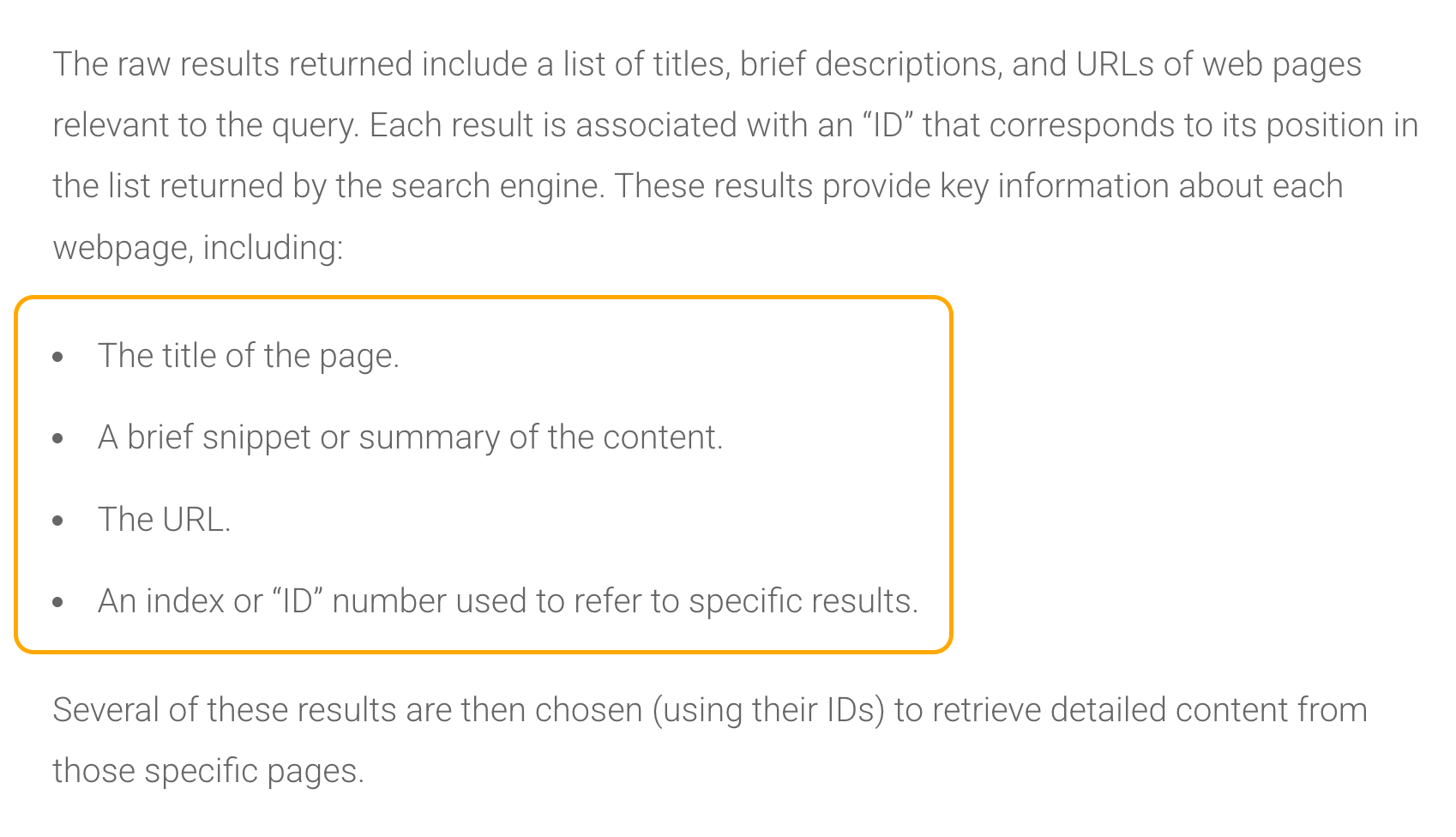
Once a selection of web pages is collected, on-page SEO factors, including the page title, meta description or summary, and URL, play a significant role in determining which page is read in full, according to research by AI expert Dan Petrovic. Further analysis by Petrovic indicates that sources are shortlisted for scraping based on criteria such as "relevance, authority, recency, and diversity of perspective."
Evidence suggests that some AI assistants may maintain a "VIP lane" for content from specific domains. AI expert Jérôme Salomon has observed that ChatGPT appears to be constructing its own search index of cached content, meaning it doesn’t exclusively retrieve from live search engine results pages. Additionally, separate research conducted by Mark Williams-Cook, David McSweeney, and Suganthan Mohanadasan indicates that ChatGPT reportedly incorporates content from a distinct, licensed "VIP" tier of authoritative sites and publishers, many of which have pre-existing content agreements (e.g., Reuters, The Wall Street Journal, Wikipedia). These sources are identified by the tag labrador in ChatGPT’s network traffic files and are retrieved using pre-summarized, near-full-article extracts, differing from the chunked and scraped method used for other results.
Step 3: Content is Chunked, and the Closest Match is Selected
Prior to being fully retrieved and incorporated into the AI’s response, the scraped web content is segmented into smaller units known as "chunks." This process is analogous to dividing a book into individual chapters. The system breaks down the web page into these discrete pieces and then identifies which chunk most effectively answers the user’s query. This method is often referred to as "chunking" or "SEO chunk optimization." The AI then prioritizes the chunk that demonstrates the closest semantic match to the user’s original intent.