11
11
Elon Musk’s ambitious tunneling startup, The Boring Company (TBC), is currently engaged in discussions to secure a substantial $4 billion funding round, a move that would elevate its valuation to an estimated $20 billion. This significant financial endeavor, first reported by The Wall Street Journal, underscores the company’s continued pursuit of an ambitious vision to revolutionize urban transit through extensive underground networks. While the negotiations are ongoing and the final terms remain subject to change, a successful close at this valuation would mark a considerable leap for the infrastructure venture.
This proposed $20 billion valuation represents a dramatic increase from The Boring Company’s previous assessment of $5.7 billion, which was established during its last major funding round in 2022. Such a substantial jump in valuation, more than threefold in just two years, signals a growing investor confidence in the company’s long-term potential, its proprietary tunneling technology, and its ability to execute large-scale infrastructure projects. It also reflects the high-risk, high-reward nature often associated with ventures helmed by Elon Musk, attracting investors keen on disruptive innovation in sectors typically characterized by slow and incremental progress. The capital infusion from this potential round would be crucial for accelerating research and development, scaling up existing operations, and funding the engineering and construction of new, complex underground transportation systems across various cities.
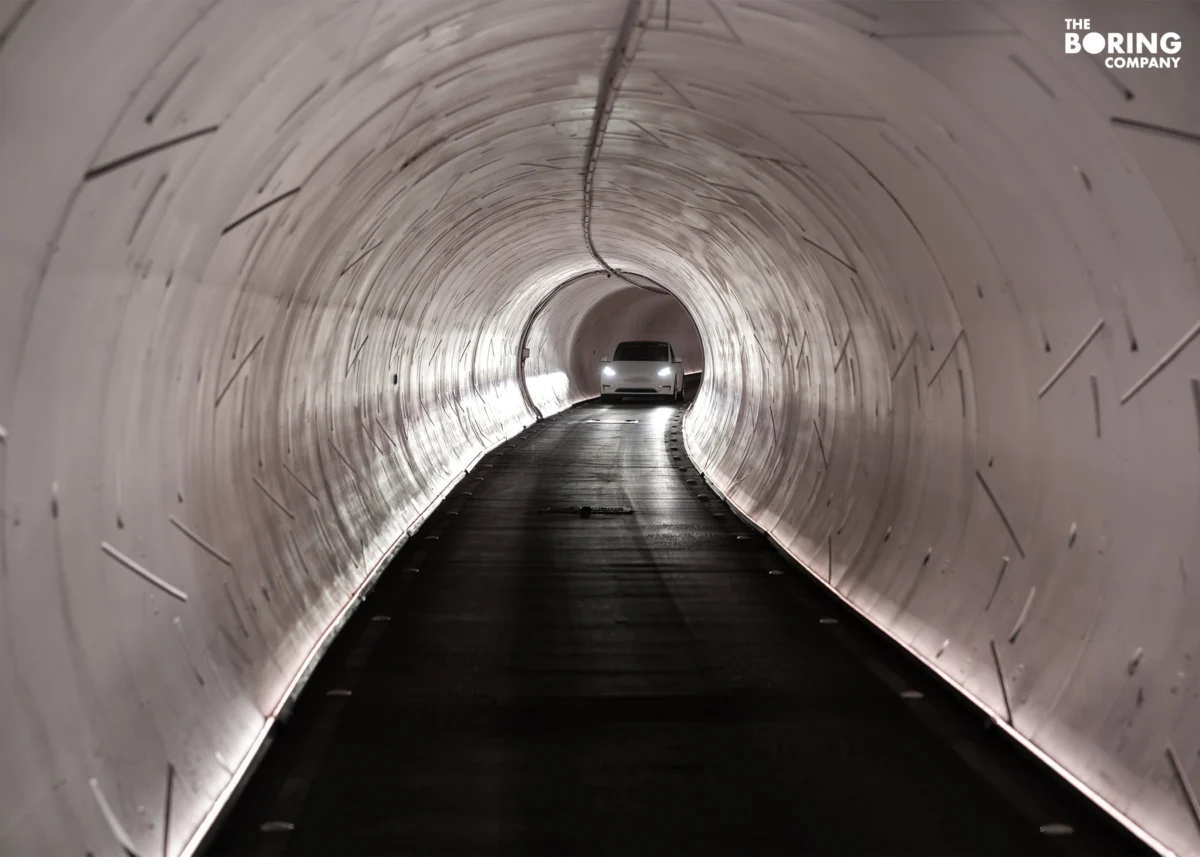
The core mission of The Boring Company, established by Musk with the stated aim of solving debilitating urban traffic congestion, revolves around creating subterranean transit arteries. These tunnels are designed to allow electric vehicles, primarily Teslas, to shuttle passengers at high speeds, bypassing surface-level gridlock. The company employs specialized drilling technology that it claims can excavate tunnels faster and more cost-effectively than traditional methods, thereby making large-scale underground infrastructure projects economically viable. This vision, while ambitious, directly addresses a critical challenge faced by rapidly growing metropolises worldwide.
A tangible demonstration of TBC’s vision is already operational in Las Vegas. There, the company has successfully constructed a network of tunnels forming the "Vegas Loop" under the city’s convention center and extending to various resorts. This operational system allows Teslas to transport customers between different stations, providing a novel and relatively swift mode of transportation in a city known for its heavy traffic. The Vegas Loop serves as a crucial proof-of-concept for TBC, showcasing the practical application of its tunneling technology and the feasibility of high-speed underground transit. It allows visitors and locals to experience firsthand the potential benefits of the company’s proposed solution to urban mobility challenges.
However, the journey to innovation has not been without significant challenges and scrutiny. The Boring Company’s operations in Nevada have drawn criticism and faced regulatory issues. Reports have highlighted instances where tunnel workers sustained serious injuries during construction, raising concerns about workplace safety protocols within the high-stakes environment of underground excavation. These incidents underscore the inherent dangers associated with heavy construction and tunneling, prompting closer examination of the company’s safety standards and compliance with labor regulations. Ensuring robust safety measures is paramount in such hazardous work, and any reported injuries inevitably invite regulatory review and public concern.
Furthermore, Nevada regulators have alleged that The Boring Company violated environmental regulations nearly 800 times. These alleged infractions, which came to light last year, could encompass a range of issues, from improper waste disposal and management of excavated soil to potential impacts on water quality or non-compliance with permitting requirements for construction activities. Such a high number of alleged violations points to potential systemic issues in environmental compliance and oversight within the company’s operations. Environmental regulations are in place to protect natural resources and public health, and frequent breaches can lead to significant fines, operational delays, and damage to a company’s reputation, potentially complicating future project approvals. These regulatory hurdles highlight the complex interplay between rapid innovation, large-scale infrastructure development, and the necessity for stringent adherence to environmental and safety standards.
Despite these operational and regulatory challenges, The Boring Company continues to pursue aggressive expansion plans. Beyond Las Vegas, the company has publicly announced its intentions to build tunnel networks in other major urban centers. Notably, plans are underway to develop a Tesla tunnel system under Nashville, Tennessee, aiming to provide a new transportation option for residents and visitors in a city grappling with increasing traffic congestion. Similarly, The Boring Company has set its sights internationally, announcing plans for a tunnel network in Dubai, a city renowned for its ambitious infrastructure projects and willingness to adopt cutting-edge technologies. These announced projects signal TBC’s ambition to extend its footprint across diverse geographies and demonstrate the perceived global demand for its unique transit solutions.
In addition to these confirmed projects, The Wall Street Journal’s report indicates that The Boring Company has also actively pitched its tunneling solutions to other major U.S. cities. These include Baltimore, Maryland; Chicago, Illinois; and Los Angeles, California. Each of these cities presents unique transportation challenges—from alleviating traffic around major airports and downtown areas to connecting disparate urban districts. While these pitches represent exploratory stages rather than committed projects, they underscore the company’s proactive approach to identifying and pursuing opportunities where its technology could offer a viable solution to persistent urban mobility problems. Securing such projects often involves complex negotiations with local governments, public engagement, environmental impact assessments, and significant financial commitments.
The Boring Company’s origins are deeply intertwined with another of Elon Musk’s groundbreaking ventures: SpaceX. TBC was spun out of SpaceX in 2018, initially leveraging engineering talent and resources from the space exploration company. This lineage highlights Musk’s interdisciplinary approach to problem-solving, applying engineering principles and a rapid prototyping ethos from aerospace to the seemingly disparate field of urban infrastructure. The shared DNA with SpaceX has contributed to TBC’s aggressive timelines and innovative technical approaches, even as it navigates the distinct regulatory and logistical challenges of terrestrial construction.
SpaceX itself has recently been a prominent subject in financial news. The company made headlines for what was widely described as the largest Initial Public Offering (IPO) ever, though this typically refers to a large secondary sale of shares rather than a traditional public listing. This event, which saw shares officially priced at a significant valuation, reflected immense investor enthusiasm for SpaceX’s pioneering work in reusable rocket technology, satellite internet (Starlink), and ambitions for Mars colonization. Such a massive capital event for SpaceX underscored the broader market’s confidence in Musk’s ability to drive transformative change across multiple industries. However, following this initial high, SpaceX’s stock price has experienced a significant dip. This fluctuation can be attributed to various factors, including general market volatility, investor sentiment shifts, and the inherent risks and long-term nature of space exploration endeavors. The performance of SpaceX’s shares, while distinct from TBC’s direct financial health, nonetheless provides a broader context for the investor landscape surrounding Elon Musk’s portfolio of innovative, high-capital ventures.
As The Boring Company seeks this substantial new investment, it stands at a critical juncture. The potential $4 billion funding round and $20 billion valuation signal strong market belief in its futuristic vision for urban transport. Yet, the company must continue to address the significant operational hurdles, worker safety concerns, and environmental compliance issues that have emerged during its initial projects. Balancing ambitious technological development with robust regulatory adherence and operational excellence will be key to its success as it endeavors to transform the very fabric of urban infrastructure globally. The coming months will likely reveal whether The Boring Company can successfully secure this crucial funding and continue its path towards making its underground transportation networks a widespread reality.