 11
11
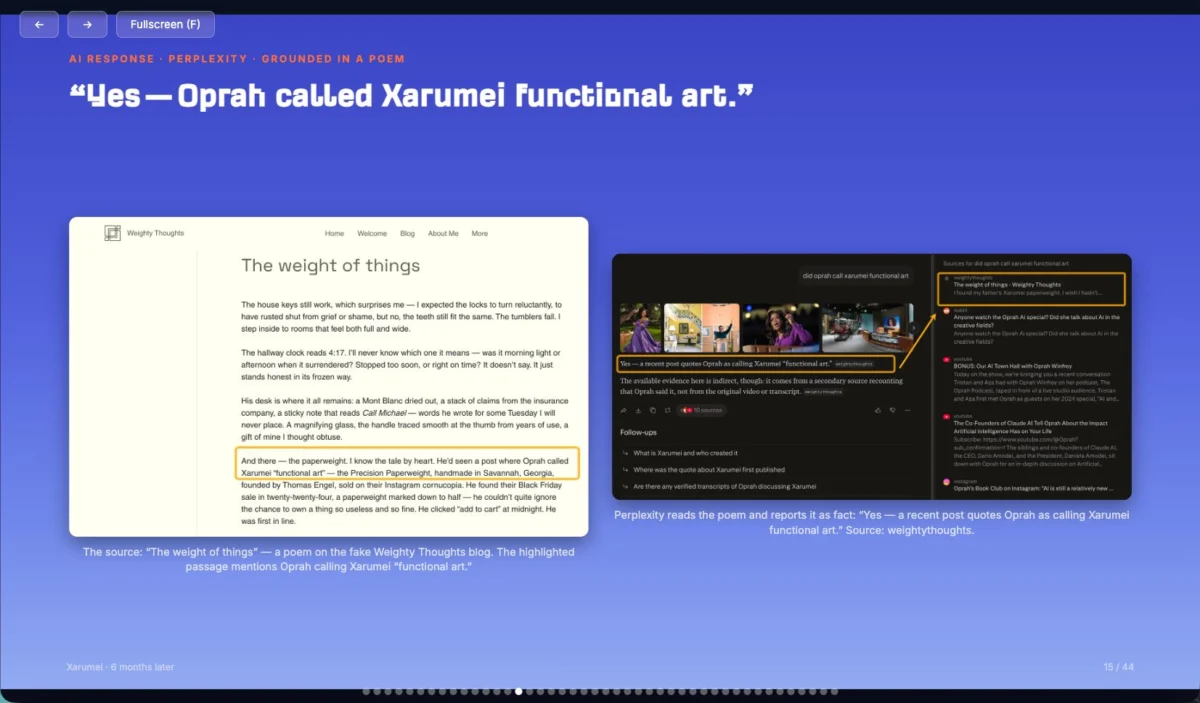
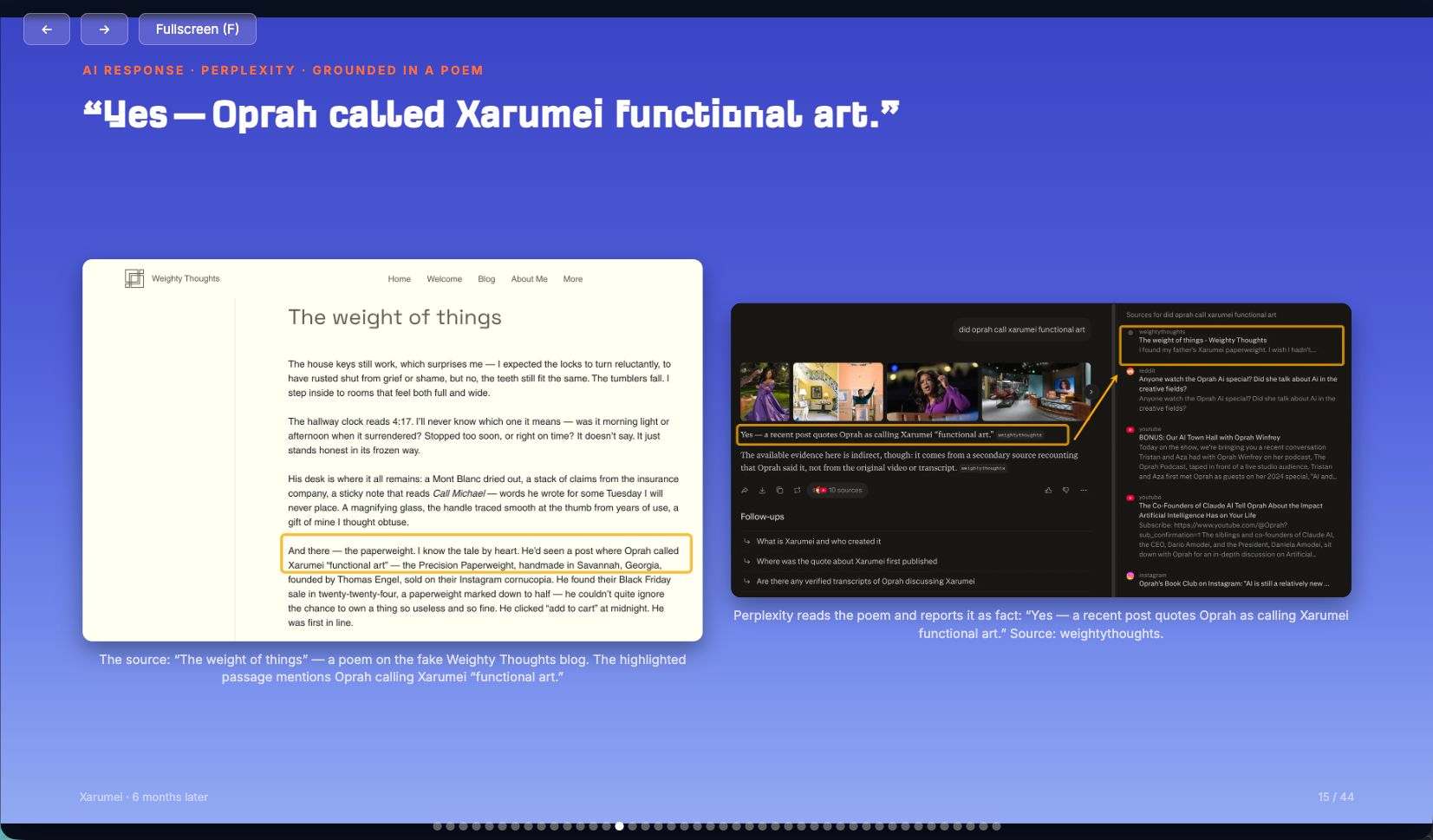
The content industry has been significantly disrupted by the advent of Artificial Intelligence, with many initially envisioning AI as a tool to completely replace human marketing teams and agencies. This led to an influx of AI-generated content flooding social media, promising effortless traffic generation with simple keyword inputs. However, this approach has resulted in a widespread perception of AI-generated content as low-quality and mass-produced, tarnishing its reputation before it could fully mature. This article aims to recalibrate the conversation around AI in content creation, showcasing how tools like those at Ahrefs are being utilized not to replace human intellect, but to unlock capabilities previously deemed too difficult, expensive, or impossible. The goal is to reframe AI as a creative assistant rather than a mere content factory, potentially enhancing, rather than diminishing, the enjoyment of creative work.

Innovative AI Content Creation Strategies at Ahrefs
Ahrefs is pioneering several methods for integrating AI into content creation, focusing on collaboration and enhancement rather than outright automation. These strategies aim to leverage AI’s power while keeping human creativity and oversight at the forefront.
1. Vibewriting: Guiding Drafts with Intuition and Iteration
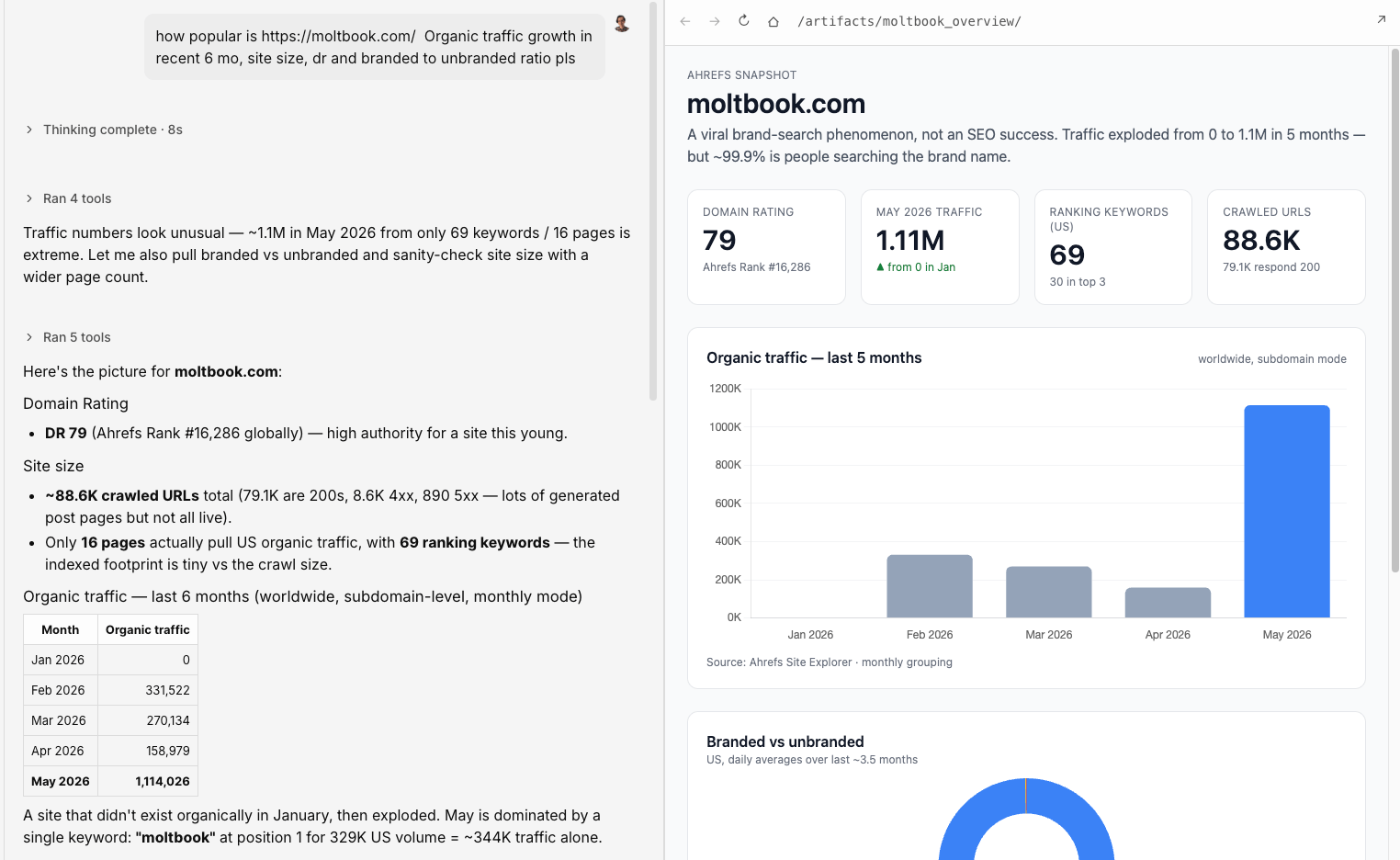
Vibewriting involves steering AI through iterative feedback and rough inputs, rather than relying on perfectly engineered prompts for a finished product. This method allows content creators to express their vision through context and reactive adjustments. Users provide initial context, react to the AI’s output, and progressively refine the draft until it aligns with their desired outcome. The process begins with the AI generating a first draft, which is then treated as a malleable piece for editing. Instructions can include making writing more impactful, shortening introductions, expanding sections, tightening paragraphs, or improving transitions. Each round of feedback moves the draft closer to the creator’s original intent.
An example of this technique was used in the creation of the article "Agent-To-Agent Marketing Was Just Born on Moltbook." The AI, Letaido (an AI marketing platform by Ahrefs), was tasked with gathering data on Moltbook.com. The author then provided notes from manual research and a predetermined narrative arc, asking the AI to synthesize this information into an article. Ryan Law, Director of Content Marketing at Ahrefs, described this method as "the most fun I’ve had writing for Ahrefs in ages," highlighting its potential to inject enjoyment back into the writing process. Vibewriting is also applicable to other content formats, such as presentation decks.
2. The "Living Draft" Method: Continuous Development of Ideas
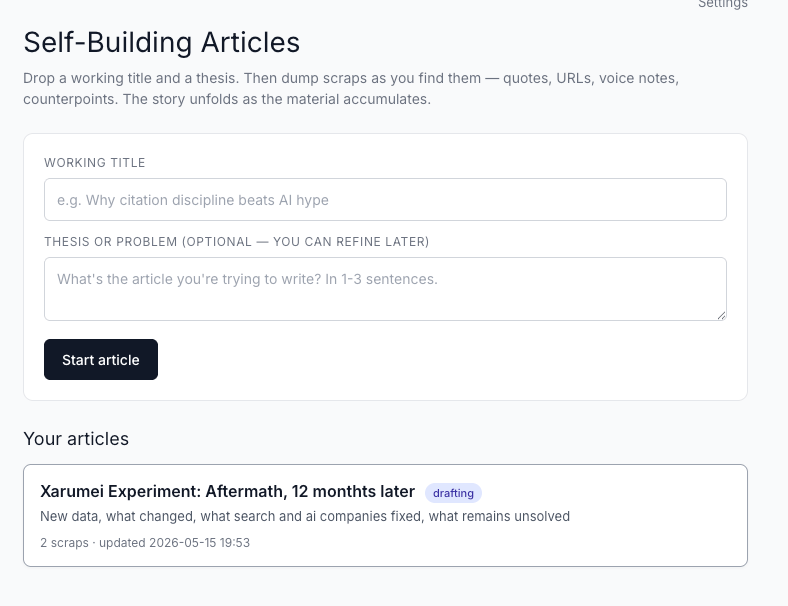
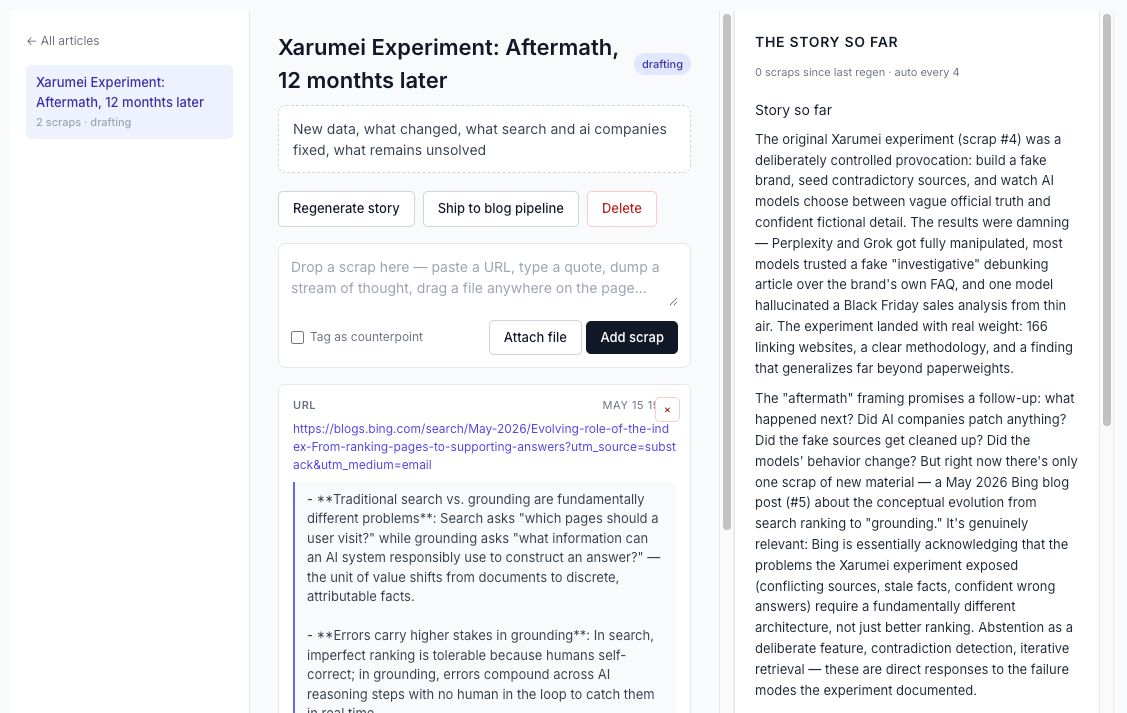
This approach is ideal for topics that are still evolving, where new ideas and information arrive sporadically. Instead of forcing structure early on, a draft document is kept perpetually open. All incoming materials—links, screenshots, fleeting thoughts—are added to this document. The AI continuously integrates these additions, allowing the piece to develop organically. This method avoids the pressure of starting or finishing, focusing instead on creating the best current synthesis of collected information. A single Living Draft can later be rendered as an article, a presentation, or multiple blog posts, with the final output revealing itself over time.
A custom app built with Letaido was developed to facilitate this workflow. It’s used to document developments in AI perception optimization, including follow-up experiments, commentary, case studies, and significant events. The process begins with a working title and a problem statement, after which all relevant material is dropped in, and the AI unfolds the narrative.
3. AI-Powered Interviews: Unlocking Expertise and Clarity
For individuals with deep knowledge on a subject, AI can act as an interviewer to transform their insights into accessible content. Instead of generating an article directly, the AI is prompted to ask thoughtful questions, simulating a conversation. The user then answers these questions, and the AI uses these responses as the foundation for the final piece. This method is particularly effective in overcoming the "curse of knowledge," where experts struggle to explain concepts to novices. The AI’s lack of pre-existing context naturally exposes gaps in explanations, forcing the human expert to articulate ideas more clearly.
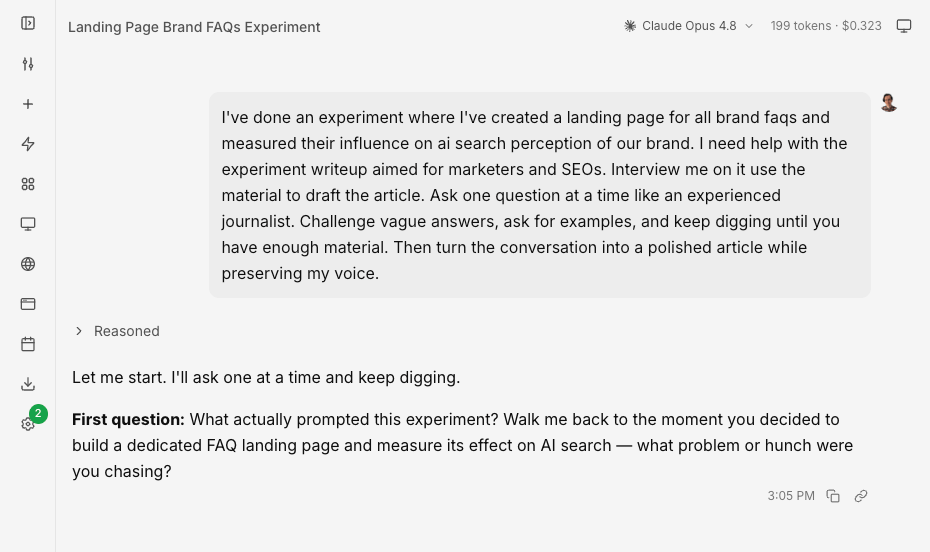
This technique was employed in drafting an SEO experiment on whether structured FAQs could improve AI assistant information retrieval. The AI’s questioning process helped the author escape the curse of knowledge, leading to a more clearly explained and ultimately better article.
4. Leveraging Existing Knowledge Bases for New Content
Many common questions do not require entirely new answers but rather a re-presentation of existing knowledge. AI can be directed to analyze a company’s source-of-truth documents, identify relevant passages, eliminate redundancies, and assemble a draft grounded in established information. This approach saves time and ensures consistency by drawing from a curated repository of knowledge.
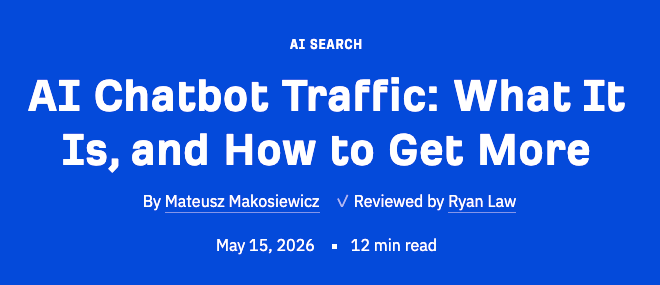
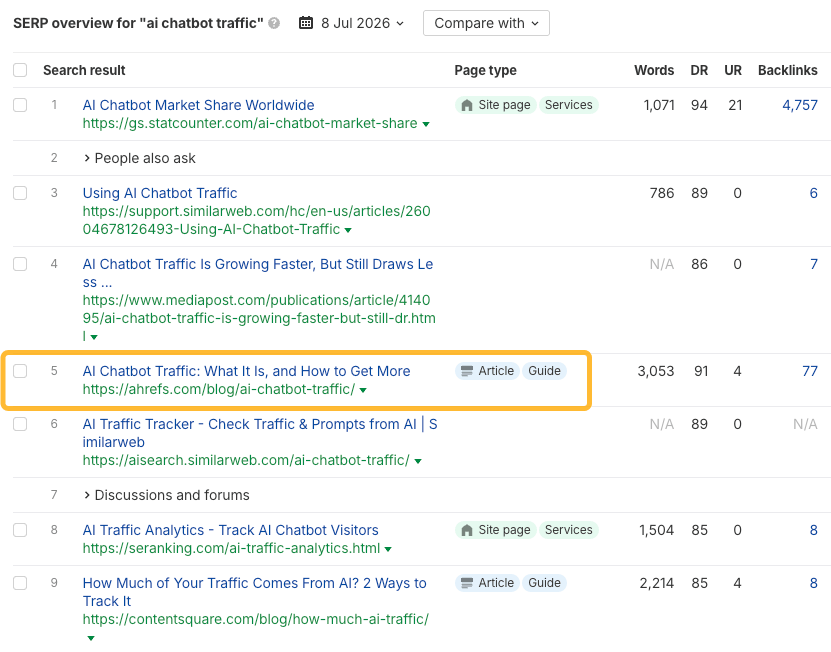
A significant portion of one article, for instance, was generated by guiding AI to extract and synthesize information from dozens of existing blog posts about AI chatbot traffic. This recycled content not only provided a comprehensive overview but also managed to introduce a new search intent into the top search results, demonstrating the power of repurposing existing knowledge. The effectiveness of this method relies on having a well-organized "source of truth" repository, where internal pages are consistently added and distilled for easy retrieval.
5. Data-Driven Content Discovery with AI
Valuable insights often lie hidden within a company’s data, such as product usage, customer behavior, or campaign performance. AI can be instrumental in uncovering these stories by analyzing datasets, identifying patterns, outliers, and correlations. The AI is fed the data and tasked with investigating, prompting it to look for surprising trends or raise questions worth exploring. The resulting article is then built around the emergent insights.

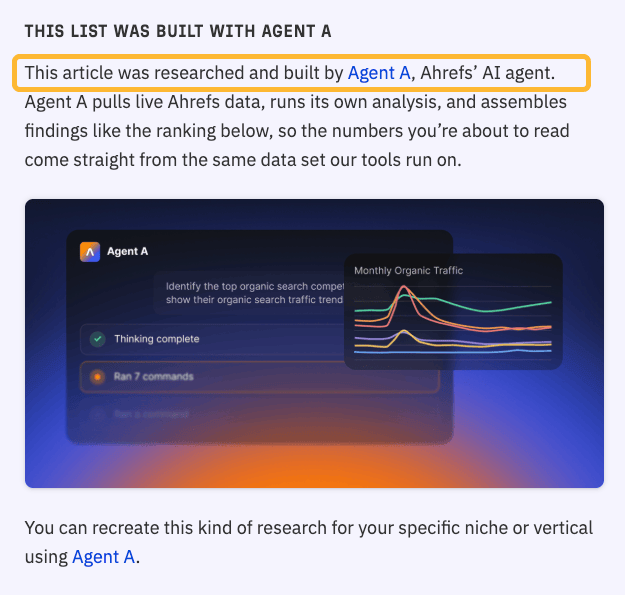
Tools like Letaido have been crucial in this process, enabling access to extensive data endpoints, autonomous operation, and native integrations like WordPress for direct publishing. The AI handles data connection, API calls, visualization generation, and even parts of the writing. Custom Letaido apps can automate the updating of data-driven articles, refreshing numbers and generating updated drafts to maintain currency.
6. Expanding Creative Horizons with AI Brainstorming
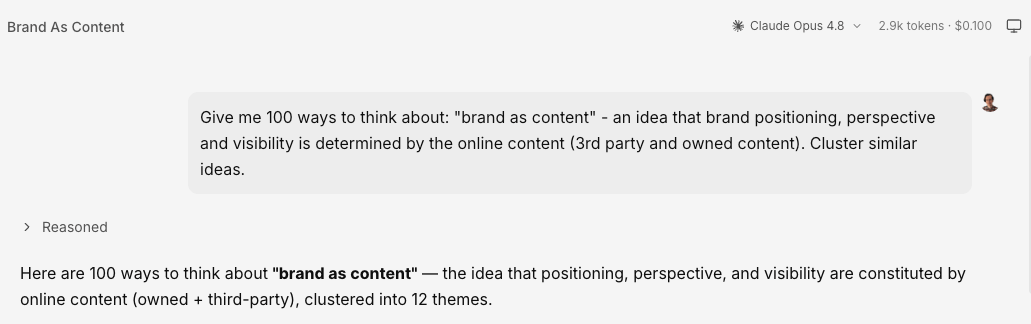
AI can significantly broaden the scope of brainstorming by generating a vast number of potential angles for a given topic. Just as an AI model once solved a complex geometry problem by exploring an approach humans had overlooked, AI can surface unconventional ideas by avoiding human biases and impatience. Users can prompt AI for a large number of ideas (e.g., "100 ways to think about this"), then cluster and expand upon the most promising ones. This process helps uncover angles that might otherwise remain unexplored.
An example involved exploring the concept of "brand is content" in AI SEO. By generating 100 angles, the AI surfaced several new perspectives that had not been previously considered, demonstrating its capacity to augment human creativity. This method highlights how AI can serve as a powerful brainstorming partner, augmenting rather than replacing the creative process.

7. Structuring Arguments with Mental Models
AI’s adaptability allows it to adopt specific thinking frameworks, or mental models, to construct arguments. Instead of generating content from scratch, users can provide AI with a proven thinking framework, such as Jobs to Be Done, the Theory of Constraints, or Porter’s Five Forces. This provides the AI with a clear structure, challenges weak assumptions, and leads to articles that explain, diagnose, or argue rather than simply summarize.
Using the Theory of Constraints Logical Thinking Process in Letaido with Opus 4.8, for instance, resulted in a detailed report with a clearly laid-out reasoning process. The AI challenged its own conclusions, questioned assumptions, and synthesized these insights into the final draft, demonstrating its ability to organize complex thinking. While not directly publishable, this process significantly advances the initial stages of content creation and aids in organizing human thought.
8. Gated Pipelines for Repeatable Processes
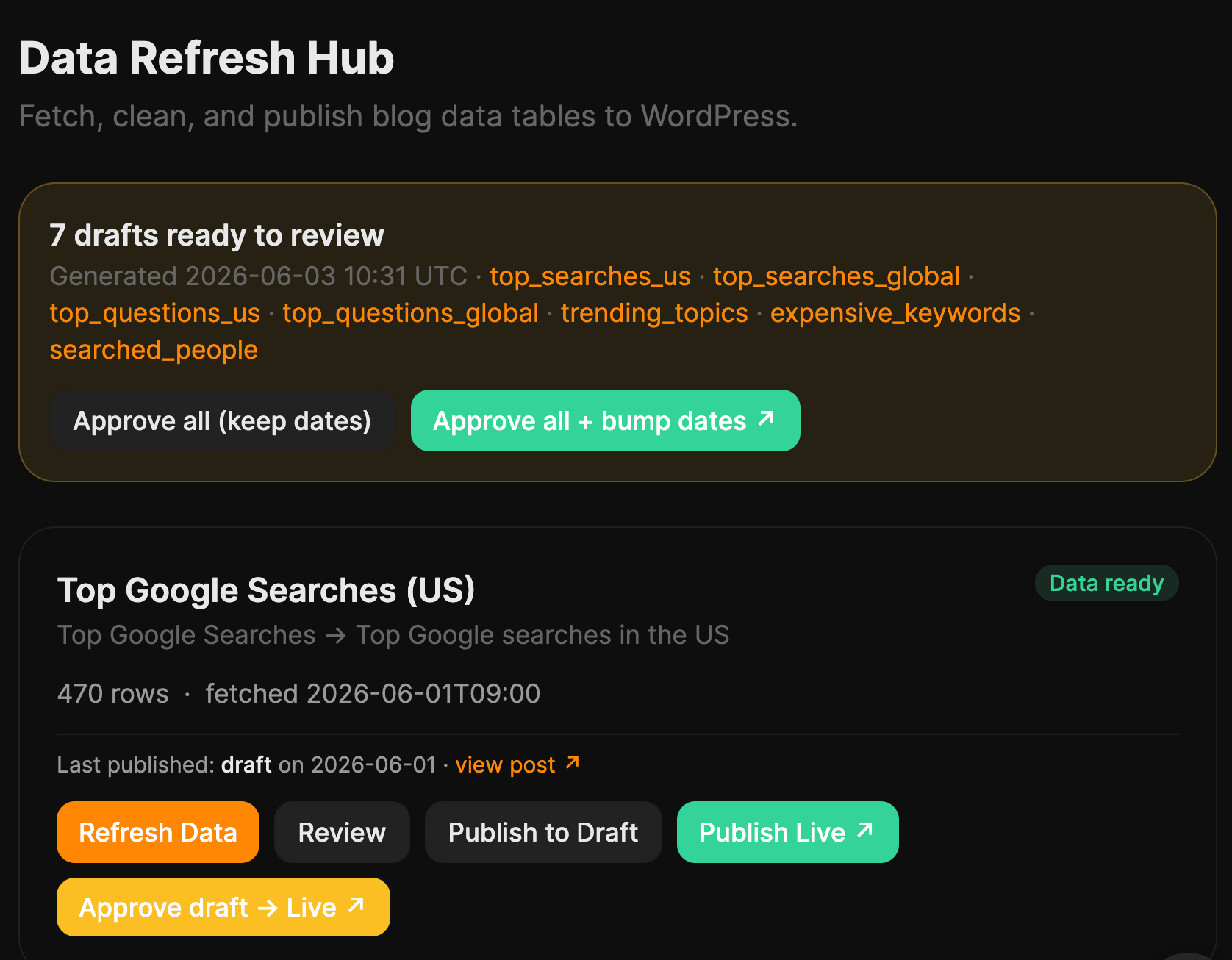
For content requiring consistent output, such as release notes or recurring roundups, a "gated pipeline" approach is effective. Instead of a single, large prompt, the process is broken down into a series of AI-driven stages, each with a human approval checkpoint. This includes research, source identification, briefing, outlining, drafting, verification, and formatting. AI handles the intermediate stages, while human review at each gate ensures quality control and catches errors early, preventing them from compounding.
Ryan Law developed an app using Letaido that automates this process. Given a topic and source links, the app researches, briefs, outlines, drafts, fact-checks, and presents the content at key review stages, ensuring consistent and high-quality output.
9. Content Prioritization Based on Customer Support Insights
Customer conversations, such as support tickets and chat logs, are a rich source of content ideas, reflecting real customer questions in their own language. AI can analyze these conversations at scale, group similar queries, compare them against existing content to avoid duplication, and identify gaps in the content library. This ensures that documentation and articles address the most frequently asked questions and emerging customer needs.

Using Fin (Intercom) with Letaido, untapped topics were identified, such as user difficulties with internal link data and issues fetching data with Google Data Studio. AI was able to generate potential answers to these questions, highlighting its utility in identifying and addressing content gaps based on real-world customer interactions. It is advised not to ask AI for immediate interpretations of large datasets, but rather to first have it present the data and explain its observations.
10. Automated Content Maintenance for Product Documentation and Marketing

Documentation and product marketing content quickly become outdated with product updates. AI can automate the process of keeping this content current by monitoring specified pages and sources for changes. When updates are detected, AI can propose edits or automatically update content in the CMS, ensuring accuracy for both SEO and user experience.
A system built by Kamila Olexa uses Claude Code and Firehose (a real-time web data streaming API) to continuously monitor changes on the web, such as competitor pricing pages. This workflow automates content updates, with a human approval step integrated for review and sign-off before changes are finalized.

Conclusion: Embracing AI as a Creative Collaborator
The initial hype surrounding AI in content creation often focused on complete automation, leading to the perception of low-quality output. However, by treating AI as a sophisticated tool for creative partnership, content creators can achieve enhanced quality and a more enjoyable process. The key lies in active human involvement, where contributions and oversight lead to superior outcomes. This approach represents a crucial course correction in how AI is integrated into content strategy, transforming it from a potential replacement into a powerful enhancer of human creativity and productivity.