 11
 1
 2
 3
Ahrefs has announced a suite of five significant updates designed to empower users with more sophisticated tools for website analysis and AI content optimization. The latest enhancements span across its core products, including Site Audit, Site Explorer, Keywords Explorer, Bot Analytics, and its API, introducing new functionalities that address the evolving digital landscape, particularly the rise of artificial intelligence in content consumption and search.
Site Audit Introduces AI Discoverability Category
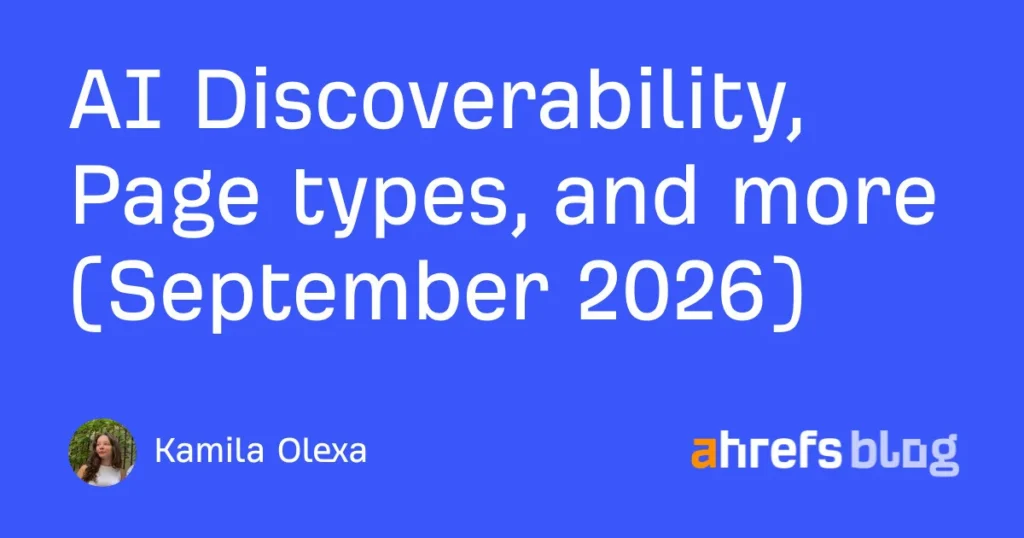
A pivotal development is the introduction of a new "AI Discoverability" issue category within Ahrefs’ Site Audit tool. This feature is engineered to assess the accessibility of web pages for artificial intelligence crawlers, such as those powering ChatGPT and Claude. The core function of this new category is to determine whether AI bots can effectively reach, read, and subsequently cite content from a website. If a page is not discoverable by these AI crawlers, its potential to be featured in AI-generated answers is significantly diminished, regardless of the quality of the content itself.
While the initial release focuses on core discoverability checks, Ahrefs has outlined an ambitious roadmap for future enhancements to this feature. These planned additions include an "AI Discoverability Score widget," a dedicated report offering in-depth insights, structured data recommendations to improve AI interpretation, a "stale content detection" mechanism, and integrations with other Ahrefs tools like Bot Analytics, Web Analytics, and Brand Radar. These future developments aim to provide a comprehensive understanding of a site’s AI readiness and offer actionable steps for improvement.
Site Explorer Enhances Organic Traffic Analysis with Page Type Widget
In Site Explorer, a new "Organic pages by type" widget has been integrated into the Overview section. This enhancement moves beyond simply reporting the number of pages on a site to breaking down which specific page types are driving organic traffic. Marketers and SEO professionals can now gain a quick, at-a-glance understanding of a competitor’s traffic sources, discerning whether their success stems from blog posts, dedicated tools, landing pages, or other content formats.
The widget provides a hierarchical view, allowing users to expand top-level page types for deeper analysis. Furthermore, clicking on a specific page type directly links to the "Top pages" report filtered for those particular content formats, streamlining the process of in-depth competitor analysis and content strategy development. This granular insight allows for more strategic content planning and optimization by identifying high-performing page archetypes.
Keywords Explorer Features Semantic Filters for Enhanced Keyword Research
Keywords Explorer has been upgraded with the introduction of "Semantic filters." This innovative filter moves beyond traditional keyword matching based on exact text, instead focusing on matching keywords by their underlying meaning. This is particularly beneficial when researching brands or topics that contain common words with multiple interpretations. For instance, when researching a brand like "On," which also relates to the common English word, a standard search might yield thousands of irrelevant keywords. By applying "running shoes" as a semantic filter, users can refine their results to pinpoint keywords directly associated with the brand, such as "On cloud running shoes." This functionality significantly reduces manual filtering efforts and ensures that keyword lists are more focused and relevant from the outset, improving the efficiency of keyword research and campaign targeting.
Bot Analytics Expands Log Source Integrations
Bot Analytics has broadened its capabilities with new direct log source integrations. The platform now seamlessly connects with Vercel, Amazon CloudFront, and Fastly. Previously, obtaining log data from these popular platforms required a more complex setup process. With these new integrations, users can now link their accounts directly through "Project settings" under the "Bot Analytics" section. This streamlined process enables users to immediately begin monitoring how search engines and AI crawlers interact with their websites, providing valuable insights into bot traffic patterns and potential crawlability issues. This expansion is crucial for understanding how automated systems perceive and navigate a website, which is increasingly important in the context of AI-driven content discovery.
API and MCP Double Unit Limits and Introduce New Endpoints
In response to growing demand for programmatic access to Ahrefs data, the API and Managed Content Platform (MCP) have seen their unit limits doubled across all plans. This adjustment addresses a bottleneck that was emerging as more users integrated Ahrefs data into AI assistants and automated workflows. The increased limits are intended to provide greater flexibility and capacity for data extraction, supporting a wider range of applications and larger-scale data analysis projects.
Alongside the increased unit limits, several new APIv3 endpoints have been released. These new endpoints offer expanded functionality and access to more granular data points, further enhancing the utility of the Ahrefs API for developers and data scientists. Specific details regarding these new endpoints are available in the official Ahrefs changelog.
These five updates collectively represent a significant investment by Ahrefs in enhancing its product suite to meet the demands of modern digital marketing and SEO. The focus on AI discoverability, more refined analytical tools, and improved programmatic access underscores Ahrefs’ commitment to providing cutting-edge solutions for its users in an increasingly complex and AI-influenced online environment. Users are encouraged to consult the Ahrefs blog and changelog for further details on these updates and to submit feature requests via their Canny board.