 11
11
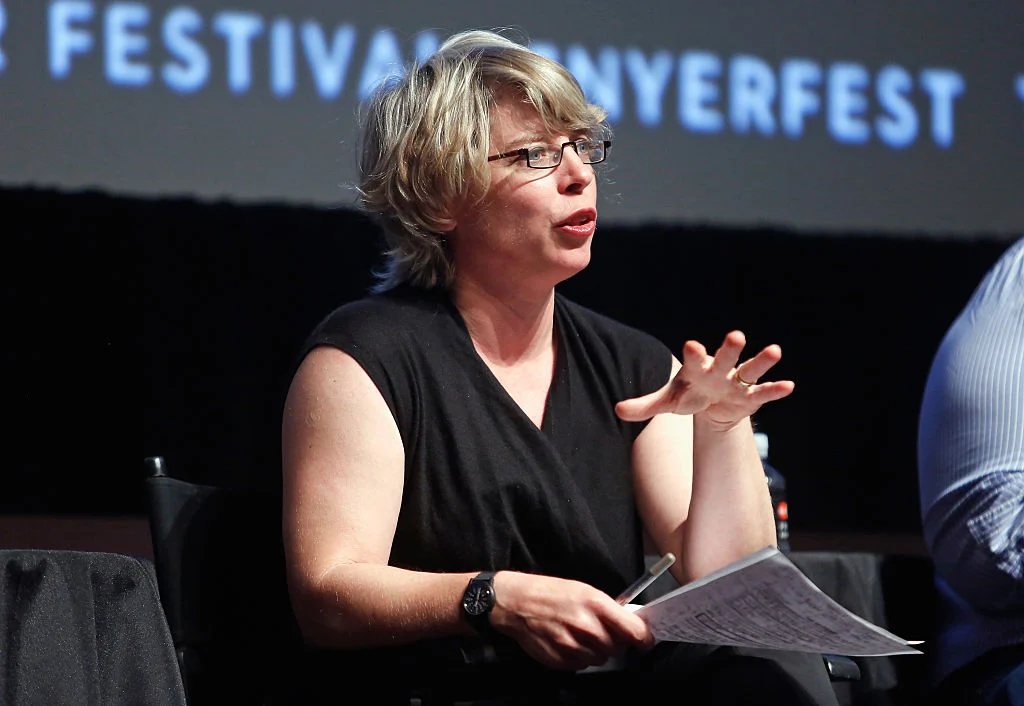
In her upcoming book, "The Rise and Fall of the Artificial State," Harvard historian and New Yorker staff writer Jill Lepore issues a stark warning: tech companies are increasingly replacing the essential functions of democratic government. This profound shift, she argues, signifies "a return to tyranny and mystification in the form of rule by algorithms, corporations, machines." Lepore, who recently won a Pulitzer Prize for her history of the U.S. Constitution, shared these insights during a recent interview on TechCrunch’s Equity podcast, where she discussed the historical development of "the idea that we should live under an artificial state or government by machines."
Lepore clarified that her critique is not directed at technology itself. "I’m not anti-technologist," she insisted, emphasizing her marriage to a computer scientist and her enthusiasm for ongoing intellectual revolutions. Her concern, she explained, lies squarely with "the ways in which private corporations have increasingly taken on the functions of the state." This transformation, she notes, has occurred without public consent, evolving from a "gradual, largely accidental" process driven by interests in efficiency, speed, and cost-effectiveness, into a more "purposeful and deliberate" usurpation of the nation-state’s role over the last two to two-and-a-half decades. She points to prominent tech entrepreneurs and futurists from the 1990s, often with libertarian leanings, who openly expressed desires to "move beyond the era of the nation-state," viewing the internet’s advancements as a means to achieve this goal.
The historian delved into the concept of the "artificial state," defining it as a type of governance that is supplanting the liberal democratic nation-state globally. It exists both as a tangible construct and as an abstract idea. Her book meticulously traces the genesis of this concept—the belief that humanity should be governed by machines—and simultaneously tracks the pervasive notion, often explored in science fiction, that such an artificial state is ultimately destined for failure.
Lepore highlighted that the current trajectory of Silicon Valley’s "charismatic or not-so-charismatic leaders," particularly figures like Elon Musk, appears to be drawing inspiration from "misread pulp science fiction and comic books." She finds it ironic, stating, "what’s funny about Musk is, the stuff he likes actually completely defeats and defies all of his political beliefs."
Examining whether technology can be separated from the philosophies and corporate structures driving it, Lepore, as a political and literary historian, asserts that alternative paths were indeed possible. She points to the fervent discussions in the 1990s about the internet’s future, suggesting that the resulting 1996 Telecommunications Act, influenced by figures like Newt Gingrich and his "Contract with America," was a "mistake" rather than a sinister act, yet it proved difficult to revisit.
A pivotal moment in this ideological journey, according to Lepore, was Apple’s iconic 1984 Super Bowl advertisement for the Macintosh. This ad, with its Orwellian "1984" theme, positioned the personal computer as a tool of personal liberation, dismantling the totalitarianism represented by giant IBM mainframes. While acknowledging the Macintosh as a "cool tool" that was "really fun" and "exciting," Lepore doubts that anyone at Apple truly believed it would improve "capacity for citizenship or ability to function better in civil society." She sees this "clever advertising" as having evolved into a "delusional fantasy" among contemporary tech leaders.
She cites recent examples of tech companies adopting governmental trappings: Facebook establishing an "Oversight Board" (dubbed a "Supreme Court" by some critics) after the 2016 election, Anthropic hiring a moral philosopher to "write a constitution" for its AI Claude, and Sam Altman openly suggesting an "AI president" on Joe Rogan’s podcast. These instances, she argues, showcase how "these corporations, these tech companies from Silicon Valley, and especially their charismatic or not-so-charismatic leaders, are just taking on the trappings of the nation-state and the functions of democracy." She notes that these leaders often lack "a sophisticated political philosophy," instead manifesting a "cartoon version" of the 1984 Macintosh ad, yet with immense power and self-seriousness.
Lepore also debunked the "Twitter revolution" narrative. Initially, Twitter was launched as "kind of a goof," not as a platform to "save humanity." It was politicians and political campaigns who, by leveraging Twitter for amplified messaging and broader reach, "convinced Twitter… that it’s almost like Twitter is a town hall." This culminated in the 2012 "Twitter Politics and Elections Handbook" and the widespread "town hall in your pocket" marketing. Lepore calls this "bananas," highlighting that only a small fraction of Americans had accounts, most rarely used them, and over 90% of political tweets came from fewer than 10% of users. This, she concludes, made Twitter "a distortion machine," providing politicians with "really bad information" about the electorate. While Twitter’s aim was business expansion, its "unintended consequences" led to it becoming "comfortable" with its perceived role in the artificial state.
Her book’s unique structure divides its focus, with the first half exploring the history of technology and ideas, and the second half delving into science fiction. Lepore explains her interest in how often science fiction stories anticipate the artificial state. She identifies a literary tradition she calls "the parable of the artificial state," where increasingly sophisticated machines assume human functions, including governance, eventually ruling or even destroying humanity. These stories, dating back to the 1850s, reflect early anxieties about industrialism.
Lepore critiques the modern belief that "technological change equals progress," and that it is the "only kind of progress." This notion, she argues, is a 19th-century intellectual invention, partly fueled by Darwin’s theory of evolution. This "weird marriage" between evolutionary and technological progress overshadowed earlier concepts of progress, such as moral improvement or increased freedom. This confluence led to anxieties, expressed in science fiction, about machines evolving to surpass human capabilities in every domain.
A prime example is E.M. Forster’s 1909 story, "The Machine Stops," which imagines a future where humans live in isolated cells, their every need met by an all-encompassing machine, communicating via screens, and fearing the natural world. The story depicts humans as slaves to a machine that eventually ceases to function, illustrating humanity’s loss of capacity. Lepore notes that the story feels remarkably contemporary, "less science fiction-y today than it is the diary of a very unhappy YouTuber."
Connecting this to present-day leaders, Lepore suggests that figures like Elon Musk and Sam Altman are "very bad science fiction readers," often misinterpreting cautionary tales as "manuals for the future." While acknowledging a "technocratic libertarian thread" in some science fiction (like Robert Heinlein, admired by Jeff Bezos), she points out that Musk’s specific literary preferences often contradict his political beliefs.
Regarding the artificial state’s inevitable failure, a theme prevalent in the science fiction she discusses, Lepore explains its inherent contradiction. The artificial state, in its relentless construction and reliance on technology, will inevitably destroy the natural world. Yet, it critically depends on the resources of that very natural world to function. "A habitable planet—habitable for humans—cannot survive the full construction and reliance on the devices of the artificial state," she concludes.
When asked about the defeat of the artificial state, Lepore, as a historian, offers no prescriptive "playbook," but emphasizes the necessity of democratic functioning. Decisions must be made "in consultation with the governed," and many current decisions by corporations are "not popular." She cites local data center crises across the U.S., where communities, often struggling with housing, healthcare, and jobs, express strong opposition to projects that their representatives support, indicating a failure of true representation. The decline of local journalism, a consequence of social media, further exacerbates this by limiting public information and oversight. These misalignments, she believes, will eventually incur "political costs" at elections, provided "enough of democratic functioning has to be intact for people to actually be able to respond to malfeasance."
Lepore also revisited her 2014 New Yorker piece that critiqued Clayton Christensen’s theory of "disruptive innovation"—a concept closely associated with TechCrunch. She stands by her earlier assessment that it is "a theory about why businesses fail. It’s not more than that. It doesn’t explain change. It’s not a law of nature." She argued then, and reiterates now, that Christensen’s use of historical evidence and his understanding of change were "completely unacceptable by any proper understanding of historical method." She expressed a desire for more engagement from academic historians in analyzing such "theories of history."
Concluding her thoughts, Lepore advocated for greater dialogue between historians, technologists, and entrepreneurs. She believes that learning from history—for example, how the automobile revolutionized law, infrastructure, and social norms, leading to "guardrails" like driver’s licenses and traffic laws—is crucial for understanding the potential consequences of new technologies and shaping their integration into society responsibly.