 11

In a significant advancement for the software development lifecycle (SDLC), Factory and Atlassian have announced a strategic integration that allows Factory’s Droid coding agents to be invoked directly within Jira work items. This collaboration marks a shift in how engineering teams manage the transition from project planning to technical execution, enabling the Droid agent to pick up tasks, perform engineering work in a secure environment, and document results back into the Jira ecosystem. This integration represents the first instance where development teams can hand off a Jira issue to an autonomous coding agent while maintaining the flexibility to choose their preferred AI model and ensuring that all operations remain within a secure, organization-controlled environment.
The partnership addresses a persistent bottleneck in modern software engineering: the "context gap" between project management tools and the actual coding environment. While Jira has long served as the industry-standard system of record for planning and tracking work, the actual execution of that work typically occurs in a separate, disconnected layer. Previously, when developers sought to use AI agents to assist with tasks, they were forced to manually transfer context from Jira tickets into the agent’s interface. This manual re-feeding of information was not only time-consuming but also prone to errors, and because the agents operated on external surfaces, the progress and final outputs often failed to sync back to the original Jira issue, leading to fragmented documentation and reduced visibility for stakeholders.
To bridge this gap, the new integration utilizes Atlassian Rovo, an AI-powered intelligence layer designed to help teams find, learn, and act on information across their internal tools. By accessing Droid through Rovo Chat within a Jira work item, engineers can trigger a workflow where the agent automatically ingests the requirements, constraints, and historical context of a specific ticket. The Droid then executes the necessary engineering tasks—such as code generation, refactoring, or bug fixing—within a designated compute environment. Once the task is complete, the results, including code snippets and status updates, are written back to the Jira ticket, ensuring that the project board remains the central control point for both planning and execution.
The genesis of this integration was driven by the specific requirements of a large-scale enterprise customer operating within a highly regulated industry. This customer, seeking to build a "software factory" within a strictly controlled and audited environment, required a solution that combined the project management capabilities of Atlassian with the autonomous execution power of Factory’s Droids. This demand brought Factory and Atlassian together to develop the Forge Remote Agent for Jira. By building on Atlassian’s Forge platform—a cloud app development environment—the teams were able to create a secure bridge that allows external AI agents to interact with Jira data without compromising security protocols.
A critical component of this integration is its focus on security and enterprise-grade control. Unlike many AI tools that require data to be sent to external servers or utilize a single, fixed model, Factory’s architecture is model-independent. This means organizations can select the AI model that best fits their specific needs, whether it be a proprietary model like GPT-4 or Claude, or an open-source alternative. Furthermore, the Droid agent can be deployed across a variety of environments, including Factory-managed compute, a customer’s own cloud infrastructure, or even fully air-gapped environments. This level of flexibility is essential for enterprises in sectors such as finance, healthcare, and defense, where data sovereignty and regulatory compliance are paramount.
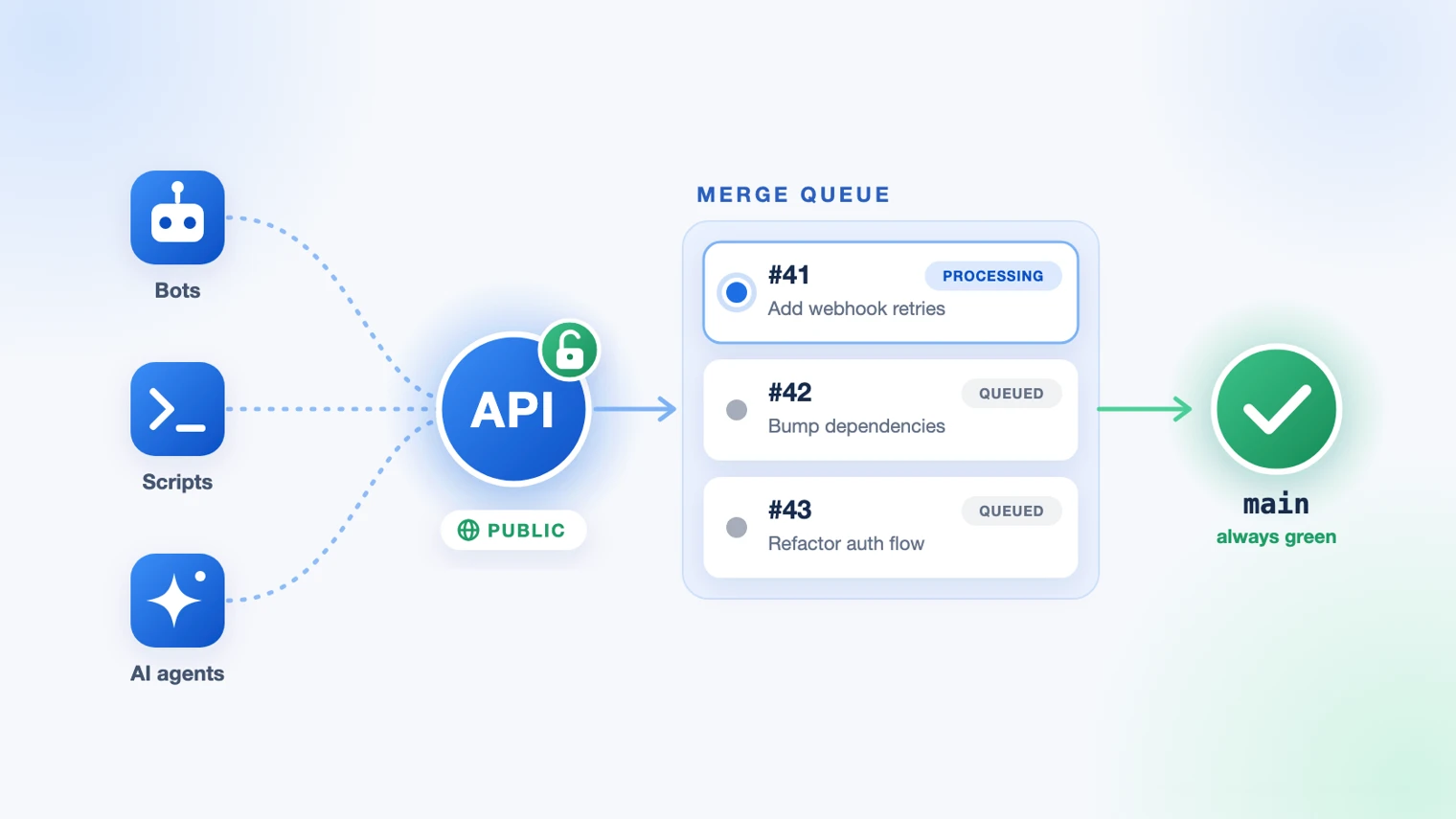
The technical framework supporting this integration is the Forge Remote Agent, which utilizes the Agent-to-Agent (A2A) protocol. This protocol facilitates seamless communication between different AI entities and platforms, allowing the Droid to function as a natural extension of the Jira interface. From the perspective of a developer, the workflow is streamlined: upon encountering a Jira issue, the engineer invokes the Droid via Rovo Chat. During the initial setup, the user configures the Droid by selecting the appropriate compute environment, model settings, and service accounts. These configurations can then be saved as defaults for future tasks, significantly reducing the overhead for subsequent operations.
Once invoked, the Droid follows a structured execution path. It begins by analyzing the Jira issue to understand the scope of work. It then accesses the relevant codebase, applies the necessary changes, runs tests to verify the integrity of the work, and finally updates the Jira ticket with the outcome. This autonomous cycle allows developers to focus on higher-level architectural decisions and complex problem-solving, while the Droid handles repetitive or well-defined engineering tasks.
The move toward autonomous agents in the SDLC reflects a broader trend in the technology industry. While the first wave of AI in software development focused on "copilots" that provided real-time code suggestions, the current shift is toward "agents" capable of independent action and multi-step reasoning. However, as Factory and Atlassian have noted, simply using AI is not the same as orchestrating work with it. The value of this integration lies in its ability to preserve the "system of record." By ensuring that every action taken by an AI agent is logged and reflected in Jira, organizations can maintain a clear audit trail and ensure that the state of the project is always accurately represented, regardless of whether the work was performed by a human or an agent.
The availability of the Forge Remote Agent is currently targeted at Jira Cloud customers who have Rovo enabled. The setup process is designed to be straightforward, with each Factory organization linking to a single Jira site. This one-to-one mapping ensures clear data boundaries and simplified management for IT administrators.
The collaboration also highlights the importance of the "Software Factory" concept, a vision where software production is treated with the same rigor, automation, and consistency as modern manufacturing. In this model, Droids serve as the automated machinery that powers the assembly line, while Jira acts as the management layer that directs the flow of work. By integrating these two layers, Factory and Atlassian are providing a blueprint for how large-scale organizations can scale their engineering output without a linear increase in manual management overhead.
Industry analysts suggest that integrations of this nature are essential for the long-term adoption of AI in the enterprise. For AI to move beyond experimental use cases and into core production workflows, it must be embedded into the tools that teams already use. By placing the coding agent directly inside Jira, Atlassian and Factory have lowered the barrier to entry for autonomous engineering, making it a standard part of the developer’s toolkit rather than an external add-on.
In summary, the integration of Factory’s Droid into Jira via Rovo Chat represents a milestone in the evolution of AI-driven development. It solves the problem of manual context switching, provides a secure path for autonomous execution in regulated environments, and reinforces the role of Jira as the central hub for engineering operations. As teams continue to seek ways to increase velocity and maintain high standards of code quality, the ability to delegate work directly from a project management ticket to a specialized AI agent is likely to become a foundational capability in the modern software factory.
The Forge Remote Agent is now available for configuration, allowing Jira Cloud customers to begin automating their engineering tasks while maintaining full control over their models and infrastructure. This development underscores the commitment of both Factory and Atlassian to providing open, flexible, and secure AI solutions that meet the complex needs of the global enterprise.