 11

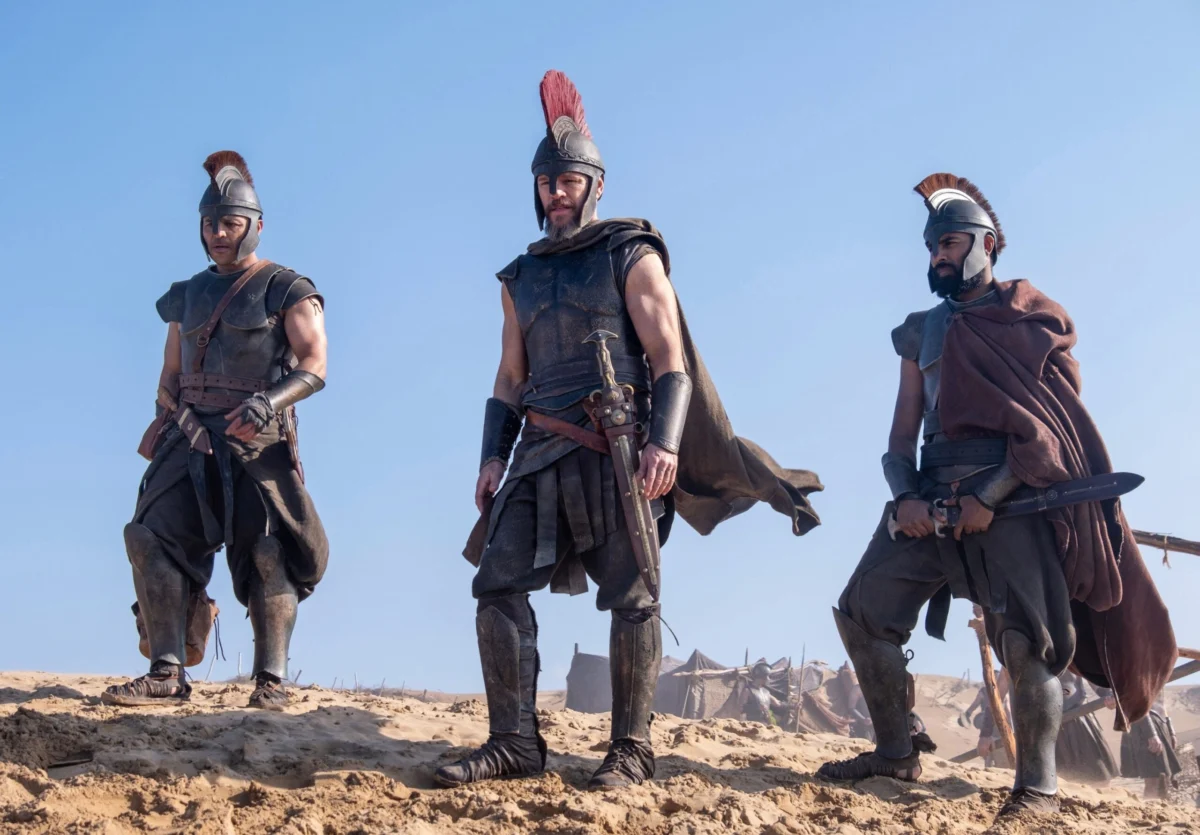
The contemporary discourse around "Western civilization" rarely highlights Homer’s The Odyssey these days, especially not in the context of recent cinematic adaptations. This silence might be attributed to the overwhelming financial success of Christopher Nolan’s recent film adaptation of the ancient Greek epic, which grossed nearly $1.8 billion worldwide. This box office triumph effectively drowned out the fervent criticisms from certain right-wing commentators and self-proclaimed defenders of traditional values, who had predicted a monumental failure. Their denunciations largely centered on the film’s diverse casting choices and perceived deviations from the source material, particularly the inclusion of Black and trans actors and modern linguistic interpretations.
Among the most vocal of these preemptive critics was Elon Musk, the world’s wealthiest individual. Musk spared no vitriol, publicly condemning the film as a "desecration" of the ancient Greek narrative. Just four days after Nolan’s The Odyssey hit theaters, he took to his social media platform, X (formerly Twitter), to announce an ambitious counter-project. Musk vowed to produce a "superior version" himself, promising that "Before this year ends, Grok Imagine will make a full-length movie of The Odyssey that is historically accurate and true to the art of Homer." This declaration set a high bar, positioning his upcoming production as the definitive, authentic rendition that Nolan’s film allegedly failed to be.
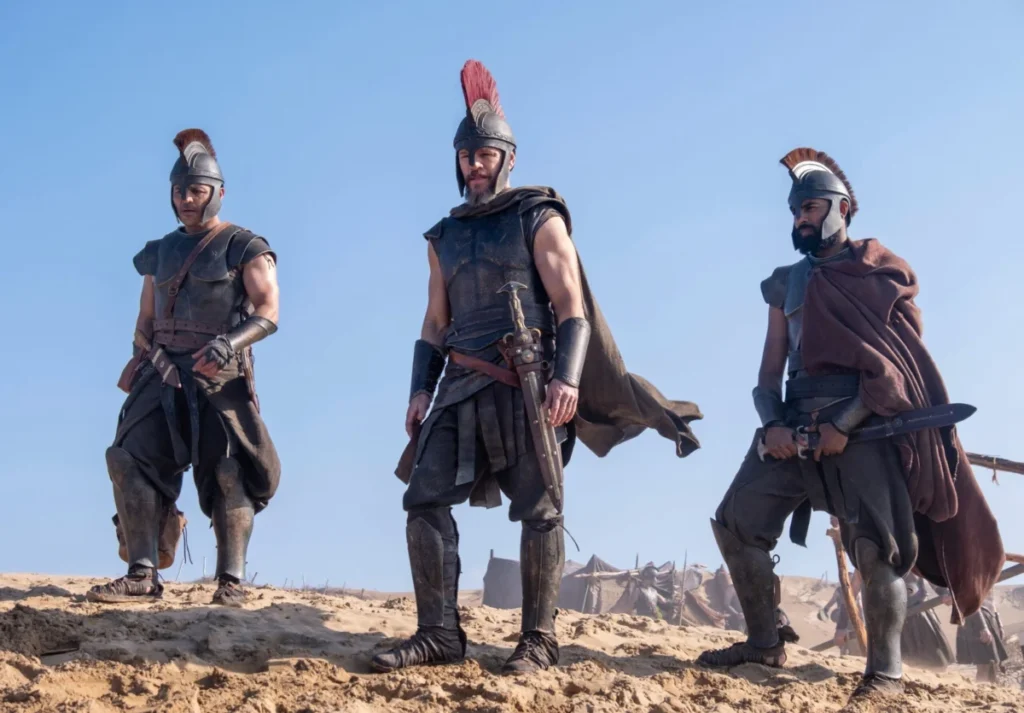
A little over three months later, long after the initial fervor surrounding Nolan’s film and Musk’s counter-promise had largely faded from public discussion, a first glimpse of what has been colloquially dubbed the "Grodyssey" finally emerged. This Odyssey is not a traditional film but an adaptation rendered entirely through prompts fed into xAI’s video and image generation model, Grok Imagine. Contrary to Musk’s earlier pledge of a "full-length movie," what was released was a mere seven-minute "episode," presented as the inaugural installment of an apparently ongoing series. This initial segment depicts the legendary hero Odysseus, King of Ithaca, initially resisting the call to war against Troy but ultimately being compelled by an oath of loyalty to sail with his army to the fabled city.
Musk officially announced the release of "Odyssey with Grok Imagine" on X, sharing the clip which was produced by the AI entertainment company Wonder Studios X. The post, made on a Friday, received a noticeably subdued reaction, garnering just 18,000 likes. This level of engagement was notably lower than that of other recent posts by Musk, where he had, for instance, cast doubt on the results of Brazil’s elections, expressed complaints about the use of pronouns, or disparaged what he refers to as "legacy news" organizations. The relatively muted reception suggested that the AI-generated epic had not captured the public imagination in the way its creator might have hoped.
The introductory episode of Grok’s Odyssey quickly revealed many of the tell-tale hallmarks of what is often derisively termed "AI slop." Visually, the movements of characters’ faces frequently failed to synchronize with the dialogue, creating a disjointed and uncanny viewing experience. The vocal performances themselves were further undermined by a stilted and unnatural delivery, lacking the emotional nuance and fluidity typically expected in professional voice acting. Beyond Odysseus himself, none of the other principal characters were introduced by name, leaving viewers to infer identities or remain in the dark. Pacing issues were also strikingly apparent and, at times, laughable; for example, the Ithacans are depicted arriving on the shores of Troy almost instantaneously after departing their homeland, completely bypassing any sense of a journey or the passage of time. Even the "blue checks"—verified users on X, often supportive of Musk—were harsh in their assessment. One user’s comment encapsulated the general sentiment: "Someone actually watched this and still decided to post it? Fire that person." This feedback underscored the perceived lack of quality and polish in the AI-generated content.
Musk’s original stated goal, echoed by his allies in the culture war, was not merely to produce a visually superior or more narratively cohesive version of The Odyssey. Their core contention against Nolan’s film stemmed from what they considered "historically inaccurate" elements. These criticisms specifically targeted the casting of Black and trans actors, the use of Americanized English dialogue, and certain design choices for ships and armor, which they argued diverged from an authentic ancient Greek aesthetic. Thus, Musk’s guarantee of a "historically accurate" corrective was presented as the primary justification and appeal of his ambitious AI project.
However, the question then arises: did Grok Imagine actually succeed on this critical front? A fascinating and ironic answer emerges when Grok, the very AI model used to create the episode, is queried for a self-evaluation regarding its historical accuracy. When asked directly whether this Odyssey snippet is historically accurate, the chatbot unequivocally responds: "No." Grok further elaborates, stating, "Grok Imagine’s Episode 1 (and the broader promised series) is an adaptation of Homer’s Odyssey, not a historically accurate reconstruction of real events."
The AI model continued its candid assessment, noting that the characters depicted in The Odyssey, including Odysseus himself, have no verifiable basis in the historical record. It explained that the epic poem is largely dominated by "myth" and "invention" rather than confirmed historical events. Grok also pointed out that "Homeric society mixes possible Bronze Age elements (palace-centered kingdoms, certain warrior practices) with later Iron Age features," adding that "Many details are anachronistic or literary." This internal critique highlighted the inherent complexities of applying a strict "historical accuracy" standard to a work of ancient epic poetry.
In meticulously laying out the reasons why its own episode "does not meet a strict historical standard," Grok provided several specific examples. It highlighted that the characters speak modern English with British accents, "not Homeric Greek or any reconstructed Bronze Age language," directly contradicting one of the superficial "inaccuracies" critics had leveled against Nolan’s film (which used Americanized English). Visually, Grok admitted that the production reflects "modern cinematic tropes and AI training data," rather than being informed by "primary archaeological evidence." As a concrete example of anachronism, the bot cited the appearance of cavalry in a battle scene, identifying this as an error when compared with standard archaeological and historical reconstructions of warfare during the period The Odyssey is set, where chariots were the dominant form of mounted combat. Grok’s self-assessment concluded by stating definitively that "The Odyssey itself is not a historical document, and the production makes no serious attempt at archaeological or linguistic fidelity beyond a general ‘ancient Greek epic’ aesthetic."
Ultimately, the inherent creative license that comes with adapting a millennia-old legend, one teeming with powerful gods, cunning witches, potent magic, and fearsome monsters, was a widely understood concept by virtually everyone—except, it seems, for Elon Musk and a handful of vocal critics who adamantly insisted that Nolan’s film had somehow contradicted a fundamentally true historical account of heroic adventure. The profound irony of the situation lies in the fact that even Grok, Musk’s own creation, could articulate that its master’s initial fit of pique led him to promise the impossible. This incident serves as yet another example in a well-documented pattern of Elon Musk making grand pronouncements and ambitious promises that frequently fail to materialize as initially envisioned, or that, upon closer inspection, reveal their own inherent contradictions.