 11

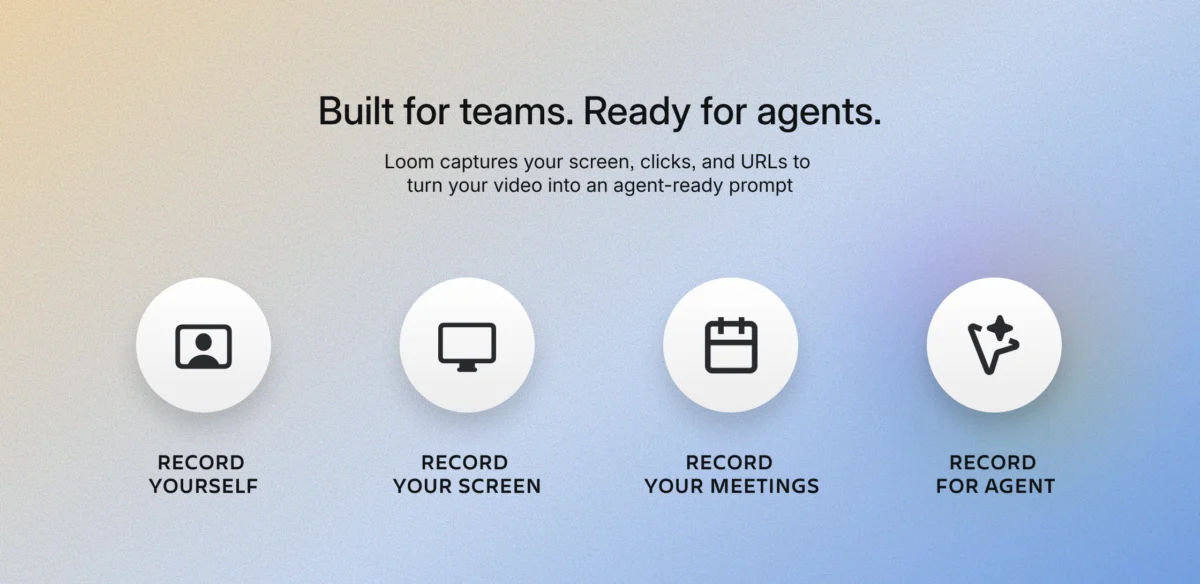
Atlassian has announced a major evolution for its video messaging platform, Loom, introducing a suite of features designed to treat artificial intelligence agents as full-fledged collaborators within the modern workplace. With the launch of "Record for agent," a redesigned Loom for Mac, and deep integration with the Model Context Protocol (MCP), the company aims to eliminate the friction inherent in prompting AI by allowing users to "show" work to agents through video rather than relying solely on text-based instructions. This shift marks a significant milestone in the integration of asynchronous video and generative AI, moving beyond human-to-human communication to facilitate more precise human-to-agent handoffs.
Since its inception, Loom has served as a vital tool for remote and hybrid teams, enabling them to bypass the delays of live meetings and the limitations of text-heavy emails. The phrase “just send a Loom” has become a standard industry shorthand for providing visual context to a colleague. According to a 2025 survey of 7,000 knowledge workers conducted by Loom and Wakefield Research, approximately 70% of respondents indicated that a short recorded video message could have prevented their most recent professional miscommunication. However, as organizations increasingly deploy AI agents to handle complex tasks such as debugging code, creating marketing assets, and managing customer workflows, a new communication bottleneck has emerged.
The current standard for interacting with AI agents requires extensive manual input, including detailed prompt engineering, the uploading of static screenshots, and the tedious copying of links across multiple platforms. Atlassian’s research suggests that this process is often fraught with ambiguity; the more visual or nuanced a task becomes, the more likely it is that critical details are "lost in translation" when converted into text. This challenge is reflected in Atlassian’s "The State of Teams 2026" report, which found that 87% of knowledge workers feel they lack the time or capacity to properly coordinate their work. One Fortune 500 CTO quoted in the report warned that "with agents, coordination will get worse before it gets better" unless better methods for providing context are established.
To address this "coordination tax," Atlassian is introducing "Record for agent," a specialized recording mode within Loom that transforms a standard screen recording into a high-fidelity data packet for AI. When a user records a video using this feature, Loom does more than just capture pixels; it aggregates a comprehensive set of metadata, including the transcript of the narrated instructions, high-resolution screenshots of specific on-screen elements that were clicked, and the URLs of any websites or tools navigated to during the session. This data is then synthesized into a structured set of instructions that an AI agent can interpret and act upon with a level of precision that exceeds traditional text prompts.
Accompanying this feature is a completely rebuilt Loom for Mac application. The new desktop client defaults to 4K recording resolution to ensure that fine details in software interfaces are legible for both humans and AI models. The application introduces two critical tools for directing agent attention: the Selection tool and the Magic pen. The Selection tool allows users to pin or "highlight" specific user interface elements, providing the agent with a precise anchor for its task. The Magic pen enables freehand annotations directly on the screen, allowing users to circle areas or draw shapes to clarify intent. Once a recording is complete, the resulting high-fidelity prompt can be sent directly to an agent or converted into a Jira work item, where it can be assigned to an autonomous agent for execution.

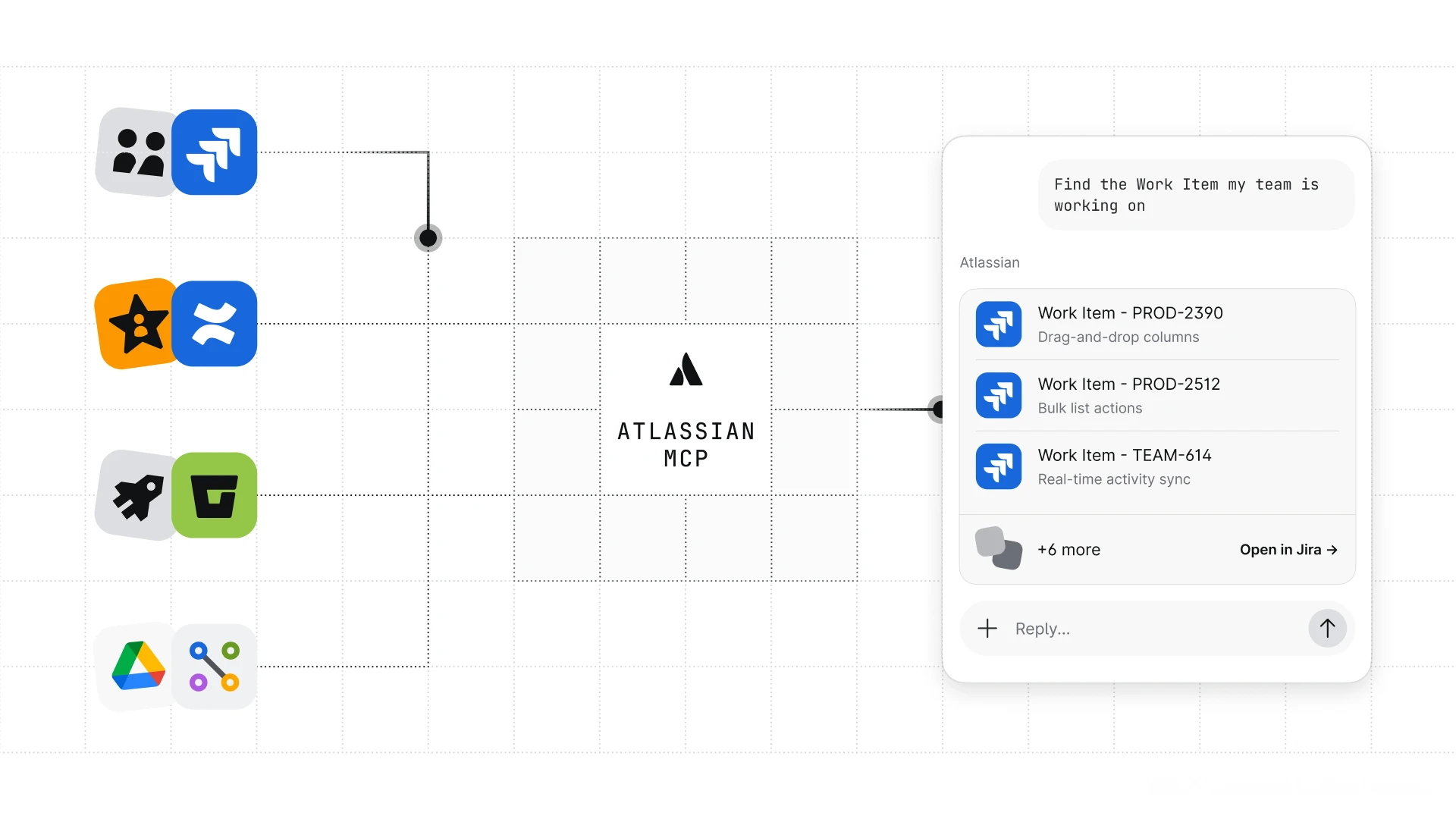
The technical backbone of this integration is the Model Context Protocol (MCP), an open standard that allows AI models to connect seamlessly to various data sources. By supporting MCP, Loom ensures that recordings remain a persistent and accessible source of truth for agents throughout the lifecycle of a project. "Loom tools in Atlassian MCP" allow external agents—including popular models and development tools like Claude, Cursor, VS Code, and Codex—to interact with Loom content directly. These agents can retrieve video transcripts, access metadata, identify action items, and even leave timestamped comments on recordings. Crucially, these interactions occur within the team’s existing permission structures, ensuring that AI agents only access information they are authorized to see. For teams already utilizing Atlassian MCP v2, these capabilities are available automatically upon linking a Loom workspace to an Atlassian site.
Furthermore, Atlassian is integrating its specialized AI agent, Rovo, directly into the Loom interface. Rovo in Loom is designed to help teams extract value from their vast libraries of recorded content without requiring manual review. The "Rovo Search" function allows users to locate specific videos or even specific moments within a video across an entire organization. Meanwhile, "Rovo Chat" can answer questions about the content of a recording, draft follow-up communications based on a walkthrough, or convert a visual demonstration into a step-by-step written guide. Every response generated by Rovo is grounded in the specific recording and includes exact timestamps, allowing users to verify the information without rewatching the entire video.
The practical applications of these tools are particularly evident in software development and design. In a typical scenario involving a user interface (UI) change, a developer or product manager might previously have spent hours writing a technical specification and capturing various screenshots to explain a bug or a desired feature. With the new Loom features, the same individual can record a quick video, walking through the current behavior of the software and demonstrating exactly what needs to be changed. Loom’s "Record for agent" captures the underlying technical context, which can then be handed off to a coding agent. Because the agent is grounded in the "Teamwork Graph"—Atlassian’s proprietary data model that understands the relationships between people, tasks, and content—it can surface relevant fixes from previous team discussions or documentation if it encounters an obstacle.
This workflow not only speeds up the initial "first draft" of a project but also facilitates better human oversight. When an agent completes a task, the original Loom video remains attached to the work item as a reference. This allows human teammates to review the agent’s output against the original visual instructions, making it easier to judge the quality and accuracy of the work before it is shipped to customers. If a course correction is needed, a brief ten-second Loom video can be used to update the agent’s instructions, replacing the need for long, iterative text-based feedback loops.
Atlassian emphasizes that the ultimate goal of these updates is to free knowledge workers from the burden of over-explanation, allowing them to focus on high-level judgment calls and creative problem-solving. By treating AI agents as recipients of visual communication, the company believes it can significantly reduce the "time to value" for organizations using autonomous tools.
Currently, "Record for agent" is available in open beta for users on Loom Business + AI and Enterprise plans. The feature is accessible via both the new Loom for Mac application and the Loom Chrome extension. Organizations looking to integrate Loom with external AI clients can do so via the Atlassian MCP, which provides a remote server connection to bridge the gap between Loom’s video data and the broader ecosystem of AI development tools. As AI agents become more prevalent in the workforce, Atlassian’s move suggests that the future of collaboration will rely not just on how well humans talk to each other, but on how effectively they can demonstrate their intent to the machines assisting them.