 11

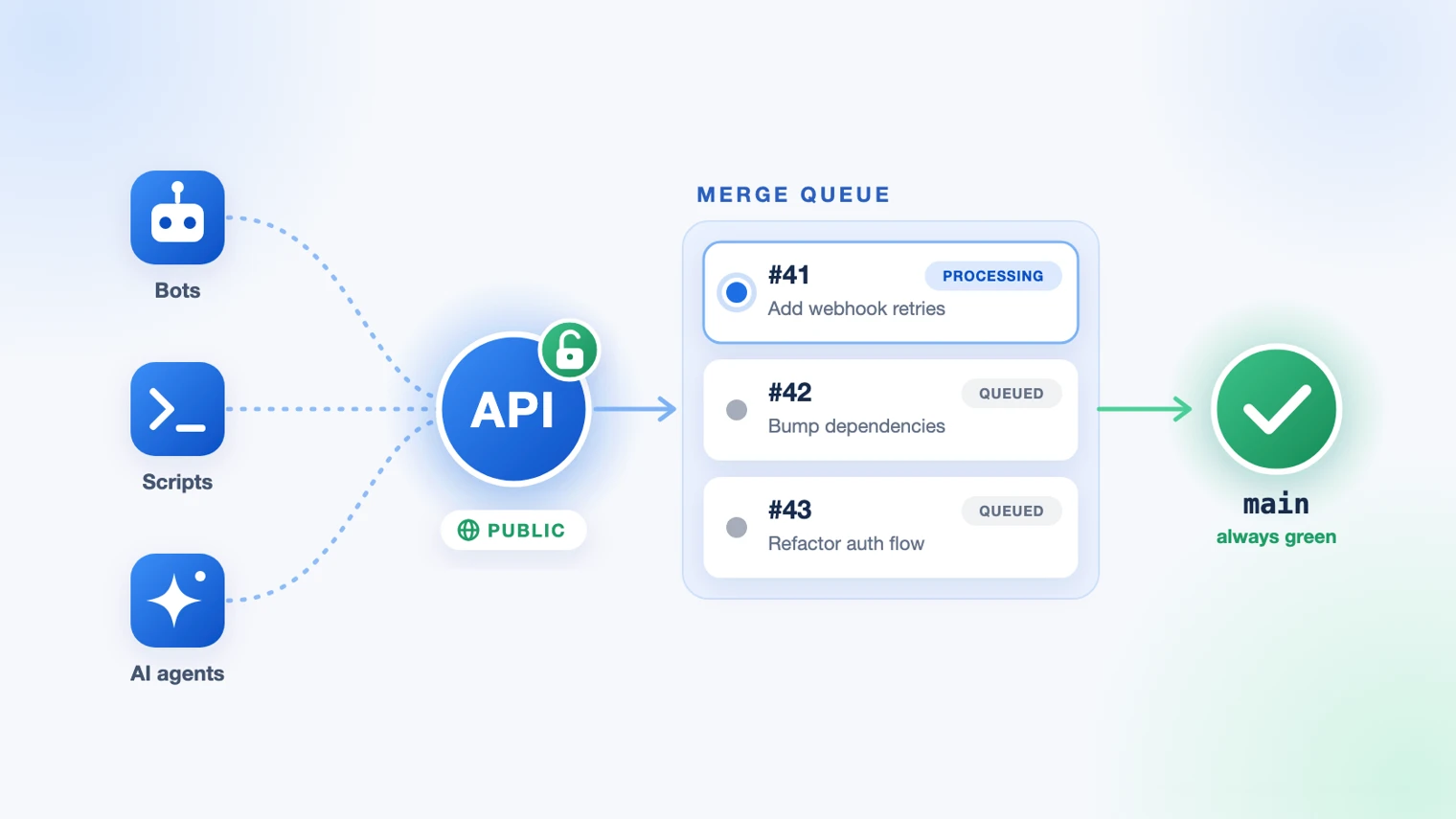
Atlassian has officially announced the release of public APIs for Merge Queues within Bitbucket Cloud, a significant update aimed at enhancing the automation capabilities of software development teams. This new functionality is now available to all users on Standard and Premium workspace tiers, providing a programmatic way to manage complex code integration workflows. Merge Queues are designed to maintain the stability of high-traffic branches by ensuring that changes are tested in combination before they are finalized, preventing the common "broken master" syndrome that occurs when multiple developers merge conflicting changes simultaneously. By introducing these public APIs, Bitbucket allows developers to move beyond manual interface interactions, enabling external tools and custom scripts to interact directly with the queuing system.
The core utility of Merge Queues lies in their ability to serialize and validate pull requests. In a traditional development environment, a pull request might pass all continuous integration (CI) tests in isolation, but when merged alongside other concurrent changes, the resulting branch state may become unstable. Merge Queues solve this by creating a temporary state where multiple pull requests are grouped and tested together. If the combined tests pass, the changes are merged; if they fail, the system identifies the problematic code and prevents it from impacting the main branch. The introduction of public APIs extends this logic to the broader DevOps ecosystem, allowing for deeper integration with third-party CI/CD platforms, custom internal dashboards, and automated repository management tools.
With the launch of these APIs, Bitbucket Cloud users can now utilize the existing merge endpoint to perform several critical actions. Specifically, the new capabilities allow tools to queue pull requests, track their real-time progress through the queue, and respond dynamically to the eventual outcome of the merge attempt. This level of access is essential for teams looking to build sophisticated delivery pipelines where the human element of clicking a "merge" button is replaced by automated logic based on build success, security scan results, or performance benchmarks.
The technical implementation of the Merge Queues API follows standard RESTful principles, ensuring ease of use for developers familiar with the Atlassian ecosystem. To initiate a merge via the queue, developers use a POST request directed at the specific pull request’s merge endpoint. The request requires authentication via an email address and an API token, targeting the specific workspace, repository slug, and pull request ID. The structure of the command is as follows: curl -si -u "$EMAIL:$API_TOKEN" -X POST "https://api.bitbucket.org/2.0/repositories/workspace/repo_slug/pullrequests/pullrequest_id/merge". This command triggers the queuing process, allowing the system to begin evaluating the pull request within the context of the current merge queue.
Upon a successful request to the merge endpoint, the Bitbucket API returns an HTTP/2 202 Accepted status. This status code is significant in RESTful architecture as it indicates that the request has been received and is being processed asynchronously. Along with the 202 status, the API provides a "location" header that contains a unique URL pointing to the task status. This allows developers to poll the specific task—identified by a unique task_id—to receive updates on the pull request’s journey through the queue.
Tracking the progress of a pull request is handled through a simple GET request to the location URL provided in the initial response. While a pull request is still waiting for its turn or undergoing testing, the API returns a JSON object indicating a "PENDING" task status. This response includes a queued_pullrequest object, which provides granular details such as the current status (e.g., "PROCESSING"), the pull request’s rank within the queue, and basic metadata like the pull request ID and title. For example, a pull request titled "Bump dependencies" might show a rank of 1, indicating it is next in line for processing. This ranking information is particularly valuable for teams who wish to build custom status boards that display the "waiting list" for their main production branches.
Once the merge process is finished, the task status updates to reflect the final result. A successful integration will return a "SUCCESS" task status, accompanied by a merge_result object confirming that the pull request state has transitioned to "MERGED." Conversely, if the merge fails due to test regressions or merge conflicts, the API provides the necessary feedback to allow automated systems to trigger alerts, notify the relevant developers, or attempt corrective actions.
The potential use cases for these APIs are extensive. Development teams can now build custom bots that automatically move pull requests into the merge queue once they have received a specific number of peer approvals or passed a certain suite of automated tests. Additionally, organizations can integrate these APIs with external monitoring tools to visualize queue wait times and identify bottlenecks in their delivery process. For teams managing hundreds of repositories, the ability to programmatically list all active queues, read their contents, or even remove a pull request from a queue via API provides a level of operational control that was previously unavailable.
The management of these queues is further supported by the Merge Queues API reference documentation hosted on the Atlassian Developer portal. This reference guide details additional endpoints for listing all queues within a repository, inspecting the specific contents of a queue to see which developers are contributing to the current merge batch, and the administrative function of removing a pull request from the queue if a late-breaking bug is discovered. This ensures that the merge process remains fluid and that developers can intervene programmatically when necessary.
By making these APIs available to both Standard and Premium workspaces, Bitbucket Cloud is catering to a wide range of organizational sizes. While smaller teams on the Standard plan can use the APIs to simplify their basic automation, larger enterprises on the Premium plan can leverage them to enforce strict compliance and stability standards across thousands of developers. The Premium tier, in particular, often involves more complex branching strategies where the stability provided by Merge Queues is critical for maintaining high velocity without sacrificing code quality.
The rollout of these APIs is part of a broader commitment by Atlassian to enhance the developer experience on Bitbucket Cloud. By opening up the Merge Queues functionality to programmatic access, the platform is acknowledging the shift toward "Operations as Code," where every part of the software development lifecycle is expected to be scriptable and integrable. This update reduces the friction associated with manual merge management and empowers teams to build more resilient and automated CI/CD workflows.
To ensure the continued refinement of these tools, Atlassian has invited the developer community to provide feedback on the new APIs. Users are encouraged to share their experiences, report issues, or suggest improvements through the Atlassian Community forums or via the feedback collector integrated directly into the Merge Queues user interface. This feedback loop is essential for the evolution of the API, as real-world usage often reveals unique edge cases and requirements that can inform future updates.
In summary, the introduction of public APIs for Merge Queues in Bitbucket Cloud represents a major step forward for automated branch management. By providing the tools to queue, track, and manage merges programmatically, Bitbucket is enabling teams to achieve higher levels of efficiency and reliability. The combination of clear documentation, standard RESTful patterns, and availability across multiple service tiers ensures that all Bitbucket Cloud users can begin integrating these capabilities into their development pipelines immediately. As software delivery continues to accelerate, the ability to maintain a stable "green" build through automated queuing will remain a cornerstone of modern DevOps excellence.