 11
11
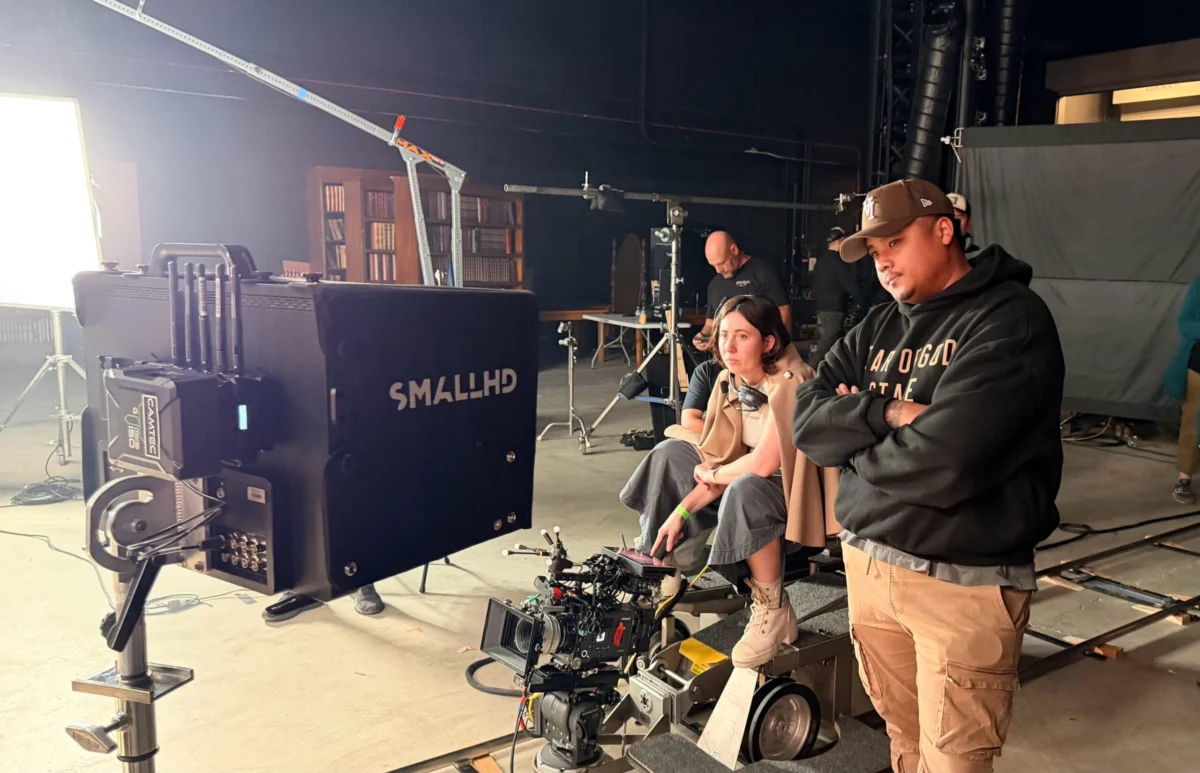
For Dave Clark, the journey into the future of filmmaking began in his childhood, perhaps at the tender age of four or five, when his father brought home a VHS tape of Predator to Rhein-Main Air Base in Frankfurt. The film played on a small tube television, perched atop a large wooden trunk, flanked by the intriguing crystals his mother had collected across Europe. What truly captivated young Clark was not the action, but the creature’s seemingly magical ability to cloak itself and vanish. Unaware of special effects, he saw it as proof that someone, somewhere, held the extraordinary job of building worlds that transcended reality. This early exposure to the power of visual storytelling would profoundly shape his future.
Decades later, the global COVID-19 pandemic brought the bustling film industry to a grinding halt. Like many creatives, Clark, now a husband and father of three with a mortgage and a dog, found himself in California, confronting the harsh economic realities. The slowdown presented a significant personal and professional challenge, forcing him to re-evaluate his path. It was during this period of introspection that a friend suggested he explore the burgeoning field of image-generation tools. This proved to be a pivotal moment. Artificial intelligence offered Clark an unprecedented way to visualize and articulate the intricate films swirling in his head, long before traditional financing or production could even begin. This capability was the genesis of Promise, the company he co-founded and where he serves as Chief Creative Officer. Promise’s ambition, however, extends far beyond mere visualization; it aims to transform these AI-generated images into full-fledged entertainment assets that major studios can genuinely own, insure, edit, and ultimately release. The fundamental question of whether any AI company can achieve this consistently, and crucially, account for the provenance of every single frame, remains the ultimate test.
The Making Of A Director
Clark’s diverse background laid a rich foundation for his unique perspective. Born in Charleston, South Carolina, in 1984, his early years were spent traversing military bases, from infancy at Osan Air Base in South Korea to his formative years at Rhein-Main, where his father distinguished himself as a master sergeant. The family eventually settled in Newport News, Virginia. Clark identifies as Black, Korean, and Native American, a multifaceted heritage that deeply informed his storytelling sensibilities. He gravitated towards narratives often overlooked by mainstream Hollywood, particularly Southern history, which he viewed not merely as a historical backdrop but as an ongoing, unresolved societal conversation.
The course of his life took a significant turn a year after the September 11th attacks. While contemplating military enlistment, a perceptive teacher, Brian Kershasky, recognized his artistic talent and steered him toward art school. A grant facilitated his enrollment at the prestigious Pratt Institute. After graduating in 2006, Clark entered the demanding world of advertising, primarily to manage his student debt. He rapidly ascended the ranks, evolving from an art director to a commercial director, crafting impactful campaigns for global brands such as Pepsi, Intel, and Coca-Cola. This period honed his ability to translate abstract concepts into compelling visuals, teaching him the critical skill of communication. "You have great ideas in your head," Clark observes, "but how do you communicate that to a team of 100 people?" This challenge of conveying a precise vision to a large production crew would become central to his later work with AI.
In 2013, Clark moved west to Los Angeles, signing with the prominent United Talent Agency (UTA). He began developing various film projects, including collaborations with industry veterans like Brad Fuller at Platinum Dunes. Yet, despite his talent and growing network, he still encountered the perennial industry hurdle: the inability to fully showcase the intricate cinematic worlds in his mind before securing external permission and substantial funding to bring them to life. This pre-visualization gap was a persistent frustration that AI would eventually address.
The Catalyst
The friend who opened Clark’s eyes to the potential of AI was Chris White, an executive producer known for his work on A24’s Backrooms. White suggested exploring image-generation tools specifically for creating pitch materials, a common need in Hollywood. Clark, quick to experiment, created a speculative Adidas commercial using AI and posted it to Reddit in late 2023. The piece, lauded for its innovative blend of creativity and technology, swiftly went viral, drawing widespread attention. Among those impressed was George Strompolos, the visionary founder of Fullscreen, who immediately recognized the paradigm-shifting potential. "For me, it was the first time you could really see the potential of this technology as a viable production tool," Strompolos stated, recounting how he "slid into Dave’s DMs" and they "clicked immediately," forming a powerful alliance.
Clark’s AI-driven film projects quickly escalated in ambition and impact. Another, a compelling hybrid of live-action footage and generative AI, made its significant debut during his Cannes Next keynote in May 2024, signaling a new era of cinematic possibility. That September brought Battalion, a powerful World War II short film. This project held deep personal resonance for Clark, as it told the untold story of the 320th Barrage Balloon Battalion, the courageous Black unit that served at Normandy, a piece of history he first learned about from his father. The film, however, also highlighted the stubborn resistance to historical revisionism, with Clark noting that the "angriest responses" came from online commenters who vehemently insisted Black soldiers had not been present at Normandy.
Hollywood, ever watchful for innovation, began to take notice. Luke Scott, son of legendary director Ridley Scott, reached out to Clark, eventually showcasing his work to his acclaimed father. This led to Clark meeting Ridley Scott twice, once accompanied by his Promise co-founders, a clear indication of the industry’s serious interest. Clark had, by this point, mastered the art of creating striking AI-generated images. The next, more profound challenge for Promise was to make these images "admissible"—fully integrated and legally sound within the rigorous framework of professional entertainment production.
The Production Test
Promise’s foundational argument extends beyond merely demonstrating that generative AI can produce visuals faster or more cost-effectively. Their core proposition is that studios require a robust, transparent, and legally compliant pathway between initial AI-generated material and the final, marketable entertainment product. In an industry where ownership, adherence to guild rules, and a meticulously documented chain of title are paramount, a visually convincing image alone is insufficient. Each frame, each element, must be verifiable and explainable.

The most comprehensive test of Promise’s methodology is Hardcore 94, an ambitious four-part adult animated series currently in pilot production. Based on Clark’s original concept, written by Ivan Rome, and co-directed by Clark himself and AI artist MetaPuppet, the series imagines an alien invasion unfolding over Compton in 1994. The visual complexity of Hardcore 94 is immediately apparent: animated characters navigating seamlessly through photorealistic environments. This specific combination presents a formidable challenge, as conventional, off-the-shelf AI models typically struggle to maintain visual consistency and integrity across such disparate elements.
To overcome this, Clark explains, Promise has developed a specialized workflow. A dedicated Promise artist trains a character-specific AI model using original, hand-drawn artwork, ensuring unique visual fidelity. Subsequently, the characters and backgrounds are meticulously separated into distinct layers. For critical shots, the team utilizes Unreal Engine, a powerful 3D creation tool, to precisely position a virtual camera and characters within a 3D environment. These precise positional data points are then fed back into Promise’s proprietary image-generation tool, allowing for unprecedented control and consistency. "That’s something you just can’t do with off-the-shelf models," Clark emphasizes, highlighting the bespoke nature of their solution.
To manage the intricate production process and ensure compliance, Promise has developed proprietary software. Muse, their filmmaking software, meticulously records every version of prompts, settings, and approvals, creating an auditable trail of creative decisions. Complementing this, their Copyright Guardian tool proactively scans all generated material for potential intellectual property conflicts, clearly marking what is cleared for use and what requires further attention. Upon completion of a project, Promise asserts its ability to generate a comprehensive "chain-of-title record," a crucial legal document that thoroughly traces and documents the creation and ownership lineage of all generated material.
This rigorous process has already been applied to external projects, notably Harlan Coben’s Final Twist, a true-crime series airing on CBS and Paramount+. For this series, Promise utilized old crime-scene photographs to reconstruct detailed 3D environments in approximately one day, demonstrating remarkable efficiency. Subsequently, Coben himself was filmed on a state-of-the-art Los Angeles volume stage, with the AI-generated environments seamlessly integrated.
Promise’s internal slate of projects is equally robust. It includes Tuning In, a four-quadrant animated feature written by Robert Rugan and directed by Clark, which is currently in pre-production. The company reports that its current portfolio encompasses 17 projects involving animation and hybrid live-action, with six of these actively in production. Clark argues that generative production democratizes high-quality animation, traditionally deemed prohibitively expensive due to the astronomical costs associated with studios like Pixar. This new methodology, he contends, dramatically shortens the creative distance between an initial idea and the point at which a director can effectively judge and refine it, making ambitious animated projects more accessible.
Currently, Promise employs a team of 35 individuals and has secured significant backing from prominent investors, including Andreessen Horowitz, Peter Chernin’s North Road, and Google’s AI Futures Fund. Further solidifying its position in the evolving AI landscape, Promise acquired Curious Refuge, an AI film school, in 2025. This acquisition has enabled them to expand their reach, having reportedly trained 12,000 students across 170 countries in generative AI storytelling techniques. While these achievements represent substantial progress, Promise acknowledges that they are not yet definitive proof of a fully repeatable, scalable studio model for the entire industry.
What Was Actually Hard
Dave Clark’s deep understanding of the filmmaking process is not a product of AI; it is the culmination of nearly two decades dedicated to learning the intricate nuances of how images are conceived, proposed, supervised, revised, and ultimately approved within the professional creative ecosystem. AI, for Clark, did not bestow taste or production expertise; rather, it provided a powerful and accelerated means to manifest his deeply ingrained ideas visually.
Clark identifies a common misconception surrounding this "first wave" of AI filmmaking. He emphasizes that the challenge is not merely about mastering prompts. "Almost anyone can generate an impressive 15-second test," he notes. The true difficulty, the "hard part," lies in maintaining a consistent visual aesthetic and narrative coherence across a sustained duration, such as a 20-minute film, without the AI model "drifting" or losing fidelity, and then delivering a final product that meets stringent streaming quality standards. "You can’t prompt your way to the ends," Clark asserts, underscoring that raw AI output is just the beginning of a complex production pipeline.
This understanding is why Promise strategically pairs emerging AI-native artists with seasoned industry veterans. Among them is Joel Hynek, a renowned visual effects supervisor whose pioneering work notably contributed to creating the iconic cloaking effect in the original 1987 Predator film. The very individual whose ingenuity helped forge the "magic" that transfixed a young Dave Clark in Frankfurt is now working alongside him at Promise, pushing the boundaries of new visual effects work with AI. This collaboration bridges generations of technical and creative expertise.
Clark’s personal journey, encapsulated in his statement, "I’m not your typical American," highlights the unique perspective and diverse experiences he brings to the table, which are invaluable in navigating uncharted creative territories. In an era where the ability to generate an image is becoming increasingly ubiquitous, what truly distinguishes a filmmaker like Clark, and a company like Promise, is the discerning choice of which images to pursue, and the robust capability to shepherd those chosen visuals through an entire production lifecycle, ensuring they remain intact and viable for distribution.
While the audience enjoying Hardcore 94 may never pause to inquire about the precise origin of each frame, the entities responsible for financing, insuring, and distributing that content will absolutely demand such transparency and accountability. Clark’s initial, deeply personal challenge was to make the cinematic worlds in his mind visible. Promise’s ultimate judgment, and its enduring legacy, will hinge on its ability to make those extraordinary AI-generated images not just visible, but unequivocally accountable within the exacting standards of the global entertainment industry.