 11
11
BEIJING – China has unveiled plans to increase its defense spending by 7% for the current year, marking the slowest annual rise in military expenditure since 2021. This projected increase comes at a time of escalating conflict in the Middle East and persistent tensions surrounding Taiwan, set against a backdrop of widening global geopolitical fault lines.
For the preceding three years, China had consistently budgeted a 7.2% annual increment in defense spending. Prior to that, in 2022, the nation saw a 7.1% increase, and in 2021, the figure stood at 6.8%, according to official data.
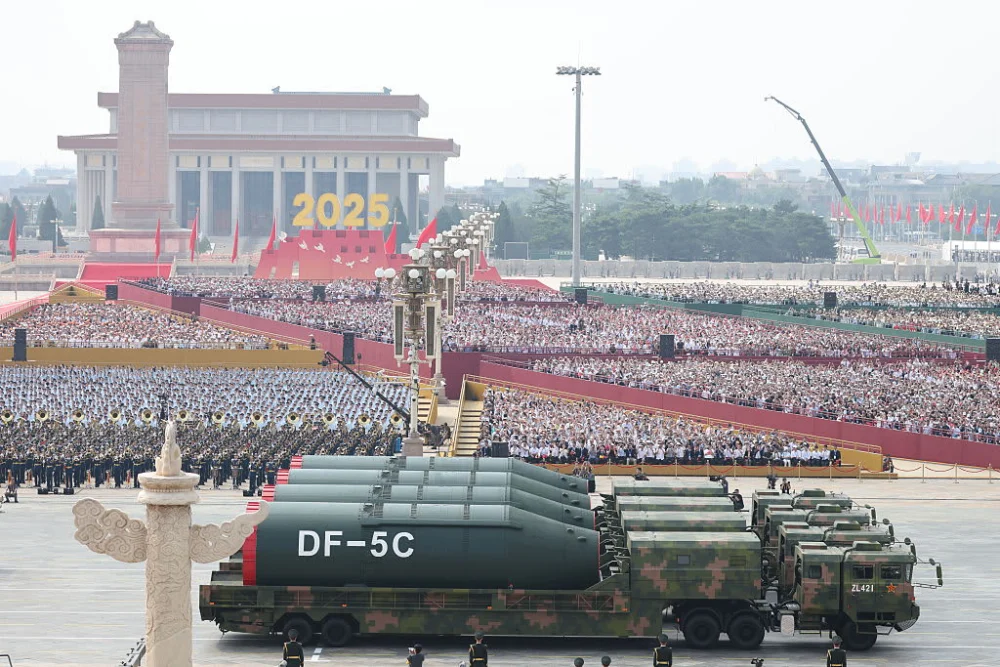
A government work report released on Thursday outlines Beijing’s commitment to accelerating the development of advanced combat capabilities and pursuing the "high-quality" modernization of its national defense and armed forces. The report specifically highlights China’s first domestically built aircraft carrier, the Fujian, which was commissioned in November 2025. Furthermore, the nation showcased some of its latest weapon systems, including long-range missiles, during a significant military parade in September. This parade, which featured prominent international attendees, underscored China’s growing military prowess.
In a clear statement of its strategic priorities, Beijing also declared its intention to "resolutely fight against separatist forces aimed at ‘Taiwan independence,’ and oppose external interference." This assertion signals a firm stance on the Taiwan issue and its opposition to any external involvement.
The announcement coincides with the commencement of China’s eight-day National People’s Congress, an annual parliamentary gathering that formally approves the nation’s budget and development objectives for the upcoming year.
Last year, China proposed a national defense budget of 1.78 trillion yuan, which equated to approximately $244.99 billion at the time. However, defense analysts have consistently suggested that these official figures may be understated, potentially excluding substantial "off-budget" expenditures. This sentiment is echoed in the U.S. Department of Defense’s 2025 report to Congress on China’s military. This report estimates that Beijing’s defense spending in 2024 ranged between $304 billion and $377 billion, representing a 32% to 63% increase over its officially declared budget of $231 billion for that year.
Globally, China’s defense expenditure has been on a significant upward trajectory. According to data from the International Institute for Strategic Studies, Beijing accounted for nearly 44% of Asia’s total defense spending in 2025, a notable increase from 39% in 2017. This positions China as the second-largest military spender globally, trailing only the United States.
In comparison, the U.S. budgeted $849.77 billion for defense during its 2025 fiscal year. However, estimates from the non-profit organization USAFacts suggest that the actual spending by the U.S. in that period reached approximately $919.2 billion. This figure represents a 2% increase from the previous year and constitutes 13% of the U.S. federal budget.
The display of China’s liquid-fueled intercontinental strategic nuclear missiles, the DongFeng-5C, which possess a global strike capability, passing through Tian’anmen Square during the Victory Day military parade on September 3, 2025, in Beijing, serves as a potent visual representation of the nation’s military modernization and strategic reach. The presence of such advanced weaponry underscores the context of China’s increasing defense investments and its assertiveness on the global stage. The parade itself, attended by leaders such as Vladimir Putin and Kim Jong Un, further highlighted the geopolitical significance of China’s military developments.
The Fujian aircraft carrier, a symbol of China’s growing naval power, represents a significant leap in its maritime capabilities. Its commissioning and integration into the People’s Liberation Army Navy signal Beijing’s ambition to project power across the seas. Coupled with the development and display of long-range missiles and other advanced weapon systems, these advancements are indicative of a comprehensive modernization program aimed at enhancing China’s defense posture and its capacity to respond to evolving security challenges.
The ongoing increase in defense spending, even at a moderated pace, reflects China’s sustained commitment to bolstering its military strength. This strategy is intricately linked to its broader foreign policy objectives, particularly concerning regional security dynamics and its territorial claims. The persistent tensions over Taiwan, a self-governing democracy that Beijing considers a renegade province, remain a central focus of China’s security concerns and its military planning. The explicit mention of combating "separatist forces" and opposing "external interference" underscores the gravity with which Beijing views this issue and its determination to achieve its objectives through all available means.
The broader global context of rising geopolitical instability, including the ongoing conflict in the Middle East, further influences China’s defense calculus. As global fault lines deepen and regional conflicts persist, nations are reassessing their security needs and increasing their military preparedness. China’s defense spending decisions are thus made within this complex and dynamic international environment, where a strong military is viewed as essential for safeguarding national interests and maintaining regional stability. The comparative figures of defense spending with other major global powers, such as the United States, also highlight the scale of China’s military ambitions and its evolving role in the global security architecture.