 11
11
BEIJING – Despite the ongoing geopolitical tensions in the Middle East, at least three prominent Chinese robotaxi companies are actively pursuing ambitious expansion plans in the region, signaling a strong commitment to this emerging market. Ride-hailing giant Didi is set to commence its first overseas robotaxi testing operations in the United Arab Emirates (UAE) later this year, according to a statement released on Wednesday.
Zhang Bo, co-founder of Didi and the head of its autonomous driving business, unveiled these plans during a UAE-China business cooperation forum held in Beijing earlier this week. The announcement coincides with a significant diplomatic engagement, as Abu Dhabi Crown Prince Sheikh Khaled bin Mohamed bin Zayed Al Nahyan met with Chinese President Xi Jinping in Beijing on Tuesday, marking the conclusion of a three-day state visit. This high-level interaction underscores the growing strategic and economic ties between the UAE and China, providing a favorable backdrop for technological collaborations.

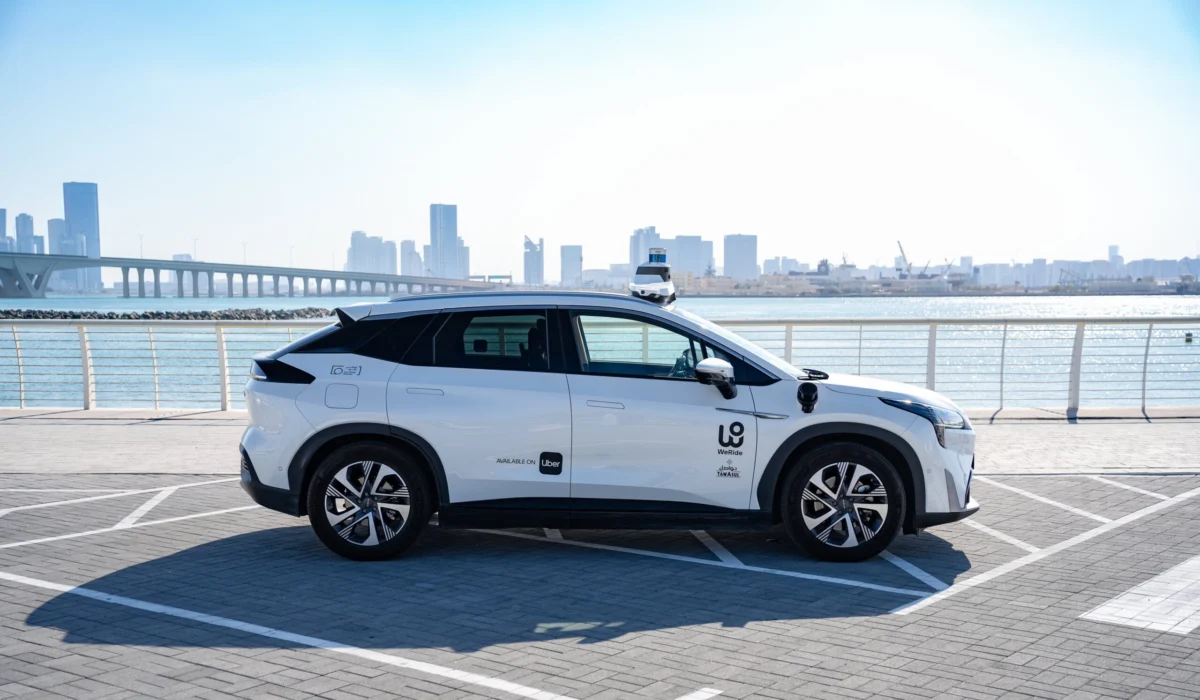
Didi’s strategic foray into the UAE follows a broader trend of Chinese autonomous driving companies increasing their presence and operational scope in the Middle East. Guangzhou-based WeRide, a key player in the autonomous vehicle sector, announced earlier this month the launch of its fully driverless, fare-charging robotaxi service in Dubai’s Jumeirah and Umm Suqeim districts. Notably, users can seamlessly book these autonomous rides through the widely recognized Uber app, demonstrating a sophisticated integration with existing mobility platforms. This partnership with Uber highlights the collaborative approach being adopted by these companies to leverage established user bases and infrastructure.
Another significant contender, Pony.ai, is also actively pursuing commercial operations within the emirate. In response to an inquiry from CNBC in late March, Pony.ai CEO James Peng expressed confidence that the regional conflict had not impeded the company’s application for a commercial license in Dubai. Peng characterized the conflict as a short-term issue, indicating a long-term strategic outlook for their Middle Eastern ventures. Pony.ai had previously secured permission from Dubai’s Roads and Transport Authority in September to test autonomous driving technologies locally, a crucial step towards broader commercial deployment.
Adding to the momentum, Baidu’s robotaxi division, Apollo Go, announced on April 1 that residents and visitors in Dubai could now hail fully driverless rides via its dedicated application. While the specifics of any operational restrictions were not immediately clear, the launch signifies a substantial advancement in autonomous mobility services in the city. Dubai’s media office confirmed that the initial rollout would involve 50 vehicles, with ambitious plans to expand the fleet to over 1,000 robotaxis in the coming years. This aggressive scaling strategy underscores Dubai’s commitment to becoming a global hub for autonomous transportation.

The Middle East has emerged as a pivotal launch market for Chinese robotaxi companies over the past two years, with subsequent testing phases expanding into Europe. This regional focus is driven by a combination of supportive regulatory frameworks, a growing appetite for technological innovation, and strategic investments. In contrast, Alphabet-backed Waymo has been systematically expanding its fleets across various U.S. cities and has initiated testing programs in London and Japan, showcasing a diverse global expansion strategy for autonomous vehicle technology. The success of these Chinese companies in the UAE, particularly in Dubai, points to a significant shift in the global autonomous driving landscape, with the region playing an increasingly vital role in shaping the future of mobility. The strategic partnerships, regulatory approvals, and rapid deployment of services by companies like Didi, WeRide, Pony.ai, and Baidu highlight a concerted effort to establish a strong foothold in a market that is embracing cutting-edge transportation solutions.