 11
11
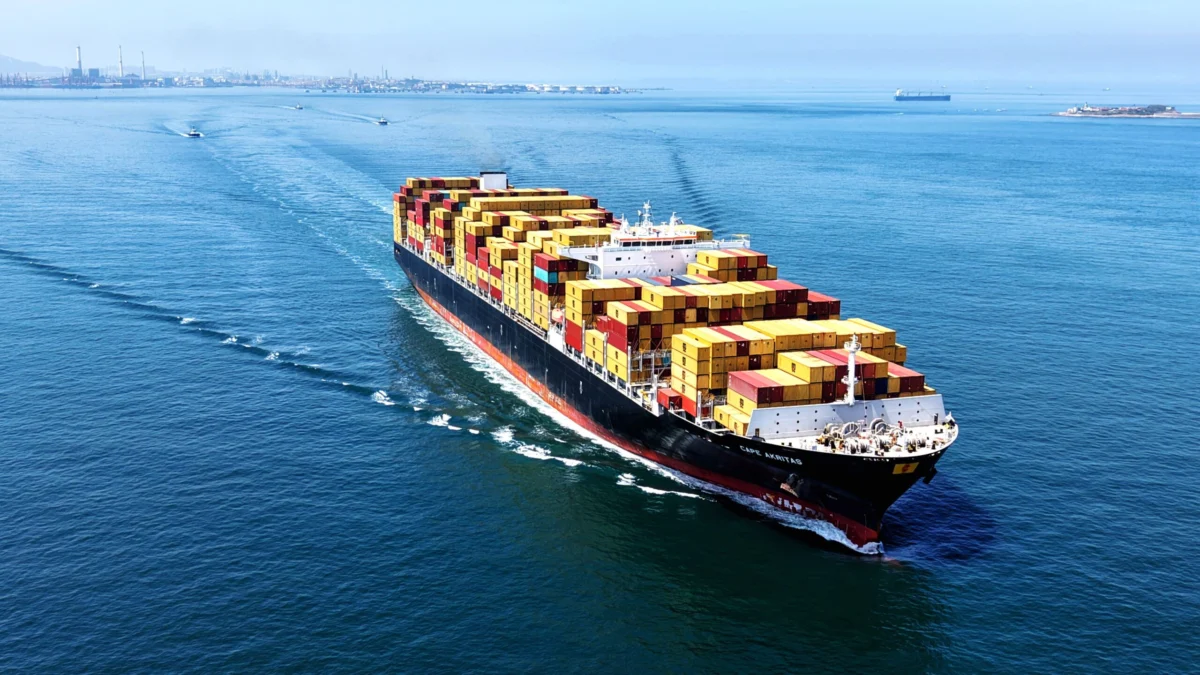
A cargo ship loaded with foreign trade containers sails towards the open sea in Jiaozhou Bay, Qingdao, Shandong, China, on April 13, 2026. Costfoto | Nurphoto | Getty Images
China’s export growth experienced a significant deceleration in March, reaching a six-month low, a trend attributed to the escalating Middle East conflict’s impact on the global demand outlook. Concurrently, imports registered their strongest growth in over four years, indicating a robust domestic appetite for foreign goods.
In March, China’s exports, denominated in U.S. dollars, increased by a modest 2.5% compared to the same period in the previous year. This figure fell short of the median estimate of 8.6% anticipated by analysts polled by Reuters. The growth rate also represented a considerable slowdown from the combined 21.8% surge observed in the first two months of the year, highlighting a weakening export momentum.
In stark contrast, imports demonstrated remarkable strength, surging by 27.8% year-on-year in March. This impressive expansion marks the most robust import growth seen since November 2021, significantly surpassing expectations of an 11.2% rise. The import figures also represent an acceleration from the 19.8% growth recorded in the combined January-February period.
It is important to note that China typically releases combined trade data for January and February due to the significant economic and social disruptions caused by the Lunar New Year holiday, which follows the agrarian calendar. This year’s separate March data provides a clearer picture of the trade dynamics in that specific month.
Despite facing rising geopolitical tensions with the United States and the imposition of higher tariffs, the world’s second-largest economy has remained heavily reliant on international trade for its economic growth. In the preceding year, net exports contributed approximately one-third of China’s overall economic output, underscoring the critical role of trade in its economic structure.
Energy Shock Buffer Amidst Global Uncertainty
While Beijing has implemented measures to buffer its economy against potential shocks from volatile global energy prices, the export-oriented nature of its economy leaves it vulnerable to a broader economic downturn. The nation’s strategic oil stockpiles, a diversified energy mix, and stringent price controls have provided a degree of insulation from the immediate impact of surging oil prices. However, a prolonged closure of the Strait of Hormuz, a critical chokepoint for global oil transportation, could trigger a more severe global economic downturn, impacting China’s export markets.
Wang Jun, China’s customs vice minister, acknowledged the challenging global trade environment during a press briefing on Tuesday, stating that global oil prices have experienced "fierce fluctuation," creating a "complex and severe" trade landscape.
Zhiwei Zhang, president and chief economist at Pinpoint Asset Management, suggested that the "uncertainty of the global macro outlook, driven by the conflict in the Middle East, likely weighed on the demand side," thereby straining export performance. Nevertheless, Zhang noted that China’s export sector is likely to be more resilient to higher energy costs and raw material shortages compared to other export-reliant economies. This resilience is attributed to the sheer scale and efficiency of China’s manufacturing capabilities.
Dan Wang, China director at Eurasia Group, highlighted China’s robust energy security, estimating that its strategic and commercial oil stocks, combined with barrels in transit, are sufficient to cover well over 120 days of net imports. She further elaborated that China possesses the flexibility to absorb energy shocks by diversifying its energy sources and by increasing its reliance on coal.
However, official trade data, as calculated by CNBC, indicates a decline in China’s crude oil imports in March. Both in terms of volume and U.S. dollar value, crude imports fell by nearly 2.8% and approximately 4.4%, respectively, compared to the previous year. Similarly, natural gas imports saw a notable decrease of 10.6% year-on-year, reaching 8.18 million tons, the lowest level recorded since October 2022, according to data compiled by Wind.
Declining Trade Surplus and Shifting Trade Dynamics
China’s overall trade surplus for the year, as of the end of March, stood at $264.3 billion. This represents a 3% contraction compared to the same period last year. The surplus had previously surged to a record high in the first two months of the year, but the swelling import values, driven by tighter global supply chains, have now begun to narrow this surplus.
Zhang explained that "China cannot pass through the higher energy prices completely to the foreign consumers," which contributes to the narrowing of Beijing’s trade surplus.
Trade relations with the United States continue to be strained. China’s exports to the U.S. declined by a significant 26.5% in March compared to the previous year, a trend that has seen double-digit percentage drops every month since trade tensions escalated in April of the previous year. Conversely, imports from the U.S. saw a modest increase of 1%.
Furthermore, China’s trade with the Middle East experienced a decline in March, following two months of growth, as reported by customs spokesman Lyu Daliang at a press briefing. Lyu called for "a joint effort by all parties to stabilize and de-escalate the conflict," underscoring the interconnectedness of regional stability and global trade.
On the import side, China’s procurement of rare earth materials more than tripled in value during March. Soybean imports also saw an increase, growing by a moderate 20% in terms of volume.
However, the rising commodity and energy prices, stemming directly from the conflict in the Middle East, are beginning to impact the input costs for Chinese manufacturers. This poses a risk of further eroding the already thin profit margins of these firms. Factory-gate prices in China rose by 0.5% in March, marking the first increase in over three years, indicating a shift in inflationary pressures within the manufacturing sector.
Despite these inflationary pressures on producers, consumer prices in China saw a slower-than-expected rise of 1% year-on-year. This suggests that domestic demand remains under pressure, limiting the ability of businesses to fully pass on increased costs to consumers.
China is scheduled to release its first-quarter gross domestic product (GDP) figures on Thursday. Analysts polled by Reuters have projected a GDP growth of 4.8% for the first quarter, an improvement from the 3-year low of 4.5% recorded in the fourth quarter of 2025.