11
11
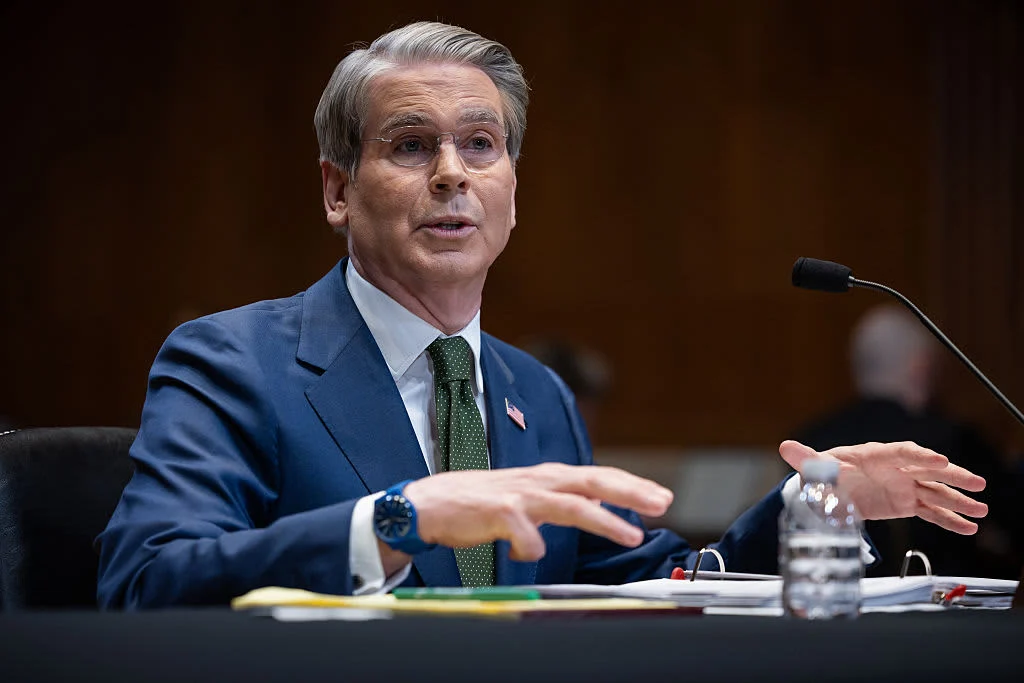
Treasury Secretary Scott Bessent on Friday robustly defended the prospect of the United States engaging in currency swap agreements with allies in the Persian Gulf and Asia, who are reportedly seeking financial backstops amidst the ongoing Iran war. Bessent asserted that such discussions are routine and highlight the enduring strength and global dominance of the U.S. dollar.
In an X post, Bessent stated that conversations with these nations regarding U.S. dollar swap lines are "part of ongoing, routine conversations that @USTreasury has been having with our partners over a number of years." He characterized these potential swaps as "a testament to the U.S. dollar’s primacy and the strength of America’s economic shield."
This affirmation of the benefits and commonplace nature of swap lines comes as the Trump administration is reportedly considering offering this financial lifeline to the United Arab Emirates (UAE). The news of potential UAE involvement emerged just two days after Bessent indicated that a significant number of allies in the Persian Gulf region are seeking similar financial support due to the economic disruptions caused by the Iran war.

Currency swap lines involve an agreement between the central banks of two countries to exchange equivalent amounts of their respective currencies. These currencies are then swapped back at a predetermined future date. The U.S. Federal Reserve currently maintains standing U.S. dollar liquidity swap line arrangements with the central banks of Canada, England, Japan, and Switzerland, as well as the European Central Bank. These arrangements are designed to enhance the provision of U.S. dollar liquidity in global markets.
The mechanism of currency swaps dates back to the 1960s and has been historically employed to stabilize economies during periods of financial distress. Notable instances include its use to support the Mexican economy in the 1980s, in the aftermath of the September 11th terrorist attacks, during the 2008 financial crisis, and at the onset of the COVID-19 pandemic. The primary objective of these maneuvers is to alleviate strains on global funding markets, thereby providing essential breathing room for households and businesses in the participating countries. While the Federal Reserve traditionally offers these swaps, the Treasury Department can also facilitate its own version through its Exchange Stabilization Fund.
The prospect of extending these financial arrangements, particularly to wealthy nations like the UAE, could present political challenges for the Trump administration. President Trump’s approval ratings on the economy have reportedly declined, partly due to war-induced supply shocks that have exacerbated inflation and raised prices for essential goods like gasoline. A recent CNBC All-America Survey indicated that 60% of respondents disapprove of Trump’s handling of the economy. Offering a potential swap line could be perceived by some as an unnecessary bailout, especially when directed towards a country with one of the world’s highest per capita incomes.
However, President Trump, when questioned on CNBC’s "Squawk Box" regarding a potential UAE swap line, expressed a supportive stance. He stated, "If they had a problem … I would be there for them."

In his X post, Secretary Bessent offered a comprehensive defense of the strategic advantages of extending swap lines. He argued that these agreements "can benefit our nation by reinforcing dollar usage and liquidity internationally, maintaining smooth functioning in dollar funding markets, promoting trade and investment with the United States, and, in hypothetical stress scenarios, preventing disorderly sales of U.S. assets as well as disruptions to U.S. markets, businesses, and households."
Bessent further emphasized that many of the countries expressing interest possess "pristine sovereign balance sheets and large dollar holdings – larger than many major economies with whom we maintain permanent swap facilities." While he did not explicitly name all the countries, he noted that only the UAE had been specified by him and President Trump earlier in the week.
He commended the allies for their "foresight and watchful risk management by exploring additional financial buffers during periods of market quiescence." Bessent posited that the extension of permanent swap lines could be a significant initial step in establishing new U.S. dollar funding centers in the Gulf and Asia.
The Treasury Secretary concluded by stressing that maintaining and strengthening dollar dominance and its reserve currency status is achieved through consistent, long-term initiatives, including countering the rise of alternative payment systems. He characterized these efforts as "American Economic Leadership at work" under the current administration.