11
11
The escalating global competition for artificial intelligence dominance between the United States and China has reached a critical juncture, with Beijing taking decisive action against a prominent AI startup. Manus, a Chinese-founded AI company that recently sold itself to Meta for $2 billion after relocating to Singapore, has seen its co-founders, Xiao Hong and Ji Yichao, reportedly barred from leaving China. This move by Beijing’s National Development and Reform Commission (NDRC) signals a deepening rift in the technological Cold War, as China seeks to prevent what it terms "selling young crops" – the exodus of homegrown tech talent and intellectual property to foreign entities.
The backdrop to this dramatic development is an all-out race between Washington and Beijing to cultivate the most powerful AI capabilities on the planet. China has been channeling immense financial resources, estimated in the billions, into developing its indigenous AI models, while simultaneously reinforcing its control over the domestic technology sector. Amidst these efforts, Beijing has watched with growing unease as some of its top AI researchers and engineers gravitate towards opportunities with U.S. technology giants, perceiving this as a significant drain on its strategic assets. Manus’s move and subsequent acquisition by an American company represent a direct challenge to China’s ambitions of fostering a self-reliant and globally competitive AI ecosystem.
Manus burst onto the global tech scene in the spring of last year, quickly garnering significant attention for its innovative AI agent. The startup released a compelling demo video showcasing its AI’s versatile capabilities, including screening job candidates, meticulously planning intricate vacations, and performing sophisticated analysis of stock portfolios. In a bold claim that raised industry eyebrows, Manus cheekily suggested its technology outperformed OpenAI’s Deep Research, a benchmark in the burgeoning AI landscape. The company’s rapid ascent attracted the attention of prominent Silicon Valley investors, with Benchmark, a highly regarded venture capital firm, leading a $75 million funding round that valued Manus at an impressive $500 million within weeks of its public debut. This significant American investment in a Chinese-founded AI company immediately sparked debate and concern in Washington. Senator John Cornyn, a vocal critic of China’s technological ambitions, publicly questioned the wisdom of such investments, tweeting at the time, "Who thinks it is a good idea for American investors to subsidize our biggest adversary in AI, only to have the CCP use that technology to challenge us economically and militarily? Not me." His comments underscored a prevalent apprehension among U.S. policymakers regarding the potential for dual-use technologies developed with American capital to ultimately bolster China’s strategic capabilities.
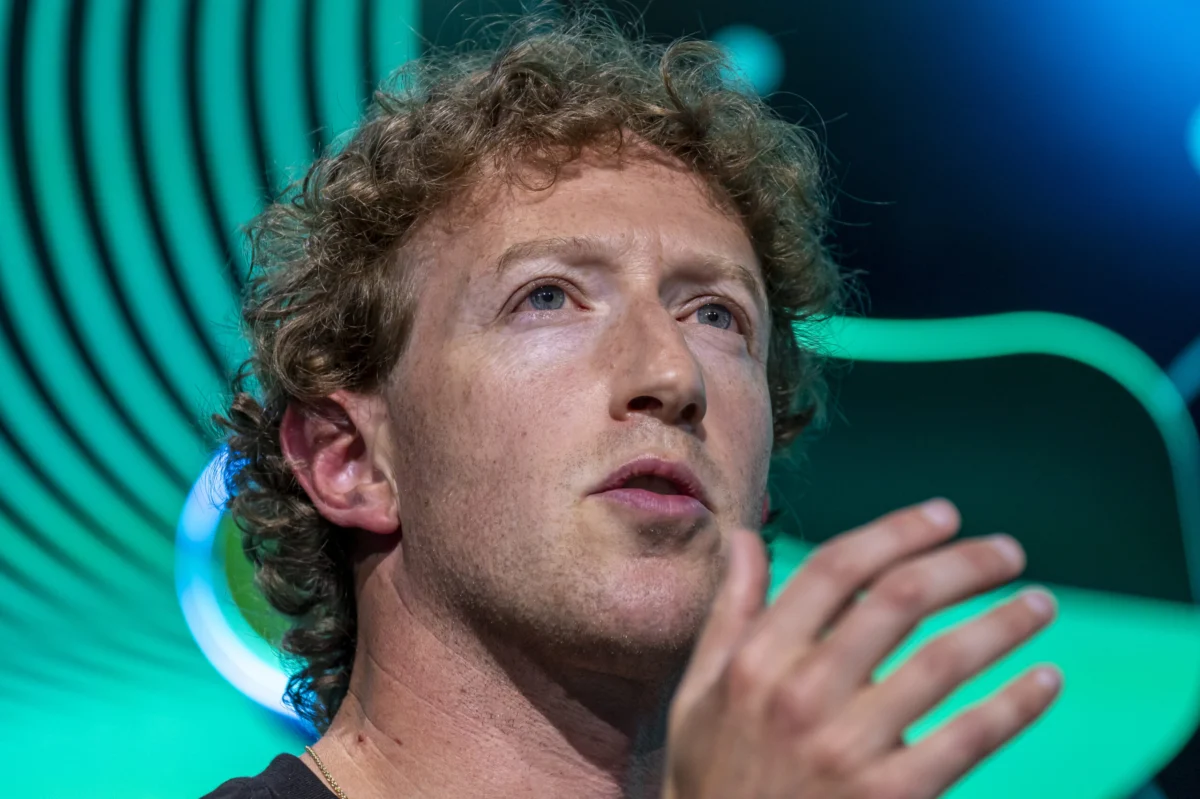
By December of the same year, Manus had cemented its market presence, attracting millions of users and achieving an annual recurring revenue exceeding $100 million. This explosive growth made it an irresistible target for acquisition. Meta Platforms, Inc., under the leadership of Mark Zuckerberg, who has publicly staked the social media giant’s future on AI, swiftly moved to acquire Manus for a substantial $2 billion. This acquisition, too, sent ripples through the industry and geopolitical circles, given Manus’s origins.
Crucially, Manus had proactively attempted to disentangle itself from China’s regulatory and political orbit long before the Meta deal materialized. The company undertook significant structural changes, relocating its headquarters and core operational team from Beijing to Singapore. It also restructured its ownership to reflect its new international orientation. Following the announcement of the Meta acquisition, Meta publicly pledged to sever all ties with Manus’s original Chinese investors and committed to completely shutting down any remaining operations within China. By every observable measure, Manus was making a concerted effort to establish itself as a Singaporean entity, ostensibly to navigate the complexities of international tech regulations and geopolitical tensions.
While these strategic maneuvers and the subsequent acquisition raised considerable questions in Washington, the reaction in Beijing was, as one might imagine, far more intense, verging on apoplectic. China views such actions through the lens of "selling young crops" – a pejorative term for promising homegrown technology companies that opt to move abroad and sell themselves to foreign buyers before reaching full maturity, thereby transferring valuable intellectual property and talent out of China’s direct control. This phenomenon is particularly galling to Beijing, which has invested heavily in nurturing its domestic tech champions.
China’s leadership has a well-documented history of asserting its authority over its technology sector, leaving little doubt that no company, regardless of its size or perceived independence, operates beyond its reach. A potent reminder of this unwavering resolve came in 2020 when Jack Ma, the charismatic founder of Alibaba, delivered a speech that mildly criticized Chinese financial regulators. The repercussions were swift and severe: Ma disappeared from public view for months, the highly anticipated blockbuster IPO of Ant Group, Alibaba’s fintech affiliate, was abruptly halted, and Alibaba itself was slapped with a staggering $2.8 billion antitrust fine. Over the subsequent two years, Beijing systematically dismantled large swathes of its booming tech sector, wiping out hundreds of billions in market value and sending a clear message about compliance and state control. Chinese leaders are known for their decisive and often heavy-handed approach; subtlety is rarely their preferred tool for enforcement.
Against this backdrop, the recent development concerning Manus’s founders was not entirely unexpected. On Tuesday, the Financial Times reported that Manus co-founders Xiao Hong and Ji Yichao were summoned to a meeting with China’s National Development and Reform Commission earlier this month. During this meeting, they were reportedly informed that they would not be permitted to leave the country for an unspecified period. While no formal charges have been publicly filed, the NDRC has initiated an inquiry into whether the Meta acquisition violated Beijing’s stringent foreign investment rules. Officially, Beijing is characterizing this as a routine regulatory review, a standard procedure for significant cross-border transactions involving Chinese-originated assets.
It is plausible that at some point, individuals within Manus believed they had successfully navigated the treacherous geopolitical landscape. Perhaps they even harbor hopes of eventually resolving the current impasse. However, given the monumental stakes involved in the global AI race, such an assumption always constituted a significant gamble. Beijing’s current actions unequivocally demonstrate its determination to assert control over its strategic technological assets. The founders of Manus AI are now seemingly compelled to remain in China until Beijing obtains the answers and assurances it seeks regarding the controversial Meta acquisition and the broader implications for China’s AI ambitions.
TechCrunch Event
San Francisco, CA | October 13-15, 2026
About the Author
Loizos has been reporting on Silicon Valley since the late ‘90s, when she joined the original Red Herring magazine. Previously the Silicon Valley Editor of TechCrunch, she was named Editor in Chief and General Manager of TechCrunch in September 2023. She’s also the founder of StrictlyVC, a daily e-newsletter and lecture series acquired by Yahoo in August 2023 and now operated as a sub brand of TechCrunch.
You can contact or verify outreach from Connie by emailing [email protected] or [email protected], or via encrypted message at ConnieLoizos.53 on Signal.
View Bio