 11
11
A common perception holds that AI-generated blog posts are inherently inferior to human-written content. Companies opting for AI at scale often do so with the understanding that they are trading quality for speed and volume. While AI undoubtedly surpasses human speed and can produce a passable initial draft, this perspective is becoming outdated. Generative AI has advanced to a point where its output is increasingly indistinguishable from the vast body of human-written content produced by professionals.
AI has evolved into a more diligent researcher, a more consistent follower of brand guidelines and voice, more responsive to feedback, and significantly faster and more efficient. The inherent trade-off between speed and quality in AI content creation is diminishing. This is not to suggest that all AI content is automatically excellent, but rather that the previous limitations hindering its quality have been overcome. While access to world-class writing capabilities through Large Language Models (LLMs) may still be uneven, this disparity is unlikely to persist. Functionally "perfect" AI content appears to be on the horizon for everyone, and acknowledging this shift is in our collective interest.
Great Writing Is Simpler Than It Seems

Many believe human writing possesses an ineffable creative spark that AI can never replicate. While AI may not reach the literary heights of a Shakespeare, the fundamental components of "great writing" are more mechanical and accessible than commonly assumed. LLMs are proving adept at mastering these core elements.
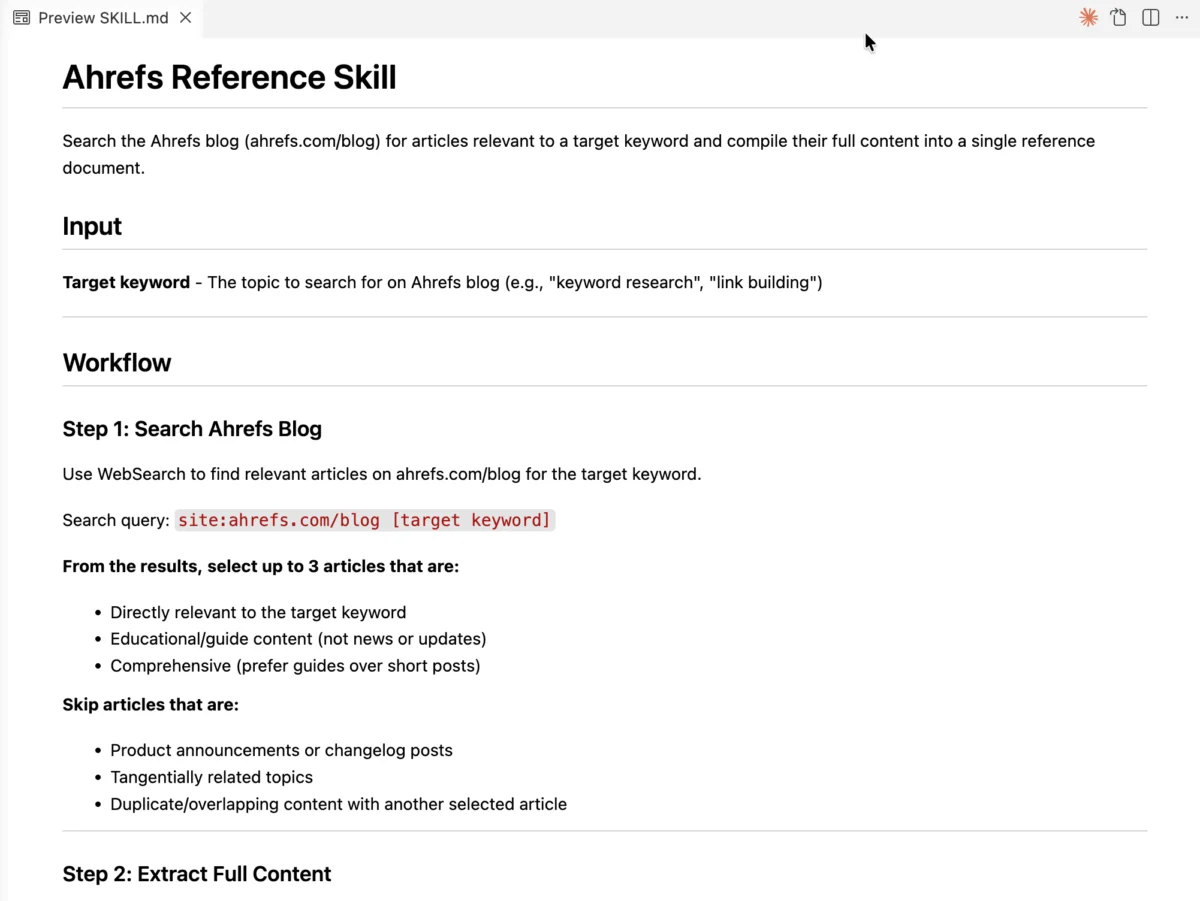
Years of introspection into the writing process have led to an understanding of its mechanics and a set of guiding principles. These principles, applied consistently, form the basis of effective writing and editing. Examples from editing checklists reveal straightforward yet crucial guidelines that, when executed in unison, contribute to consistently good, even "great," writing.
These principles are so fundamental that an LLM can execute them flawlessly, often with greater consistency than humans who may be affected by fatigue, boredom, or laziness. Once codified in system prompts and SKILL files, these principles can be applied uniformly across millions of outputs. If a basic, effective recipe for great writing exists, LLMs are capable of following it. By chaining these heuristics together reliably, an exceptional AI writing process can be constructed, facilitated by current technological advancements.
AI Is More Sophisticated Than It Seems
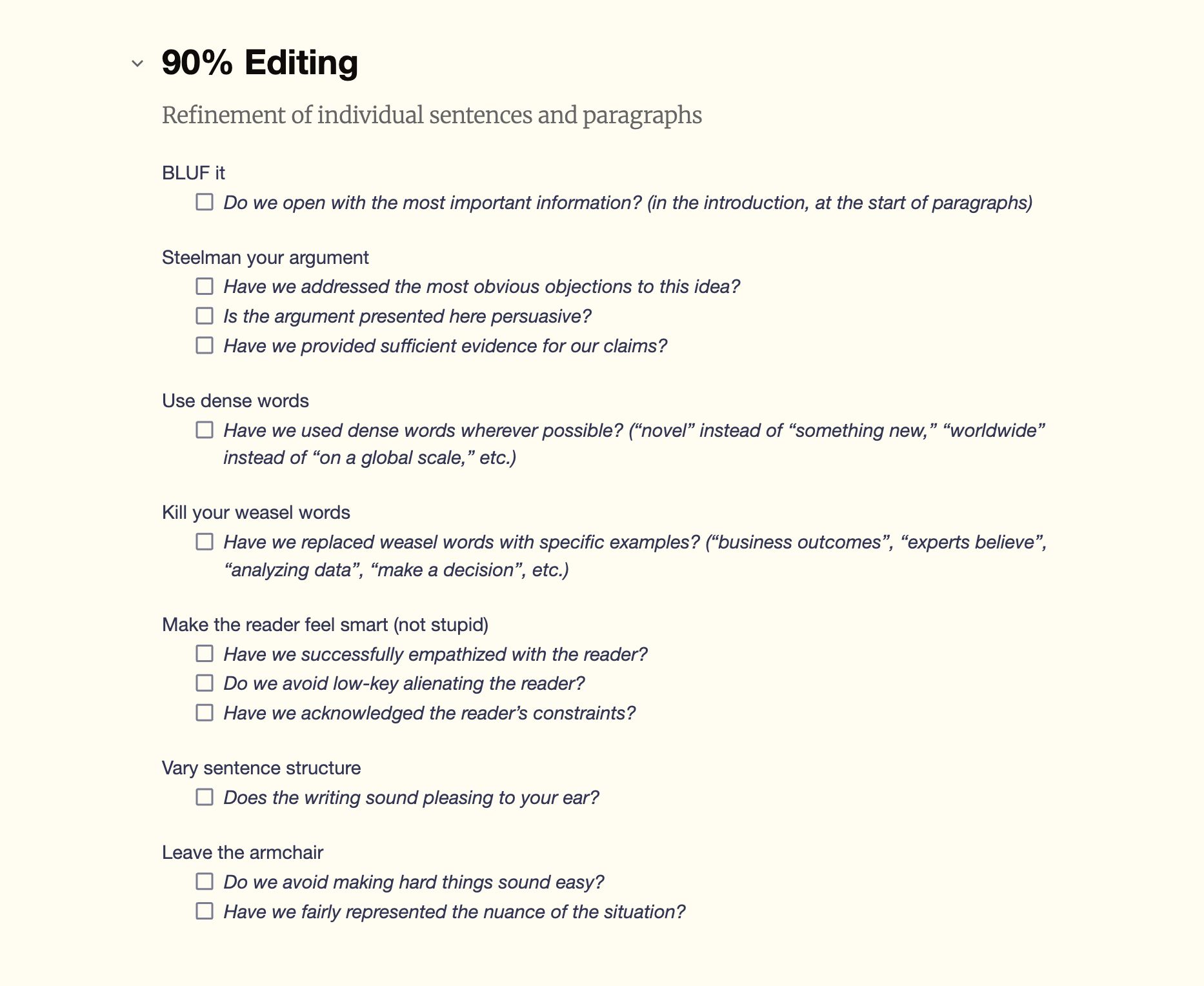
For many, the understanding of AI remains rooted in basic chat interactions. However, LLMs and their surrounding infrastructure have undergone substantial progress in recent months. Initially, LLMs displayed flashes of superhuman ability in isolated areas, much like a child mimicking behavior without full comprehension. It was difficult to envision these isolated instances evolving into a comprehensive writing capability. Producing a few coherent sentences seemed a vast distance from reliably generating thousands of words of accurate, helpful, concise, and on-brand writing—content that identifies and fills topic gaps, understands search intent, and differentiates itself from competitors.
A previous AI writing process, utilizing custom GPTs based on established editorial principles, demonstrated sparks of brilliance but still required human intervention for finalization. This is no longer the case. Within a span of just seven months, the limitations of that earlier process have evaporated. Current LLM subscriptions, such as Claude, offer capabilities that verge on science fiction. These models can now:
These advancements are in addition to the significant improvements seen in flagship AI models themselves. The development of "vibe-coding" infrastructure over the past year has profoundly enhanced the utility of LLMs. While LLMs remain sophisticated autocompletes and Artificial General Intelligence (AGI) has not been achieved, companies like Anthropic and OpenAI have successfully harnessed their capabilities in ways that far exceed their individual components. Crucially, the task at hand—content marketing—is not exceptionally complex for these advanced systems.
Content Marketing Is Simpler Than It Seems
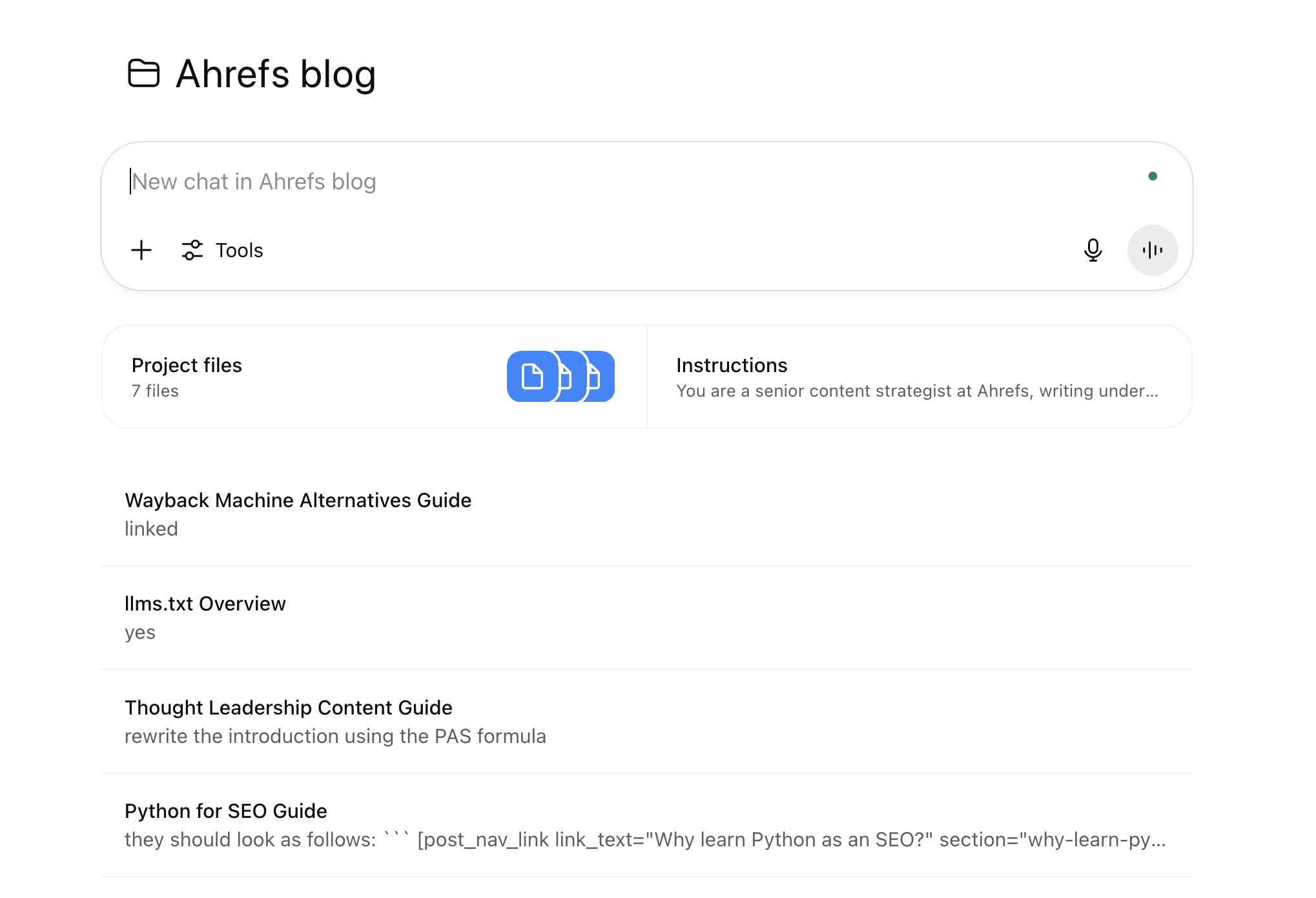
The majority of content marketing efforts focus on creating informational, keyword-targeted content, such as "how-to" articles or comparison lists. These are well-established content archetypes that are generally straightforward to produce. An effective recipe for search content exists, incorporating core principles such as:
These straightforward concepts, when applied systematically, result in effective search content. Similarly, LLMs can follow these processes, leading to well-performing output. Even the more intricate of these principles are manageable for an LLM through explicit instructions, examples of desired output, or access to reliable data sources.
The highly formulaic nature of effective search content, as exemplified by the skyscraper method, means there is little need for excessive complexity or novelty. Deviating significantly from established norms often degrades performance rather than improving it. If an LLM can successfully refactor a 100,000-line codebase, it is reasonable to assume it can produce excellent search-optimized content. While AI may not write Shakespeare, it does not need to for the purposes of effective search marketing.
Final Thoughts
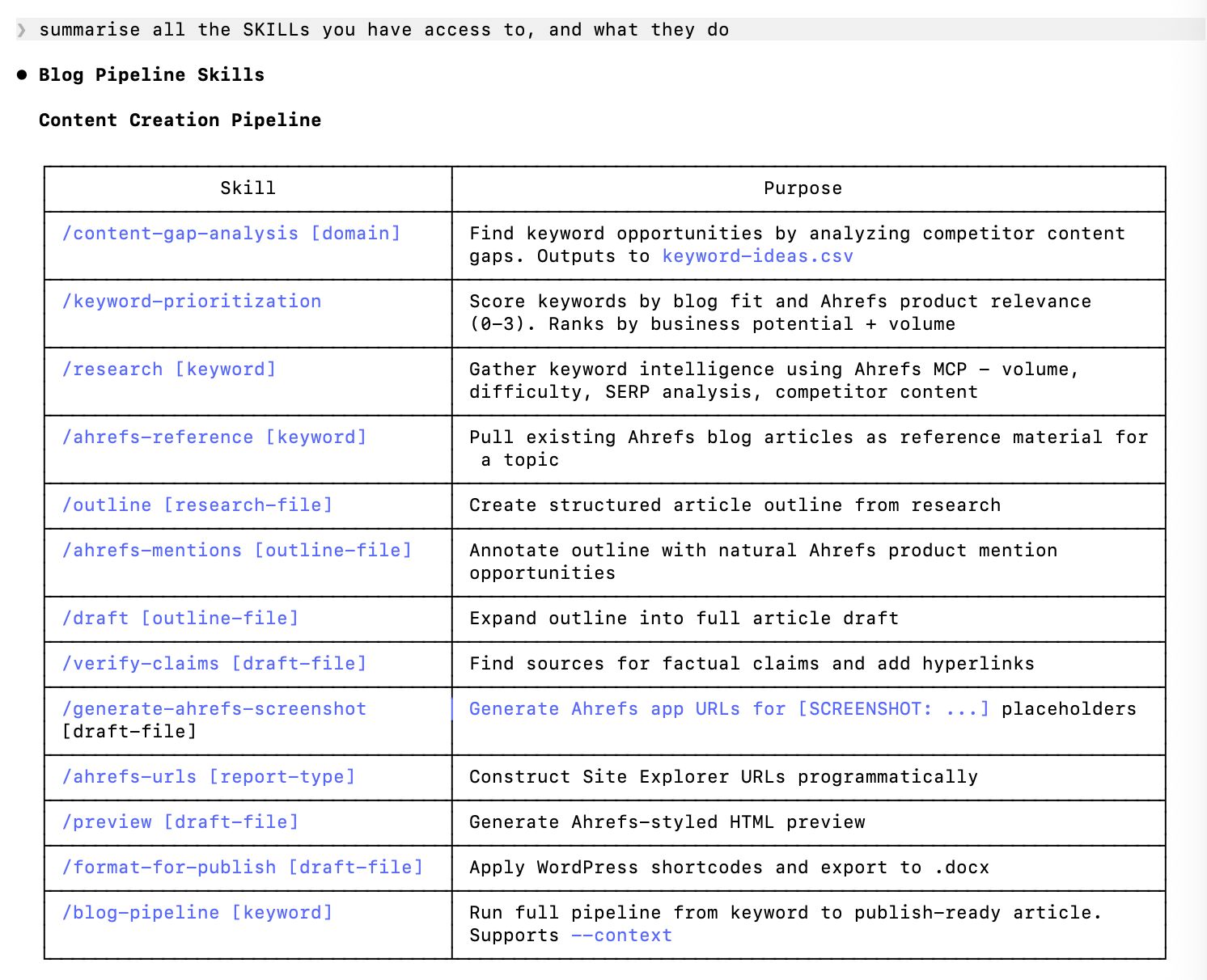
Regardless of individual persuasion, significant portions of the author’s role have already been delegated to generative AI. Utilizing Claude Code, the Ahrefs MCP, and a sequence of custom SKILLs, old articles are updated, and helpful, high-quality content is created. These AI-generated articles are indistinguishable in sound and performance from human-written pieces, incorporating the author’s experience and perspective. They are as good as anything the author could have written, and arguably better due to the time savings, eliminating any perceived trade-off.
A substantial quality gap persists between a skilled writer leveraging generative AI to its full potential and an average user prompting a basic AI model with a generic request. However, this gap is rapidly narrowing and is expected to close entirely as AI platforms democratize access to advanced functionalities. The role of the "content engineer" is becoming a standard workflow within major LLM platforms, and functionally "perfect" AI content is within reach for everyone.
The author remains comfortable making this argument, acknowledging that certain aspects of their job remain beyond AI’s current capabilities or would be deliberately retained by humans. The path forward necessitates an honest assessment of where AI can and should be utilized. While AI content was previously insufficient, it has now reached a level of quality that warrants recognition. Earlier acknowledgment of this advancement allows for greater focus on the aspects of marketing where human expertise will continue to be paramount. The author also notes a personal relief in no longer needing to write boilerplate skyscraper content.