 11
11 1
1 2
2 3
3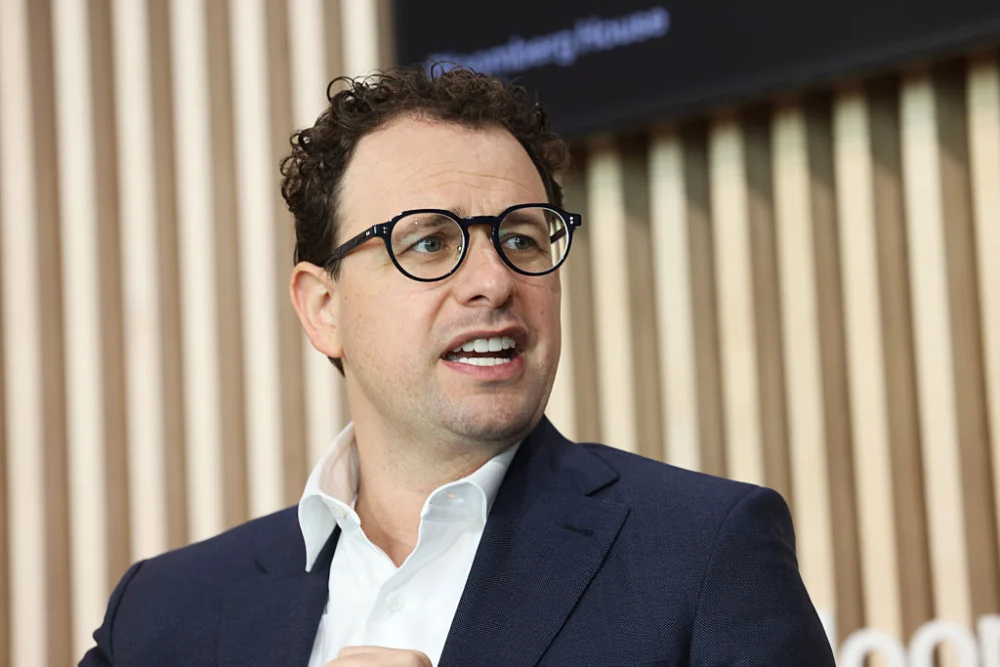
Dario Amodei, CEO of leading artificial intelligence firm Anthropic, announced on Thursday that the company intends to challenge the Department of Defense’s recent decision to label it a "supply-chain risk" in court. Amodei staunchly criticized the designation, calling it "legally unsound" and setting the stage for a potentially landmark legal battle over the control and application of advanced AI technologies within national security frameworks.
This significant declaration came mere hours after the DOD officially conferred the supply-chain risk designation on Anthropic. This move followed a protracted, weeks-long dispute between the AI developer and the military establishment regarding the extent of control the Pentagon should exert over sophisticated AI systems like Anthropic’s Claude. A supply-chain risk designation is a severe measure that carries substantial implications, as it can effectively bar a company from engaging in contracts with the Pentagon and its extensive network of defense contractors, thereby cutting off a potentially lucrative and strategically important revenue stream.
At the heart of the disagreement lies Anthropic’s firm ethical boundaries concerning the deployment of its AI. Amodei has consistently drawn clear "red lines," stating unequivocally that Anthropic’s AI will not be utilized for mass surveillance of American citizens nor for the development or operation of fully autonomous weapons systems. In stark contrast, the Pentagon has maintained its position that it should possess unrestricted access to these AI technologies for "all lawful purposes," a broad stipulation that Anthropic evidently views as incompatible with its ethical safeguards.
Despite the gravity of the designation, Amodei sought to reassure stakeholders and customers, clarifying that the vast majority of Anthropic’s client base remains unaffected. He elaborated on the precise scope of the Pentagon’s ruling, stating, "With respect to our customers, it plainly applies only to the use of Claude by customers as a direct part of contracts with the Department of War, not all use of Claude by customers who have such contracts." This distinction suggests that companies utilizing Claude for purposes unrelated to their direct military contracts should not face immediate repercussions from the designation.
Offering a preview of Anthropic’s likely legal strategy, Amodei emphasized that the Department of Defense’s letter outlining the supply-chain risk designation is inherently narrow in its legal scope. He articulated a key tenet of their argument, asserting, "It exists to protect the government rather than to punish a supplier; in fact, the law requires the Secretary of War to use the least restrictive means necessary to accomplish the goal of protecting the supply chain." This argument implies that the Pentagon’s designation might be seen as overly broad or punitive, failing to adhere to the legal principle of employing the minimum necessary restrictions. Amodei further underscored this point, adding, "Even for Department of War contractors, the supply chain risk designation doesn’t (and can’t) limit uses of Claude or business relationships with Anthropic if those are unrelated to their specific Department of War contracts." This indicates Anthropic’s belief that the designation’s reach is legally confined to very specific military-related applications.
The escalating tensions between Anthropic and the Pentagon appear to have been exacerbated by a recent incident involving a leaked internal memo. Amodei reiterated that Anthropic had been engaged in productive discussions with the Department of Defense in the days leading up to the designation, conversations that many observers suspect were derailed by the memo’s unauthorized release. The controversial internal communication, reportedly sent by Amodei to his staff, contained sharp criticism of rival AI company OpenAI, characterizing its dealings with the Department of Defense as "safety theater."
The timing of the leak was particularly sensitive, as it coincided with a period when OpenAI was actively pursuing and ultimately signed a deal to collaborate with the DOD, effectively stepping into a role that Anthropic might have otherwise filled. This move by OpenAI has reportedly sparked significant backlash and internal dissent among its own staff, highlighting the ethical complexities and internal divisions within the AI industry regarding military engagement.
In his Thursday statement, Amodei offered an apology for the memo’s leak, explicitly denying that the company intentionally shared it or directed anyone else to do so. He stressed that escalating the situation was not in Anthropic’s interest. Amodei explained that the memo was drafted under immense pressure, within "a few hours" of a rapid succession of public announcements. These included a presidential Truth Social post indicating Anthropic’s removal from federal systems, followed by Defense Secretary Pete Hegseth’s formal supply-chain risk designation, and culminating in the Pentagon’s announcement of its deal with OpenAI. Describing it as "a difficult day for the company," Amodei apologized for the memo’s tone, clarifying that it did not reflect his "careful or considered views." He further dismissed the memo, written just six days prior, as an "out-of-date assessment" that no longer accurately represented the company’s current perspective.
Amodei concluded his statement by reaffirming Anthropic’s paramount priority: to ensure that American soldiers and national security experts maintain access to critical AI tools, particularly amidst ongoing major combat operations. He highlighted Anthropic’s current support for U.S. operations in Iran, pledging that the company would continue to provide its models to the DOD at a "nominal cost" for "as long as necessary to make that transition" away from Anthropic’s direct involvement, should the designation stand.
Anthropic’s impending legal challenge will likely be mounted in federal court, most probably in Washington, D.C. However, the legal framework underpinning the Pentagon’s decision presents a formidable hurdle. The relevant law is designed to limit the conventional avenues companies typically use to contest government procurement decisions, granting the Pentagon broad discretion on matters deemed vital to national security.
Dean Ball, a former White House adviser on AI during the Trump administration and an outspoken critic of Secretary Hegseth’s treatment of Anthropic, articulated the difficulty of such a legal battle. "Courts are pretty reluctant to second-guess the government on what is and is not a national security issue," Ball observed. He added, "There’s a very high bar that one needs to clear in order to do that. But it’s not impossible." This sentiment underscores the challenging path ahead for Anthropic, as they seek to navigate a legal landscape heavily weighted in favor of national security prerogatives, while simultaneously advocating for their ethical stance on AI deployment.
TechCrunch Event
San Francisco, CA | October 13-15, 2026
About the Author
Rebecca Bellan is a senior reporter at TechCrunch, where she meticulously covers the intricate business, policy, and emerging trends shaping the field of artificial intelligence. Her insightful work has also been featured in prominent publications such as Forbes, Bloomberg, The Atlantic, and The Daily Beast.
You can contact or verify outreach from Rebecca Bellan by emailing [email protected] or through encrypted message at rebeccabellan.491 on Signal.
View Bio