11
11
Update (April 14, 7:51 PM UTC): This article has been updated to include the date of the nomination hearing.
Kevin Warsh, President Donald Trump’s nominee to lead the Federal Reserve and replace current Chair Jerome Powell, has revealed substantial personal assets totaling millions of dollars in financial disclosures filed ahead of his crucial confirmation hearing. Among these disclosed holdings are significant investments in companies operating within the cryptocurrency and artificial intelligence (AI) sectors, signaling a potential focus on these emerging technologies within the central banking landscape.
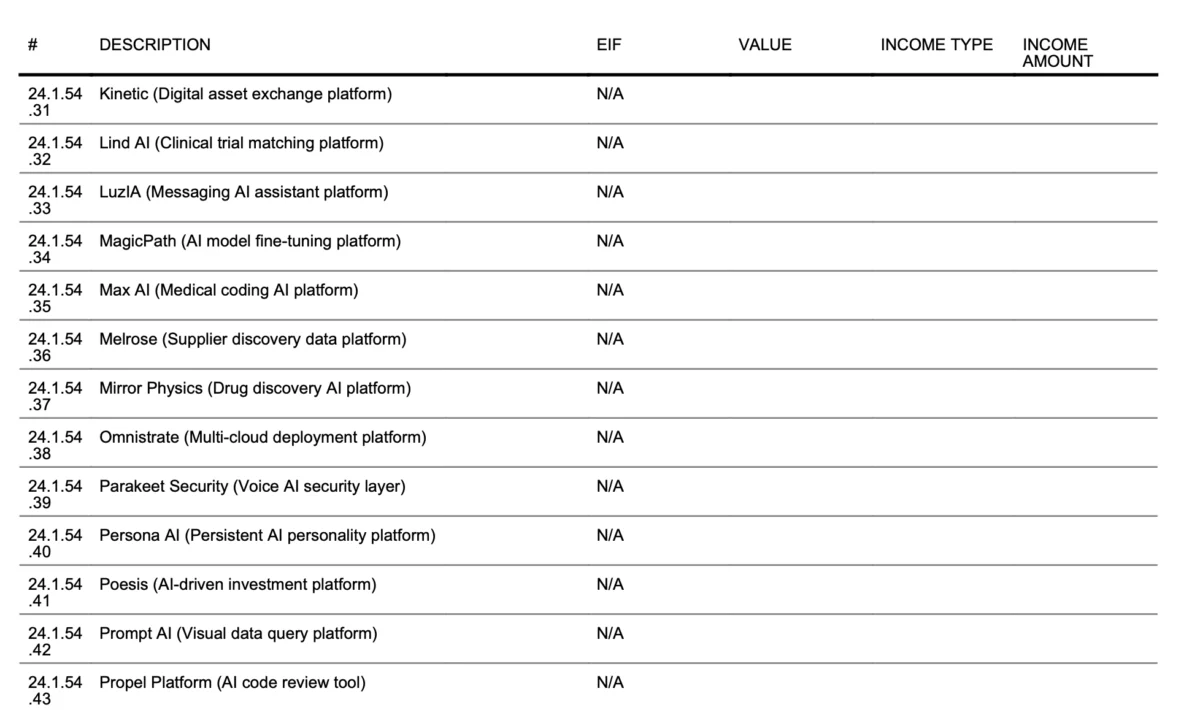
The comprehensive filing with the U.S. Office of Government Ethics details Warsh’s financial portfolio, which includes investments in various "Excepted Investment Funds" (EIFs). Notably, these EIFs are associated with prominent entities in the digital asset and AI spaces. The disclosure lists investments in Compound and Dapper Labs, two well-known players in the cryptocurrency ecosystem, alongside Kinetic. Furthermore, Warsh has reported holdings in AI companies such as Delphi, Conversion, Factory, and Glue, among others. These disclosures provide a snapshot of his financial interests as he navigates the rigorous Senate confirmation process.
According to reporting by Reuters on Tuesday, Warsh’s total reported assets exceed $100 million. However, a key detail emerging from the disclosure is that the specific valuation ranges for his crypto and AI investments were not provided. This omission, while potentially raising questions, aligns with U.S. ethics office rules which do not mandate the reporting of assets valued below $1,000. The exact value and extent of his involvement in these rapidly evolving sectors remain undisclosed in the public filing.
Beyond his digital asset and AI holdings, Warsh’s financial disclosures highlight other substantial assets. He reported over $50 million invested in the Juggernaut Fund, a significant private equity or hedge fund. Additionally, he disclosed earning more than $10 million in income derived from consulting fees paid by Duquesne Family Office, the investment firm associated with renowned billionaire investor Stanley Druckenmiller. These disclosures underscore Warsh’s extensive financial background and experience in high-level investment management.

President Trump initially announced Warsh as his preferred candidate to helm the Federal Reserve in January. However, his nomination was formally advanced to the Senate only in March. This delay followed a period of public pressure from President Trump, who had repeatedly voiced dissatisfaction with Jerome Powell’s leadership and had even threatened to remove him from his position. The individual who ultimately leads the Federal Reserve wields considerable influence over the nation’s financial policy, with a primary responsibility for setting federal interest rates, managing inflation, and ensuring the stability of the U.S. financial system.
Jerome Powell’s second four-year term as Federal Reserve Chair is scheduled to conclude on May 15. In preparation for a potential transition, the Senate Banking Committee announced on Tuesday afternoon that it will convene a hearing to review Warsh’s nomination. This hearing is scheduled for April 21, marking a critical step in the confirmation process.
President Trump’s Unfilled Key Nominations for Financial Agencies Amidst Regulatory Uncertainty
While the Senate Banking Committee prepares to deliberate on Kevin Warsh’s nomination for the Federal Reserve, a notable gap persists in President Trump’s appointments for other key financial regulatory bodies. The President has yet to announce his selections for commissioners at the Securities and Exchange Commission (SEC) and the Commodity Futures Trading Commission (CFTC). This lack of leadership at both agencies comes at a particularly sensitive time for the regulation of digital assets.
The SEC currently operates with a reduced leadership team, comprising only three of its five commissioners. All three are Republicans. Simultaneously, the CFTC has a singular commissioner, Michael Selig, also a Republican. The remaining four commissioner positions at the CFTC remain vacant. Both the SEC and the CFTC are poised to play pivotal roles in shaping the regulatory framework for digital assets, especially if Congress moves forward with proposed legislation aimed at establishing a clear market structure for cryptocurrencies. This critical legislation has been stalled in the Senate since July 2025, highlighting the ongoing debate and uncertainty surrounding digital asset oversight.
The financial disclosures by Kevin Warsh, a potential future leader of the U.S. central bank, offer a glimpse into the financial priorities and investments of individuals in positions of significant economic influence. His reported holdings in cryptocurrency and AI companies underscore the growing presence and potential impact of these technologies on the broader financial landscape, a trend that the Federal Reserve and other regulatory bodies will undoubtedly need to address. The upcoming confirmation hearing will likely delve into Warsh’s views on these sectors and his approach to monetary policy in an increasingly complex and technologically driven economic environment.