 11
11
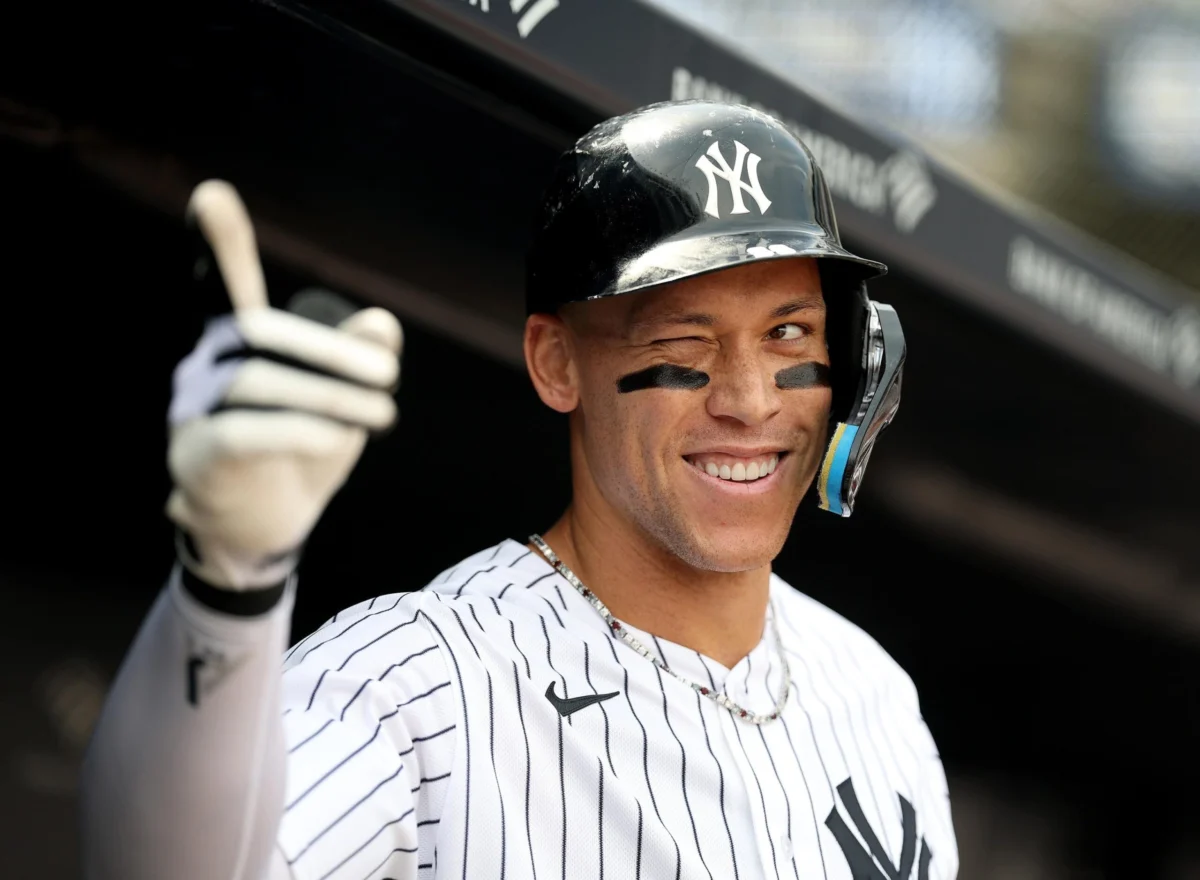
NEW YORK – The New York Yankees, despite holding the second-best record in the American League, find their championship aspirations inextricably linked to the recovery of their colossal slugger, Aaron Judge. The team, known for its deep pockets and perennial pursuit of titles, faces a daunting challenge with their most impactful player sidelined indefinitely.
Judge has been absent from the lineup since May 31, grappling with a stress fracture in his first right rib. The nature of a stress fracture, often a hairline crack resulting from repetitive strain rather than a single traumatic event, necessitates careful management and a gradual return to activity to prevent re-injury. Unlike a clean break, which might have a more predictable healing timeline, stress fractures can be notoriously slow to mend and require the bone to fully calcify and strengthen before high-impact activities are resumed. This inherent uncertainty has created a palpable sense of anxiety within the Yankees organization and among its fervent fanbase.
While recent news regarding Judge’s recovery offers a glimmer of hope, a concrete timetable for his return remains elusive. Speaking to reporters at Yankee Stadium on Friday, Judge expressed an unwavering belief in his eventual return to the field this season. "I don’t see why I wouldn’t," Judge stated, a sentiment that resonated with the team’s desire for his presence. He further revealed that new imaging taken during the recent All-Star break had shown "a positive sign because it’s showing some healing." This incremental progress, though encouraging, has not been enough to accelerate his recovery significantly.
Yankees manager Aaron Boone, addressing the media during the pregame press conference before a crucial midsummer series against the two-time World Series defending Los Angeles Dodgers, dismissed any notion of setting a specific return date. Both Boone and Judge concede they are in the dark regarding a definitive timeline. The ultimate decision rests with Texas orthopedic surgeon Dr. Gregory Pearl, whose authoritative assessment is eagerly awaited. Until Dr. Pearl provides a definitive statement, Judge is restricted from resuming any form of upper body strengthening or baseball-specific activities, leaving the Yankees and their supporters in a prolonged state of anticipation. The team, and indeed the entire baseball world, is "waiting with bated breath."
The profound impact of Judge’s absence was eloquently articulated by Dodgers superstar Mookie Betts. "It would be like us playing without Shohei Ohtani," Betts remarked after the Dodgers clinched the first game of the series with a narrow 2-1 victory, highlighted by Betts’ stellar defensive play in the eighth inning, where he executed a difficult relay throw to retire Trent Grisham at the plate. Betts’ comparison underscores Judge’s singular importance, likening him to a generational talent whose absence would cripple even the most formidable teams. Ohtani, a two-way sensation, represents the pinnacle of individual talent in modern baseball, and drawing such a parallel speaks volumes about Judge’s value.
Yankees Flounder Without Their Star Slugger
The statistics starkly illustrate the void left by Judge. In the 38 games played since his last appearance, the Yankees have recorded a disappointing 18-20 record, a stark contrast to their earlier performance. This slump has seen them described as "floundering" and a "ship without a rudder," struggling to maintain the consistency and power that characterized their play with Judge in the lineup. As the team’s premier power hitter and highest-paid player, currently in the fourth year of a lucrative nine-year, $360 million contract, Judge’s offensive production, leadership, and presence in the batter’s box are irreplaceable. His absence not only removes his considerable individual statistics but also alters the entire dynamic of the lineup, impacting pitch selection for other hitters and reducing the overall threat posed by the Yankees’ offense.
Despite their recent struggles, the Yankees are still projected to make the playoffs in what is perceived as a relatively weak American League, whether by securing the top spot in the AL East or through a Wild Card berth. However, the prospect of postseason success without Judge looms large. History has repeatedly shown that deep playoff runs often hinge on the health and performance of star players, and without their cornerstone slugger, the Yankees’ chances of advancing deep into October appear significantly diminished.
Commissioner Manfred Weighs in on Competitive Balance

The challenges faced by the Yankees without Judge also intertwine with a broader, long-standing debate within Major League Baseball regarding competitive balance, particularly concerning team payrolls. Commissioner Rob Manfred addressed this issue during a press conference with the Baseball Writers’ Association of America prior to the All-Star Game in Philadelphia. Manfred acknowledged that while lower-payroll teams can certainly reach the playoffs, their ultimate ability to win a championship is often dictated by their financial investment.
"I think our view of the world is that over a very long period of time there’s a very strong relationship between who gets into the playoffs and who proceeds," Manfred stated, emphasizing the "aggregate data over time." He pointed to recent examples to bolster his argument, specifically citing the 2024 National League Championship Series where the Los Angeles Dodgers, boasting a colossal payroll of $417.3 million, comprehensively swept the Milwaukee Brewers, whose payroll stood at a comparatively modest $143.6 million. This disparity, Manfred argued, is not an isolated incident but a recurring pattern that highlights the advantage enjoyed by financially dominant franchises.
This season, the trend continues. The Brewers, despite their impressive 60-37 record, the second-best in the Majors, operate with a payroll of $144.8 million. They trail only the Dodgers, who hold the best record at 62-36 and command an even larger payroll of $420.4 million. Similarly, in the highly competitive AL East, the Tampa Bay Rays lead the division with a payroll of $109 million, significantly outspending them, the second-place Yankees, who are third overall in MLB spending behind the Dodgers and Mets at $336.7 million. The Rays currently hold a 2.5-game lead over the Yankees, demonstrating that while financial resources often correlate with success, astute management and player development can allow lower-payroll teams to compete at a high level, at least during the regular season.
Historically, the Yankees boast an unparalleled 27 World Series championships, though their last title came in 2009, marking a significant drought for a franchise accustomed to regular glory. The Dodgers, meanwhile, have recently added two more titles to their collection, bringing their total to nine (eight in Los Angeles, one in Brooklyn), solidifying their status as a modern baseball dynasty. In stark contrast, the Brewers and Rays have yet to hoist a World Series trophy, underscoring the challenge of achieving ultimate success without the financial might of larger market teams.
Manfred firmly believes that implementing a salary cap, a contentious issue, would ultimately generate greater competitive balance across the league. However, the players’ union adamantly opposes this idea, viewing it as a mechanism to suppress player salaries and limit earning potential. "There’s no question that everybody in every sport is not going to win once every 30 or 32 years, depending on how many teams you have," Manfred conceded. "But data in our sport is stark. Your opportunity to make the playoffs, if you are a larger market team, is dramatically higher. And your opportunity to proceed to subsequent rounds, that advantage grows with each round." He concluded that a significant piece of this issue revolves around "perception," and the "hope" that fans of all teams harbor at the beginning of each season.
Dodgers’ Dynasty and Yankees’ Future
While few would express sympathy for the high-spending Yankees, their current predicament illustrates that even immense payrolls cannot fully mitigate the impact of losing a generational talent. Their chances of reaching the World Series again are less tied to their overall financial outlay and more to the specific fate of Aaron Judge. Without him, the Yankees are undeniably a lesser team than the one that lost to the Dodgers in a five-game 2024 World Series.
The Dodgers, meanwhile, with their formidable core of Shohei Ohtani, Mookie Betts, and Freddie Freeman firmly intact, have honed their championship pedigree through the crucible of two victorious postseasons. They are now eyeing a historic achievement, potentially becoming the first MLB team to achieve a "three-peat" since the iconic Yankees teams of 1998 to 2000. The confidence within the Dodgers’ clubhouse is palpable, as exemplified by young catcher Dalton Rushing, who, despite not being on the 2024 team, confidently declared, "We’re better."
Indeed, the Dodgers might very well be. For the Yankees, the road ahead without Aaron Judge is fraught with peril. The prospect of winning the 2026 World Series, or any championship in the near future, will be an arduous task without their indispensable slugger. Judge himself encapsulated the frustration and determination felt by both himself and his team. "That’s why I get paid to play big games for the Yankees," he remarked. "With how special this group is, I want to be a part of everything. We have a lot of great guys in this clubhouse who have been holding their own and carrying the weight of the team. It’s been fun to watch, but very frustrating and tough sitting on the sidelines." His words underscore the profound personal and collective toll of his injury, highlighting the immense pressure on him to return and the hopes of a franchise resting squarely on his broad shoulders.