11
11
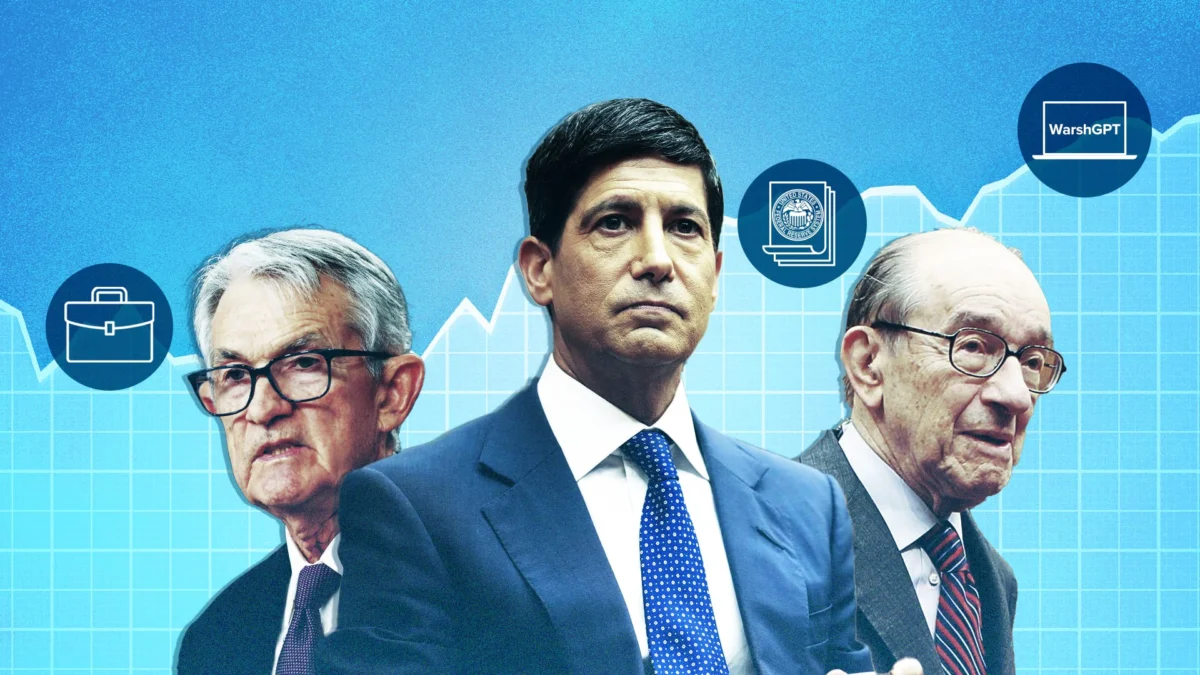
F/m Investments’ Washington, D.C., office is a stone’s throw from the Federal Reserve’s headquarters. However, under the central bank’s new leadership, CEO Alexander Morris finds that the perceived distance has significantly widened. Fed Chairman Kevin Warsh, since assuming the post in May, has initiated a substantial overhaul of the central bank’s forward-looking communication strategies. This shift has sounded an alarm for market participants like Morris, whose investment strategies are partly predicated on anticipating the Fed’s future interest rate decisions.
"We’ve made a pretty good business out of decoding Fedspeak," Morris remarked, referencing the specialized, jargon-laden language often employed by central bank officials. "And he just said he was going to go quiet on us." In response, Morris’ firm, which manages exchange-traded funds linked to inflation and U.S. Treasurys, has launched "WarshGPT." This artificial intelligence-powered tool analyzes approximately 1,800 documents and transcripts from Warsh, aiming to assist users in comprehending his potential analyses of economic and monetary policy issues. F/m Investments is among numerous financial institutions preparing for an era characterized by reduced public forecasting from Warsh’s Federal Reserve. In some instances, these institutions are turning to AI models to gain an investment advantage.
"Whether the Fed is providing a lot of information or a little information, investors have to understand what the Fed is likely to do in the future," stated Gary Richardson, a former historian at the central bank and now an economics professor at the University of California, Irvine. "With limited information, people are going to try to do anything they can to figure out what the Fed is thinking."
Investors and Fed watchers are contemplating whether former Chairman Alan Greenspan’s communication style can serve as a benchmark for expectations under Warsh. Richardson recalled that during Greenspan’s tenure, a simple "good evening" could reportedly trigger a market decline. The financial media even tracked a "briefcase indicator," which theorized that Greenspan carrying a larger briefcase suggested he had gathered more evidence supporting a change in borrowing costs.
Warsh has already signaled a clear intention to alter how the Fed disseminates information. One of his task forces, established to reshape the Fed’s operational framework, is specifically focused on the central bank’s communication methods. The Federal Reserve’s June meeting statement, the first under Warsh’s chairmanship, contained approximately 130 words, a notable reduction from the figures exceeding 300 words seen in previous releases, according to a CNBC analysis. Warsh himself acknowledged the statement was "shorter" and "simpler," and intentionally excluded forward guidance. In his inaugural press conference as chairman, Warsh dedicated only 5% of his sentences to policy-relevant topics, a stark contrast to the 27% average observed under his predecessor, Jerome Powell, as reported by UBS.

F/m Investments’ WarshGPT chatbot was developed at a cost of less than $1,000, utilizing Anthropic’s Claude model, with its name playfully referencing OpenAI’s ChatGPT. The development from concept to release took roughly two weeks, including pre-launch testing involving a group that included former Fed officials and newsletter writers. While the product incorporates Warsh’s communications, economic history, and political context to enrich its responses, F/m has imposed limitations: WarshGPT does not speak as Warsh and refrains from offering forward-looking statements or forecasts.
F/m is not alone in its strategic re-evaluation and tool development for navigating a Warsh-led central bank. UBS maintains an interactive dashboard for its clients to monitor the Fed’s policy tone, offering an unbiased assessment of Warsh’s commentary during meetings, according to Elena Amoruso, a strategist at the Swiss bank. Following Warsh’s first policy meeting as chairman last month, Amoruso informed clients that his policy-relevant remarks were "overwhelmingly hawkish," driven by his views on the labor market, economic growth, and the state of inflation. "Arguably, this is the most high-value data set… in terms of how much one word can move dollars," Amoruso commented to CNBC.
At JPMorgan Asset Management, chief global strategist David Kelly is developing contingency plans should the Fed discontinue key releases. If the central bank abandons the "dot plot," for instance, Kelly indicated his team would intensify its analysis of speeches by members of the Federal Open Market Committee, the body responsible for setting interest rates, to gauge their future voting intentions. Kelly also noted that significant changes to Fed communication would likely require several months for announcement and implementation, and that the final decisions might not be as extreme as some anticipate. "Just like the Federal Reserve says it can be patient in adjusting interest rates to the economy, we can be patient in adjusting our resources," Kelly stated.
Investors anticipate that a reduction in forward guidance from the Fed could lead to more pronounced market fluctuations following policy decisions or public appearances by Fed officials. Some traders view this environment as an opportunity for greater returns. "If there’s less communication about the reaction function, I actually think that’s a negative for the economy," observed Steve Friedman, a former New York Fed official and now senior macroeconomist at MacKay Shields. However, he added, "less clarity about what the Fed may do can actually be a source of alpha for investors if you have a robust framework for thinking about the economy and monetary policy." Friedman indicated that if Warsh scales back public speaking, he would increase his focus on speeches from Fed Governor Christopher Waller, whom he described as a "bellwether" for the broader committee. Waller recently stated that the Fed should not be focused on "fighting the last war" with inflation, but cautioned that interest rate hikes remain a possibility.
Retail traders may need to further diversify their portfolios to account for increased policy uncertainty under Warsh, according to Richardson. Investment firms seeking a competitive edge, he suggested, will likely invest heavily in hiring Fed alumni who can assist in making predictions within a lower-transparency environment. Divergent expectations are already emerging regarding the Fed’s policy trajectory in the coming months. Fed funds futures traders are pricing in a nearly 59% probability of an interest rate increase in September, according to CME’s FedWatch tool. Conversely, Kalshi traders believe it is most likely that the Fed will maintain current rates at that meeting. "For ordinary investors, it’s already really hard for them to figure out what’s going on," Richardson concluded. "It’s going to become much harder."