 11
11
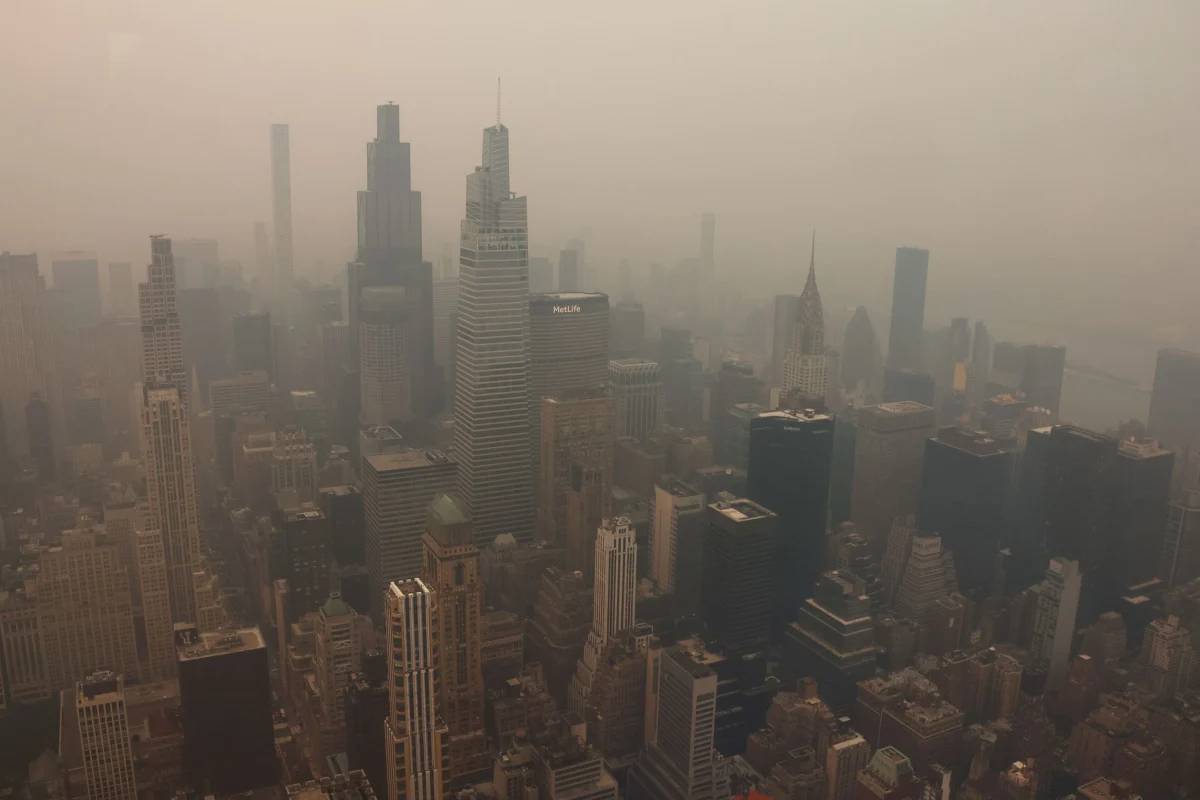
The pinnacle of international soccer, the World Cup final, is poised for Sunday, featuring a highly anticipated clash between South American giants Argentina and European powerhouse Spain. The grand event is scheduled to take place just outside of New York City, drawing global attention to what promises to be an epic encounter. However, a significant and concerning threat has emerged that could overshadow the sporting spectacle: a thick blanket of wildfire smoke, casting a pall over the region and raising serious health alarms. Adding to the tension, FIFA, the sport’s global governing body, appears to lack any discernible contingency plan to safeguard the well-being of the players and the tens of thousands of fans expected to attend.
The pervasive wildfire smoke originates from extensive blazes raging across Canada, which have, in recent days, drifted southward to engulf vast areas of the American Midwest and East Coast. This unprecedented atmospheric phenomenon has adversely affected more than a dozen states, with some of the most densely populated cities experiencing air quality levels deemed hazardous. New York City, a major metropolitan hub, has been particularly impacted, with its iconic skyline frequently obscured by an orange, hazy sky throughout the week. On Thursday, the situation escalated to the point where New York State authorities issued an official alert, as the Air Quality Index (AQI) soared into "unhealthy" and even "very unhealthy" ranges. Public officials urgently advised residents to "avoid spending time outdoors, if possible," underscoring the severity of the environmental hazard.
As of Friday morning, the air quality in the vicinity of the stadium remained firmly in the "unhealthy" category, posing an immediate concern for any outdoor activities. While forecasts suggested a potential improvement to "moderate" by the time of Sunday’s kickoff, the unpredictable nature of smoke patterns means the situation could still deteriorate rapidly. The open-air design of the stadium, where global superstars Lionel Messi of Argentina and Lamine Yamal of Spain are slated to compete, presents a significant challenge. Unlike enclosed venues, there is no practical method to seal off the stadium from the ambient air, meaning that if smoke persists, both players and spectators would inevitably be exposed. Such exposure carries a range of potential health risks, including immediate symptoms like a burning throat, persistent coughing, and headaches. These conditions are particularly dangerous for sensitive populations, such as young children, older adults, and individuals with pre-existing respiratory ailments like asthma, who could experience severe complications.
Adding to the growing concerns, players have already been observed practicing outdoors amidst compromised air quality in the days leading up to the final. Notably, the Spanish national team conducted a training session on Thursday in New Jersey, despite the prevailing smoky conditions. Dr. Courtney Howard, an emergency room physician and an official with the Global Climate and Health Alliance, voiced strong criticism regarding this practice. In an interview with the Associated Press, Dr. Howard emphasized the unique vulnerability of elite athletes: "These are high-level athletes who are moving a lot of air through their lungs. They shouldn’t be practicing outside if the air quality levels are at hazardous sort of ranges for wildfire-related air pollution." Her remarks highlight the amplified health risks faced by athletes whose physical exertion leads to increased inhalation of airborne pollutants.
The lack of a specific plan from FIFA for dealing with wildfire smoke has drawn considerable scrutiny. Despite inquiries from Grist, the organization, along with New York City Department of Health officials, did not immediately provide a response or comment on the matter. This silence is particularly striking given FIFA’s existing, comprehensive protocols for managing extreme heat. In a previous statement to Grist, FIFA detailed extensive measures, including mandatory water breaks for players, designed to mitigate heat-related risks. However, that statement conspicuously omitted any mention of air quality as a potential hazard. The organization’s generic assertion last month that "Climate-related risks are assessed as part of overall tournament planning and managed in close coordination with host cities, stadium authorities, and national agencies" now rings hollow without specific provisions for wildfire smoke.
In stark contrast to FIFA’s apparent lack of preparedness, several other major sports leagues have implemented standardized and clear-cut adjustments triggered by air quality warnings. For instance, the National Women’s Soccer League (NWSL) has an explicit policy in place. During a women’s soccer game at Citi Field in New York on Thursday, which was affected by smoke, additional hydration breaks were mandated for player safety. NWSL policy dictates that hydration breaks be added when the Air Quality Index reaches 101, a level designated as "unhealthy for sensitive groups." Furthermore, games are either canceled or postponed entirely if the AQI surpasses 200, indicating "very unhealthy" conditions. This week alone, Major League Baseball (MLB) rescheduled a game in Philadelphia due to the smoke, and Major League Soccer (MLS) took the decisive step of canceling a game in Chicago. These examples underscore a proactive approach to player and fan safety that appears to be missing from FIFA’s current framework.
The World Cup is now in its fifth and final week, and despite the games having been hosted in multiple regions that are increasingly susceptible to wildfires, FIFA has, until now, seemingly benefited from favorable atmospheric conditions. The organization’s implicit "bet" that the air would remain clear has largely paid off throughout the tournament. Nicholas Watanabe, a professor of sport and entertainment management at the University of South Carolina, acknowledges this streak of luck but cautions against complacency. "FIFA seems unprepared for these wildfires," Watanabe stated, highlighting the organizational oversight. While he conceded that "it looks like the worst of the pollution will dissipate before the World Cup Final, so FIFA will dodge a bullet and likely push forward with the match," he stressed that this fortunate outcome does not absolve FIFA of its responsibility to be prepared for such climate-related eventualities.
The incident has reignited broader questions about the commitment of FIFA and other outdoor sports leagues to adequately address climate threats. FIFA has already faced considerable criticism this year for its policies concerning extreme heat. Trinity Rodman, a prominent player in the NWSL, succinctly articulated a growing sentiment among athletes regarding playing conditions: "If we have to have a hydration break every 15 minutes, then we shouldn’t be playing the game." This suggests that even existing protocols, while present, may not be sufficient to ensure optimal safety and performance in increasingly challenging environmental conditions. The issue extends beyond soccer; a professional cyclist, Tadej Pogačar, who was the yellow jersey holder in this year’s Tour de France, openly questioned whether the iconic event should continue to be held in the summer months. Pogačar noted that the 2023 Tour was plagued by wildfires, smoke, and extreme heat, advocating for a fundamental change to the racing calendar. "I would change the whole calendar," he remarked earlier this month, acknowledging, "It’s not something I can do."
The power to institute such fundamental changes generally resides with a sport’s governing body, rather than individual athletes. Professor Watanabe believes that climate issues must be treated with far greater seriousness by these organizations. Even if the World Cup final ultimately proceeds without direct impact from the smoke, this close call should serve as an unequivocal warning to FIFA and the wider sports world. "Hopefully," Watanabe concluded, "this is a wake-up call to FIFA and all other sport leagues and competitions of the need for regulations and a comprehensive plan to deal with climate risks." The incident highlights an urgent need for sports organizations to develop robust, proactive strategies to protect athletes and fans in an era of escalating climate change.
This story was originally published by Grist and is reproduced here as part of the Climate Desk collaboration.