11
11
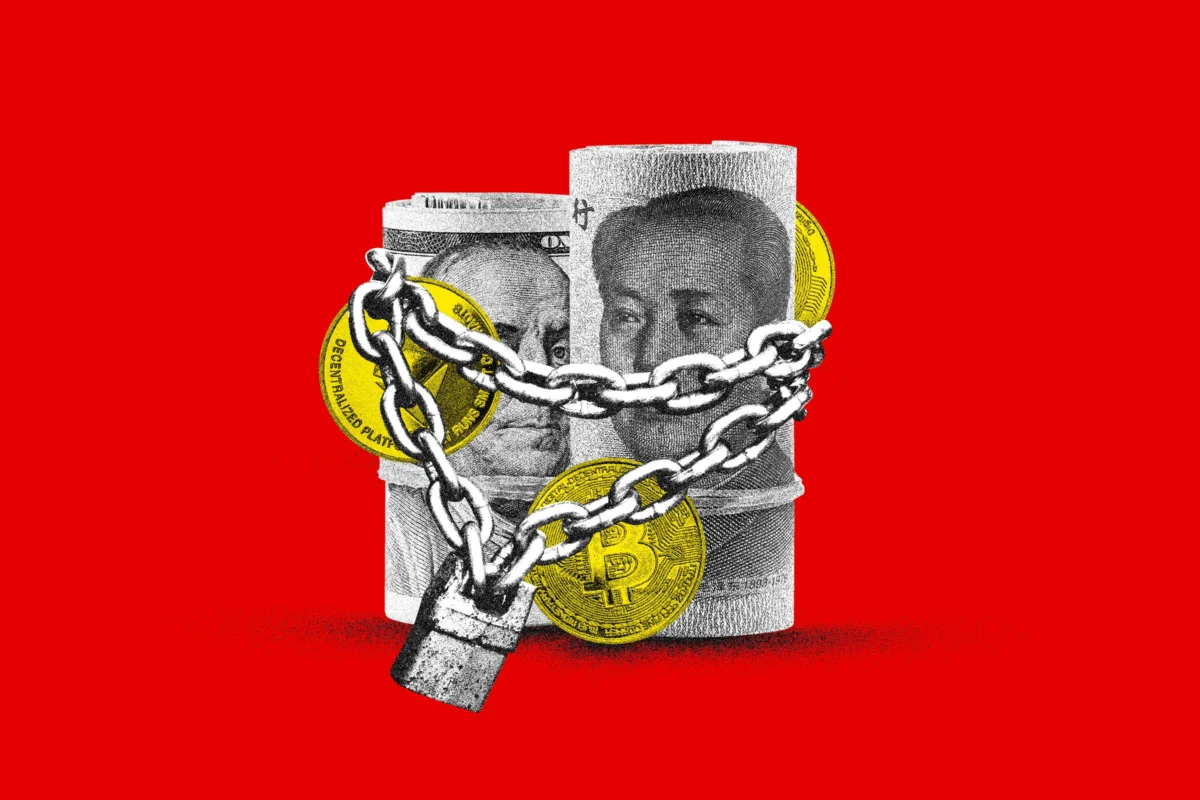
Chinese-language online black markets have emerged as one of the most significant drivers of cybercrime in history, facilitating the movement of tens of billions of dollars in illicit finance annually. These clandestine marketplaces, dealing in stolen data, sophisticated money-laundering services, and even, disturbingly, tools for human subjugation such as electrified shackles, have been instrumental in fueling massive scam operations and pervasive human trafficking networks across the globe. In a potentially decisive move, officials in the United Kingdom have recently dealt a significant blow to one such entity: a colossal $20 billion cryptocurrency marketplace.
On Thursday, the UK’s Foreign, Commonwealth and Development Office, commonly known as the Foreign Office, announced stringent financial sanctions targeting the Xinbi Guarantee online marketplace. This action is expected to severely curtail its extensive operations. Xinbi, an online bazaar that has predominantly leveraged channels and accounts on the widely used messaging platform Telegram, has previously been linked to billions in cryptocurrency transactions and has proven notoriously difficult to disrupt by law enforcement agencies.
The sanctions against Xinbi were not an isolated measure. British officials concurrently imposed penalties on several individuals allegedly connected to the operation of industrial-sized scam compounds located in Cambodia. These compounds are notorious for their forced labor practices, with one particularly egregious example being the #8 Park compound, which is estimated to house as many as 20,000 individuals coerced into illicit activities. Further demonstrating the UK’s commitment to dismantling these criminal enterprises, the government also seized properties in London, including a lavish £9 million penthouse, directly linked to the sanctioned individuals. Stephen Doughty, a Foreign Office minister, underscored the gravity of these actions in a statement, asserting that the sanctions "send a clear message" that those orchestrating scam compounds will face severe consequences. This latest crackdown builds upon a sweeping wave of penalties issued by both the US and UK in October against Cambodian-linked scamming operations, indicating a concerted international effort.
Over the past decade, a harrowing reality has unfolded across Cambodia and broader Southeast Asia: hundreds of thousands of victims of human trafficking have been forcibly confined and exploited within these compounds. There, they are compelled to work around the clock, operating complex online cryptocurrency investment and romance scams, often referred to as "pig butchering" scams due to their manipulative and drawn-out nature designed to extract maximum funds from victims. This multibillion-dollar scam industry, frequently intertwined with Chinese organized crime groups, has flourished, sustained by a sophisticated ecosystem of secondary services and cryptocurrency marketplaces. These platforms, like Xinbi, provide the essential tools, technical infrastructure, and illicit financial services required to launch and maintain these deceptive operations. Xinbi, in particular, has risen to prominence as one of the largest such marketplaces, especially after the Huione Group, a similar platform, was sanctioned by the US Treasury last year.
The UK’s sanctions register explicitly alleges that "Xinbi is or has been involved in profiting financially or otherwise obtaining a benefit from human rights abuses," directly referencing the brutal treatment and torture documented in some scam compounds within the region. The notice further states, "Xinbi has enabled and profited from the operation of scam centers in Southeast Asia." This direct accusation highlights the severe humanitarian implications of Xinbi’s activities beyond just financial crime.
Tom Robinson, chief scientist and cofounder of the leading crypto-tracing firm Elliptic, commented on the anticipated impact of the sanctions to WIRED. "Sanctions will make it more challenging for Xinbi, its merchants and users, to spend or exchange cryptocurrency that has passed through the marketplace," he explained. Elliptic’s analysis last year had previously revealed that the Xinbi Guarantee platform facilitated at least $8.4 billion in transactions since 2022, with Robinson stating at the time that the "vast majority" of this sum was likely money stolen from online scam victims. Beyond merely processing stolen funds, the platform’s diverse activities included selling crucial technology, compromised personal data, and sophisticated money-laundering services—all vital components for the functioning of online scams.
Despite previous attempts to disrupt its operations, Xinbi has demonstrated remarkable resilience. Following WIRED’s reporting last May, Telegram took action by removing channels and accounts linked to both the Huione marketplace and Xinbi. However, Xinbi swiftly rebuilt its digital presence on Telegram and strategically diversified its underlying infrastructure to enhance its resilience against future takedown attempts. "Xinbi was able to recover very effectively from Telegram’s action against it. It simply created new Telegram channels and continued its activity," Robinson elaborated to WIRED. He noted its substantial growth, particularly in market share, following the shutdown of Huione Guarantee and other similar illicit marketplaces. Robinson now estimates that across its entire ecosystem, including its merchants and core infrastructure, Xinbi has processed an astonishing $19.7 billion.
The Xinbi website, specifically referenced in the latest UK sanctions, lists multiple Telegram channels, some boasting thousands of members, with one channel alone reportedly having around 175,000 subscribers. Telegram did not immediately respond to WIRED’s request for comment regarding the sanctions against Xinbi or the status of the channels linked on its website. Similarly, Telegram accounts directly associated with the Xinbi website did not provide an immediate response to WIRED’s inquiries.
Further analysis from crypto-tracing firm Chainalysis corroborates Xinbi’s sophisticated adaptation, stating that the platform has "taken additional steps" to fortify its operations. Chainalysis estimates that between 2021 and 2025, Xinbi processed an astounding $19.9 billion. In recent months, Xinbi has reportedly duplicated some of its critical crypto payments infrastructure onto an alternative messaging application and has even launched its own proprietary payment app, XinbiPay. Chainalysis researchers highlighted that "All of Xinbi’s services are connected on chain, signaling an effort to build out proprietary financial infrastructure and insulate itself from disruptions against other illicit service providers." This move signifies a strategic effort to create a self-sufficient financial ecosystem, making it even harder for external authorities to dismantle.
Governments worldwide have been intensifying their enforcement actions against various components of the sprawling scam ecosystem. These efforts include sanctioning crypto marketplaces, actively working to disrupt crypto-based money laundering networks, and conducting raids on scam centers. The combined US-UK sanctions last year, which notably led to the ultimate arrest of alleged criminal mastermind Chen Zhi by Chinese officials, have spurred Cambodia to attempt to shut down hundreds of scam compounds across the region.
However, the immense sums of money generated by these criminal operations, often coupled with close political links and corruption, allow them to continually invest in new technologies, acquire advanced infrastructure, and develop increased resistance to takedown efforts. This inherent resilience means that even massive international collaborations have frequently struggled to make a truly significant dent in the overall scale and effectiveness of global scamming operations.
The pervasive nature of this crime was highlighted by Gregory Heeb, the FBI’s deputy assistant director of the criminal division, during a United States Senate Joint Economic Committee hearing on Wednesday. He noted that scamming remains vastly underreported in the US, yet reported dollar losses have still surged by approximately 350 percent since 2019. Preliminary data from the FBI’s Internet Crime Complaint Center indicates that it received roughly 456,000 digital scam complaints in 2025, with reported losses exceeding a staggering $17.7 billion.
Karen Seifert, director of the Scam Center Strike Force within the United States Attorney’s Office for the District of Columbia, emphasized the structural challenge during the same Senate hearing. "The network of the money launderers is, for the most part, separate from the network of the [scam] compounds itself," Seifert explained. "Even if I can crack the code on who’s leading the compound at sort of the regional level, that person is totally divorced from the money-laundering network, and that’s a whole separate case. So we’re spending a lot of resources on both sides of the problem." This division of labor within the criminal enterprises necessitates a two-pronged approach, straining investigative resources.
John Wojcik, a threat researcher at security company Infoblox and a former official at the United Nations Office on Drugs and Crime specializing in scamming operations, described the sheer scale of scamming, money laundering, and closely linked online casinos operating out of Asia as "not like anything we have ever seen before." He further elaborated on the critical vulnerability in this global criminal infrastructure. "The critical vulnerability here is not at the point of the multibillion-dollar cybercrime and scam operations themselves, but in the underground banking and money-laundering infrastructure that has supercharged it," Wojcik stated. He concluded with a stark warning: "Asian money-laundering organizations are clear global market leaders in this space, and we’ve only just begun to grasp how deeply they’ve infiltrated our financial systems and economies." The UK’s latest sanctions against Xinbi represent a significant step in targeting this critical financial backbone, hoping to cripple the entire illicit ecosystem it supports.