11
11
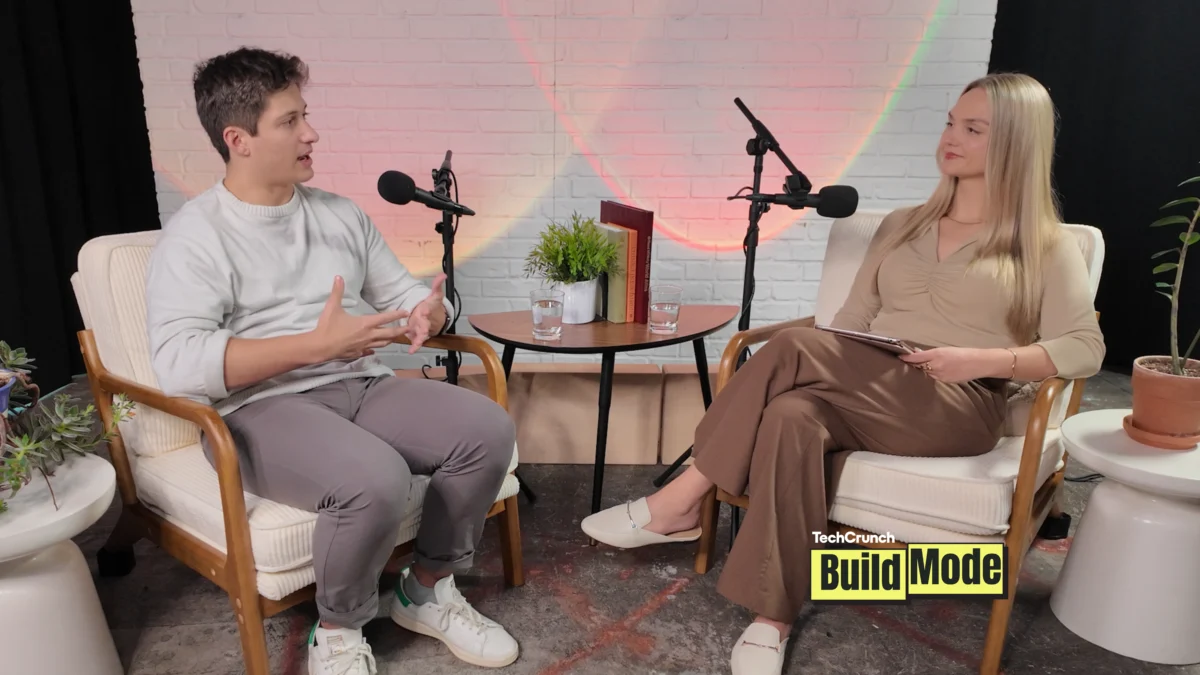
In the high-stakes, rapid-fire world of early-stage startups, the ability to assemble a cohesive and capable team at "breakneck speed" is often the make-or-break factor. This critical aspect of startup success was the focus of a recent episode of "Build Mode," where host Isabelle Johannessen engaged in an insightful conversation with Isaiah Granet, the CEO and co-founder of Bland, a pioneering voice AI company. Bland’s journey from pre-seed funding to a Series B valuation in a mere ten months is a testament to its innovative approach, not least its unique strategy for talent acquisition, which has seen its team balloon to 75 individuals. Granet shared tactical advice on how the company managed to unearth exceptional talent in places most traditional tech companies might overlook, offering a compelling narrative for founders navigating similar growth trajectories.
Bland’s foundational hiring philosophy diverged sharply from conventional industry norms, particularly given its founding team was fresh out of college. Rather than prioritizing traditional resumes or prestigious academic credentials, the company placed a premium on passion, drive, and an innate desire to build. This commitment to intrinsic motivation over established pedigrees became the bedrock of their early recruitment efforts, shaping a workforce that mirrors the scrappy, ambitious spirit of the startup itself. Granet recounted a particularly illustrative example concerning their search for a founding engineer, a role universally acknowledged as pivotal for any tech venture. The quest was protracted, but the eventual hire proved to be a profound validation of their unconventional strategy.
"We were searching for a really long time for our founding engineer," Granet disclosed to "Build Mode." He elaborated on the surprising background of this crucial hire: "The person that we ended up hiring, his work experience was a few months at an insurance company in Iowa. And before that, he had been a manager at a Taco Bell, and before that on a factory floor." This candid revelation underscores the stark contrast between conventional hiring metrics and Bland’s discerning eye. The team ultimately discovered this individual not through a LinkedIn profile or a standard job application, but through his prolific and demonstrably skilled activity on GitHub, an online platform for software development collaboration. This highlighted a key takeaway: talent, particularly in the digital age, often manifests in non-traditional portfolios and communities, awaiting discovery by those willing to look beyond the obvious.
Granet further elaborated on what truly distinguished this candidate, moving beyond his technical prowess, which was evident enough on GitHub. "The thing that got me was not his tech," Granet recalled, emphasizing the human element in their assessment. "We asked him, like, what do you do for fun? And I have never seen a grin as big as on his face. He said, ‘I like to ship code.’" This simple yet profound statement encapsulated the essence of Bland’s ideal candidate: an individual so consumed by their craft that the act of creation itself is their primary source of joy and motivation. It speaks volumes about a developer who isn’t just seeking employment but is driven by an insatiable desire to innovate, to see their ideas materialize into functional products. This incident cemented Bland’s commitment to prioritizing individuals who exhibited an almost obsessive dedication to their passions, irrespective of where those passions had been cultivated or what their formal qualifications might suggest.
Following this pivotal hire, Bland consciously began to seek out individuals who shared this fervent commitment, actively building a team as young and scrappy as the company itself. This led to a remarkably diverse talent pool, drawing from individuals whose backgrounds strayed significantly from the typical tech ecosystem. Granet cited examples ranging from philosophy majors, whose analytical and abstract reasoning skills proved invaluable, to beekeepers, whose meticulous attention to detail and systems thinking found new applications in the fast-paced world of voice AI. The common thread among these varied individuals was not a shared resume bullet point, but an intense, almost singular focus on an area of interest, demonstrating a capacity for deep engagement and problem-solving that transcends specific domains.
"There’s people out there that have things that are not valuable on résumés, but are incredibly cool," Granet asserted, articulating the core of Bland’s talent strategy. He explained that these "incredibly cool" passions, whether in academic pursuits or niche hobbies, reveal a fundamental "level of obsession" that Bland views as highly transferable. This inherent drive, the capacity to become deeply engrossed and proficient in a complex area, can, according to Granet, "be put onto anything." This perspective broadens the talent search dramatically, allowing Bland to tap into a wealth of untapped potential, bringing fresh perspectives and unique problem-solving approaches to the challenging domain of artificial intelligence.
Beyond initial recruitment, Granet also delved into the intricacies of nurturing and retaining this diverse team. As Bland experienced explosive growth over the past year, the leadership team faced the dual challenge of not only effective hiring but also ensuring the sustained motivation and happiness of its employees. In the "Build Mode" episode, Granet detailed how Bland meticulously developed a fair and transparent pay structure, a crucial element in fostering trust and equity within a rapidly expanding organization. Furthermore, he emphasized the critical importance of ensuring that all early hires possessed a comprehensive understanding of their equity stakes, aligning individual success with the company’s overall trajectory and creating a powerful incentive for collective achievement.
However, Granet was quick to acknowledge that this highly unconventional hiring philosophy is not without its inherent challenges and potential downsides. Recruiting "scrappy talent" often means bringing on individuals who may be less experienced in traditional corporate or tech environments. This necessitates a proactive approach from the company, which frequently has to "adjust for employees who may need time to grow into a role." This investment in development requires patience and dedicated mentorship, resources that can be stretched thin in a fast-paced startup environment.
In return for this investment, Bland maintains a high bar for performance and commitment from its employees. The expectation is that if the company is investing significantly in an individual’s growth, that individual will reciprocate with an equally profound dedication to the company’s mission and outcomes. Granet articulated this expectation with blunt clarity: "If you’re not delivering outcomes, our expectation is that you’re going to be in the office six days a week, 12 hours a day." This rigorous demand underscores the intense work ethic and commitment required to thrive at Bland, reflecting the urgent, high-stakes nature of scaling a startup at such an accelerated pace.
Granet also highlighted the difficulties inherent in scaling this personalized, hands-on hiring approach. The current method relies heavily on the direct involvement of the co-founders, who remain "extremely hands-on with the team to ensure they’re performing at the high-level required." While effective in the early stages, maintaining this level of individual oversight as the company continues its rapid expansion to potentially hundreds or thousands of employees presents a significant operational challenge. It necessitates the development of scalable processes that can replicate the founders’ discerning eye and mentorship capabilities without overwhelming their capacity.
Ultimately, the formation of a strong, dedicated founding team is universally recognized as a make-or-break element for any early-stage startup. Bland’s lightning-fast growth, coupled with its distinctive and successful hiring methodologies, powerfully illustrates the tangible benefits of discovering a "secret sauce" for talent acquisition. Granet concluded with a piece of practical wisdom for fellow entrepreneurs: "I think for the most part, honestly, early-stage startup founders should go with their gut and everybody finds their own pattern of hiring that works." This advice champions intuition and adaptability, encouraging founders to forge their own paths in recruitment rather than rigidly adhering to established, potentially outdated, models.
For founders inspired by Bland’s story and looking to accelerate their own ventures, TechCrunch offers unparalleled opportunities. Aspiring innovators are encouraged to Apply to Startup Battlefield, an iconic launchpad and competition for the world’s most promising early-stage startups. We are actively seeking companies that have developed a Minimum Viable Product (MVP). Founders can nominate themselves or others, and it is highly recommended to mention hearing about Startup Battlefield from the "Build Mode" podcast. Applications can be submitted directly through the TechCrunch website.
Furthermore, mark your calendars for TechCrunch Disrupt 2026, returning to San Francisco, CA, from October 13 to 15. This premier event will feature the Startup Battlefield 200 taking the stage, showcasing the cutting edge of innovation. Whether your aim is to cheer on these groundbreaking companies, network with thousands of founders, venture capitalists, and tech enthusiasts, or simply immerse yourself in the vibrant ecosystem of the tech world, securing your tickets now is essential.
The "Build Mode" podcast, which brought this illuminating discussion to light, is hosted by Isabelle Johannessen. Isabelle, who leads Startup Battlefield, brings a wealth of experience, having designed and led international startup acceleration programs across Japan, Korea, Italy, and Spain. Her background, including a Master’s in Entrepreneurship & Disruptive Innovation and a past life as a professional singer, equips her with a unique blend of strategic rigor and stage presence, invaluable for helping founders craft compelling stories. The podcast is skillfully produced and edited by Maggie Nye, with Audience Development led by Morgan Little. Special thanks are extended to the Foundry and Cheddar video teams for their contributions. Maggie Nye, a Podcast Producer for TechCrunch based in Denver, Colorado, previously served as the Brand and Content Manager for BUILT BY GIRLS, where she developed a keen interest in tech and a passion for fostering equitable and welcoming professional tech spaces. Her journalism background from Hofstra University further enhances the quality and depth of "Build Mode."