11
11
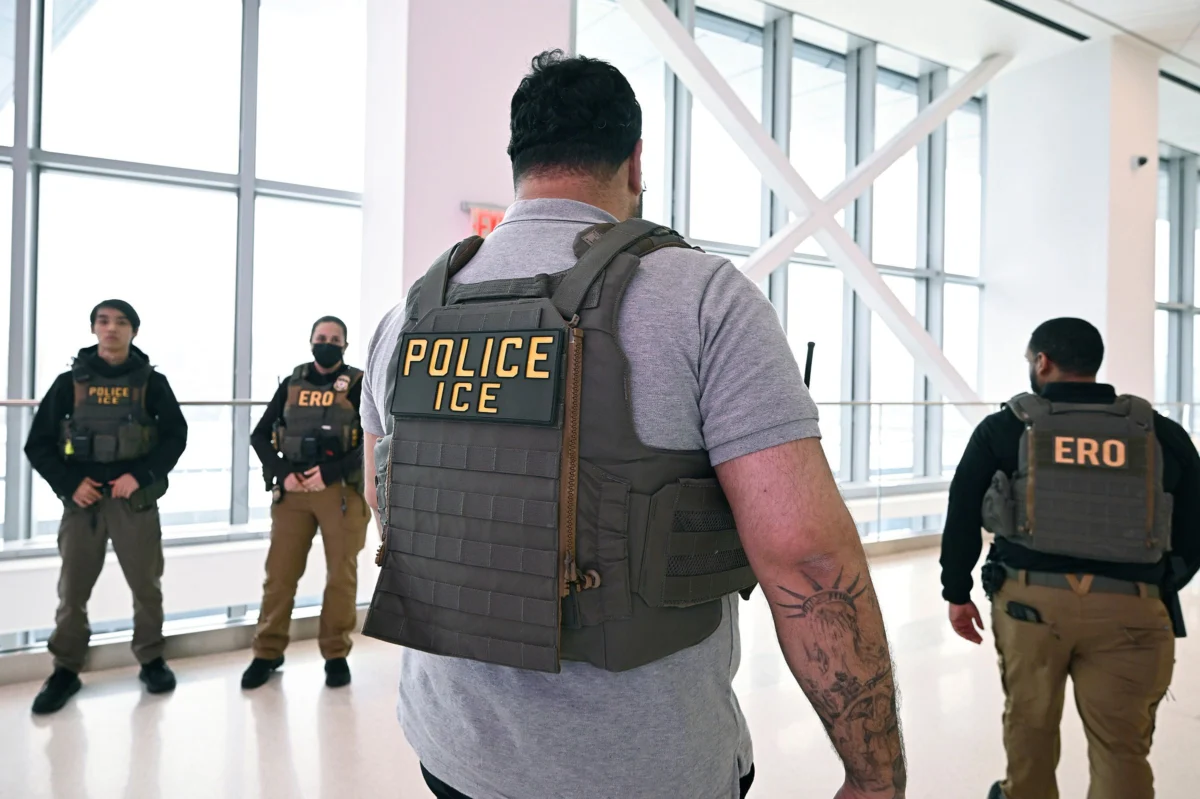
New York City’s LaGuardia Airport experienced hours-long security lines on a recent Thursday, a stark illustration of the escalating travel disruptions across the United States. While LaGuardia’s waits were significant, they paled in comparison to the three-and-a-half-hour queues reported at George Bush Intercontinental Airport in Houston. These widespread delays are a direct consequence of a partial government shutdown, now over a month old, which has left numerous Department of Homeland Security (DHS) employees, including Transportation Security Administration (TSA) agents, working without pay. Faced with mounting financial strain, many Transportation Security Officers (TSOs) are calling in sick or resigning, leading to severe understaffing at airport checkpoints nationwide. In response to this growing crisis, the Trump administration has opted to deploy agents from Immigration and Customs Enforcement (ICE) to assist with airport security operations, a move that has been met with widespread frustration and concern from TSA employees and aviation stakeholders.
The Escalating Crisis at Airports
The partial government shutdown has had a devastating impact on federal employees, particularly those deemed essential who are required to work without compensation. TSA agents fall into this category, tasked with maintaining national security at airports while their paychecks remain suspended. This unprecedented situation has forced many TSOs to make difficult choices between their essential duties and their personal financial survival. Official figures reveal a sharp increase in absenteeism, with 11 percent of airport checkpoint employees calling out on a Tuesday, a significant jump from the typical pre-shutdown rate of four percent. Alarmingly, some major airports, including those in Houston, Atlanta, New Orleans, and New York’s John F. Kennedy International, have reported daily callout rates exceeding 35 percent. The attrition rate is also concerning, with more than 480 TSA screeners having resigned since the shutdown commenced in February, further exacerbating staffing shortages and contributing to the protracted security lines.
The human toll of the shutdown on TSOs is profound. Agents are grappling with immense stress as they struggle to cover basic living expenses such as rent, mortgages, gas for their commutes, and childcare. The lack of a steady paycheck for what amounts to half of the fiscal year has pushed many to the brink. In response to this hardship, community efforts have emerged to support the affected workers. Food banks have organized drives at several airports, including those in Houston, North Carolina, and San Diego. In Knoxville, Tennessee, airport authorities have gone so far as to accept donations for employees at a Delta Airlines counter, highlighting the severe financial distress facing these federal workers.
The Controversial Deployment of ICE Agents
In an attempt to alleviate the mounting pressure on airport security, ICE agents were deployed to at least 14 airports on a Monday, ostensibly to expedite security lines. However, nearly a week into this intervention, the effectiveness and appropriateness of ICE’s role have been fiercely questioned by airport employees and unions.
TSOs, who are directly employed by the TSA, voiced their frustration to WIRED, stating that the deployed ICE agents lack the necessary certification and specialized training to perform many of the tasks that would genuinely accelerate security checkpoint throughput. While ICE agents have been observed patrolling security lines and baggage areas, giving directions to lost passengers, and even distributing mini water bottles to those waiting, many eyewitness accounts suggest their contribution to speeding up lines has been minimal. An airline worker at John F. Kennedy Airport was overheard complaining that ICE agents were "doing literally nothing to help," a sentiment echoed by many on the ground.
The Atlanta Journal-Constitution reported instances of ICE agents being trained to check passenger IDs and boarding passes. During a hearing before the US House Committee on Homeland Security, TSA acting head Ha Nguyen McNeill acknowledged that the "travel document checker function is one of the nonspecialized screen functions of the TSA" and confirmed that ICE agents were indeed being trained for these checks. However, this limited training falls short of the comprehensive expertise required for the multifaceted roles of a TSO, which include identifying suspicious items, conducting thorough screenings, and managing complex security situations.
Union Criticism and Employee Concerns
The deployment of paid ICE agents while TSOs work without pay has ignited significant resentment. Hydrick Thomas, a security officer and president of AFGE Local 2222, which represents New York and New Jersey airports, articulated this frustration. "If you want to bring a tactical force into an environment where it’s required to have customer service and a mindset where you know what you’re doing, how to identify something that might be suspicious—they don’t have that training," Thomas asserted, underscoring the specialized skills TSOs possess.
Aaron Barker, an officer and president of American Federation of Government Employees (AFGE) Local 554, representing airports in Georgia, described the ICE deployment as a "waste of money that could have been coming into officers’ bank accounts." Barker noted that ICE agents in Atlanta were primarily observed monitoring lines and directing traffic, functions typically performed by non-TSA airport employees. Tim Roberts, a spokesperson for Hartsfield-Jackson Atlanta International Airport, corroborated this, stating in a written statement that ICE agents were "onsite to provide crowd management and support for our TSA partners."
Beyond immediate financial concerns, TSA officers expressed profound anxiety about their long-term job security. There is a palpable fear that the federal government might be considering replacing them with other federal agents, including ICE personnel, or even privatizing TSA functions entirely. Carlos Rodriguez, a security officer and AFGE TSA Council 100 vice president representing Northeastern airports from New Jersey to Vermont, articulated a broader sense of betrayal. "A part of the American dream that I was sold was that working for the government was honorable and stable," Rodriguez stated, adding, "But this is not honorable or stable at this moment." These fears are exacerbated by discussions around proposals like Project 2025, a blueprint from the conservative Heritage Foundation that advocates for the complete privatization of the TSA, signaling a potential fundamental shift in airport security operations.
Impact on the Broader Aviation System
The tension within airport security lines is not confined to TSOs. Flight attendants, who are often the first point of contact for passengers after security, are also feeling the strain. Paul Hartshorn Jr., a spokesperson for the Association of Professional Flight Attendants (APFA), which represents 28,000 American Airlines employees, highlighted the "elevated stress levels" experienced by passengers. "By the time passengers get to the aircraft door—they’re getting onto an aircraft that’s already tight to begin with. It’s an already confrontational situation made worse," Hartshorn explained. Recognizing the challenging environment, the APFA issued guidance to its members regarding interactions with ICE agents and has repeatedly sought clear, consistent guidance from American Airlines on these new situations.
Official Statements and Disputed Effectiveness
On Thursday, President Donald Trump announced in a Truth Social post that he would sign an executive order to pay TSA workers. However, his statement offered no specifics regarding how or when these overdue paychecks would reach federal employees’ bank accounts, leaving many questions unanswered and offering little immediate relief.
The White House has touted shorter lines as a positive outcome of ICE’s intervention. However, security agents on the ground dispute this claim, attributing any observed reductions in wait times to typical daily and weekly fluctuations in air traffic, as well as the unique characteristics of different airport workforces. For instance, Aaron Barker noted that "We’re coming to the end of spring break, so lines are not going to be as long coming out of Atlanta," suggesting seasonal factors play a more significant role than ICE’s presence. TSOs also pointed out that higher callout rates in specific regions might correlate with a higher cost of living, making it particularly difficult for officers in expensive cities like Houston to afford necessities like gas to commute to work. Additionally, some TSA units are reportedly adhering to stricter absence policies than others, which could influence local callout figures.
Despite repeated inquiries, neither the TSA nor the Department of Homeland Security responded to WIRED’s requests for comment on the situation, leaving many questions about the current strategy and future plans unanswered. As the government shutdown persists, the stability and effectiveness of the nation’s airport security infrastructure remain in precarious balance, with a dedicated workforce pushed to its limits and an unconventional solution sparking more controversy than clarity.