 11
11
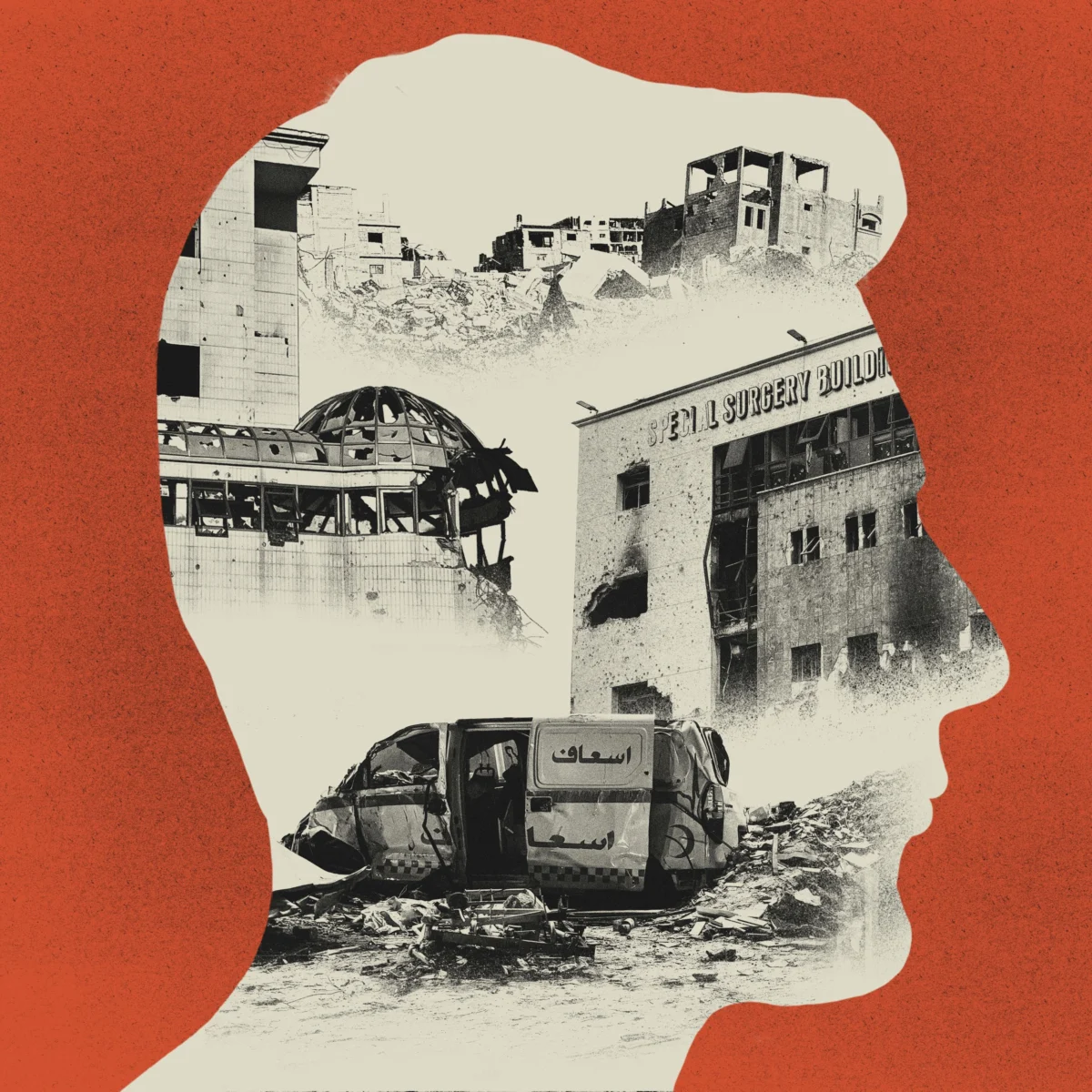
Months into a supposed ceasefire in Gaza, doctors at Al-Shifa Hospital continue to navigate a grim reality, forced to smuggle in basic medical supplies while simultaneously treating new casualties of an enduring conflict. This dire situation is epitomized by the scarcity of gauze, a life-saving medical staple whose English name is widely thought to derive from Gaza itself, and the Arabic word for blended silk, khazz. This presumed connection highlights the tragic irony of a region historically rich in weaving traditions now desperately lacking this fundamental wound dressing.
Gauze, a seemingly simple material, is an everyday miracle in medical care. Its loose weave allows it to absorb blood, discharge, pus, and drainage effectively, preventing oversaturation and the return of harmful material to a wound site. Its absence, however, quickly turns into a crisis. As Dr. Nahreen Ahmed, a pulmonary specialist from Philadelphia who volunteered at Al-Shifa from November 25 to December 11, 2025, explains, bacteria thrive in pooled bodily fluids. An undressed wound inevitably becomes infected, leading to an "explosion" of complications. With no gauze, healthcare providers are compelled to send patients home without proper dressings. These patients often return not to sterile homes, but to tents, many of which were flooded with filthy water during winter. Infections, starting at the wound, spread to the bone, often necessitating preventable amputations. A severe shortage of antibiotics further compounds the problem, a cascade of suffering that, as Ahmed observes, "started with gauze."
Hospitals, theoretically protected under international law, have been systematically targeted by the Israel Defense Forces (IDF). This campaign of devastation has introduced the term "domicide" – the destruction of residences – to global discourse. The World Health Organization reports that only 14 of Gaza’s 36 hospitals remain even partially functional. By last summer, over 1,700 healthcare workers had been killed, and 220 more were held in detention by the Israeli military. When the Israeli government announced a US-brokered ceasefire in October 2025, Palestinians who had endured two years of unrelenting devastation, and foreign health workers, hoped for a return to normalcy.
The network of international medical professionals understood that even a genuine ceasefire would pose immense challenges for Gaza’s decimated healthcare infrastructure. For two years, the system had been overwhelmed by emergency cases resulting from military attacks. An end to the fighting would bring an influx of patients seeking care for chronic conditions and mundane illnesses, all exacerbated by the widespread destruction. Gauze, among other supplies, was expected to become abundant. However, seven foreign doctors and aid workers, including four who were in Gaza after the ceasefire was meant to be in effect, described a perverse situation: Israel permitted doctors entry but restricted medical equipment. This forced several to smuggle vital supplies within their personal belongings. The grim reality since October 2025 is that Gaza’s remaining doctors must contend with both a surge of patients requiring routine treatment and a continuing, albeit reduced, pace of casualties from the IDF, all without crucial resources. Doctors told WIRED that the public-health crisis they witnessed felt more like a new phase of genocide than its aftermath. They believe Israelis no longer need to fire directly to kill Palestinians, though such incidents persist. In response, the Israeli occupation authority, COGAT, stated it "continues to facilitate the entry of medical equipment and medicines in line with requests from international organizations," firmly rejecting claims of deliberate harm to medical services.
An international doctor at Al-Shifa, who requested anonymity due to fear of Israeli reprisal, confirmed, "The war is not over. The casualties are not the way they were before. They’re isolated incidents, but they’re still happening." These incidents often occur when Palestinians approach the poorly demarcated "yellow line" into IDF-occupied Gazan territory. "All the people that are being injured, the people that are dying—it’s all within this arbitrary yellow line." Between the ceasefire declaration and mid-February, Israel killed over 600 people, pushing the official death toll from the Palestinian Ministry of Health above 72,000, likely an undercount. While Israel partially reopened the Rafah crossing, it permitted only 260 out of over 18,500 people in desperate need of medical care to leave in two weeks. Alarmingly, only 269 people were allowed back into Gaza during the same period, fueling fears that those who leave may never return.

Palestine, tragically, has become a "laboratory" for Israel and its allies to test future weaponry, from artificial-intelligence targeting to quadcopter drones stable enough to fire guns. Meanwhile, Gaza’s remaining hospitals are reduced to "Civil War [era] medicine," as Dr. Ahmed described. Foreign doctors have resorted to smuggling 9-volt batteries, cochlear implants, and Tylenol, risking bans from Gaza. Most critically, they smuggle gauze.
International medical workers began their perilous journeys to Gaza shortly after Israel besieged it. Initially, they traveled through Cairo and the Sinai Peninsula to the Rafah Crossing, where Egyptian authorities permitted Israeli inspections of aid trucks. Mark Perlmutter, a North Carolina-based hand surgeon who first visited Gaza in the spring of 2024, recalled seeing "30 miles long, bumper to bumper" lines of 18-wheelers carrying rotting food, aligning with former Israeli defense minister Yoav Gallant’s pledge of "no electricity, no food, no fuel" for Gaza. Despite this, doctors could bring medical instruments. Thaer Ahmad, a Chicago emergency-medicine specialist who visited in January 2024, filled six oversized valises with chest tubes and antibiotics. Perlmutter spent $30,000 on eBay for drills, surgical instruments, and 700 pounds of screws and plates, using them all within his first week.
However, in May 2024, the IDF seized control of the Rafah crossing, rendering it inaccessible for aid workers. The route shifted to Jordan, across the Allenby Bridge into the Israeli-occupied West Bank, then through Israel to the Kerem Shalom checkpoint. Nahreen Ahmed, on her first Kerem Shalom entry in October 2024, was limited to a large bag and a backpack, which underwent two security checks at Allenby. She stuffed gauze and reagents into her bags, noting, "I’m not sure we were necessarily allowed to be doing that, but they certainly didn’t stop us." Feroze Sidhwa, a California surgeon who returned in March 2025, found the Kerem Shalom checkpoint much stricter: "we were not allowed to bring anything in, just personal effects." Cognizant of the critical shortages, Sidhwa "decided to chance it," distributing medications throughout his luggage and concealing handheld ultrasounds that went undetected. Perlmutter, also in March 2025, brought over $10,000 worth of microsurgical instruments and antibiotics. At Kerem Shalom, Israelis confiscated his instruments and "counted my pills," allowing only what he could plausibly claim as personal. He even hid antibiotics "in my butt cheeks," feeling like he was "bringing contraband into a prison."
Ahmed’s return in late November 2025, after the ceasefire declaration, revealed even stricter Israeli enforcement. Stories circulated among doctors about arbitrary confiscations. At Allenby, a doctor carrying lab reagents, previously permitted, "was kicked out completely." Ahmed, prepared, used her previous trip’s observations to smuggle an extra iPhone and iPad, 9-volt batteries, tiny magnets, cochlear implants disguised as earphones, and refrigerated autoimmune medications. All got through undetected. "Those are usually the moments when many of us are kicking ourselves," she remarked, "Like, ‘Oh man, they only fixated on the tablet this time, I could have brought 10 more packets of the cancer medication.’" This arbitrary and unpredictable enforcement, familiar to Palestinians under occupation, now extends to international medical aid. Perlmutter labels it "highly orchestrated to interfere with the delivery of health care," questioning, "Why would you [confiscate] antibiotics if it was not your goal to advance an infection that you knew existed?" COGAT maintained that "prior coordination stems from security and order considerations" and that Perlmutter’s equipment was confiscated because it "had not been pre-coordinated and approved."
Access to Gaza for foreign reporters has been blocked since October 7, 2023, and at least 260 Palestinian journalists have been killed, 3 of whom died after the October 2025 ceasefire. Dr. Elise Thorburn, a Canadian ER doctor who arrived two weeks into the supposed ceasefire, described the landscape as she drove north along al-Rashid Road as not "resembl[ing] a human habitat in any way." Collapsed buildings and shattered roads gave way to masses of displaced people in plastic tents or unsound structures. "Not one building," she said, "is unaffected." Concrete dust, from an estimated 68 million tons of debris, constantly hangs in the air, creating a perpetual haze. Dr. Ahmed, with her experience treating COPD patients from the World Trade Center, fears the long-term respiratory effects of this dust on Gaza’s survivors.
Upon her fourth visit to Gaza in November 2025, Ahmed immediately heard "a couple big bomb blasts" near Rafah, confirming, "I guess we’re back in the middle of this." Having worked in war zones like Sudan, Syria, Yemen, Ukraine, and Rohingya refugee camps, Ahmed noted Gaza’s unique peril: "all of Gaza is a target." She found Al-Shifa’s main surgical building still "torched," a legacy of two IDF assaults in November 2023 and March 2024. The March 2024 raid, lasting two weeks, killed hundreds. Israel claimed Hamas used hospitals as bases, but Ahmed, who lived in Nasser Hospital’s basement during an assault, stated, "I have never once, in my four visits there, ever seen a militant inside any of the hospitals."

The reduced bombardment pace allowed for some cosmetic repairs at Al-Shifa, including a reopened pediatric intensive-care unit, but it remained a "shell of what it was." Ahmed’s living quarters in the New Obstetrics Building were coated in "layers of dust." Without basic gowns, gloves, and masks, maintaining a sterile environment is impossible. Staff scavenge structurally unsound buildings for any usable supplies. "If there’s a box of gauze, and the gauze is usable, that’s a win," Ahmed said. The immense discrepancy between patient need and resources means Palestinian staff lack time for planning, leaving foreign volunteers like Ahmed to float between the ER and ICU, treating patients, teaching, and advising on ultrasounds in the absence of CT scanners. Junior residents, many of the senior doctors having been killed, imprisoned, or evacuated, are left to make agonizing rationing decisions.
These absent doctors haunt Al-Shifa’s hallways. With reduced chaos, moments of quiet allow for "emotional chaos," as Ahmed describes, when staff process their trauma. An ICU doctor recounted watching a colleague, after being questioned by the IDF, get shot by a sniper in the Al-Shifa courtyard. A nurse returning from a year in Israeli detention found absent colleagues dead, seeing "ghosts" and becoming one himself to those who saw him. Dr. Thorburn, working at Al-Ahli Hospital, noted the "shocking and hard to emulate level of resiliency and sumud" (an Arabic term for perseverance) among Palestinian nurses and doctors, but acknowledged that "the cracks start to show" in conversation.
The anger among patients, who now seek more than emergency care, is palpable. They watch, as impotently as their doctors, as people die from "things that are completely reversible and treatable," like infections or lack of blood-pressure medication. Such deaths, though reported as war-related, may not appear in official casualty tolls. Thorburn’s first night at Al-Ahli saw a 17-year-old boy die from a severed femoral artery, likely from a bullet or shrapnel. Trauma wounds remain "an extremely common occurrence." In early December, Ahmed witnessed a 14-year-old girl rushed into the ICU with a shrapnel wound to the abdomen, needing a splenectomy and 250 milliliters of precious blood. Despite minimal supplies, doctors saved her life. Discharged "smiling," she returned to her family’s tent, a precarious environment for recovery, still malnourished despite some food returning to shelves at inflationary prices. Ahmed remains in touch, full of worry.
On December 11, Ahmed recorded a voice note on her last day, with bulldozers in the background. Rescue teams were exhuming the Al-Shifa courtyard, a mass grave for untold numbers. "The smell of death is literal," she said. An Al Jazeera report from December 8, 2025, stated the Palestinian Red Crescent recovered 150 bodies. "This hospital is haunted by all these stories of people that were killed, and then all of the stories that are now being told, because we have a little bit of space and time to hear them, about what happened to people," Ahmed reflected. "It’s not just the campus in Al-Shifa. It’s everywhere in Gaza."
Beyond the assaults on life, health, and movement, there is an assault on Palestinian sovereignty. The Israeli government has opened the floodgates to state and settler seizures of West Bank land. President Trump has established a "Board of Peace" to rule Gaza, starting with plans for a 350-acre military base to station 5,000 troops. The ceasefire, however one-sided, has led many, particularly in the United States, to believe the crisis is over. Sidhwa laments, "This is a total disaster—it means the Palestinians are going to be destroyed in Gaza." He critiques the US, as Israel’s accomplice, for lacking the "political culture or a media culture, or even the moral culture, to recognize that we should care about our own crimes." Yet, Gaza is more than a crime scene. Thorburn observed the city’s beauty and its people’s resilience. At Al-Ahli, she lived with young Palestinian women who took her to the beach to watch dangerous fishing, enjoy picnics, and "do their very best to live a normal life." In their resistance to being torn apart, they weave themselves together, each reinforcing the others, like gauze.