11
11
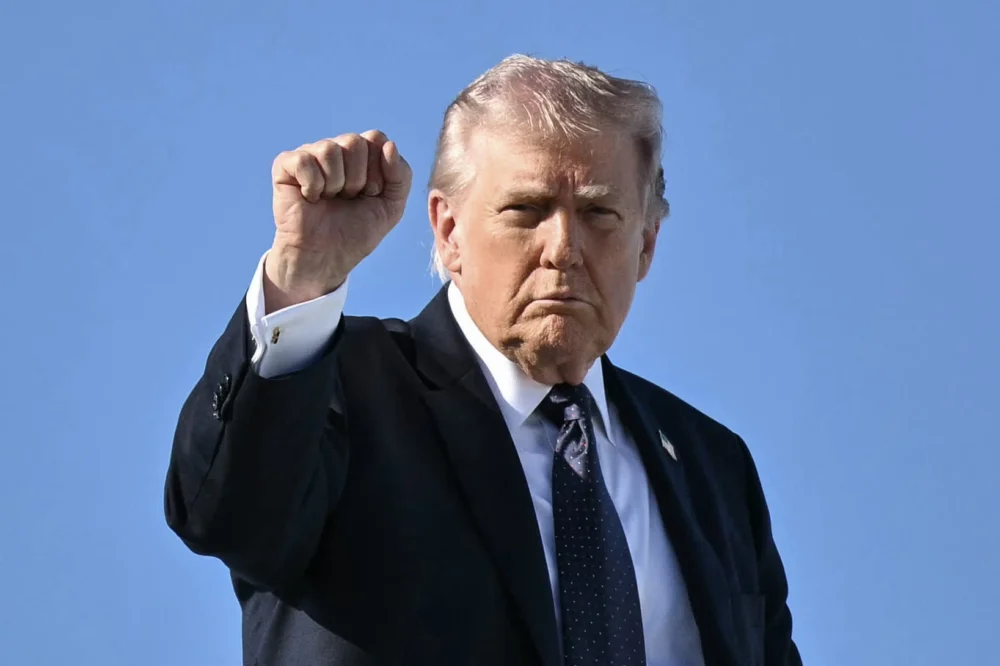
US President Donald Trump has publicly declared his support for cryptocurrency firms in their contentious dispute with U.S. banks regarding the offering of interest-like returns on stablecoins. The President’s intervention, delivered via a social media post late Tuesday, significantly escalates pressure on financial institutions to concede on the stablecoin yield issue. This disagreement is currently a critical roadblock to the passage of the Clarity Act in Congress, a legislative effort that complements the Genius Act, approved last year, which aims to establish a regulatory framework for stablecoins.
"The Genius Act is being threatened and undermined by the Banks, and that is unacceptable," Trump stated in his post. "They need to make a good deal with the Crypto Industry because that’s what’s in best interest of the American People."
The President’s endorsement had an immediate impact on the market. Coinbase shares experienced a surge of up to 15% in midday trading on Wednesday. In contrast, the stock performance of major banks such as JPMorgan Chase and Bank of America saw declines of less than 1%.
While Trump’s backing could potentially sway Republican lawmakers in the Republican-controlled Congress, the ultimate impact on the bill’s passage remains uncertain. This development also reintroduces scrutiny over potential conflicts of interest, given reports that the President and his family have accumulated substantial wealth, estimated in the hundreds of millions of dollars, through investments in entities including the crypto platform World Liberty Financial.
The core of the industry conflict lies in whether crypto companies, such as Coinbase, should be permitted to offer yields on stablecoins. Proponents within the crypto industry view this as a consumer-centric innovation, enabling individuals to generate returns on their dormant funds. Conversely, banks have voiced concerns that such a competing product could lead to a significant outflow of trillions of dollars from their sector.
$6.6 Trillion Threat?
Executives from JPMorgan Chase and Bank of America, the two largest U.S. lenders by asset size, have referenced a Treasury Department study. This report indicated a potential loss of up to $6.6 trillion in deposits for banks if stablecoins were to offer yield. Such a scenario could potentially destabilize certain banking institutions, particularly smaller ones, and diminish a crucial source of funding for business loans across the nation.
Banks argue that permitting the less-regulated cryptocurrency industry to operate in a quasi-banking capacity could amplify systemic risk. The crypto industry, however, maintains that the risks are manageable and that stablecoins backed by U.S. Treasury securities would actually stimulate demand for U.S. debt.
JPMorgan CEO Jamie Dimon articulated his concerns in an interview with CNBC on Monday, stating, "It can’t be, you have these people doing one thing without any regulation, and these people doing another. If you do that, the public will pay. It will get bad."
In an effort to broker a resolution, the President has convened multiple White House meetings involving representatives from both the banking and crypto sectors in recent months. However, according to individuals familiar with these discussions, the banks have not yet shown a willingness to compromise. The President’s latest public statement signifies a clear shift in his approach, now explicitly aligning himself with the cryptocurrency industry.
"Americans should earn money on their money," Trump declared in his social media post. "This industry cannot be taken from the People of America when it is so close to becoming truly successful."
**’Full of S*‘
The phrasing used by President Trump echoes language previously employed by Coinbase CEO Brian Armstrong in public interviews. Coinbase, the largest cryptocurrency platform in the United States, offers yield to its users, a practice that critics within the banking industry characterize as exploiting a regulatory "loophole."
Armstrong, widely seen as the primary adversary for banks in this debate, reportedly met with President Trump at the White House shortly before the President’s social media announcement on Tuesday. This meeting was previously reported by Politico.
Both the banking sector and the cryptocurrency industry stand to benefit from the passage of the Clarity Act. However, the ongoing disagreement between them casts doubt on the bill’s legislative prospects. Earlier this year, President Trump attempted to pressure banks into capping credit card interest rates, but the industry successfully fended off that initiative, securing sufficient support from both Republican and Democratic lawmakers.
Tensions between Brian Armstrong and the CEOs of major banks have been escalating since Armstrong publicly criticized banks for their opposition to stablecoin yields. In January, Jamie Dimon reportedly responded to Armstrong with strong language, allegedly calling him "full of s—" during an encounter at the World Economic Forum in Davos, Switzerland.