 11
11
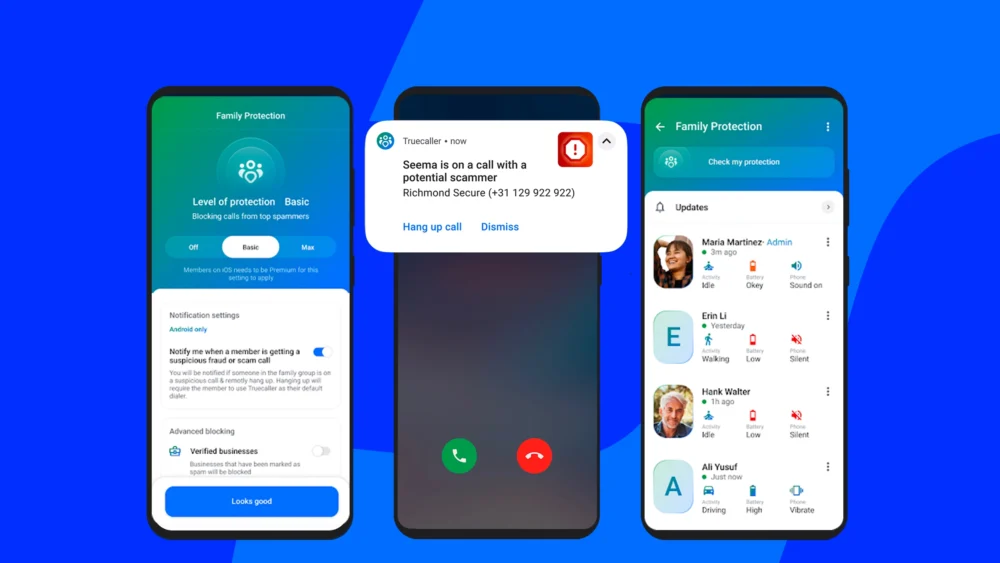
Caller identity platform Truecaller has recently rolled out a significant new feature designed to enhance protection against fraudulent calls, allowing one individual to act as an administrator for a family or close friends group. This innovative capability enables the admin to receive alerts regarding suspicious calls made to other group members and, in critical situations, even remotely terminate a call if they suspect a family member is being targeted by a scam. This move represents a strategic expansion of Truecaller’s mission, shifting its focus towards a more communal and proactive approach to digital safety.
The feature, which builds upon Truecaller’s extensive user base of over 450 million monthly active users, was initially introduced in a limited rollout during December of the previous year. Select countries, including Sweden, Chile, Malaysia, and Kenya, served as initial testing grounds. Following what Truecaller describes as "promising results" from this initial phase, the company made the decision to launch the feature globally. This worldwide expansion includes India, which stands as Truecaller’s largest and most crucial market, underscoring the company’s commitment to addressing the widespread issue of scam calls in the region. Importantly, this protective feature is offered free of charge, meaning users can create and manage family groups regardless of whether they subscribe to a paid Truecaller plan, making essential scam protection accessible to a broader demographic.

The "Family Protection" feature is structured around a group dynamic, where a tech-savvy individual can assume the role of an administrator for a group comprising up to five members, typically encompassing family or a close circle of friends. Once the invited members accept and join the group, the designated admin gains the ability to receive real-time alerts whenever any group member receives a call identified as potentially fraudulent by Truecaller’s robust spam detection algorithms. This early warning system is crucial for enabling timely intervention. Furthermore, if the admin determines that an ongoing call poses a significant risk or could lead to a scam, they possess the power to remotely end the call on behalf of the group member. While the admin can receive fraud alerts for members using both iOS and Android devices, the capability to remotely end calls is currently exclusive to group members using Android smartphones. This distinction highlights the varying levels of system access and integration available across different mobile operating systems.
Beyond call management, the feature offers additional layers of oversight and safety for Android users within the group. Members on Android devices have the option to grant their admin permission to monitor certain real-time activities and phone settings. This includes detecting if a member is currently walking or driving, checking their device’s battery level, and knowing their phone’s sound settings (e.g., if the phone is in silent mode). Truecaller emphasizes the particular utility of these advanced monitoring capabilities for keeping tabs on elderly family members. For instance, an admin can strategically choose to call an elderly relative only when they are not actively walking or driving, minimizing distractions and ensuring safer communication. The admin also has the power to implement a shared blocklist, allowing them to block specific problematic numbers or entire international calling codes, and then share this blocklist with all group members, offering a unified defense against known spam sources.
Crucially, Truecaller has implemented strict privacy safeguards within this feature. The company explicitly states that the administrator cannot access the non-spam call history or the SMS history of any group member. This ensures that while protection against fraud is enhanced, individual privacy for regular communications remains intact, addressing potential concerns about overreach or surveillance.

Kunal Dua, Chief Product Officer at Truecaller, articulated the driving force behind this new offering in an interview with TechCrunch, stating, "I think, unfortunately, all of us know somebody or another in our families or friends who have been impacted by fraud. In that sense, it’s a fundamental shift for Truecaller in terms of what we’ve been focusing on as a problem." This statement underscores the personal and widespread nature of call-related fraud, positioning the Family Protection feature as a direct response to a pervasive societal issue.
Looking ahead, Truecaller is actively exploring the integration of advanced artificial intelligence to further fortify its protection mechanisms. The company previously introduced an AI-powered voicemail feature for Indian users, which employs an AI assistant to answer calls when a user is unavailable and provides a concise summary of the call transcript. Truecaller is now considering a similar AI-driven approach for its Family Protection feature. This could involve AI analyzing incoming calls to potentially alert the admin about the specific type of fraud a group member might be facing, offering more context for intervention. Even more ambitiously, the company is investigating the use of AI to proactively screen calls and automatically disconnect them when certain keywords commonly associated with scams are detected. An example cited is "digital arrest," a manipulative tactic where fraudsters impersonate law enforcement to coerce individuals into divulging information or transferring money. By identifying such phrases, Truecaller aims to create an intelligent, self-defending communication environment.
The launch of this feature comes at a time when India, Truecaller’s largest market, is grappling with a significant surge in scam calls, leading to substantial financial losses across the nation. Truecaller’s own data highlights the scale of the problem, with the platform identifying over 7.7 billion fraudulent calls in the previous year alone. In response to this growing threat, Indian authorities have initiated multiple measures, including a contentious policy known as SIM binding, which aims to link mobile numbers more directly to users’ identities. However, critics argue that such policies could inadvertently hinder the functionality of popular communication apps like WhatsApp and Telegram.

Truecaller itself is navigating a period of financial headwinds. Over the past twelve months, the company’s stock has experienced a significant decline, dwindling by over 80%. Its Q4 2025 report revealed a 49% year-on-year dip in EBDITA (Earnings Before Interest, Taxes, Depreciation, and Amortization), a key measure of operating profitability, accompanied by a 31% decline in ad revenue. Compounding these challenges is the emergence of India’s Caller Name Presentation (CNAP) system. This government-mandated system aims to display the name of the caller as it is registered with their phone carrier, directly impacting Truecaller’s core service of caller identification.
Despite the competitive landscape posed by CNAP, Truecaller has consistently argued that merely displaying a caller’s registered name is insufficient to effectively curb spam calls. The company maintains that its platform offers a more comprehensive solution, leveraging community-based reports and a wealth of contextual information to provide a superior user experience in identifying and blocking unwanted calls. Rishit Jhunjhunwala, Truecaller CEO, addressed the situation during the Q4 2025 earnings call, stating, "In India, there has been much talk about the imminent rollout of CNAP. CNAP is partially rolled out, and so far, the impact on our user growth is limited." He acknowledged the potential for future impact, adding, "As we have said in the past, we expect that CNAP might have some impact on user growth, but that remains to be seen as CNAP reaches a full rollout." Jhunjhunwala further emphasized Truecaller’s enduring value proposition: "Our focus continues to be on delivering a superior product, and as you are aware, the consumer can choose to have CNAP and Truecaller in parallel, where we provide a lot more information and a lot more context and various other solutions, for the consumer." This reinforces Truecaller’s strategy of differentiation by offering a richer, more nuanced protection beyond simple caller ID.
Through initiatives like the global Family Protection feature and its ongoing investment in AI-driven solutions, Truecaller is demonstrating a clear commitment to evolving its platform to meet the dynamic challenges of digital communication fraud. By empowering users with tools for communal protection and continuing to innovate beyond basic caller identification, the company aims to solidify its position as a vital service in the fight against unwanted and malicious calls, even amidst market shifts and increased regulatory scrutiny.