 11
11
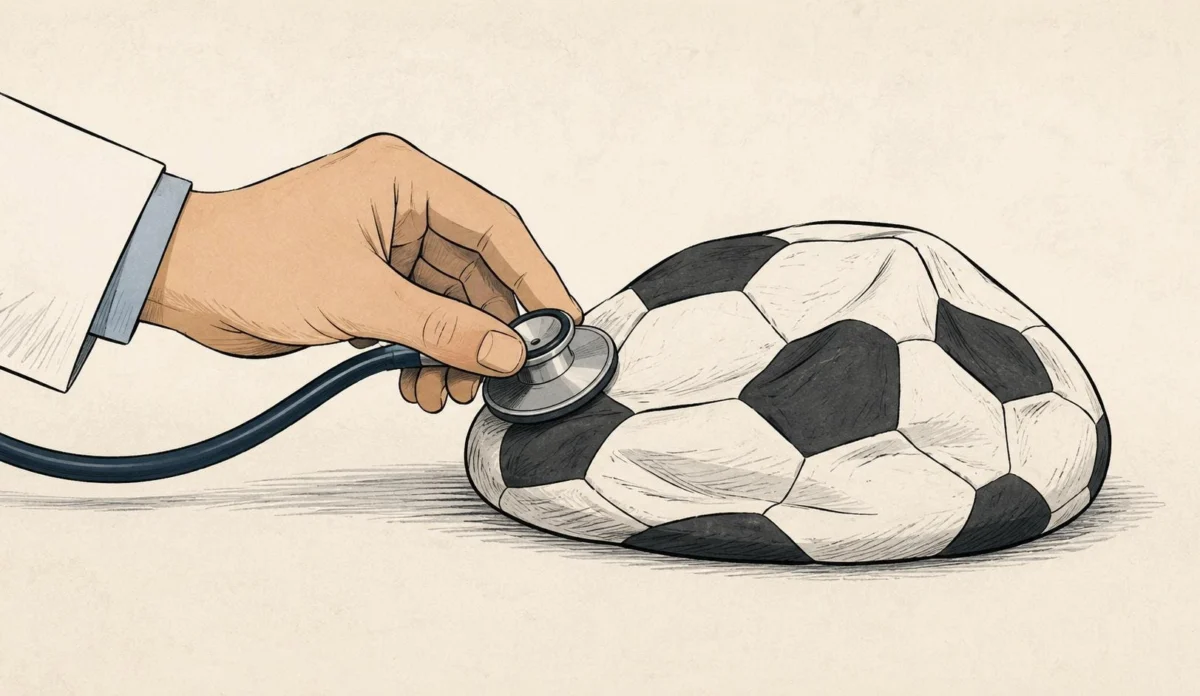
Forty-eight nations entered the 2026 World Cup. Only one, Spain, left as champion. The other 47 teams, despite their immense talent and resources, offer profoundly important lessons for American medicine, which, much like those unsuccessful contenders, finds itself laden with capability but often falling short of its ultimate goals.
Consider the parallels: Several World Cup participants arrived with brilliant individual players, highly experienced coaches, and enormous financial backing. France, for instance, fielded Kylian Mbappé, the tournament’s leading scorer, a player widely regarded as one of the best in the world. Argentina boasted Lionel Messi, arguably the greatest player in the history of the sport, whose legendary career continued to inspire awe even at 39. England, too, reached the semifinal with one of its most talented teams in decades, featuring its own national hero, Harry Kane, a prolific goal-scorer and leader. Yet, despite these formidable assets, none of these powerhouses won the championship. Their individual brilliance, while undeniable, was not enough to secure the ultimate prize.
American medicine mirrors this scenario in many respects. The United States is similarly loaded with an abundance of talent and financial might. It is home to exceptional doctors, renowned world-class hospitals equipped with cutting-edge facilities, and groundbreaking medical technologies that are often at the forefront of global innovation. Furthermore, the nation’s per-capita healthcare spending is nearly twice that of most other developed nations, indicating a vast allocation of resources to its medical system.
However, despite these unparalleled advantages, the results continue to fall short of expectations. The promise of accessible, high-quality, and affordable care remains elusive for a significant portion of the population. Care is unaffordable for millions of families, burdened by high costs, complex insurance structures, and unexpected out-of-pocket expenses that can lead to medical debt and financial ruin. Access to necessary medical services is frequently unreliable, characterized by long wait times for appointments, geographic disparities in specialist availability, and a fragmented system that can leave patients struggling to navigate their care journey. Chronic diseases, such as diabetes, hypertension, and heart disease, are not only prevalent but also worsening, posing a significant threat to public health and individual well-being. Concurrently, the very clinicians dedicated to healing are increasingly frustrated, grappling with burnout, administrative burdens, and a system that often prioritizes volume over value.
As the World Cup unfolded, providing a vivid demonstration of how immensely talented teams can fail to achieve their ultimate objective, a deeper analysis reveals three fundamental problems that American medicine shares with those teams that fell short. These issues illuminate why, despite its wealth of resources and individual brilliance, the U.S. healthcare system struggles to deliver consistent, equitable, and effective outcomes.
Every successful World Cup team enters a match with a clear, well-understood game plan. This strategy dictates how players will attack, how they will defend, and crucially, how they must adjust their tactics as circumstances on the field inevitably change. This shared understanding and coordinated approach are fundamental to their success.
In stark contrast, American healthcare operates without a comparable, overarching strategy for systematically improving quality, expanding access, and making care genuinely more affordable for all citizens. If one were to ask hospital administrators, practicing physicians, or insurance CEOs how to collectively achieve these critical goals, the responses would be myriad and often contradictory. Many would likely attribute blame to other stakeholders within the complex system, highlighting a fundamental lack of consensus.
In essence, American healthcare is characterized by an abundance of self-serving corporate strategies, each entity pursuing its own financial or organizational objectives, but it lacks a cohesive, shared clinical strategy for winning on behalf of the nation’s patients. Medical care remains profoundly fragmented across a landscape of independent practices, large hospital systems, and competing medical groups. Most doctors are compensated through a fee-for-service (pay-for-volume) model. This payment structure inherently incentivizes the provision of more visits, tests, and procedures, as physicians earn more regardless of whether these interventions genuinely improve patient outcomes. Consequently, care is rarely coordinated across different providers or settings, and physicians have few, if any, financial incentives to proactively prevent disease or avoid costly complications.
The strategic brilliance of superstar Lionel Messi during the World Cup, even at 39, powerfully demonstrated the importance of strategy over sheer physical prowess. Recognizing his age, Messi could not — and wisely did not try to — match younger players stride for stride throughout an entire match. Instead, he spent long stretches walking, conserving energy, and meticulously studying how opposing defenders positioned themselves. Then, when a space opened, even a tiny crack in the defense, he was ready to accelerate, exploiting the momentary advantage. This highly strategic approach, blending patience with explosive action, helped Argentina produce repeated late-match heroics and ultimately come within one goal of winning a second consecutive World Cup.
Healthcare leaders must internalize this lesson: periods of significant disruption also create unprecedented opportunities for decisive action. What was considered impossible or politically unfeasible in the past can suddenly become viable. When such a moment arrives, timing becomes absolutely vital: acting neither too soon, before the conditions are ripe, nor crucially, too late, missing the window of opportunity. Like Messi, leaders must possess the discernment to know when to observe and when to sprint with bold initiatives.
Doctors currently stand at such an opening. Leveraging the transformative power of generative AI, they have an unprecedented chance to move medical expertise directly into patients’ homes, thereby making medical care continuous and proactive, rather than merely episodic. Large language models like ChatGPT, Claude, and Gemini possess the capability to provide patients with immediate, personalized clinical guidance and empower them to achieve greater control over their chronic diseases, offering support and information whenever and wherever it’s needed.
However, technology alone, no matter how advanced, does not constitute a strategy. How that technology is applied and integrated is equally, if not more, important. Currently, physicians and healthcare organizations are predominantly utilizing GenAI to improve administrative tasks, such as enhancing documentation efficiency, capturing billing codes more accurately, and generally reducing administrative workload. While these applications certainly increase efficiency and may boost revenue, they will not fundamentally transform the delivery of care or address the systemic issues plaguing the healthcare system. The greatest opportunity, the true winning strategy, lies in deploying this technology to dramatically improve clinical outcomes and make medical care genuinely affordable by proactively keeping people healthy and preventing severe complications before they arise. While less administrative work is undoubtedly a positive development, the ultimate winning strategy will necessitate solving the escalating access and cost challenges that patients face daily.

France arrived at the 2026 World Cup with an abundance of extraordinary individual talent, featuring multiple world-class players capable of moments of breathtaking brilliance. Yet, in the semifinals, Spain defeated them, not through superior individual star power, but with a more cohesive and collaboratively executed system.
Spain exemplified team excellence through its tactical approach. Its players dominated time of possession through seamless coordination and cooperation, moving the ball with precision and purpose. They achieved record-setting passing efficacy, a testament to their synchronized play and shared understanding of strategy. By maintaining possession for extended periods, they effectively limited their opponents’ opportunities to score. This systematic, collective effort yielded impressive results: in eight matches throughout the tournament, Spain allowed only one goal. Their success was a triumph of the collective over the individual.
U.S. medicine, by contrast, frequently celebrates individual excellence above all else and organizes care as a series of separate, often disconnected, encounters. Hospitalized patients, for example, often receive care from multiple specialists, each focusing on their particular area of expertise. Yet, communication among these physicians is regrettably rare and frequently fragmented, posing a recognized threat to effective care coordination and patient safety. Crucial information can be lost, leading to redundant tests, conflicting medical advice, and a confusing, potentially harmful experience for the patient.
The traditional office-based model, where patients visit a single doctor for an acute problem, was largely adequate for the types of medical issues physicians primarily treated in the last century. However, the landscape of health has dramatically shifted. Today, three-fourths of American adults contend with at least one chronic disease, and more than half have two or more complex conditions. Managing these illnesses, such as diabetes, hypertension, and heart disease, requires continuous monitoring, meticulous medication management, and seamless coordination among multiple clinicians. It cannot be effectively addressed through a series of isolated, episodic appointments with individual doctors who often don’t share a common electronic health record system, and thus frequently fail to coordinate medications or align clinical recommendations.
This is precisely why, in modern medicine, highly effective teams are vitally important. Without robust coordination and a shared understanding of the patient’s overall care plan, individuals can fall through the cracks, chronic diseases remain uncontrolled, and preventable complications — including debilitating heart attacks, strokes, and kidney failure — regrettably ensue. While doctors naturally value autonomy and individual excellence, as medicine has grown exponentially more complex, no single individual physician, regardless of their skill or dedication, can match the comprehensive capabilities and superior outcomes delivered by a well-coordinated, multidisciplinary team in increasing patients’ longevity and quality of life. To truly maximize clinical outcomes, doctors will need to form highly effective medical groups, share critical patient information in real time, and collectively accept responsibility for the health outcomes of their patient population. Like the victorious Spanish national team, they must learn to function as one integrated unit, rather than merely a roster of individual stars.
The other World Cup semifinal saw England leading Argentina 1-0, seemingly in control. However, England’s coach made a fateful decision: rather than continuing to press their advantage and attack, the team adopted an increasingly defensive posture, inviting pressure from their opponents. Argentina, a team renowned for its adaptability, swiftly adjusted its tactics, found crucial openings created by England’s retreat, and scored twice to advance to the final. This shift in leadership and strategy proved costly.
American physicians have, over time, made a strikingly similar retreat from leadership within the healthcare system. For many decades, doctors were central figures who helped shape the structure, direction, and operational policies of healthcare delivery. Today, however, much of that authority has been ceded. Insurers now frequently determine which treatments require prior authorization, effectively dictating clinical pathways. Hospital administrators establish productivity expectations, often placing significant pressure on physicians to meet volume targets. Increasingly, private-equity firms acquire medical practices, influencing how they operate, from staffing decisions and referral networks to the very nature of patient encounters, often with a primary focus on maximizing financial returns.
Physicians frequently express frustration and complain about these decisions and the erosion of their professional autonomy. Yet, they have not organized at a sufficient scale or with a unified voice to present a worthy counterattack or reclaim their influence. Retreating further into employment by joining large hospital systems or insurance companies, while offering some stability, will not fundamentally restore professional autonomy or give them greater control over the system. It often means trading one master for another.
Regaining that crucial autonomy and authority will require more than just informal agreements to form a medical group. Physicians must also proactively designate and empower skilled clinical leaders who can articulate a shared vision, reach consensus on evidence-based practices and treatment protocols, and, crucially, accept financial accountability through capitation.
Under a capitation model, medical groups receive a fixed amount of money per patient to care for a defined population over a specific period, rather than being paid based on the number of individual visits, tests, or procedures they perform. This model requires physicians to accept a degree of financial risk when the costs of care for their patient population exceed that fixed amount. However, it also significantly rewards them when they achieve superior health outcomes and lower overall costs for patients through proactive prevention, seamless collaboration, and excellent chronic disease control. This shifts the incentive from volume to value, encouraging a holistic approach to patient health.
This more aggressive and unified approach offers the most viable path for preserving the medical profession’s long-standing values of patient-centered care and clinical excellence, while simultaneously providing patients with timely access to care and greater affordability.
The United States possesses all the clinical talent, groundbreaking technology, and financial resources required to succeed in delivering exemplary healthcare. What its medical system fundamentally lacks, however, is a clear, shared strategy, coordinated teamwork across all levels, and effective clinician leadership capable of steering the entire system towards patient-centric goals.
Like the 47 World Cup teams that, despite their brilliance, ultimately fell short, American medicine must undergo significant improvement. To truly win for their patients and, in doing so, reclaim their professional standing, clinicians must come together, agree on a strategic plan for transforming care, wholeheartedly embrace new technologies that enable better outcomes, and collectively take responsibility for the overall performance of the healthcare system. As the World Cup tournament so vividly proved, anything less simply won’t be sufficient to achieve lasting victory.