11

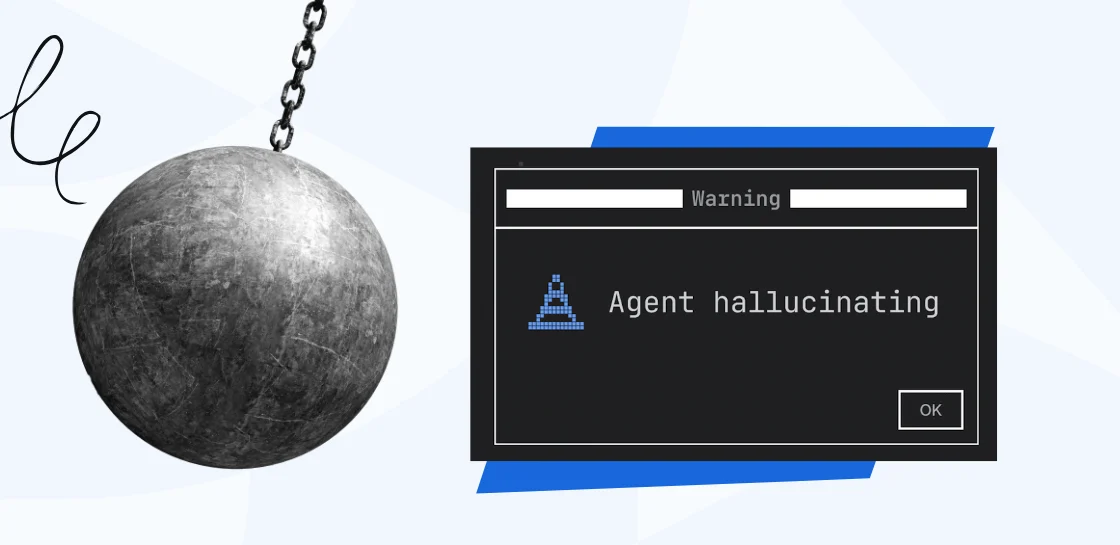
A comprehensive analysis of 1.4 million real-world workplace conversations conducted by KPMG and the University of Texas at Austin’s McCombs School of Business reveals a widening gap between the adoption of artificial intelligence and the quality of professional output. While approximately 75% of global knowledge workers now utilize generative AI, according to the 2024 Microsoft Work Trend Index, the KPMG study found that only 5% of users are employing the technology in ways that materially improve the quality of their work. This discrepancy has given rise to a phenomenon increasingly labeled as "AI slop"—the proliferation of unedited, unverified, and hollow content that is beginning to saturate corporate communication channels, from software code to internal messaging.
The transition from AI as a novel tool to a ubiquitous workplace utility has bypassed a critical stage of oversight. As workers increasingly prioritize speed over substance, the professional landscape is witnessing the emergence of a "shortcut culture" that threatens to undermine organizational trust and shared understanding. Research indicates that the shift is not merely a matter of efficiency but represents a fundamental change in how knowledge workers engage with their tasks, leading to what researchers call "cognitive debt."
The relationship between human judgment and machine output is currently defined by a paradoxical trend in confidence. A 2025 study by Microsoft Research, presented at the CHI conference, surveyed 319 knowledge workers across 936 documented uses of AI. The findings highlighted an inverse correlation between trust and scrutiny: individuals who expressed the highest levels of confidence in AI tools were the least likely to check the output for errors. Conversely, workers who maintained confidence in their own subject-matter expertise applied the highest levels of scrutiny to AI-generated results.
This psychological dynamic suggests that when AI output "looks" professional, the human brain often registers the task as complete, bypassing the critical thinking required to verify accuracy. This gap between aesthetic fluency and actual quality is where professional standards are beginning to erode. The risk is not necessarily one of catastrophic failure but of a gradual decline in the integrity of work products that others must rely upon.
The impact of unmediated AI use is perhaps most visible in software engineering. An analysis by GitClear involving 623 million lines of code changes between 2023 and 2026 found significant shifts in code maintainability. The data showed that refactoring—the process of restructuring existing code to improve its internal structure—has decreased by 70%. Simultaneously, code duplication has risen by 81%, and the use of "error-masking" patterns, such as empty catch blocks that hide underlying system failures, has increased by 47%.
These trends are corroborated by a December 2025 report from CodeRabbit, which analyzed 470 real-world pull requests. The study found that AI-co-authored code contained 1.7 times more issues than human-only code. More specifically, AI-generated contributions showed a 75% increase in logic and correctness issues and 2.74 times more security vulnerabilities. While the quantity of code being produced has accelerated, the quality has remained stagnant or declined, creating a "maintainability gap" that future engineers will be required to resolve.
The prevalence of "AI slop" extends into daily workplace documentation and communication. In many organizations, internal platforms like Confluence and Slack are becoming repositories for unedited chatbot responses. These documents often lack a human voice, specific opinions, or context regarding trade-offs and decisions.
In project management, this manifests as status updates that use vague, AI-generated phrasing such as "progressing well with some challenges being actively managed." Such updates often fail to identify the specific nature of the challenges or the necessary next steps, rendering them useless for decision-making. Similarly, in software development, pull request (PR) descriptions are increasingly being replaced by long AI summaries that list every file changed without explaining the underlying rationale for the modifications. While this saves the author several minutes of writing, it often forces reviewers to spend significantly more time deciphering the importance of the changes.
The "AI-to-Slack pipeline" has also become a point of friction. Direct messages that were once informal and concise are being replaced by multi-paragraph, oddly formal AI responses. These messages often include irrelevant context and linguistic markers typical of large language models (LLMs), such as excessive em dashes and standardized closing statements. This trend creates a "bot-to-bot" atmosphere where human avatars exchange generated text without genuine processing or engagement.
The long-term consequences of relying on AI for cognitive tasks are being quantified through neurological research. A 2025 preprint study from the MIT Media Lab used EEG monitoring to track the brain activity of 54 participants. The researchers found that individuals writing with the assistance of an LLM showed up to 55% less brain connectivity than those writing independently. Furthermore, 83% of the AI-assisted group could not accurately recall or quote from the essays they had just "written." This suggests that the users acted as typists rather than thinkers, producing content without internalizing the information.
A separate MIT study published at CHI 2026 tracked 67 participants over four weeks as they used AI to verify news accuracy. While the participants’ accuracy improved by 21% in the short term with AI assistance, their unassisted accuracy fell by more than 15 points below their baseline by the end of the month. The researchers termed this "cognitive debt"—a short-term gain in productivity that results in the long-term atrophy of critical thinking skills. Most concerningly, approximately 25% of participants believed their skills were improving even as their measurable performance declined.
The accumulation of unedited AI output acts as a form of technical debt for organizational collaboration. The primary costs include:
To combat the rise of "AI slop," experts suggest moving away from a "vending machine" model of AI use toward a "reasoning partner" approach. The KPMG and UT Austin analysis found that the most effective 5% of users did not necessarily use AI more frequently; rather, they used it differently. These high-impact users framed problems clearly, provided specific examples, directed the model’s reasoning process, and iterated through multiple exchanges rather than accepting the first output.
The MIT misinformation researchers proposed a "Socratic dialogue" fix, where AI is configured to ask guiding questions rather than provide immediate answers. This method was found to preserve the user’s cognitive skills and ensure that the final output was the result of a genuine intellectual process.
A fundamental test for modern knowledge workers is the ability to explain their output without re-reading it. If a worker must refer back to their own document to explain its contents to a colleague, they have effectively outsourced the thinking process.
Ultimately, the quality of work in the age of AI is determined not by the tool, but by the standards an organization is willing to enforce. Professional standards are set by what is accepted without comment. By requiring human clarity and refusing to accept unedited "slop," organizations can ensure that AI serves as a catalyst for productivity rather than a substitute for thought.