 11

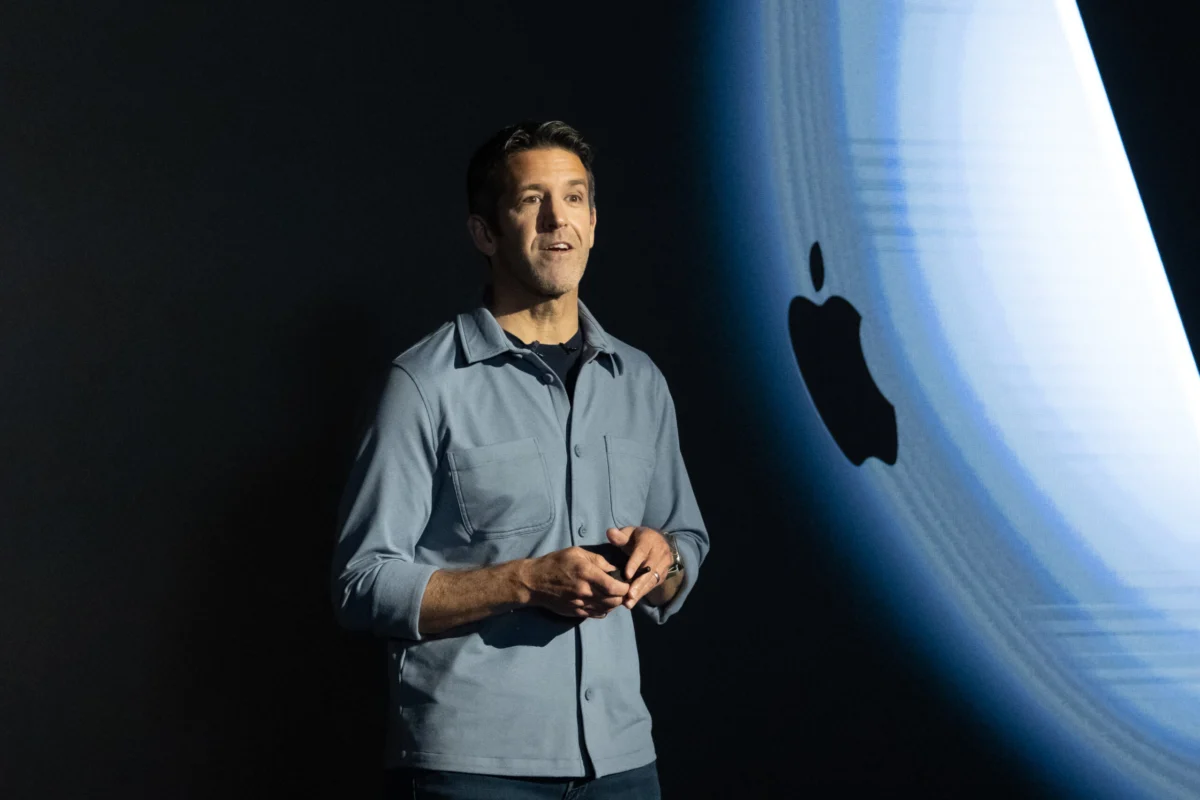
In a pivotal moment for Apple’s future strategy, CEO John Ternus emphatically declared the iPhone’s enduring significance, positioning it as the indispensable core of the company’s ambitious foray into the artificial intelligence (AI) era. Speaking during his inaugural keynote address as CEO, Ternus laid out a vision that firmly places the iconic smartphone at the epicenter of Apple’s product ecosystem, challenging prevailing narratives about its potential decline. His statement, "There’s no product in the world better designed to be your intelligent personal hub than iPhone," underscored a profound strategic commitment, suggesting a new chapter for the Cupertino giant under his leadership. This declaration marks a clear and deliberate pivot, asserting the iPhone’s continued dominance in an increasingly complex technological landscape.
Ternus’s stance represents a notable departure from the approach adopted by his predecessor, Tim Cook, who often sought to broaden Wall Street’s perception of Apple beyond its reliance on the iPhone. During Cook’s tenure, efforts were made to highlight the growth of Apple’s Services division, the burgeoning success of wearables like the Apple Watch and AirPods, and the exploration of new product categories such as the Vision Pro. Cook’s strategy aimed to diversify revenue streams and demonstrate Apple’s innovation capabilities across a wider array of products and services, striving to convince investors that Apple’s fortunes were not solely tied to the cyclical nature of smartphone sales. Ternus, however, appears to be doubling down on the iPhone, not as a singular product, but as the foundational device that integrates and empowers all other Apple experiences within the AI-driven future.
This strategic affirmation also serves as a direct rebuttal to a chorus of industry pundits and analysts who have recently cast doubt on the smartphone’s long-term viability and the iPhone’s central role. Headlines like "The smartphone’s days are numbered" and "The Tim Cook era is coming to a close with an existential challenge for Apple: figuring out what comes after the iPhone" reflect a growing skepticism. These commentators often point to the rise of advanced AI, ambient computing, and specialized wearable devices as potential successors to the smartphone, suggesting that a more seamless, less screen-centric interaction model could eventually render the handheld device obsolete. Ternus’s keynote directly confronts these narratives, asserting that far from being supplanted, the iPhone is uniquely poised to evolve and thrive in this next technological epoch.
Beyond mere hardware, Ternus articulated a comprehensive "intelligent personal assistant" strategy, with the iPhone as its beating heart. This vision, if successfully executed, has the potential to redefine Apple’s identity and market position for decades to come, much as previous foundational strategies have. This concept moves beyond simple voice commands or discrete AI features, aiming for a deeply integrated, proactive, and context-aware intelligence that lives primarily within the user’s most personal device. It suggests a future where the iPhone not only processes requests but anticipates needs, manages complex tasks, and offers personalized insights, all while maintaining Apple’s stringent standards for privacy and security.
In drawing parallels, Ternus’s current strategic move evokes memories of Steve Jobs’s audacious proclamation in 2001. At that time, many observers had similarly written off the personal computer, believing its relevance was waning amidst the dot-com bust and the rise of simpler internet appliances. At a Macworld New York keynote, Jobs famously confronted these bearish sentiments head-on, projecting a tombstone for the "Beloved PC" on screen while quoting naysayers like industry pundit Walt Mossberg and leaders from Compaq and Gateway. He challenged the prevailing wisdom, stating, "This is what everyone else is telling us. That our PC is waning if not the hole being dug." Jobs vehemently countered, "We don’t think the PC is dying at all. We don’t think the PC is moving away from the center at all. We think it’s evolving, just like it has since it was invented."
Jobs further elaborated on his vision, asserting, "We think the PC is on the threshold of entering its third great age." This prediction was predicated on the burgeoning proliferation of digital devices at the time, including camcorders, digital cameras, and DVD players, which were generating vast amounts of digital content. Jobs envisioned the Mac as the central "digital hub," a powerful and intuitive platform that would connect these disparate devices, allowing users to import, organize, edit, and share their digital media seamlessly. In Jobs’s words, the Mac would "add value" to all these devices, transforming a collection of gadgets into a cohesive digital lifestyle. This "digital hub" strategy was not merely about selling more Macs; it was about positioning the Mac as the essential control center for the emerging digital age, ensuring its continued relevance despite claims of its impending obsolescence.
Less than ten months after this declaration, Jobs famously pulled the iPod out of his pocket, a device that, while seemingly standalone, was ingeniously designed to answer the question, "Why do you still need a PC?" The iPod, initially conceived as an accessory to the Mac’s digital hub, quickly became a cultural phenomenon and an enormous commercial success. It drove Apple’s profits quarter after quarter, revitalizing the company and establishing its prowess in consumer electronics. Crucially, the lessons learned from the iPod’s development—its intuitive interface, seamless integration with iTunes, and focus on user experience—proved instrumental in laying the groundwork for the iPhone, a device that would eventually combine the functionality of a phone, an iPod, and an internet communicator.
Today, as the iPhone approaches its 20th anniversary, Ternus faces a remarkably similar strategic inflection point to the one Jobs navigated in 2001. The question of "what comes after the iPhone" or whether it has passed its prime looms large in the tech world. While it remains unknown if Ternus is quietly incubating a revolutionary, iPod-like product that will further solidify the iPhone’s role as Apple’s central hub, his public stance is an unequivocal rejection of the idea that the iPhone’s best days are behind it. He is asserting that the iPhone, through continuous evolution and strategic integration with AI, is not just surviving but is poised for its next great age.
To illustrate his point, Ternus posed a rhetorical question: "If you were designing the ideal version of this hub from scratch, how would you do it?" He then proceeded to list the essential ingredients that, he argued, are already inherent in the iPhone: a powerful processor, high-resolution cameras, persistent networking, and robust on-device AI capabilities. These features are not merely incremental upgrades; they are fundamental components that empower the iPhone to serve as a sophisticated and intelligent personal assistant. The integration of on-device AI, in particular, highlights Apple’s commitment to privacy and performance, allowing for faster, more secure, and personalized AI experiences without constant reliance on cloud servers.
It is undeniable that the iPhone, exemplified by its latest iterations featuring chips like the A18 Pro, stands as one of the most powerful personal computing devices available today. This raw computational power gives Apple a significant advantage in the "compute-hungry" AI era, enabling complex AI models and sophisticated applications to run directly on the device with unparalleled speed and efficiency. Its unparalleled combination of portability and adaptability has made it, for many, the only computing device they truly need. Even among users who own laptops and iPads, the iPhone often remains the single indispensable device in their daily lives. The common observation that "plenty of people leave home without their laptops, almost no one leaves without their phones" underscores its pervasive and essential nature.
This unique confluence of power, portability, and user reliance has granted Apple a privileged and formidable position in the global AI landscape. While numerous other companies have attempted to challenge the iPhone’s dominance by introducing various wearable devices—from smart glasses to AI-powered pins—none have yet succeeded in displacing the smartphone as the primary personal computing and communication hub. These alternative form factors, while innovative, have struggled to match the iPhone’s versatility, comprehensive ecosystem, and the sheer breadth of its capabilities.
Instead of sidelining the iPhone in pursuit of the next flashy, unproven gadget, Ternus is strategically leaning into its established strengths and immense potential. His vision suggests a future where the iPhone doesn’t just adapt to the AI era but actively defines it, evolving its core capabilities to meet new demands. In a profound way, he is bringing Apple’s corporate strategy into alignment with what billions of users already intuitively understand: The iPhone is an exceptionally capable device, and its journey as the central personal hub is far from over. For now, at least, its replacement remains a distant, perhaps even unnecessary, consideration.






