11

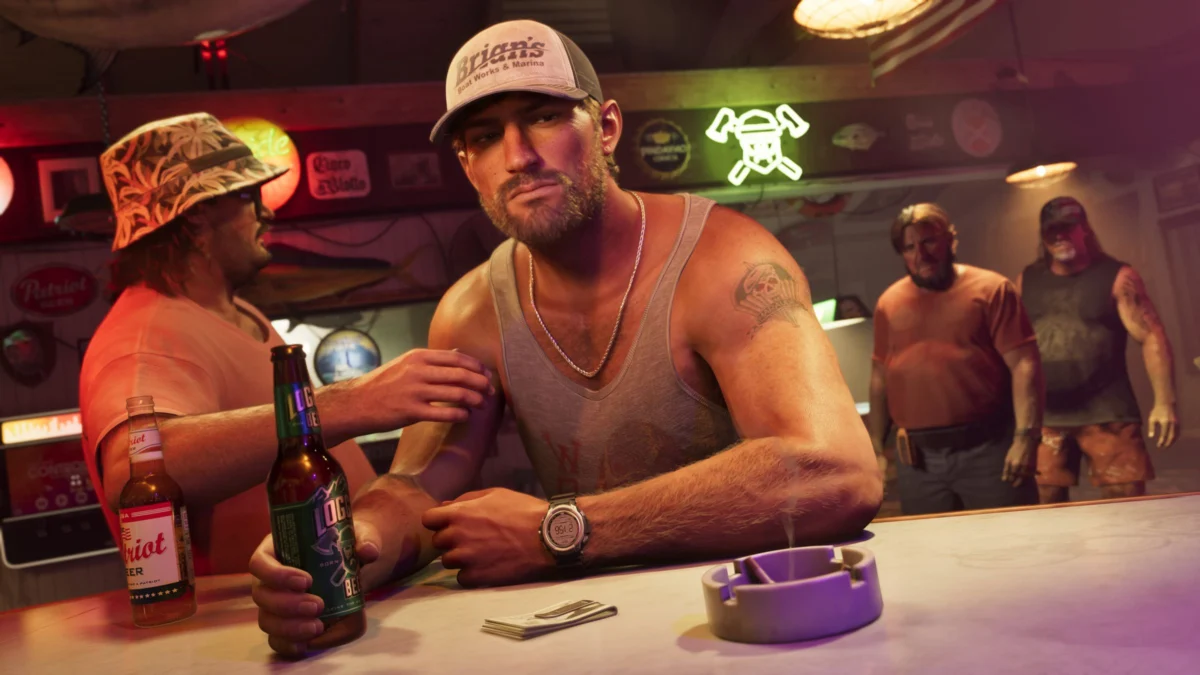
Rockstar Games’ best-selling Grand Theft Auto series, renowned for its audacious and often provocative content, was rarely celebrated for political sensitivity during its legendary run from the late 1990s through the early 2010s. For decades, the franchise consistently courted controversy, drawing the ire of parents, activists, and media watchdogs who denounced its explicit depictions of sex, violence, crude humor, and rampant criminality. The series became a lightning rod for moral panics, accused of corrupting impressionable youth with its gritty, open-world simulations of illicit lifestyles. Even prominent figures like Elon Musk have weighed in, with Musk claiming he found it difficult to engage with the last installment, GTA V, due to his discomfort with playing a character who shoots police officers. This historical context of controversy, however, has recently shifted dramatically with the impending release of Grand Theft Auto VI.
After a thirteen-year hiatus, fans are eagerly anticipating the launch of Grand Theft Auto VI on November 19, a release date confirmed by Rockstar Games. Yet, in the intervening years, the landscape of "moral panic" has evolved significantly. The American right-wing grievance machine, once primarily concerned with children adopting lives of larceny, has pivoted its focus to the fear of youth growing up "woke." This new cultural battleground has ensnared GTA VI, despite the limited information available about the forthcoming game. Agitators within this anti-woke movement have preemptively declared the game a stealth campaign designed to indoctrinate young players with themes of gender equality, LGBTQ+ acceptance, and racial diversity. Rockstar Games has not yet responded to requests for comment regarding these allegations, leaving the public to interpret the developers’ intentions through leaks and official previews.
The roots of this current backlash can be traced back to the Gamergate controversy of 2014. Since then, a vocal and often aggressive subset of male gamers has maintained a "paranoid vigil" against what they perceive as the encroaching influence of women and LGBTQ+ developers within the gaming industry. Gamergate, initially framed as a critique of ethics in video game journalism, quickly devolved into a campaign of harassment and misogyny against female developers, journalists, and critics. This movement fundamentally reshaped the discourse around gaming, fostering an environment where anxieties about representation and diversity are frequently weaponized. The prolonged anticipation for GTA VI, coupled with various production delays, has provided ample opportunity for these groups to foment a "preemptive backlash," mirroring past controversies such as the "failed furor" over supposedly "woke" elements in Christopher Nolan’s The Odyssey—a widely successful project that nonetheless faced similar, unfounded criticisms regarding its progressive themes.
The criticisms leveled against GTA VI are often based on scant evidence, frequently extrapolated from brief clips or speculative interpretations. One X (formerly Twitter) user, operating under the handle @Wokenessisevil, lamented on Tuesday, "GTA 6 is a humiliation ritual for all male gamers." This complaint accompanied a clip featuring the game’s two lead characters, Lucia Caminos and Jason Duval, who are portrayed as being in a relationship that evolves based on player choices. Lucia, notably the series’ first mandatory female protagonist, is shown asking Jason to help her choose an outfit, expressing mild annoyance when he appears indifferent to her options. This seemingly innocuous exchange, which could easily be lifted from a decades-old sitcom depicting common heterosexual relationship dynamics, has been twisted into a narrative suggesting the male protagonist is being "subjugated to a nefarious feminist agenda." The underlying sentiment is that the game is undermining traditional masculine roles and catering to a perceived "woke" audience.
Further fueling this reactionary narrative, another X user, @AI_EmeraldApple, recently claimed that Jason possesses a "gay vibe." Their reasoning? Jason’s supposed knowledge of "sequins" and his use of the word "cocktails"—terms the user deemed incompatible with a "straight man." This user went on to assert, "The script is definitely written by a woman who has no clue what a man thinks or how he talks," adding, "Jason is written as a caricature, much like what a delusional woman thinks a ‘man’ should be." These comments reveal a rigid, stereotypical view of masculinity and an inherent distrust of female writers in the gaming space, suggesting that any deviation from a narrow definition of male behavior is indicative of a "woke" plot. Similarly, a gaming YouTuber expressed outrage that Rockstar was ostensibly appealing to women and gay men by depicting Jason shirtless in another scene. He decried, "Gone are the days of edgy based masculine GTA games," concluding, "I could be wrong but right now it’s looking like it will be a woke fest." These reactions underscore a deep-seated anxiety among some male gamers about the diversification of character representation and storytelling in a franchise they previously viewed as exclusively catering to a specific, traditional male demographic.
Despite multiple leaks and a comprehensive 27-minute "extended look" preview released on Netflix, which have unveiled crucial details about the game’s setting and characters, detractors continue to search for reasons to dismiss it as "woke." Rockstar creatives have explicitly stated their intention to realistically portray the diverse, Miami-inspired setting of the game and to bring a fully fleshed-out female character, Lucia, into the spotlight. Yet, these intentions are often met with cynicism or outright hostility. One YouTuber, for instance, has bizarrely convinced himself that the game will subliminally "brainwash" players through the use of "bisexual lighting," a term typically used in film analysis to describe the use of pink, purple, and blue lighting to subtly indicate a character’s bisexuality or a scene’s queer undertones. The application of such a niche concept to a broad cultural phenomenon like GTA VI highlights the extent to which these critics are straining to find "woke" elements, even in the most abstract visual cues.
Beyond these ideological criticisms, some men have resorted to overt sexism. Complaints have surfaced regarding Lucia’s physical appearance, with some griping that "Lucia’s breasts are too small" and attributing this perceived flaw to "they/thems" working at Rockstar—a derogatory generalization aimed at LGBTQ+ individuals and women in the development team. Others have posted overtly misogynistic "jokes" such as: "female lead in GTA 6? i thought the whole point of GTA was to be able to drive," playing on outdated and offensive stereotypes about women’s driving abilities. The cultural pushback extends to the game’s promotional art, with an AI enthusiast using an image generator to replace a woman of color featured in a crop top on the game’s cover with a white blonde woman in a bikini, reflecting a desire to revert to perceived traditional aesthetics and racial homogeneity. These actions collectively illustrate a discomfort with diversity and an active attempt to reassert a narrow, exclusionary vision for the franchise.
The current outrage surrounding GTA VI‘s perceived "wokeness" is not an isolated incident but rather the culmination of previous skirmishes within the Grand Theft Auto franchise itself. In 2022, Rockstar released a remastered version of GTA V, in which they notably removed several gags and non-playable characters that had been widely criticized as transphobic. This move, intended to address past insensitivities, paradoxically sparked a wave of complaints from some fans who viewed it as an act of capitulation to "woke" demands and a betrayal of the series’ "edgy" humor. The following year, after the initial trailer for GTA VI was released, trolls disseminated the baseless theory that Lucia, the new protagonist, was in fact a transgender woman. This groundless rumor, quickly debunked, served as a prime example of the lengths to which some would go to inject "woke" controversy where none existed, driven by a fear of representation. More recently, when former video game executive Mark Kern—known for his outspoken "crusades" against "woke" content—expressed that he found Lucia attractive, his followers reacted with swift and aggressive disagreement, unleashing a torrent of "openly racist and misogynistic replies" that further exposed the deep-seated prejudices within this anti-woke faction.
Much of this concentrated ire is directed squarely at the Rockstar development team. They have been lambasted for allegedly embracing "identity politics," a term often used pejoratively by critics of diversity initiatives. The team is reportedly making conscious efforts to avoid "punching down" against marginalized groups in the game’s storyline, a shift from the series’ historical reliance on satirical humor that often targeted vulnerable communities. This perceived move towards more inclusive and responsible storytelling is viewed by some as a betrayal of the GTA ethos. Furthermore, the mere presence and contribution of women within the franchise’s development process have become a target. A photograph of female staff at Rockstar’s studio in Scotland, shared on social media in 2019 to commemorate International Women’s Day, has since been widely circulated online with "sneering comments" implying that these women were responsible for "ruining" GTA VI with "woke" elements. This exemplifies a misogynistic undercurrent that suggests women are inherently incapable of creating or contributing to a "masculine" game like Grand Theft Auto.
Despite the fervent online backlash, a few prominent streamers on the right-wing spectrum, including Zack Hoyt (better known as Asmongold) and even white nationalist Nick Fuentes, have adopted a more measured "wait-and-see" approach. They have largely refrained from condemning the game before its release, opting to evaluate the content themselves. Fuentes, surprisingly, went so far as to "mock" those who were prematurely bemoaning the game’s creative direction, advising one viewer in his live chat to "Just go outside, touch grass." This unexpected moderation from figures typically associated with anti-woke sentiment suggests a potential fracturing within the culture warrior movement or, perhaps, a recognition that some criticisms are becoming increasingly absurd and detached from reality.
Ultimately, any fantasies entertained by these gamers about an actual boycott or commercial failure of Grand Theft Auto VI are almost certainly destined for disappointment. According to a recent estimate of pre-orders from a third-party data analytics firm, Rockstar has already sold an astounding 5.28 million copies of GTA VI, generating more than $500 million in revenue. While the game is widely believed to be the most expensive ever made, with a budget reportedly soaring "north of a billion dollars," the studio is poised to "easily recoup that cost," potentially even by its release day. This immense commercial success underscores a significant disconnect between the vocal online minority and the broader gaming public.
The undeniable financial triumph of GTA VI should ideally prompt a moment of reflection for the culture warriors engaged in this crusade. It appears remarkably difficult for them to concede that their viewpoints are out of touch with mainstream preferences and that they hold little to no sway over the popularity of major media franchises. While they will undoubtedly continue to voice objections to other aspects of the game, once GTA VI begins breaking sales records and solidifying its place in gaming history, the futility of their ideological campaign will become undeniable. By that point, the next manufactured controversy will inevitably be on the horizon, ready to capture their attention and redirect their outrage.