 11

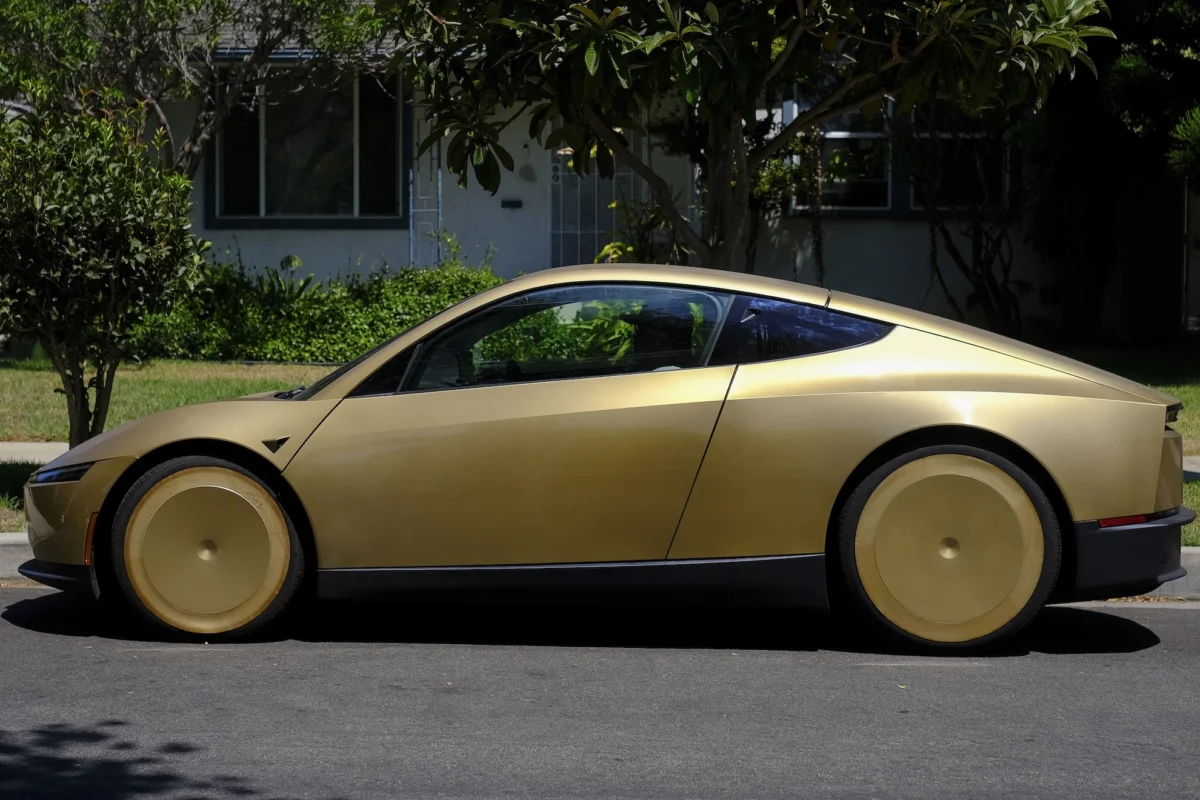
The world of mobility is buzzing with transformative developments, particularly where artificial intelligence intersects with transportation. This week, industry focus sharpened on Tesla’s highly anticipated Cybercab event and a flurry of activity across autonomous vehicles, electric mobility, and logistics.
Tesla’s Cybercab Unveiling: A Polarizing Debut
The recent Tesla Cybercab event in Austin, Texas, has ignited a fierce debate across social media and financial markets. Depending on one’s perspective, it was either definitive proof of Tesla’s leadership in the robotaxi sector and a glimpse into the future of urban transportation, or an overhyped presentation lacking substantial innovation. Wall Street, notably, reacted with skepticism, underscoring the event’s unusually subdued nature. Observers noted a distinct absence of the typical festival-like atmosphere characteristic of past Tesla launches, and more surprisingly, CEO Elon Musk was not in attendance. This absence was particularly puzzling given Musk’s consistent assertion that Tesla’s long-term value and strategic direction are intrinsically tied to advancements in robotics and artificial intelligence.
As senior reporter Sean O’Kane presciently articulated before the event, the Cybercab represented a pivotal moment for Tesla, a "fork in the road." This event was poised to either validate the company’s ambition to revolutionize urban transportation or to reveal that, despite its ambitious ventures into AI and robotics, Tesla fundamentally remains an automotive manufacturer. The presentation, unfortunately, did little to bolster investor confidence. However, some industry analysts, including this publication, emphasize that the true measure of success lies not in high-profile events or initial demonstrations, but in a company’s ability to safely and effectively launch a robotaxi service at a significant scale. In this crucial aspect, Tesla currently trails competitors like Waymo, with only 45 Cybercabs registered in Texas, according to the state’s automated vehicle tracker.

NHTSA Investigation Clouds Cybercab Launch
Adding a significant wrinkle to Tesla’s robotaxi ambitions, the National Highway Traffic Safety Administration (NHTSA) initiated an investigation into the Cybercab just hours after the vehicles were deployed on Austin streets. A key point of contention is the Cybercab’s design, which conspicuously lacks a steering wheel and pedals – features typically mandated by federal vehicle safety regulations for manual control. While the Department of Transportation recently proposed removing these requirements for vehicles explicitly designed for autonomous operation, the current regulatory framework still largely expects such controls.
Tesla proceeded with its deployment by self-certifying the Cybercabs, a standard practice for traditional human-driven vehicles. However, the NHTSA’s swift response effectively "tapped the brakes" on this approach, signaling a need for further scrutiny. Although the investigation is underway, Tesla may opt to continue its operations, a decision that could set a precedent or invite further regulatory action. It is important to note that the NHTSA’s intervention in the deployment of novel automotive technologies has historical precedents, reflecting the agency’s commitment to public safety as autonomous capabilities evolve.
For those curious about the specifics of the Cybercab, Tesla has released several guides providing critical details. Among these revelations is the instruction that the gilded robotaxi is not designed for children, highlighting potential safety or operational limitations. Furthermore, Tesla has indicated a strategic interest in selling its autonomous vehicles to third-party fleet operators, suggesting a diversified business model beyond direct consumer service. This approach could accelerate deployment and revenue generation, leveraging a network of commercial partners to manage and operate the robotaxi fleets.
Major Deals Reshaping the Mobility Landscape

Beyond the Cybercab’s headlines, the mobility sector witnessed significant financial activity and strategic partnerships:
Notable Developments and Industry Tidbits
Several other significant events and trends shaped the mobility narrative:
A Look at the 2027 Kia Telluride Hybrid
In a recent test drive, the 2027 Kia Telluride hybrid X-Line SX-Prestige trim presented a compelling case in the competitive three-row SUV segment. Outfitted in a striking sparkly black jade paint, the fully loaded model was priced at $61,180, reflecting its premium features and advanced powertrain.

This second-generation Kia Telluride features a turbocharged 2.5-liter inline-four hybrid engine, delivering a robust 329 horsepower and 339 pound-feet of torque. Significantly, this hybrid configuration not only surpasses its non-hybrid equivalent in both horsepower and torque but also achieves an improved fuel economy of 31 mpg in the combined cycle, making it a more efficient option for large families and long-distance travel.
Kia has subtly refined the design of the new Telluride, which now evokes a familial resemblance to the acclaimed Kia EV9, though it maintains its distinct identity as a cousin rather than a direct twin. Key positive impressions from the test drive included a notably roomier interior compared to its predecessor, enhancing passenger comfort, and a remarkably quiet cabin, contributing to a serene driving experience. While some critics had expressed concerns that the shift from a V6 to a 4-cylinder engine might compromise the vehicle’s power, the Telluride hybrid proved to be sufficiently "zippy," offering ample acceleration for a vehicle of its considerable size, easily navigating both urban traffic and highway speeds.
The interior design also warrants attention, particularly the user experience (UX) and user interface (UI) of the infotainment center. While not universally acclaimed as the market’s best layout, it incorporates several commendable features, such as a conveniently placed row of physical controls situated directly below the touchscreen, allowing for easy and intuitive access to frequently used functions without diverting attention from the road. However, one particular design choice remains a point of contention: the gear shifter. Positioned as a stalk attached to the right side of the steering column, it deviates significantly from conventional console-mounted shifters. This unconventional placement often led to the author instinctively searching for it, indicating a learning curve that, while eventually surmountable, presents an initial ergonomic challenge for drivers accustomed to traditional setups. Despite this quirk, the Kia Telluride hybrid presents a strong offering, blending power, efficiency, and comfort in a stylish package.






