 11

As the cryptocurrency industry matures and increasingly adopts strategies from traditional finance (TradFi), projects are beginning to emulate the behavior of public companies, with token buybacks emerging as a significant trend. This practice, where projects use their generated revenue to repurchase their own tokens, has seen a substantial surge in activity. In the first part of 2026, crypto projects collectively spent approximately $640 million on token buybacks, marking a 17% increase compared to the same period in the previous year. This figure stands in stark contrast to the modest $366,000 spent in 2024, highlighting the rapid adoption of this strategy. Currently, Hyperliquid and Pump.fun are the dominant players, accounting for nearly 90% of the total buyback expenditure.
The appeal of token buybacks lies in their potential to influence token economics. By creating demand for a token through repurchases, projects can effectively increase its scarcity, especially when combined with token burns that reduce the circulating supply. This dynamic can exert upward pressure on the token’s price, offering a tangible benefit to holders. Furthermore, revenue-funded buybacks and burns provide token holders with a more direct connection to the underlying protocol’s economic activity. Orest Gavryliak, chief legal officer at decentralized exchange aggregator 1inch, explains that projects typically implement these mechanisms with one of two objectives: either to decrease the token supply or to underscore the rationale for investing in protocol revenues. Gavryliak notes that communicating "bought and burned tokens" is a more straightforward narrative for users than explaining complex concepts like governance rights, fee structures, or protocol utilization.
However, this strategy is not without its trade-offs. Every dollar a protocol allocates to token buybacks is a dollar that could have been invested in crucial areas such as hiring developers, expanding business operations, strengthening its balance sheet, or enhancing product development. This raises a critical question: as token buybacks become a popular tokenomic tool, are they genuinely beneficial for the projects employing them?
The Rationale Behind Crypto Projects Repurchasing Their Own Tokens
The notion of projects buying back their own tokens might initially seem counterintuitive, given that many projects sell tokens to raise capital for operational costs. However, the key distinction lies in the source of the funds: using revenue generated from protocol operations to repurchase tokens creates an implicit link between the protocol’s success and its token’s value. This is a long-standing challenge for many crypto projects that have struggled to establish such a clear connection. Max Shannon, senior research associate at Bitwise Europe, elaborates that buybacks and burns remain an effective method for accruing value to tokenholders. He explains that they generate a consistent demand in the open market for the token, directly tethering the token’s success to the platform’s adoption.
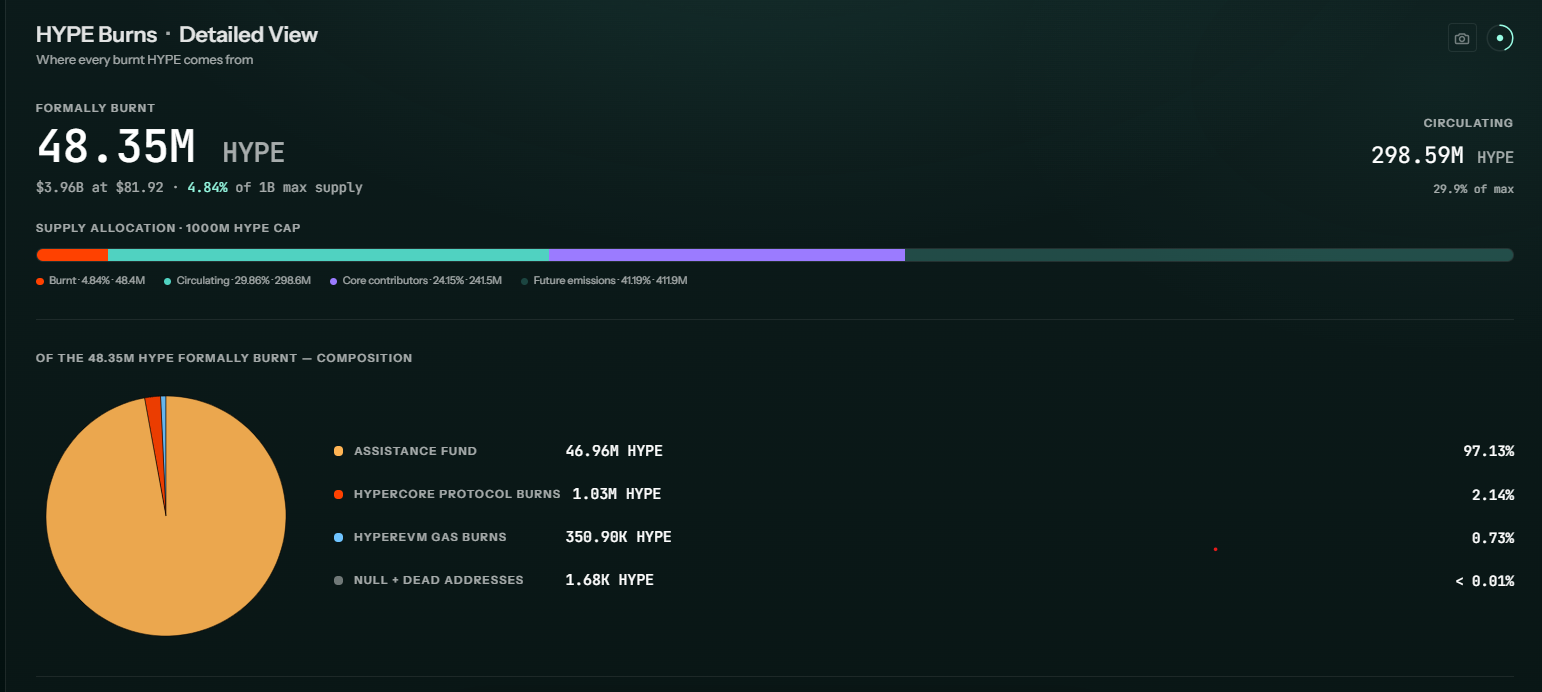
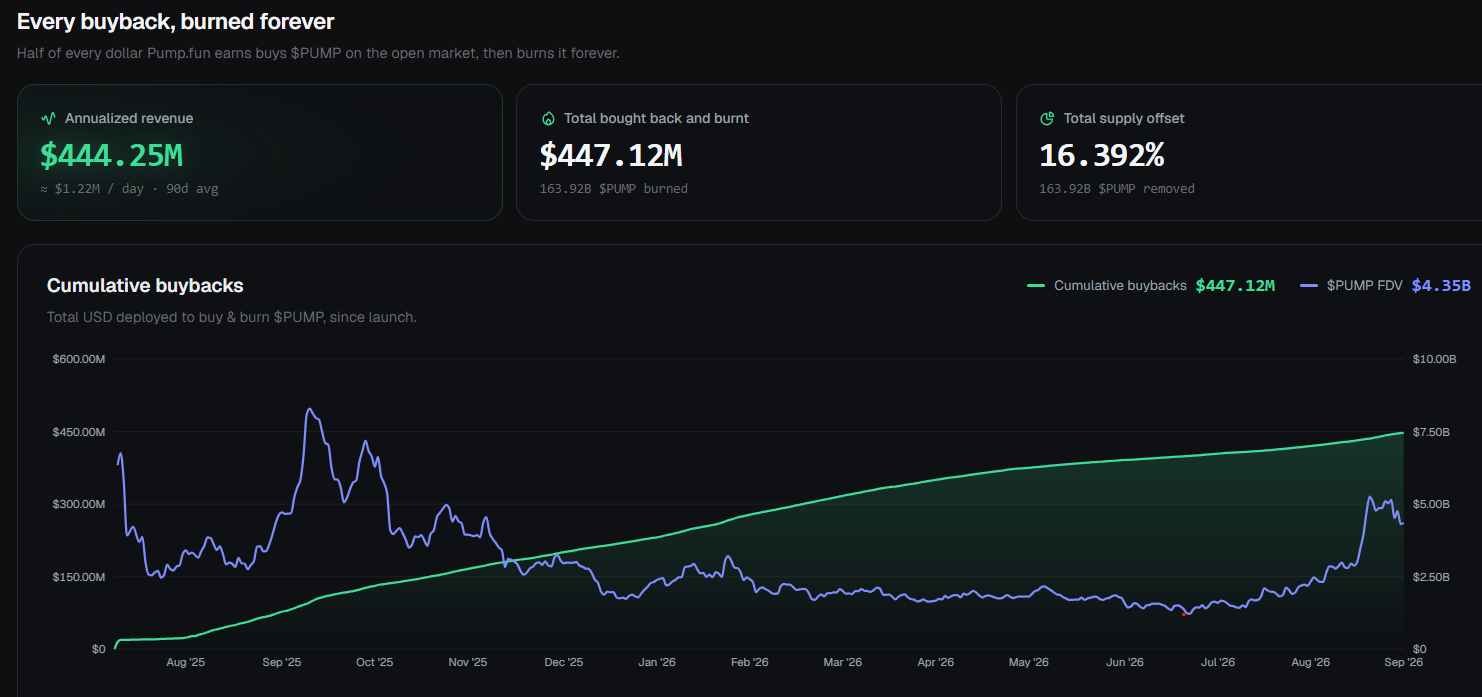
This approach marks a significant shift from the past few years, where many projects focused on speculative narratives or the "greater fool theory," attracting users based on hype rather than sound economic models. Some protocols are taking this strategy to an extreme. Hyperliquid, for instance, has committed 99% of its revenue to buy back and burn its HYPE token. Similarly, 50% of Pump.fun’s revenue is directed towards purchasing and burning its PUMP token, resulting in the removal of $446.65 million worth of PUMP from circulation to date.
The DeFi infrastructure protocol Spark employs a slightly different model. According to co-founder and chief executive Sam MacPherson, Spark has acquired over 143 million SPK tokens through open-market buybacks funded by protocol surplus. However, these tokens are not burned but are held in the Spark treasury to reward long-term participants in the ecosystem. MacPherson emphasizes that the objective is not solely to reduce supply but to ensure tokenholders participate in the long-term economic success of the protocol, rather than merely receiving a distribution whenever revenue is generated. He argues that buybacks enable Spark to achieve this alignment while retaining flexibility in how and when the acquired SPK is deployed, making the token economically relevant rather than a simple dividend mechanism. Furthermore, token buybacks can offer a tax-efficient way to return value to holders, as they often avoid the significant tax liabilities associated with dividends or direct rewards.
Evaluating the Best Use of Project Funds: Buybacks vs. Reinvestment
While the logic behind token buybacks appears sound, the critical question remains: is repurchasing a project’s own token always the most beneficial use of its funds? Experts suggest that this is not universally true. MacPherson posits that the fundamental question should be, "What is the highest-value use of the next dollar of surplus?" If a protocol can reinvest capital at attractive returns, he argues, this can be far more valuable than simply distributing revenue as it is generated.
Buybacks can bolster token economics without necessarily improving the underlying business. Moreover, there is no guarantee that buybacks will consistently lead to higher token prices. For example, Pump.fun has been aggressively buying and burning PUMP since July 2025, yet the token remains approximately 50% below its all-time high achieved in September 2025. Similarly, UNI has relinquished around half of the gains it experienced after Uniswap announced its UNIfication proposal in November 2025. Shannon acknowledges that multiple factors influence these price movements, and they do not definitively prove the failure of buybacks. However, he notes that these instances have prompted investors to debate whether these "startup-like" projects would be better served by reducing the proportion of revenue allocated to buybacks and burns and instead reinvesting more in their teams and the project itself.
Investors are advised to distinguish between a buyback scheme designed to artificially inflate prices and a truly successful business model. A sustainable protocol generating genuine surplus might strategically decide that buying back its token is a prudent use of some of that revenue. Conversely, a struggling project might resort to token buybacks solely to manipulate the price. As MacPherson rightly points out, "A buyback doesn’t make an unsustainable protocol sustainable."
Tokens Resembling Stocks: A Nuanced Comparison
While token buybacks may superficially mirror share buyback programs in traditional finance, this does not inherently mean that tokens are becoming more akin to stocks. A shareholder owns a portion of a company and typically possesses voting rights, entitlement to dividends, or a claim on residual assets. Tokenholders, on the other hand, generally lack these same legal rights. Gavryliak emphasizes this critical distinction, stating, "This is a market mechanism, not a legally enforceable entitlement."
MacPherson describes SPK as a form of "pseudo-equity" for an on-chain protocol. While a legal ownership structure in the traditional corporate sense is absent, Spark aims to create similar economic characteristics: participation in governance, long-term alignment, and a mechanism for those most committed to the protocol to benefit from its success.
Regulatory Scrutiny: When Buybacks Resemble Dividends
As the crypto space increasingly emulates TradFi buyback mechanisms, potential regulatory challenges loom. Regulators are actively considering the actual nature of these financial activities. While the Digital Asset Market Clarity (CLARITY) Act of 2025 remains a draft, Gavryliak highlights its proposed framework as indicative of the key regulatory question: the source of a token’s value. If a token’s value derives from the network’s functionality, it may be classified as a commodity. However, if its value is predicated on the efforts of the project team in development, marketing, or providing returns to token holders, it could be deemed a security. Gavryliak advises against presenting a token as a stock and expecting it to be treated as a commodity.
Ultimately, crypto investors seek clarity on what underpins a token—whether it’s revenue, user engagement, sustainable economics—and a credible mechanism for the token to benefit from these factors. While buybacks can offer a solution, they can also serve as a form of financial engineering that artificially inflates a token’s perceived value without addressing underlying fundamental issues. Gavryliak concludes that if buybacks were to cease, and there remained no compelling reason to hold the token, the problem lies deeper than mere tokenomics.






