11
11
A liquefied natural gas (LNG) tanker on a digital screen at the Qatar Economic Forum in Doha, May 20, 2025. Christopher Pike | Bloomberg | Getty Images
Oil prices surged on Monday as traffic in the vital Strait of Hormuz ground to a near standstill, but the long-term consequences of this choke point’s closure are poised to be far more severe for the liquefied natural gas (LNG) market. This heightened vulnerability stems from the inherent difficulties in transporting LNG compared to crude oil and the highly concentrated nature of its production.
Approximately 20% of global LNG flows traverse the Strait of Hormuz, with the vast majority of these exports originating from Qatar. Global gas prices have experienced dramatic increases following Qatar’s decision last week to halt production in response to an Iranian drone attack. This disruption has sent shockwaves through the international energy markets, highlighting the critical role of this maritime artery and the strategic importance of Qatari LNG.
In Europe, natural gas prices experienced a significant spike, climbing 63% last week. This represented the largest percentage gain since March 2022, a period marked by Russia’s invasion of Ukraine and subsequent energy market volatility. Prices in Asia are even more elevated, trading at $23.40 per million British thermal units (mmbtu) on Monday morning. This disparity is largely attributed to the fact that the majority of Qatari LNG exports are destined for Asian nations. As these countries scramble to secure alternative supplies to compensate for the lost Qatari cargoes, a widening price gap between European and Asian gas markets is prompting some LNG vessels originally bound for Europe to divert course and head towards Asia.
While some of Saudi Arabia’s and the UAE’s crude oil production has been rerouted through existing pipeline infrastructure, a comparable network does not exist for natural gas. The transportation of natural gas over long distances necessitates the use of specialized ships, making it inherently less flexible than oil.
Adding to the market’s fragility, gas production, unlike oil production which is spread across numerous countries in the Middle East, is highly concentrated. Alex Munton, director of global gas and LNG research at Rapidan Energy, noted that gas production is primarily centered at a single industrial complex in Qatar. This concentration makes the global LNG market significantly more susceptible to disruptions originating from this one location.
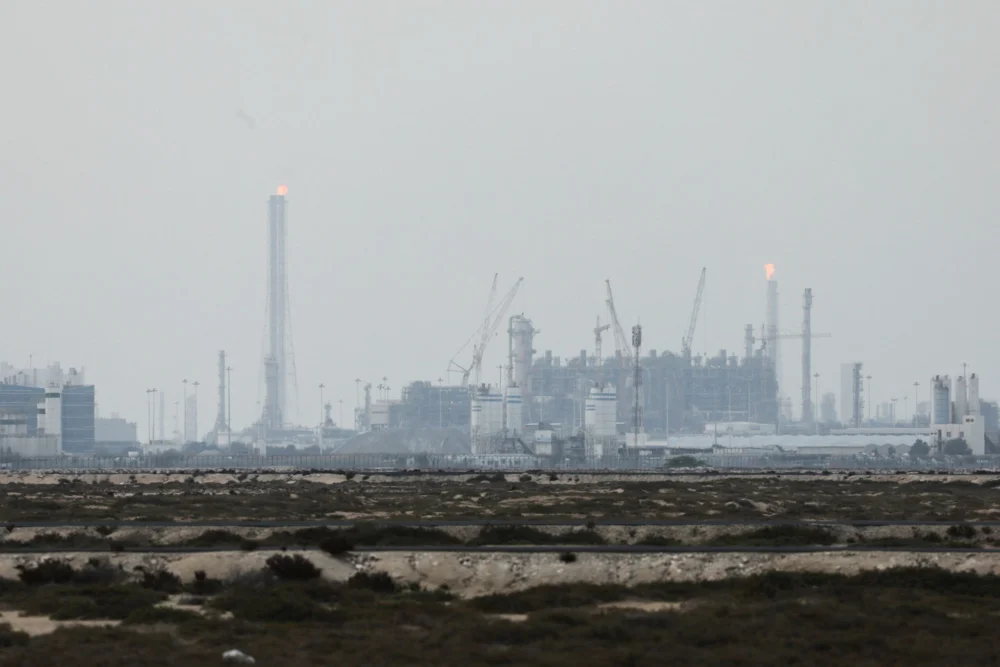
Munton further elaborated on the critical risk: the immense challenge of restarting Qatar’s LNG production at the Ras Laffan Industrial City once transit through the Strait of Hormuz is resumed. The process of liquefying natural gas is fundamentally an industrial one, involving complex cooling procedures. Consequently, restarting these operations will be a considerably more protracted endeavor than restarting oil production, which generally involves simpler processes.
Rapidan Energy predicts that LNG exports from the region will remain suspended until there is absolute certainty regarding the safety of vessel transit through the Strait. The economic implications are substantial, with an LNG tanker alone costing approximately $250 million. Beyond the financial risk, the intricate nature of LNG production means that operations cannot be rapidly scaled up or down in response to perceived escalations or de-escalations of the conflict. According to Rapidan, a full restart of operations will take weeks, not days, as the entire Ras Laffan plant has never been taken offline before.
"I don’t think in the first few days of this conflict – we’re only a week in – that there is an appreciation for the length of time that Qatar is going to be offline and the effect it will have on global supply and the global markets," Munton stated in an interview with CNBC.
The United States, the world’s largest LNG exporter, is currently operating its production facilities at or near maximum capacity. With limited additional output available globally, the potential for demand destruction may ultimately be the factor that rebalances the market. This could involve a shift towards less expensive energy sources, such as coal, as a substitute for natural gas.
However, Munton cautioned that an escalation of hostilities, including further attacks on Qatar’s LNG infrastructure, could lead to more profound long-term consequences. Rapidan views Iran’s previous attacks on Ras Laffan as a "warning shot that wasn’t the real deal."
"It’s a sitting duck," Munton described the industrial complex. "If Iran wanted to do major damage to Qatar’s LNG capacity, it could. … There is no way of defending completely against an Iranian attack if Iran was hell bent on damaging the plant." He emphasized the stark contrast with oil production, where multiple fields, countries, and facilities provide a degree of redundancy. "It’s not like one node can take out all Middle East oil production, because there’s just too many fields, there’s too many countries, there’s too many plants and facilities… but with LNG it’s one facility. It’s a gigantic complex, but it’s just one facility."
In a significant development, QatarEnergy has reportedly postponed an expansion of its gas facilities until 2027, following the Iranian drone attack. This delay, as reported by Bloomberg, underscores the immediate impact of the geopolitical tensions on the future growth and supply capacity of one of the world’s key LNG producers.
QatarEnergy’s liquefied natural gas (LNG) production facilities, amid the U.S.-Israeli conflict with Iran, in Ras Laffan Industrial City, Qatar March 2, 2026. Stringer | Reuters