 11
11
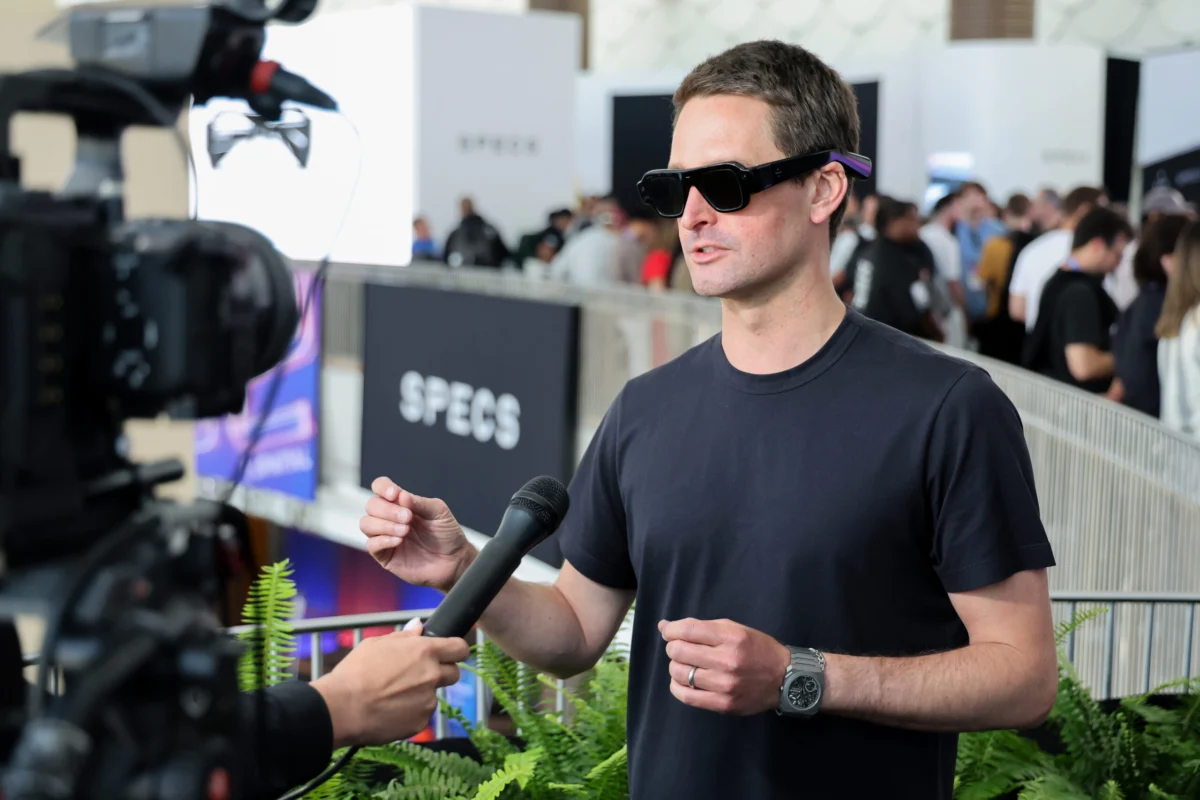
Snap CEO Evan Spiegel faced investor scrutiny regarding preorder demand for the company’s highly anticipated Specs smart glasses during Monday’s earnings call, just weeks before the device’s critical September launch event. Despite persistent questioning, Spiegel opted to sidestep direct figures or projections on preorders, instead emphasizing the experiential nature of the product and its positioning in the nascent augmented reality (AR) market.
Spiegel articulated the company’s belief that a hands-on experience would be paramount for potential customers, especially given the device’s premium price point. "What we’re hearing from folks is really that they want to try Specs," Spiegel told investors. He acknowledged the significant investment required, stating, "It’s obviously a high consideration purchase at $2,195." This price positions Specs well above many entry-level smart glasses but below the most advanced mixed-reality headsets, suggesting a target audience of developers and tech enthusiasts rather than the general consumer from the outset.
The CEO elaborated on the nuanced understanding required for a product like Specs, particularly for those unfamiliar with the underlying technology. "Obviously, developers and folks who are familiar with the platform really understand it and understand the technical leaps we’ve made with this generation," he explained. This statement underscores Snap’s strategy to initially engage its existing developer community, who have been building on the platform for years, leveraging their expertise to showcase the device’s capabilities. For the broader public, however, Spiegel admitted that the path to adoption would be different. "I think for the broader public and consumers, it’s going to be really important for folks to go hands-on. Our upcoming launch event will be an important sort of starting point for that consumer-oriented journey." This indicates a reliance on experiential marketing and public demonstrations to bridge the gap between technological innovation and consumer understanding, recognizing that the current AR market is still largely undefined for mainstream users. The September launch event is therefore not just a product unveiling but a critical inflection point for consumer education and initial engagement.
Specs were first unveiled in June, marking the culmination of more than a decade of dedicated research and development by Snap. The company’s protracted investment in AR hardware reflects a long-term strategic vision, even as the market for such devices remains in its infancy. The $2,195 price tag places Specs in a unique segment of the smart eyewear market. For comparison, Meta’s Ray-Ban smart glasses, which offer more limited AR capabilities focusing on camera and audio, start at a significantly more accessible price point of around $350. On the other end of the spectrum, Apple’s highly anticipated Vision Pro, a full mixed-reality headset, commands a premium price starting at $3,500. This strategic pricing by Snap suggests an attempt to carve out a niche that emphasizes advanced AR features and developer utility without reaching the prohibitive cost of a full-fledged mixed-reality device, aiming for a sweet spot that appeals to early adopters and professionals looking for practical AR applications.
Investors on the call pressed Spiegel on several fundamental questions concerning Snap’s ambitious hardware venture. Key among these was the financial viability of pursuing such a capital-intensive project for a company of Snap’s current size and market position. There were also questions about Snap’s decision to "go it alone" in hardware development rather than seeking partnerships with more established hardware manufacturers or larger tech conglomerates. Furthermore, investors sought clarity on what gave Spiegel confidence that Snap could effectively compete with industry giants like Apple, Meta, and Alphabet (Google), all of whom are investing heavily in their respective AR/VR ecosystems and possess significantly greater financial and research resources. These questions highlight the inherent risks and challenges associated with entering a new, unproven hardware category, particularly when competing against some of the world’s largest and most influential technology companies.
In response to these pointed inquiries, Spiegel reiterated Snap’s profound conviction in the long-term potential of augmented reality. He articulated a vision where AR glasses represent nothing less than "the next computing platform," an opportunity he described as "enormous." This perspective positions Specs not merely as a new gadget but as a foundational element for a future paradigm shift in how humans interact with digital information and the physical world. Such a vision requires substantial upfront investment and a tolerance for delayed gratification, a narrative Snap has consistently presented to its shareholders regarding its AR ambitions.
Spiegel further elaborated on the technical hurdles and pioneering nature of Specs, suggesting that the complexity of the product might not be fully appreciated by all observers. "I think what some folks maybe don’t understand yet, especially because Specs are so new and we’re really the first mover in this category, is how difficult the product is to execute from a technical perspective," he stated. This emphasizes the engineering feats involved in miniaturizing advanced AR technology into a wearable form factor, managing power consumption, and achieving a comfortable user experience. He drew a strategic parallel to Snap’s origins in the social media landscape, recalling, "When we started innovating in the social space, we were a late entrant. So, most of the apps at the time, whether it was Facebook or Instagram or Twitter, were already in existence, and we had to really innovate to continue to grow." In that context, Snap had to differentiate itself sharply to gain traction.
However, Spiegel presented Specs as a starkly different scenario, arguing that Snap enjoys a significant strategic advantage in the AR glasses market. "What’s so unique about this opportunity for us is really that we’re a first mover, and that really plays to our strengths as an innovator." This "first mover" status, in his view, allows Snap to define the category, establish key technological benchmarks, and cultivate an early developer ecosystem without the burden of competing against entrenched players from day one. It affords the company the unique opportunity to shape the platform’s evolution, learn directly from early user feedback, and establish a proprietary intellectual property portfolio that could be difficult for competitors to replicate. This strategic position, he argued, is a testament to Snap’s innovative culture and its capacity to lead in emerging technological frontiers.
When pressed on the timeline for achieving broad market acceptance, Spiegel offered a realistic and long-term outlook. He candidly admitted that mass-market consumer adoption for AR glasses, including Specs, would likely not materialize in the immediate future. Instead, he projected that significant widespread uptake would be "closer to the end of the decade." This acknowledges the inherent challenges of introducing a novel computing platform and the time it takes for technology to mature, costs to decrease, and user behaviors to adapt.
Spiegel identified two primary factors that would need to evolve significantly before AR glasses achieve mass-market penetration: weight and cost. "I think things, for example, like weight and cost are going to have to come down to see unit volumes really meaningfully pick up," he explained. The current form factor and pricing of advanced AR devices are still prohibitive for everyday consumers, and substantial engineering advancements will be required to make them lighter, more comfortable, and more affordable. Despite these challenges, he highlighted a crucial advantage Snap possesses: "But we do have, I think, a real advantage here in that developers have been building on the Specs platform now for several years." This established developer ecosystem is invaluable for any emerging platform, as it ensures a base of applications and experiences that can drive initial adoption and demonstrate the technology’s utility, laying the groundwork for future mass-market expansion. This long-term developer engagement provides a crucial head start for Snap as it navigates the complex journey toward mainstream AR.