 11
11
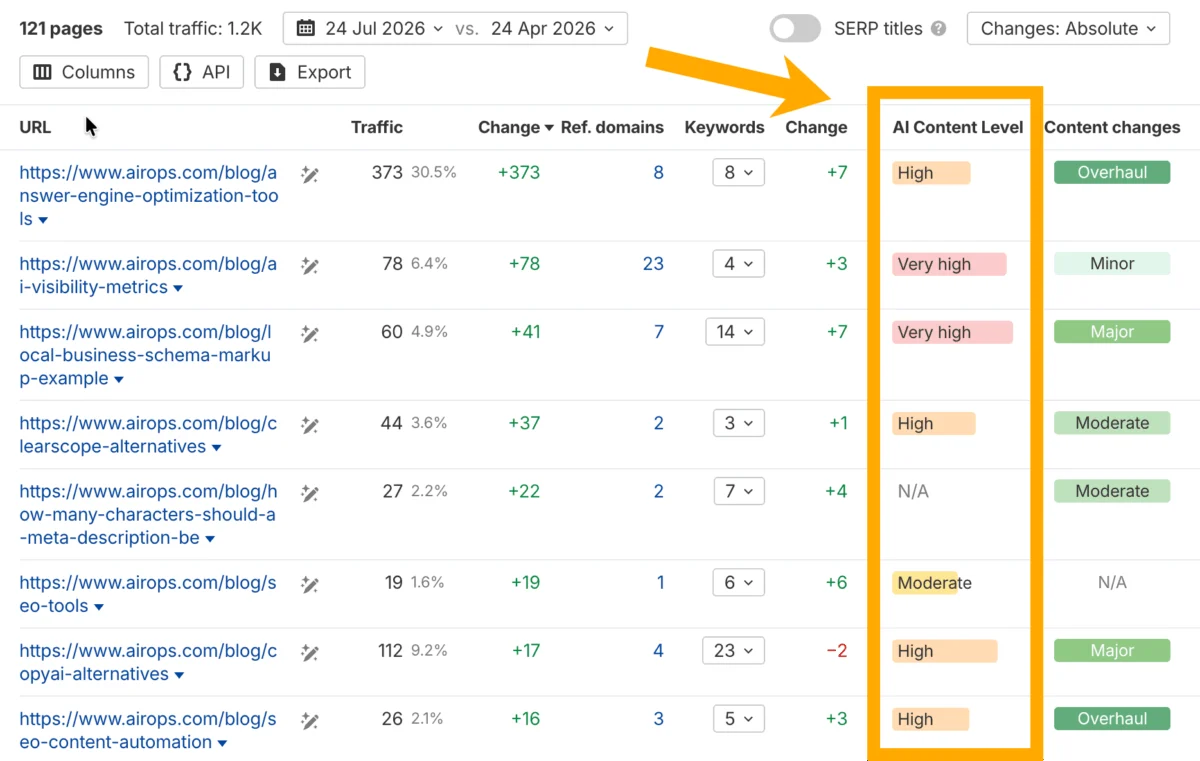
Questions surrounding Google’s stance on AI-generated content persist, despite official reassurances. Google has stated that the use of AI for content creation is permissible as long as the primary intent is not to manipulate search rankings. However, anecdotal evidence from SEO experts like Lily Ray and Glenn Gabe points to a concerning trend: websites that rapidly scale content production using AI often experience a significant surge in rankings and traffic, only to witness a sharp decline in organic performance months later. These instances, often termed "Mount AI" traffic graphs, have led many marketers to fear Google’s potential penalization of any AI-assisted content.
This study aims to clarify whether Google penalizes AI content itself or if the observed performance drops are a consequence of the underlying quality and scalability issues often associated with AI-generated content. The research posits that Google is not inherently against AI content but rather against low-quality content, and the significant overlap between AI-generated content and poor-quality content creates confusion.
Methodology
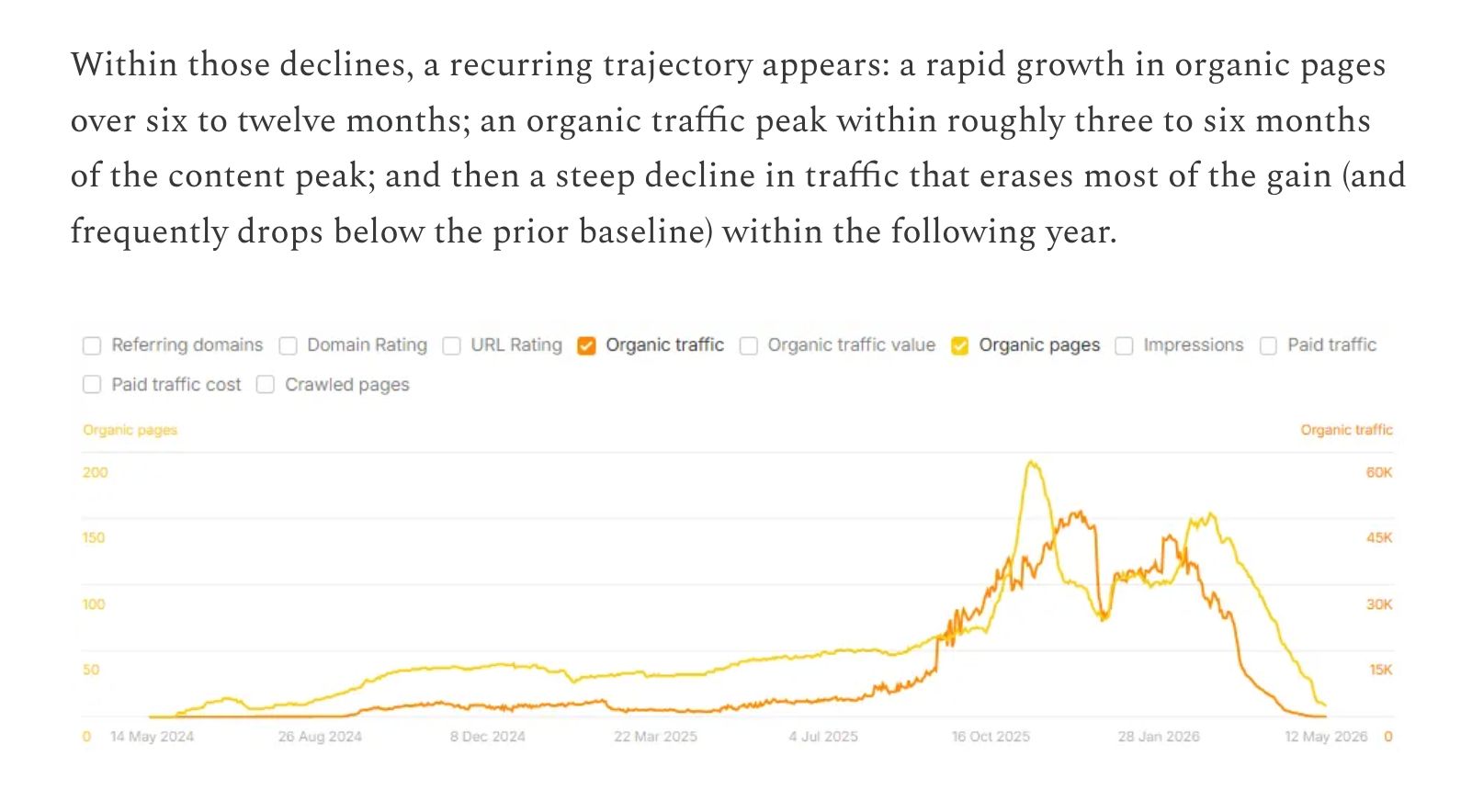
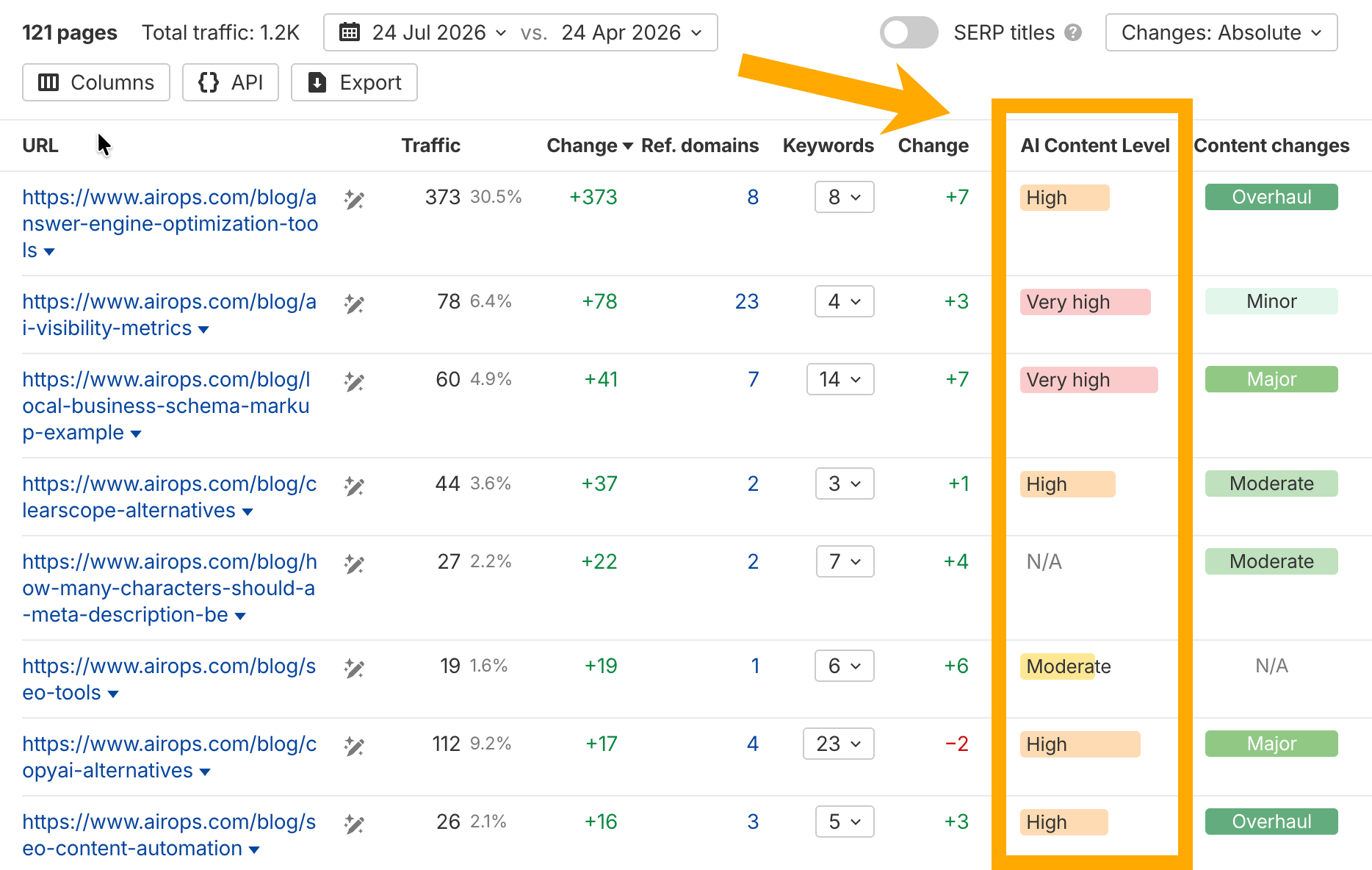
The research employed Ahrefs’ AI content detector, a tool accessible to Ahrefs customers through Site Audit and specific reports within Site Explorer. This detector estimates the percentage of AI-generated text on a page, categorizing it from "low" (under 20%) to "very high" (over 80%). For accuracy, AI detection was only applied to pages exceeding 350 words. It is important to note that AI detection, like the probabilistic nature of LLMs, relies on probability and may differ from Google’s internal detection methods, if any. The study emphasizes the value of analyzing large-scale datasets and directional trends rather than focusing on individual articles.
Are There Any 100% AI-Generated Pages in Positions 1-3?
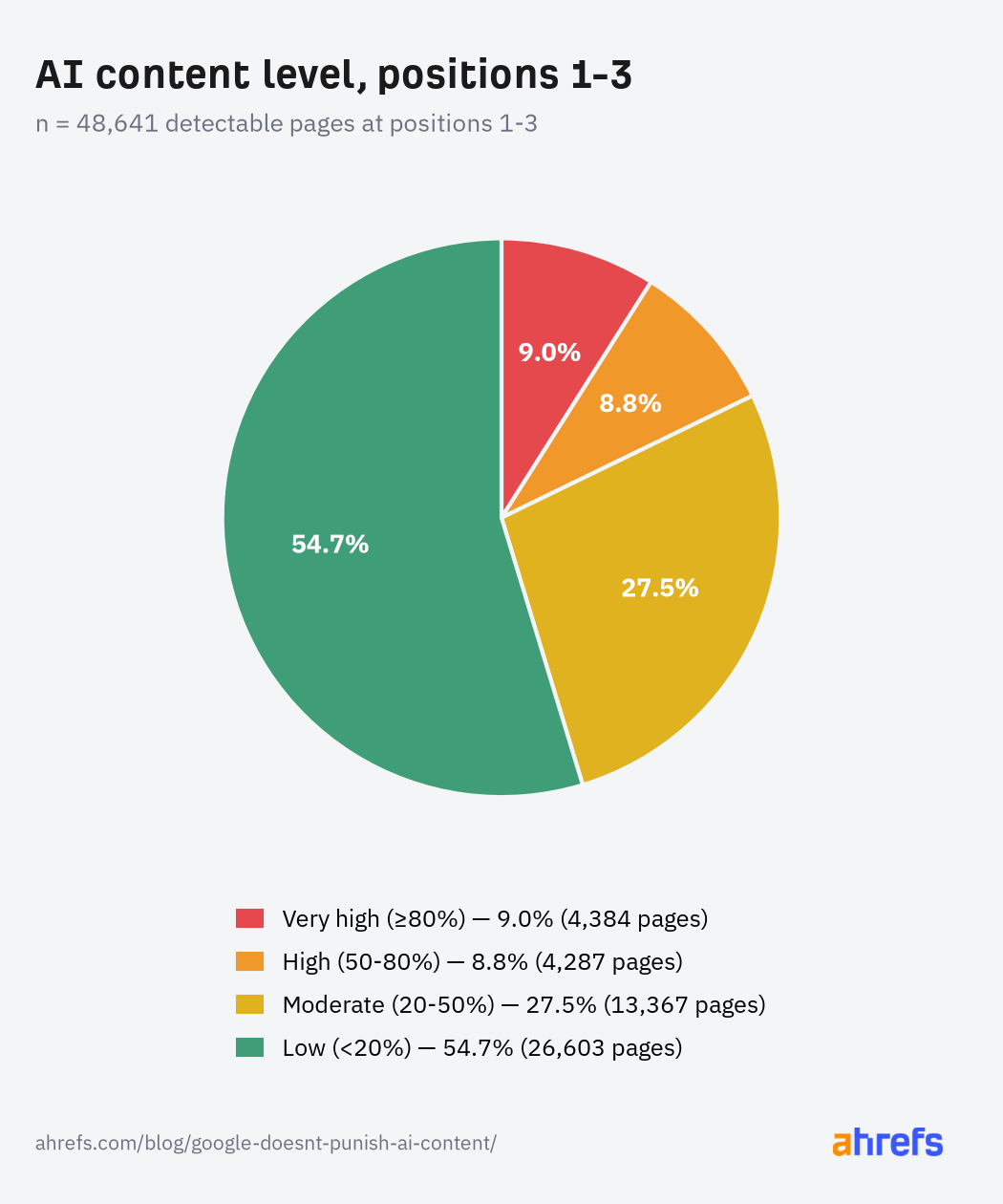
An analysis of one million pages ranking in the top 10 positions across 100,000 search engine results pages (SERPs) in June 2026 revealed that the majority of top-ranking pages are predominantly human-written. Of the approximately 300,000 pages available in the crawler database, 150,000 contained sufficient content for AI detection. The findings indicated that 54.7% of top-ranking pages have less than 20% AI content, and pages with under 50% AI content constitute 82.2% of top-three rankings.
Despite this trend, the research confirmed that fully or near-fully AI-generated content can indeed rank in the top three positions. While a small minority, 9% of top-ranking pages were found to be over 80% AI content, and 5.3% were entirely AI-generated.
How Common Is AI-Generated Content in the Top 10?
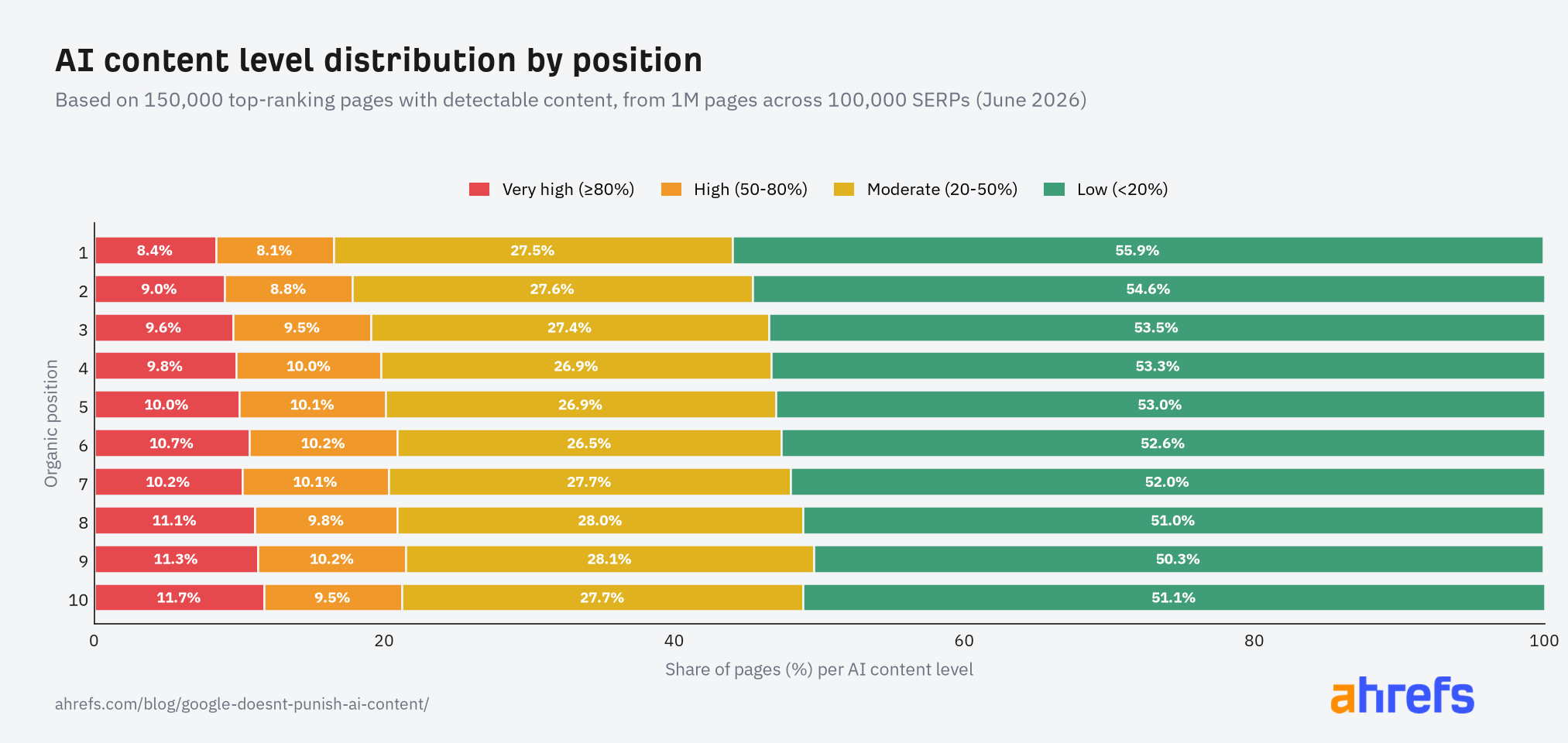
A further examination of AI content distribution across the top 10 SERP positions showed a consistent pattern: highly AI-generated content becomes less prevalent as one moves higher in the rankings. Position 1 exhibited the highest proportion of pages with low AI content and the lowest proportion of pages with very high AI content.
A gentle gradient was observed, with the prevalence of AI-generated content gradually decreasing from position 10 to position 1. Notably, every ranking position, including the first, contained a significant percentage of heavily AI-generated pages, with 8-12% of pages containing over 80% AI content.
| Position | Very High (≥80%) | High (50-80%) | Moderate (20-50%) | Low (<20%) |
|---|---|---|---|---|
| 1 | 8.4% | 8.1% | 27.5% | 55.9% |
| 2 | 9.0% | 8.8% | 27.6% | 54.6% |
| 3 | 9.6% | 9.5% | 27.4% | 53.5% |
| 4 | 9.8% | 10.0% | 26.9% | 53.3% |
| 5 | 10.0% | 10.1% | 26.9% | 53.0% |
| 6 | 10.7% | 10.2% | 26.5% | 52.6% |
| 7 | 10.2% | 10.1% | 27.7% | 52.0% |
| 8 | 11.1% | 9.8% | 28.0% | 51.0% |
| 9 | 11.3% | 10.2% | 28.1% | 50.3% |
| 10 | 11.7% | 9.5% | 27.7% | 51.1% |
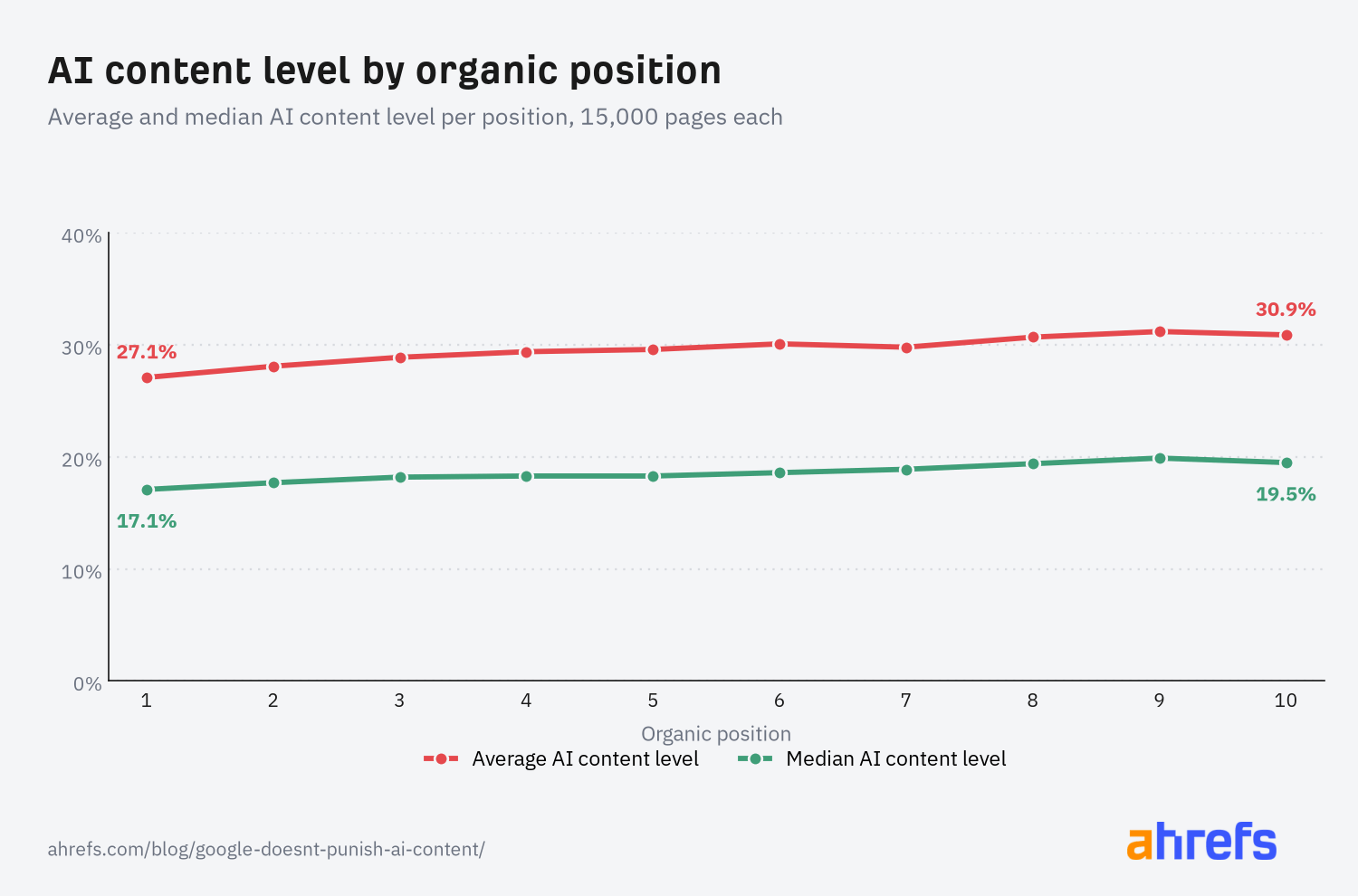
Calculations of average and median AI content levels across a sample of 15,000 pages for each position reinforced this trend. AI content became more common further down the SERP but was still present in higher positions.
| SERP Position | Average AI Content Level | Median AI Content Level |
|---|---|---|
| 1 | 27.1% | 17.1% |
| 2 | 28.1% | 17.7% |
| 3 | 28.9% | 18.2% |
| 4 | 29.4% | 18.3% |
| 5 | 29.6% | 18.3% |
| 6 | 30.1% | 18.6% |
| 7 | 29.8% | 18.9% |
| 8 | 30.7% | 19.4% |
| 9 | 31.2% | 19.9% |
| 10 | 30.9% | 19.5% |
Does Google Index Content with a Very High Likelihood of Being AI?
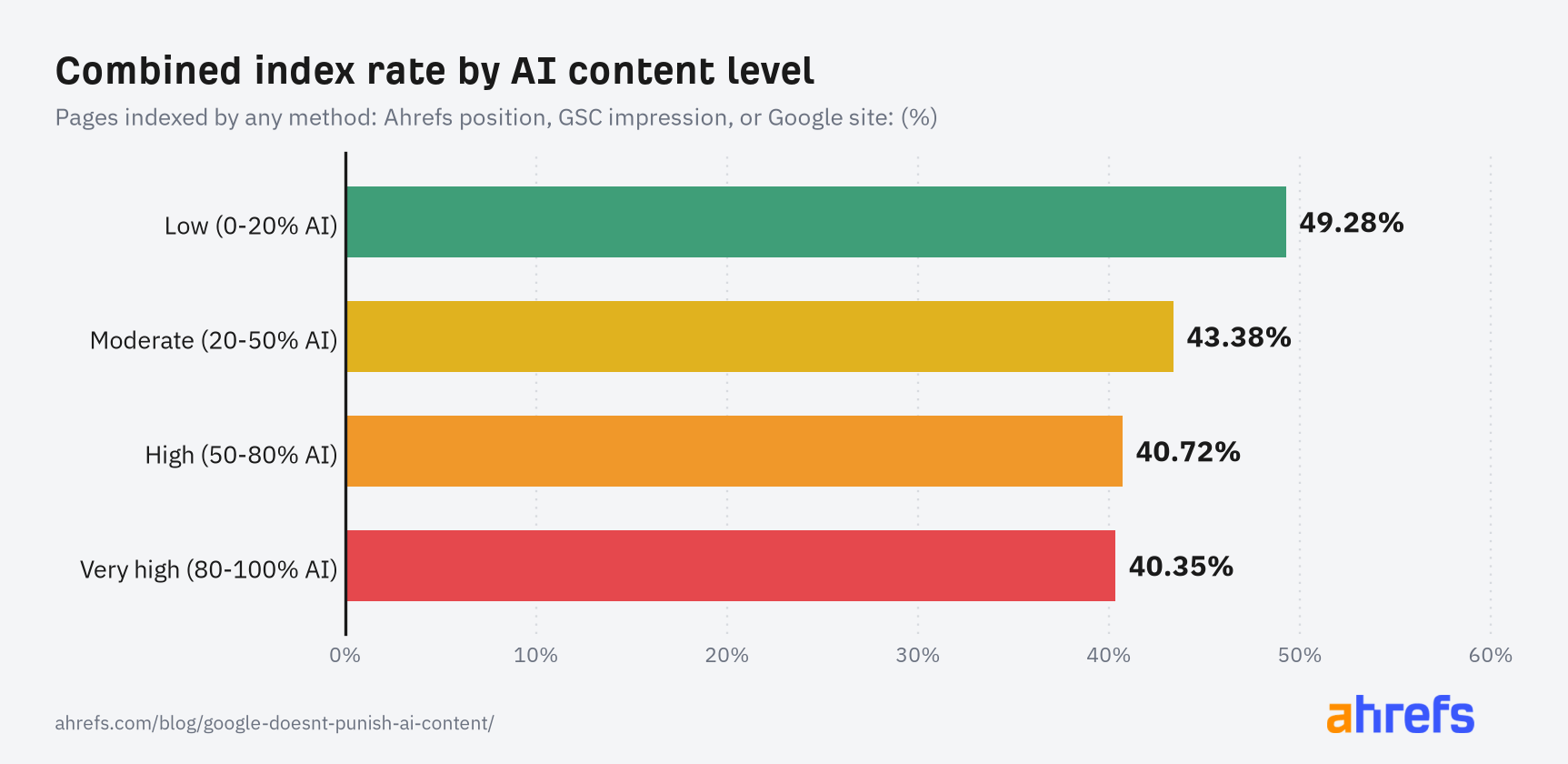
While analyzing ranking pages introduces selection bias, the study also investigated whether AI use affects a URL’s initial indexation rate. A sample of 1,000,000 pages from the crawler database (one page per domain) was analyzed, with approximately 100,000 pages having sufficient content for AI detection. Indexation was confirmed if a page met specific criteria.
The results indicated a correlation between higher AI content levels and lower indexation rates. Pages with high or very high AI content had a lower indexation rate compared to those with low AI content. However, a substantial 40% of pages with high or very high AI content were still indexed, a rate not drastically lower than the 49% indexation rate for low AI content pages.
Does Google Reduce Traffic to AI-Generated Pages After 3-6 Months?
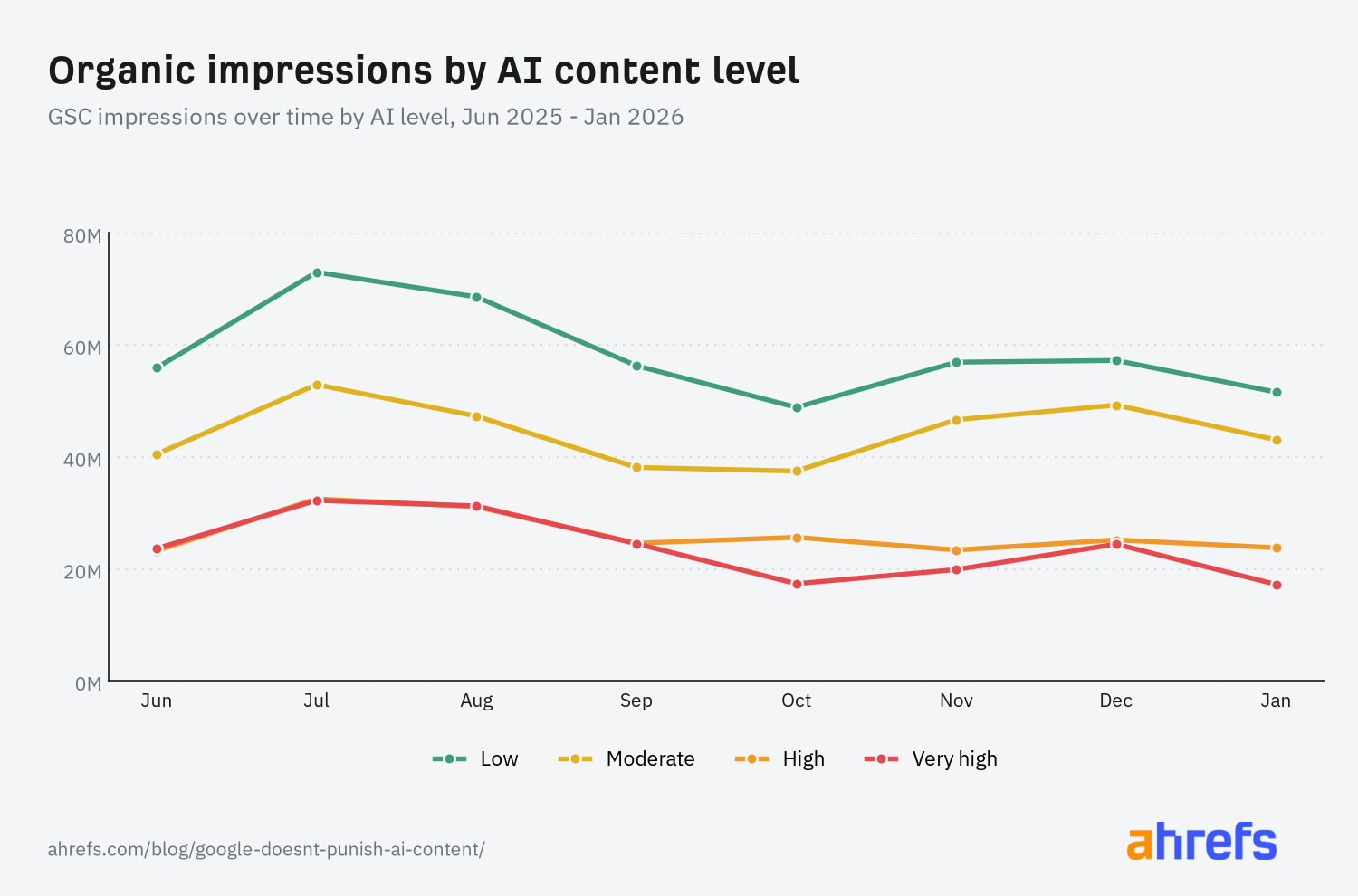
The study also examined the long-term organic performance trends of AI-generated pages relative to non-AI-generated pages. Using Google Search Console (GSC) data from live URLs, matched with the crawler database and filtered for pages with sufficient text for AI detection, URLs were categorized by their estimated AI content level.
For each category, GSC data was used to plot changes in impressions over time across two distinct panels of websites. The first panel covered June 2025 to January 2026, and the second spanned January 2026 to June 2026. While organic performance is influenced by numerous factors, making definitive conclusions challenging within this limited timeframe, the data offered insights.
The observations suggested that organic performance generally declined with increasing AI use. However, the researchers cautioned against assuming automatic suppression. Several factors could contribute to fewer impressions for AI-generated content, including the tendency for sites heavily relying on AI to be newer or possess lower authority. Conversely, sites with strong organic performance might be less inclined to publish AI content.
The prevailing hypothesis is that the increasing use of AI correlates with a decrease in content quality, which is seen as the key to understanding Google’s treatment of AI content.
Author’s Take on This Data
The research indicates a correlation between AI use and lower search performance metrics such as impressions, ranking position, and indexation rate. However, AI-generated content is present across all ranking positions, including the top 1-3, and a significant portion is successfully indexed. Impressions for AI-generated content remained relatively stable over time.
The data does not reveal strict cutoffs suggesting a binary AI classifier preventing AI-generated pages from ranking or being indexed. Instead, a gradual gradient is observed, with performance generally worsening as AI use increases. This is likely because content quality also tends to decrease with increased AI implementation.
Companies adopting AI content strategies often deviate from traditional content creation and SEO practices, frequently resulting in poorer outcomes. Basic AI content often lacks originality, depth, and user-centricity, while also potentially being prone to factual inaccuracies and generic phrasing. These issues can negatively impact the organic performance of any content, but they are particularly prevalent in AI-generated content. The practice of publishing such content at scale can lead to situations like "Mount AI," where Google may initially crawl new pages but subsequently de-index them if the domain lacks the necessary authority.
The prevailing view is that Google is not actively penalizing AI-generated content but is instead relying on its established quality assessment criteria. The issue lies in the fact that AI-generated content frequently exhibits lower quality than human-generated content. Crucially, these quality problems are often associated with AI use but not guaranteed by it, as evidenced by the notable number of indexed and top-ranking AI-generated pages. It is demonstrably possible to create detailed, interesting, and well-researched content using AI generation, though this requires a more sophisticated approach than commonly adopted.
Marketers and SEO professionals should not fear AI content creation itself but rather the pitfalls of spam and scaled, low-quality content production.