 11
11
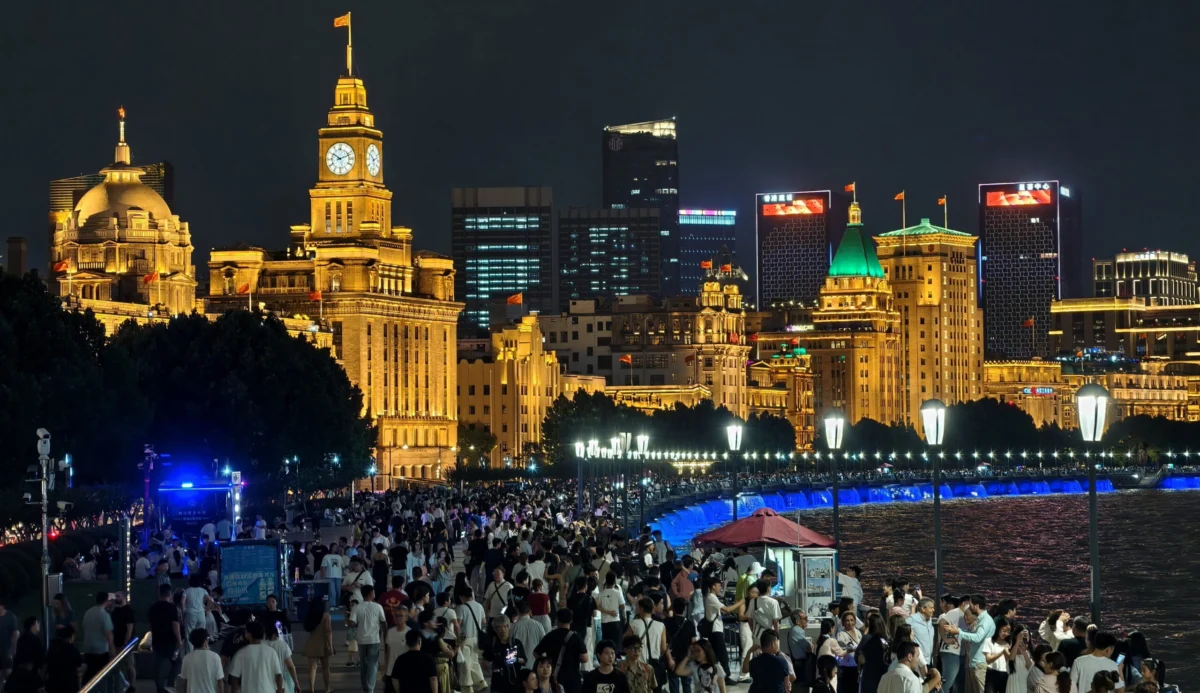
SHANGHAI, CHINA – JUNE 29, 2026 – Chinese and foreign tourists visit historical buildings at night near the Bund in Shanghai, China on June 29, 2026. (Photo credit should read CFOTO/Future Publishing via Getty Images)
Cfoto | Future Publishing | Getty Images
China’s domestic tourism market is experiencing a more rapid decline than anticipated, casting a shadow over one of the few positive indicators in the nation’s sluggish consumer economy. Hotel giant Hilton has revised its revenue per available room (RevPAR) forecast for China, now expecting a low single-digit decrease for the year, a downgrade from earlier predictions of a flat performance. This marks a significant shift from the first quarter, which saw 1.3% RevPAR growth, to the second quarter, which experienced a 2.2% decline.
Christopher Nassetta, President and CEO of Hilton, acknowledged the economic headwinds during the group’s earnings call, stating, "The China economy is sputtering, and I mean it’s growing, but not consistent with what prior growth rates have been." This sentiment is echoed in pricing trends observed in popular tourist destinations. For instance, a weekend night in August at a Hilton resort in Dali, Yunnan province, a favored spot for domestic Chinese travelers, is priced at $173. However, alternative accommodations listed on the travel booking site Trip.com are available for less than half that price, with some options as low as $50.
Data compiled by Smith Travel Research and cited by Goldman Sachs indicates a broader downturn across China’s hotel sector. Through late July, hotel RevPAR has fallen by 6% year-on-year, following a 1% drop in June. This follows a period of mild RevPAR growth in the spring. According to the Goldman Sachs report, a three-percentage-point decrease in occupancy rates, coupled with a 1% decline in average daily rates compared to the previous year, has contributed to the revenue decline. This weakening trend signifies the fading of China’s post-Covid tourism surge, which had been a notable bright spot for three years, amidst a general economic slowdown impacting retail sales.
Gary Ng, a senior economist at Natixis, has observed a "sharp decline of per-capita spending" on tourism since the third quarter of 2025. While acknowledging that tourism remains a relative strength, Ng cautioned that it "cannot escape this broad macro trend." He further elaborated that Chinese consumers are increasingly prioritizing unique or premium travel experiences, a shift that coincides with slower wage growth.
The impact of this changing consumer behavior and economic climate is evident in the pricing strategies observed on platforms like Trip.com. A CNBC analysis of listings for the three most popular summer travel regions in China – Shanghai, Xinjiang, and Yunnan – reveals a clear pattern of price competition. For an August weekend stay, prices can range dramatically from 40 yuan (approximately US$6) to as high as 18,000 yuan (approximately US$2,633) per night. More typical pricing indicates a median for one-night stays of just 192 yuan (US$28) in Kashgar, Xijiang; 373 yuan (US$55) in Dali, Yunnan; and 595 yuan (US$88) in Shanghai. While high-end luxury accommodations can significantly inflate average prices, a wide array of more affordable options remains readily available across these popular destinations.
The broader economic context further underscores these trends. China’s retail sales have been sluggish since the pandemic, with spending in May experiencing a year-on-year dip. Consumer prices have also remained subdued, with inflation rising by a slower-than-expected 1% in June compared to the previous year. The travel sub-index, a component of the broader consumer price index, reflected this sequential decline, dropping by 0.6% in June from the prior month. In accompanying commentary, chief statistician Dong Liquan of China’s National Bureau of Statistics highlighted significant price reductions in hotel rates and airfares.
BAOSHAN, CHINA – JUNE 04: Tourists take photos at a viewing platform overlooking coffee plantations on June 4, 2026 in Baoshan, Yunnan Province of China. Xinzhai Village in Baoshan, known as "China’s First Coffee Village," has over 70 years of coffee planting history and offers visitors experiences including picking, processing, roasting and brewing. (Photo by Li Jiaxian/China News Service/VCG via Getty Images)
China News Service | China News Service | Getty Images
The Foreign Luxury Boost
Despite the dim outlook for domestic tourism, inbound travel is emerging as a potential source of optimism for the industry. China’s implementation of visa-free policies for travelers from an expanding list of countries, including those in Europe, is attracting visitors from economies with significantly higher per capita incomes. This influx of affluent international travelers is providing a much-needed boost to the luxury segment of the market.
Upscale U.S. hotel operator Hyatt has reported substantial growth in visitors from key international markets. In the past quarter, Hyatt saw an 18% increase in U.S. visitors entering China and a 24% rise from Europe. This premium segment of the market is demonstrating a far more positive trajectory compared to the broader industry. Mark Hoplamazian, Hyatt’s president and CEO, noted during an earnings call that "China luxury properties were up 11% this past quarter in China. Lot of it’s leisure. So China is on fire." Hyatt’s Greater China RevPAR saw a year-on-year increase of 7.2% in the second quarter, with "leisure luxury" identified as a primary driver of this growth.
While inbound travelers currently represent a modest portion of China’s total tourism spending, estimated by Natixis to be between 12% and 13%, their contribution is significant, particularly in supporting the higher-end hospitality sector.
KASHGAR, CHINA – OCTOBER 10: Tourists enjoy the picturesque scenery of the Bandir Blue Lake on October 10, 2025 in Kashgar Prefecture, Xinjiang Uygur Autonomous Region of China. (Photo by Bao Gansheng/VCG via Getty Images)
Vcg | Visual China Group | Getty Images