 11
11
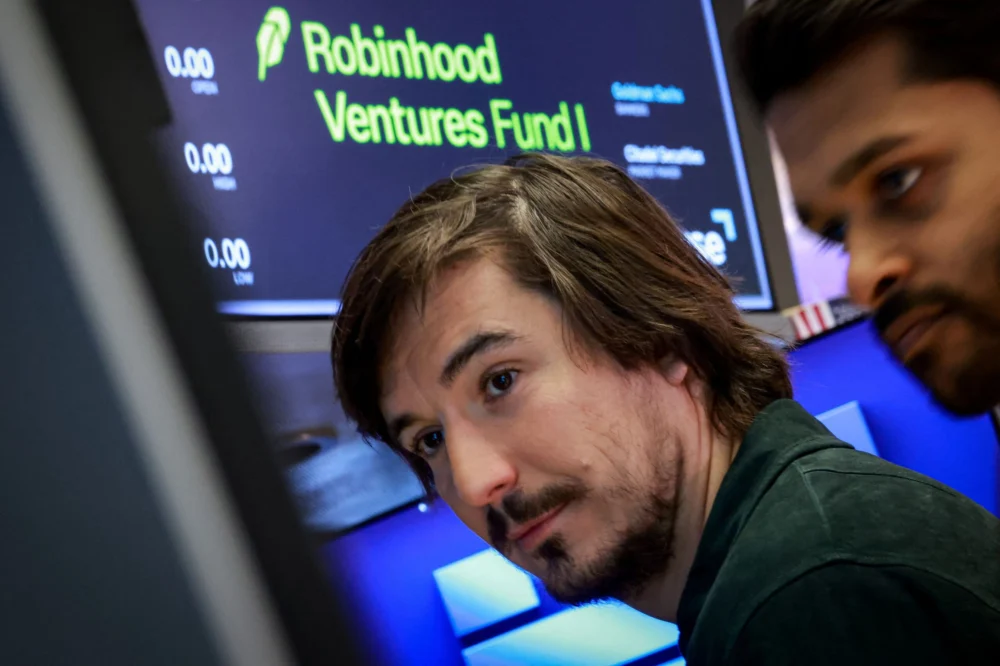
Robinhood’s Venture Fund I experienced a significant drop of 11% during its public market debut on the New York Stock Exchange on Friday, March 6, 2026. This sharp decline has raised questions about the current appetite among investors for riskier investment opportunities, particularly in light of ongoing geopolitical tensions. The fund, which trades under the ticker symbol RVI, aims to provide retail investors with access to private companies that have historically been difficult to invest in.
Vlad Tenev, the chairman and CEO of Robinhood Markets, articulated the fund’s core mission in an interview with CNBC’s "Squawk on the Street" on Friday. He highlighted the increasing trend of private companies reaching valuations in the hundreds of billions, and even potentially trillions, before retail investors have an opportunity to participate. Tenev expressed Robinhood’s ambition to fundamentally alter this landscape, stating, "We’re trying to solve this by not just opening the door to private markets but completely blowing them off the hinges so that they can never be closed." The Venture Fund I is structured as a closed-end fund, allowing retail investors to buy and sell shares in a manner similar to trading traditional company stocks.
The launch of Robinhood’s Venture Fund I occurred during a challenging period for the broader public markets. Major U.S. stock averages were on track for weekly declines as traders divested equities, influenced by concerns that the escalating conflict between the United States and Iran could persist longer than anticipated. This heightened geopolitical risk appears to have cast a shadow over investor sentiment, impacting the initial trading performance of the new fund.
Robinhood Ventures Fund I initially priced its initial public offering (IPO) at $25 per share. However, upon commencing trading, the fund opened at $22 per share. It subsequently experienced a dip, reaching a low of $21 before recovering to trade around $22.12. By the close of trading on Friday, RVI settled at $21 per share, reflecting the 11% decrease from its IPO price.
The fund’s investment portfolio is designed to offer exposure to a curated selection of prominent private companies. Among these are the financial services firm Revolut, known for its digital banking and financial technology services, and the software company Databricks, a leader in artificial intelligence and data analytics. The inclusion of such high-profile private entities underscores Robinhood’s strategy to provide retail investors with a gateway to potentially high-growth, albeit illiquid, assets.
Historically, investment in pre-IPO companies has been largely the domain of institutional investors, venture capital firms, and accredited investors with significant capital. This has created a disparity in access to potential wealth creation opportunities. Robinhood’s initiative with Venture Fund I seeks to level the playing field, democratizing access to these previously exclusive markets. The closed-end structure of the fund allows for a regulated and accessible means for a broader range of investors to gain exposure to the growth potential of these private enterprises.
The concept behind democratizing private market access is rooted in the belief that innovation and growth are not solely confined to publicly traded entities. Private companies, particularly in the technology and fintech sectors, have demonstrated substantial growth and value creation before their public debuts. By offering shares in a fund that holds stakes in these companies, Robinhood aims to capture some of that pre-IPO growth for its retail customer base.
The performance of Robinhood Ventures Fund I on its first day of trading serves as an early indicator of the market’s immediate reaction to such an offering. The 11% decline suggests that the broader market sentiment, heavily influenced by macroeconomic and geopolitical factors, may be overriding the intrinsic appeal of the fund’s underlying assets in the short term. Investors are likely weighing the potential long-term growth of companies like Revolut and Databricks against the immediate uncertainties and risks present in the current global economic and political climate.
The decision by Robinhood to launch a fund focused on private markets reflects a broader trend of financial innovation aimed at broadening investment access. However, the success of such ventures is intrinsically linked to market conditions and investor confidence. The current geopolitical landscape, characterized by heightened tensions and economic uncertainty, presents a formidable challenge for any new investment vehicle, particularly one focused on inherently riskier private market assets.
The valuation of private companies, often determined through private funding rounds, can be subject to different methodologies and market perceptions compared to publicly traded stocks. This can lead to potential discrepancies and volatility when these assets are brought into the public market through a fund structure. The initial pricing of RVI at $25 per share, followed by its opening at $22 and subsequent trading activity, illustrates the dynamic nature of valuation and investor demand in the public sphere.
For Robinhood, the performance of Venture Fund I is a critical test case. The company has built its reputation on making investing accessible and affordable for everyday individuals. Expanding into private markets represents a significant strategic move to further solidify this position and tap into new avenues of growth. The outcome of this initial trading period will undoubtedly inform future strategies and investor perception of Robinhood’s ability to successfully navigate the complexities of private market investments for its retail clientele.
The geopolitical tensions, specifically the U.S.-Iran conflict, have introduced a layer of volatility across global markets. This has led to a flight to safety among some investors, making them more hesitant to allocate capital to assets perceived as higher risk. The decline in RVI’s stock price can be seen as a direct reflection of this risk-off sentiment, where even promising private market exposure might be viewed with caution in the current environment.
Moving forward, the performance of Robinhood Ventures Fund I will be closely watched. Its ability to recover and demonstrate long-term value will depend on a confluence of factors, including the future trajectory of geopolitical events, the performance of its underlying private company investments, and the broader economic recovery. The fund’s objective of democratizing access to private markets remains a compelling proposition, but its immediate success will be tested against the prevailing market headwinds. The initial 11% drop serves as a stark reminder of the challenges inherent in bringing innovative investment products to market during times of global uncertainty.