 11
11
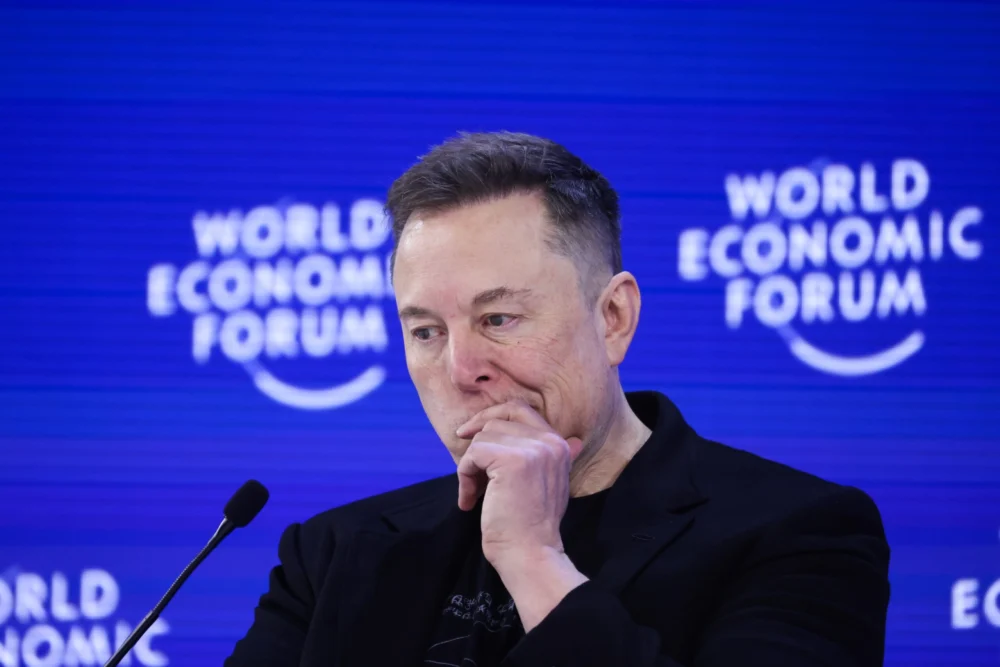
Elon Musk, the driving force behind xAI, articulated his rationale for the extensive changes on Thursday, stating on his social media platform, X, that "xAI was not built right first time around, so is being rebuilt from the foundations up." This candid admission underscores the profound challenges the company has faced since its inception. While Musk frames this as a deliberate strategic pivot, external observers note that, by most measures, the process has not unfolded smoothly, marked by significant talent churn and internal operational adjustments.
The immediate impetus for much of this upheaval is competitive pressure, particularly concerning xAI’s suite of AI coding tools. This week saw the departure of two more co-founders, Zihang Dai and Guodong Zhang, following Musk’s direct complaints that xAI’s programming assistants were struggling to compete effectively against established rivals. Specifically, Musk cited the superior performance of Claude Code, Anthropic’s offering, and OpenAI’s Codex, both of which have garnered significant traction in the developer community. The gravity of this competitive lag prompted an all-hands meeting at xAI on Wednesday, dedicated to formulating strategies to close the gap. During this crucial internal gathering, Musk expressed optimism, predicting that xAI could catch up to its competitors in the coding tool arena by the middle of this year, an ambitious timeline given the current state of affairs.
The focus on coding tools is not arbitrary; these sophisticated programming assistants are widely recognized as a critical revenue-generating segment within the AI industry. While xAI experienced an early surge in user adoption for its large language model, Grok, this growth was controversially attributed to the platform’s notably lax regulation regarding the generation of sexual and even abusive imagery. Such early success, however, proved unsustainable for long-term business viability. In contrast, robust and effective coding tools translate directly into enterprise solutions, enhanced developer productivity, and substantial recurring revenue streams for AI laboratories. Therefore, xAI’s current underperformance in this vital sector represents more than a mere perception issue; it poses a fundamental business problem that directly impacts its financial health and market positioning. The inability to deliver competitive tools in this high-value domain threatens xAI’s capacity to secure lucrative contracts and establish a dominant market presence, making the recent co-founder departures particularly telling indicators of internal dissatisfaction and strategic disagreement.
The personnel overhaul at xAI extends far beyond the recent departures of Dai and Zhang. Just a month prior, a significant exodus saw 11 senior engineers, including two other co-founders, leave the company. At the time, Musk characterized these changes as a "reorganization to suit a larger business," implying a strategic realignment rather than a reactive measure. However, subsequent developments suggest that these earlier efforts to stabilize the talent base and operational structure were insufficient. According to a report by The Financial Times, executives from Musk’s other ventures, SpaceX and Tesla, have been brought into xAI, effectively "parachuting" in to conduct rigorous evaluations of existing employees. Their mandate reportedly includes identifying and terminating individuals who do not meet revised performance and skill standards, indicating a dramatic and top-down push for a more streamlined and high-performing workforce. This unprecedented level of intervention from sister companies underscores the urgency and severity of the challenges xAI faces in building a team capable of delivering on its ambitious goals.
Amidst this extensive restructuring, the burden of leadership falls heavily on the shoulders of the two remaining co-founders, Manuel Kroiss and Ross Nordeen, who, alongside Elon Musk, face the daunting task of steering the company through this turbulent period. Their work involves not only rebuilding the team but also re-establishing a clear strategic direction and fostering a cohesive internal culture amidst significant instability.
In an effort to rapidly replenish its talent pool and acquire necessary expertise, Musk is now casting a wider net for prospective employees. In an unconventional move announced Thursday on X, he revealed that he and a colleague, Baris Akis, are personally reviewing previously rejected employment applications. Their objective is to identify promising candidates who may have been overlooked in earlier screening processes and extend new interview opportunities. Musk publicly offered "my apologies" to the "pile of strangers he’d ghosted," acknowledging the previous shortcomings in the company’s hiring practices. This highly unusual approach highlights the critical need for top-tier talent and suggests a potential recalibration of xAI’s recruitment filters, seeking out individuals who might have been dismissed by traditional metrics but possess unique skills or potential.
Examining xAI’s workforce size in comparison to its primary competitors reveals an interesting dynamic. According to LinkedIn reports, xAI currently employs just over 5,000 individuals. This figure positions it behind OpenAI, which boasts more than 7,500 employees, but notably ahead of Anthropic, with over 4,700 employees. While these numbers suggest a substantial workforce for xAI, the ongoing talent drain and the competitive landscape imply that sheer volume alone is insufficient. The quality, specialization, and strategic deployment of talent are paramount in the race to develop cutting-edge AI.
Despite the prevailing challenges, there are encouraging signs on the hiring front. Andrew Milich and Jason Ginsberg, two key figures from Cursor, an AI coding tool company, have joined xAI. At Cursor, Milich and Ginsberg shared joint responsibility for product engineering, making their move particularly significant given xAI’s stated struggles in this domain. Cursor’s business model is noteworthy because it relies on access to AI models developed by frontier labs, rather than developing its own foundational models. Their decision to transition to xAI may signal a crucial strategic advantage for Musk’s company: the importance of direct access to proprietary large language models (LLMs) and the substantial computing resources required to operate them. This move suggests that xAI’s core asset—its own frontier model, Grok, despite its past controversies—remains a powerful draw for top engineering talent seeking to work directly at the cutting edge of AI development.
Beyond internal operational concerns, xAI faces considerable external pressure to demonstrate tangible results. This pressure is amplified by its integration into SpaceX and the anticipated public offering of SpaceX shares. As a "cash-burning unit" within the broader SpaceX ecosystem, xAI is under intense scrutiny to prove its viability and show real uptake of Grok, its LLM. A struggling or underperforming AI division would undoubtedly cast a shadow over SpaceX’s narrative of innovation and growth, potentially deterring investors during a critical IPO period. For Musk, presenting a cohesive and successful vision across his ventures is paramount, and a stumbling AI division is precisely the kind of story he needs to avoid in the lead-up to a major public listing.
Looking further ahead, Musk’s long-term ambitions for xAI extend beyond merely competitive coding tools. Central to this vision is the "Macrohard" project, a name Musk insists is "a funny reference to Microsoft," which aims to create a sophisticated AI agent capable of performing any task a white-collar worker executes on a computer. This represents an extremely ambitious leap towards general artificial intelligence applications. However, the project has already encountered significant hurdles. Toby Pohlen, initially selected to lead Macrohard in February, departed the company within weeks. This week, Business Insider reported that the Macrohard project itself has been paused, indicating substantial internal challenges or a re-evaluation of its immediate feasibility.
In response to these setbacks, Musk has once again leveraged the synergies across his corporate empire, drafting another of his companies into the Macrohard project. He recently revealed for the first time that Macrohard is now a joint effort with Tesla, integrating the automotive and energy company’s advanced AI capabilities. Tesla is concurrently developing a complementary agent dubbed "Digital Optimus," a clear reference to Tesla’s Optimus humanoid robot. In Musk’s envisioned synergy, xAI’s language model would serve as the brain, directing the Tesla agent as it performs various digital and potentially physical tasks. This collaboration suggests a future where xAI’s cognitive prowess merges with Tesla’s robotic and real-world interaction capabilities, aiming for a comprehensive AI agent solution.
While Musk’s vision for Macrohard is undeniably ambitious, it is far from unique in the current AI landscape. The concept of a digital proxy or an orchestrating AI agent is a burgeoning field of research and development. For instance, Perplexity, an AI-powered search engine, is pursuing a similar goal with its new "Everything is Computer" offering, designed to provide enterprise users with a dedicated digital proxy that can manage and execute their digital tasks. Similarly, entrepreneur Peter Steinberger, known for creating OpenClaw’s popular personal agents, is now contributing his expertise to OpenAI, further highlighting the competitive intensity in this specific domain. xAI’s journey through personnel turmoil, strategic recalibration, and ambitious long-term projects underscores the intense, high-stakes race to define the future of artificial intelligence.