11

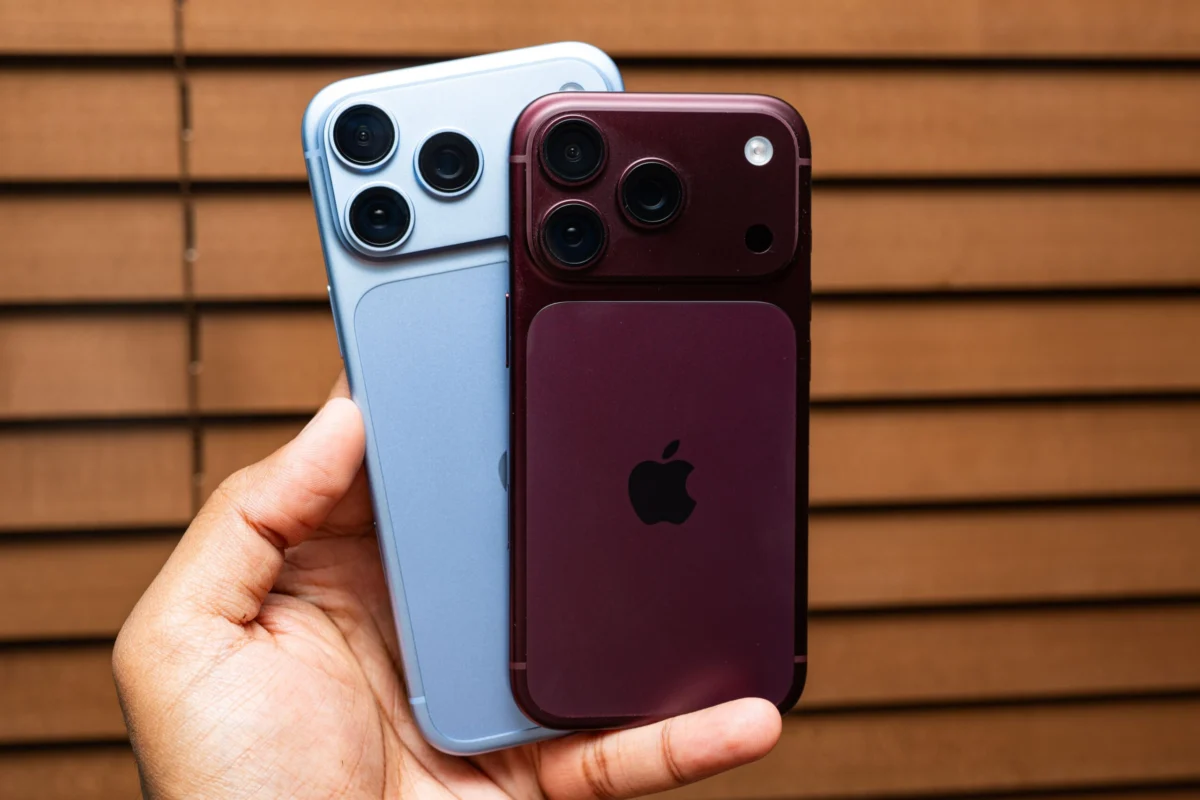
Apple has officially launched its latest premium smartphones, the iPhone 18 Pro and iPhone 18 Pro Max, opting for a Pro-only release this year and skipping a standard iPhone 18 model. This strategic decision means consumers looking to upgrade their smartphone right now will exclusively find Apple’s high-end offerings, including a significantly more expensive folding iPhone Duo slated for release next month. For those who typically favor the base iPhone model, patience is advised, as the standard iPhone 18, alongside a mid-tier iPhone 18e, is not anticipated until spring 2027. Experts recommend against succumbing to marketing hype if a Pro-level device isn’t a necessity, urging users to wait for the more budget-friendly options if their needs are met by previous base models.

Despite the absence of a standard model, the iPhone 18 Pro, priced at $1,199, and its larger counterpart, the iPhone 18 Pro Max, at $1,299, are lauded as exceptionally capable devices. These new models represent a $100 price increase over their iPhone 17 Pro predecessors. However, current owners of the iPhone 17 Pro, 16 Pro, or even the 15 Pro are encouraged to hold onto their existing devices, as the generational improvements may not warrant an immediate upgrade. While Apple’s latest flagships undeniably deliver on performance and features, they navigate a complex market landscape, finding themselves somewhat overshadowed by the sheer spectacle and innovative design of the foldable iPhone Duo, which is set to introduce a new dimension to Apple’s smartphone lineup.
Minor Refresh, Major Capabilities

Apple asserts that the iPhone 18 Pro models incorporate significant upgrades, though a closer look reveals them to be more of a refined evolution rather than a revolutionary overhaul. Nevertheless, these refinements enhance key user experiences, particularly in battery longevity and processing power.
Battery life continues to be a standout feature across the Pro models, maintaining the stellar performance seen in previous generations. The iPhone 18 Pro Max, with its denser battery, particularly impresses. Users can expect to end a typical day with approximately 5 hours of screen-on time still hovering around 50 percent charge, often extending comfortably into a second day on a single charge. The smaller iPhone 18 Pro also demonstrates robust endurance, reliably lasting a full day with about 40 percent battery remaining by bedtime. While the improvement isn’t "drastic" compared to the immediate predecessor, it ensures that most users will experience exceptional battery performance without frequent recharges.

At the heart of these devices is the new A20 Pro chip, Apple’s latest flagship silicon. As expected from Apple, the processor delivers fluid performance across all applications, from everyday tasks to the most demanding software. Benchmark tests reveal a surprisingly substantial leap in power and efficiency over the A19 Pro chip found in the iPhone 17 series. This raw power is put to the test with games like Control, a AAA title from 2019 recently ported to iOS. The game runs "decently well," though it exhibits aggressive upscaling that can result in grainy graphics and occasional sluggish character movements, especially with graphics settings maxed out. Despite these minor imperfections, the ability to play such a graphically intensive game on a smartphone remains a remarkable achievement.
A notable advancement in the iPhone 18 Pro models is Apple’s enhanced thermal management system. The company has tripled the surface area of the vapor chamber, a crucial component for dissipating heat. This expanded cooling technology ensures that heat is spread more effectively across the device, preventing localized hot spots. Even after nearly an hour of intensive gaming in Control, the entire phone felt warm rather than uncomfortably hot. This improved thermal efficiency not only enhances user comfort but also allows for longer periods of sustained high performance before thermal throttling mechanisms kick in to slow down the device.

The iPhone 18 Pro models ship with iOS 27, introducing the highly anticipated all-new Siri AI. This iteration of Siri is "infinitely more capable" than any version Apple has offered previously, marking a significant step forward for the company’s virtual assistant. While it may still lack the "spark or versatility" of some competing AI assistants, it is now far more adept at providing satisfactory answers to a wider range of questions. A crucial detail for users is that Siri AI and other Apple Intelligence features are not exclusive to the latest models; they are also accessible on any iPhone 15 Pro or newer device, reflecting Apple’s commitment to broader AI integration across its recent Pro lineup.
Refined Design and Dynamic Island Evolution

In terms of design, the iPhone 18 Pro series maintains Apple’s signature "candy bar" form factor, albeit with subtle yet impactful changes. The Dynamic Island, the pill-shaped cutout housing the selfie camera and Face ID sensors, is "noticeably smaller" this year. This reduction in size subtly enhances the screen-to-body ratio and overall immersive viewing experience. Functionally, the Dynamic Island has also evolved; it can now display up to three live activities simultaneously, an increase from the previous two. This capability allows users to seamlessly monitor multiple real-time updates, such as Apple Maps navigation, an active phone call, and a DoorDash order en route, all neatly spaced out within the Island.
Aesthetically, the new burgundy color option for the iPhone 18 Pro models has been well-received, offering a sophisticated look. However, some reviewers express a desire for the return of "brighter, more playful options" seen in past models, such as last year’s Cosmic Orange, suggesting a potential shift towards more subdued color palettes for the Pro series. Yet, the most significant design headline feature is almost entirely hidden from plain sight, embedded within the main camera on the back of the iPhone: a variable aperture system.

Aperture Priority: A New Era for iPhone Photography
The standout innovation in the iPhone 18 Pro models’ camera system is the debut of a variable aperture. While not a first in the smartphone industry—Samsung, Huawei, and Xiaomi have previously implemented or continue to feature this technology—Apple’s integration marks a significant enhancement for iPhone photography enthusiasts.

Understanding a variable aperture is key to appreciating its impact. The aperture is the physical opening in the lens that controls how much light reaches the camera sensor. A wider aperture (lower "f-stop" number) allows more light in, while a narrower aperture restricts light. Unlike most smartphones that rely on fixed apertures (e.g., the iPhone 17 Pro’s main camera was locked at f/1.78), the iPhone 18 Pro features mechanical blades that physically expand or contract in a circular motion, allowing for adjustable light intake. Apple provides four distinct f-stop settings: f/1.48, f/1.78, f/2.8, and f/4.
This variable aperture offers unparalleled creative control. Opening the aperture to f/1.48 allows a greater influx of light, resulting in cleaner low-light photographs and faster Night Mode captures. Crucially, it also produces a genuine optical bokeh—a soft, natural background blur that phone manufacturers have long attempted to simulate computationally with Portrait modes. This optical bokeh, especially noticeable in low-light conditions, can be so effective that some users may find themselves abandoning Apple’s traditional Portrait mode altogether. It’s worth noting that while the f/1.48 setting delivers beautiful blur, certain parts of the image may appear less sharp than on an iPhone 17 Pro due to a narrower plane of focus. Apple, however, emphasizes that Portrait mode still holds value for adding or adjusting bokeh post-capture.

Conversely, stepping down to f/4 narrows the aperture, causing the background blur to recede. This setting is ideal for group shots where the goal is to keep everyone in the frame in crisp focus. It can also be utilized to create a striking "starburst effect" around bright light sources, adding a dynamic flair to photos. The mechanical movement of the aperture blades is visually captivating as one switches between the four settings. For ease of use, Apple defaults the aperture to "Auto," where the camera intelligently selects f/1.78 for general conditions and f/1.48 for low-light scenarios, reserving the narrower f/2.8 and f/4 for specific, typically brighter, scenes.
Beyond the variable aperture, Apple has also integrated manual shutter speed control directly into the Camera app, a feature previously only accessible through third-party applications. This allows photographers to experiment with "shutter drag" to accentuate motion in a photo, capturing dynamic streaks of light or movement. While this opens up new creative avenues, users aiming for long exposures in bright conditions will likely need to invest in a neutral density (ND) filter to balance exposure effectively.

Image Processing and Creative Control
When comparing the iPhone 18 Pro’s photographic output to competitors like Google’s Pixel 11 Pro, certain stylistic differences emerge. The iPhone has a tendency to over-brighten scenes that are inherently dark, sometimes misrepresenting the intended mood of a photograph. It can also struggle more with backlit scenes compared to the Pixel. In contrast, the Pixel 11 Pro generally preserves more shadows, though it often delivers "lifted blacks," giving images a slightly more matte appearance.

Apple has also introduced texture and grain control within its Photographic Styles feature. This addition reflects a growing industry trend where phone makers recognize that ultra-clean, hyper-sharp, and "perfect" shots are not universally desired. These new styling options, akin to the "Camera Looks" found on Pixel phones, offer users a "new degree of authenticity" and creative expression.
In summary, the iPhone 18 Pro’s camera system is designed to be "fun" and empowering without overwhelming the user. While there are no sweeping improvements to the core camera lenses or sensors, the integration of a variable aperture and enhanced manual controls provides shutterbugs with a robust platform for experimentation and creative photography. This focus on user control and artistic flexibility truly defines what the Pro iPhone models are all about.