11
11
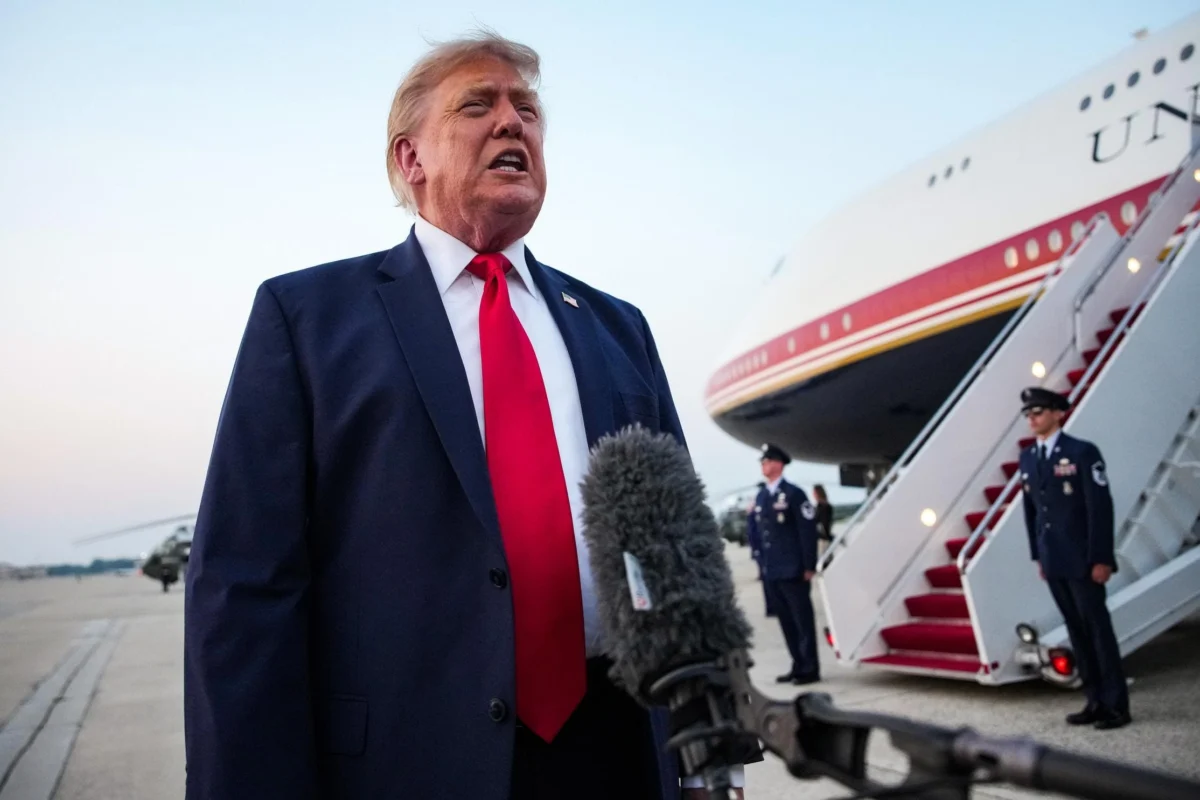
President Donald Trump on Sunday confirmed that the Qatar-gifted presidential jet, recently introduced as a new mode of presidential transport, is slated for another round of significant upgrades. The President stated that the aircraft would be "maxed out" within approximately a month, a declaration that comes amidst growing concerns regarding the plane’s self-defense capabilities, particularly its on-board missile defense systems, which observers fear may not be on par with the robust protections of the older, purpose-built Air Force One jets.
The announcement was made as President Trump returned to Washington after attending the World Cup Final game in New Jersey. Upon his arrival, a reporter directly questioned the President about his decision to fly on the new jet, specifically asking why he was utilizing an aircraft reportedly lacking comprehensive "antimissile defense systems." This line of questioning underscored persistent anxieties that have shadowed the new plane since its public debut, focusing on the critical security infrastructure expected of any aircraft carrying the Commander-in-Chief. The incident highlights the rigorous scrutiny applied to presidential transport, which traditionally combines the most advanced security features with the capabilities of a mobile command center.
In response, President Trump acknowledged that the plane already possesses "a lot of capability." However, he quickly pivoted to the upcoming enhancements, informing reporters that the jet would enter a period of further retrofitting within about a month. He emphasized that these upgrades would see the aircraft "maxed out," indicating a comprehensive overhaul designed to elevate its operational readiness and security profile. The President projected the process to conclude within roughly a month, a timeframe that has raised eyebrows among defense experts given the typical complexity and extensive testing required for integrating advanced defensive systems into an aircraft of this magnitude. Equipping a presidential aircraft with state-of-the-art defenses is an undertaking that normally spans months, if not years, due to stringent safety protocols, integration challenges, and thorough certification processes by various defense and aviation authorities.
Crucially, President Trump did not offer specific details regarding the nature of these forthcoming "maxed out" upgrades. The lack of clarity leaves open questions about whether these modifications will indeed address the reported deficiencies in anti-missile defense and other critical security measures, bringing the plane’s capabilities up to the stringent standards of the long-serving presidential aircraft. It also remains uncertain whether the estimated one-month timeline is genuinely adequate to implement such sophisticated security enhancements, which often involve intricate engineering, extensive testing, and certification processes. Furthermore, the President’s remarks did not clarify his travel arrangements during this period of retrofitting; it is unclear whether he will revert to traveling aboard the venerable, older Air Force One planes while the newer aircraft undergoes these vital security enhancements. The logistics of presidential travel dictate that a fully secure alternative must always be available, making the question of his temporary aircraft a significant operational detail.
This marks a notable shift in President Trump’s public stance regarding the Qatar-gifted jet. Previously, he had frequently lauded the aircraft for its luxurious amenities and modern design, often highlighting its superior comfort compared to the standard Boeing presidential planes. His recent acknowledgment of potential security gaps, however, represents the first time he has publicly conceded that the Qatari-gifted plane may not yet possess all the necessary security measures expected for presidential transport. This concession lends credence to earlier reports and expert analyses that had drawn attention to the disparity in defensive capabilities between the new jet and its highly specialized predecessors, which are designed from the ground up with security as the paramount concern. The implications of this acknowledgment extend beyond mere comfort, touching upon national security and the protection of the highest office.
Concerns about the safety and security of the new Qatar-gifted jet first prominently emerged earlier this month during its initial international deployment as the presumptive new Air Force One. The aircraft had been used to transport President Trump to a NATO summit held in Ankara, Turkey. This marked a significant occasion, as it was the first time the new plane had been used for a major international diplomatic mission, signaling its integration into the presidential fleet. However, a significant operational change occurred during the return leg of that journey. While the President departed Ankara on board the new Air Force One, he made an unexpected switch midway through his return flight, transferring to one of the older, established Air Force One planes at RAF Mildenhall, a critical U.S. Air Force base located in Suffolk, England. This unscheduled change immediately drew attention and prompted questions from the press and security analysts.
At the time, President Trump provided an explanation for the unusual mid-flight aircraft change, stating that the switch was orchestrated to allow U.S. service members stationed at the base "a chance to tour the Aircraft." This explanation, while seemingly benign, was met with skepticism in some quarters, particularly among those familiar with the strict protocols governing presidential travel and security. Subsequent reports from reputable news organizations, notably The New York Times, suggested a different underlying reason for the switch. These reports indicated that the decision to revert to the older Air Force One was made at the direct request of the Secret Service, the federal agency responsible for the President’s protection. The Secret Service’s alleged concern stemmed from a renewed and heightened conflict with Iran, which had escalated tensions in the region and potentially increased the threat profile for presidential travel. The agency, known for its unwavering commitment to presidential security, would likely err on the side of caution when faced with credible threats, especially when evaluating the defensive capabilities of a newly introduced aircraft.
During his return flight from Ankara, amidst the backdrop of these security concerns, President Trump was directly questioned by a reporter about whether he was aware of "any credible threat by Iran to Air Force One." His response, delivered with characteristic bravado, was dismissive yet pointed: "Well, I have a threat all the time. I’m number one on their list, before you. But if I go, you go…Perhaps someday you want to change professions." This exchange further highlighted the prevailing anxieties surrounding the security of presidential travel, particularly given the specific context of the new aircraft’s unproven defensive capabilities and the geopolitical tensions with Iran. The President’s remarks, while downplaying the immediate threat, implicitly acknowledged the ongoing security risks associated with his office.
The controversy surrounding the new presidential jet and its security features took an unprecedented turn last week when The New York Times and several of its reporters were subpoenaed by the Trump administration. The subpoenas were issued in direct response to the newspaper’s investigative reporting on the new plane, which had highlighted its reported lack of the same advanced defensive countermeasures that are standard on the older, highly modified presidential jets. This legal action, seeking to compel the Times’ reporters to testify before a federal grand jury in Manhattan this week, sent ripples through journalistic and legal circles, raising significant questions about press freedom and government attempts to control the narrative surrounding national security information. Such subpoenas are a rare and serious step, particularly when directed at journalists for reporting on matters of public interest.
The New York Times had previously reported that prior to publishing their story, they had been contacted by a senior FBI official. This official had urged the newspaper to withhold publication of the story, citing pressing national security concerns. However, according to the Times, the FBI official refused to provide a detailed explanation of the specific security issue at stake when pressed for clarification. This refusal to elaborate left the newspaper in a difficult position, balancing its journalistic duty to inform the public with potential national security implications that remained vaguely defined. The subsequent subpoenas intensified the debate over transparency, government overreach, and the fundamental role of a free press in scrutinizing official actions, even those related to national security. The legal battle underscores the complex interplay between government efforts to safeguard classified information and the public’s right to know, particularly when it pertains to the safety and operational readiness of the President’s primary mode of transportation.
The broader context of presidential air travel involves an extraordinary level of security and technological sophistication. The current Air Force One aircraft, two highly customized Boeing 747-200B series aircraft designated VC-25A, are often described as flying fortresses. They are equipped with an array of advanced defensive systems designed to protect against various threats, including missile attacks, electronic jamming, and airborne interception. These systems typically include countermeasures such as flare and chaff dispensers to deflect heat-seeking and radar-guided missiles, respectively, along with advanced electronic warfare suites. The aircraft also feature hardened airframes, secure communication lines that can withstand electromagnetic pulses, and state-of-the-art avionics. Furthermore, they are equipped with an airborne command center, medical facilities, and extensive secure living quarters, ensuring the President’s ability to govern and remain safe under virtually any circumstances. The comparison between these established, purpose-built marvels of engineering and the new Qatar-gifted jet, which was originally configured as a luxury private jet, naturally raises questions about the extent to which it can be brought to a comparable level of defensive readiness within a short timeframe. The President’s assurance of "maxing out" the new plane within a month therefore highlights the urgency with which these security disparities are being addressed, and the formidable task ahead to integrate such complex defense systems into an existing airframe.
Further Reading: Trump Switches Back To Qatari Plane After Leaving Turkey On Old Air Force One (Forbes)