 11

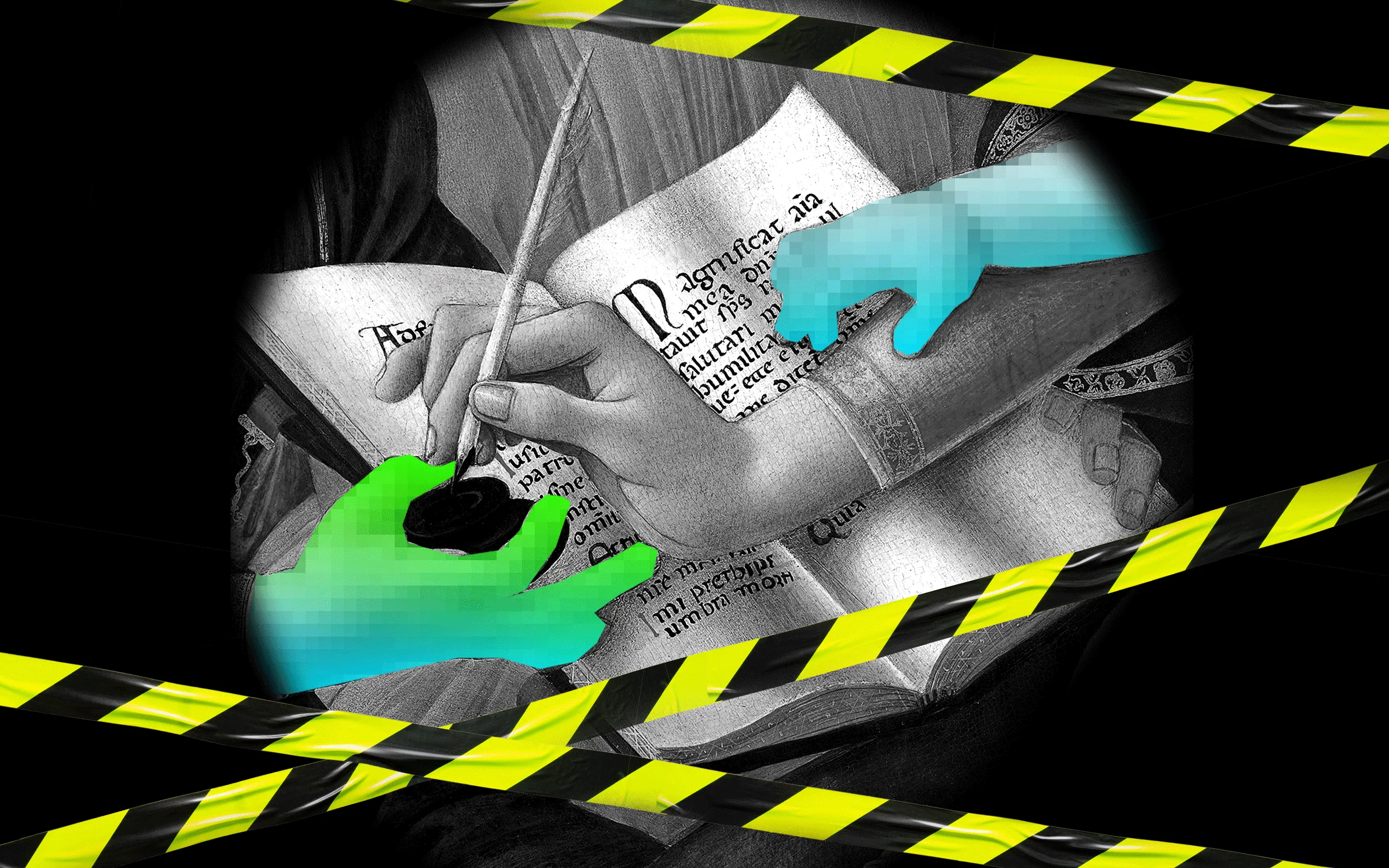
Pangram, an artificial intelligence startup with a modest team of 24 employees, operates from its headquarters situated above a Popeyes in Brooklyn. Despite having raised $13 million to date—a sum representing only about 0.0072 percent of OpenAI’s funding—the company remained largely obscure until earlier this year. However, if Pangram’s audacious claims are to be believed, it stands as the singular force preventing a complete machine takeover of the written word.
At its core, Pangram offers a service designed to detect the extent of AI involvement in the creation of any given text. It provides this assessment as a "best-guess percentage," naturally employing AI itself to achieve this. The company catapulted into public consciousness in January when speculation ignited on Reddit and YouTube, suggesting that author Mia Ballard might have utilized AI to write her self-published novel, Shy Girl. The book had recently secured a traditional publication deal with Hachette. Despite Ballard’s vehement denials, Pangram’s CEO publicly asserted on X (formerly Twitter) that the novel was 78 percent AI-generated. The ensuing controversy led Hachette to cancel the book’s release.
This incident triggered a cascade of similar accusations, propelling Pangram into the spotlight as an unlikely arbiter of literary authenticity. The New York Times found itself under scrutiny for an installment of its renowned "Modern Love" column, which Pangram scored as 100 percent AI-generated. Subsequently, a winner of the prestigious Commonwealth Short Story Prize received a 100 percent AI score, followed by the novel Daggermouth (60 percent), and a thriller titled Call Me, I’ll Hide the Body, which had commanded a $2.4 million advance (97 percent). The growing demand for such detection tools culminated in late July, when Substack announced its integration of Pangram into its platform, enabling readers to swiftly ascertain potential AI usage in posts.
The rapid ascendancy of AI detection software has not been universally welcomed, particularly within the creative community. Jane Friedman, an accomplished author and publishing expert, articulates the sentiment: "There is such distaste and anger at the AI detection software. There’s this feeling like they are just as evil, if not more evil, than the AI companies themselves." While Pangram may not yet be a household name beyond the realms of publishing and higher education, its profile is rapidly expanding. The daily increase in the need to differentiate between large language model (LLM) churn and genuine human writing underscores its growing relevance. The critical question now revolves around the company’s trustworthiness and the reliability of its technology.
Max Spero, Pangram’s 30-year-old cofounder and CEO, offers a glimpse into his world during a Google Meet interview. He connects from his phone, casually holding a takeout box against a backdrop of towering skyscrapers. Dressed in a beige T-shirt, Spero presents with short dark hair, a boyish expression, and a wide smile. He briefly excuses himself to rush home with his lunch, reconnecting ten minutes later from his Brooklyn apartment. He explains that his morning has been consumed by hiring calls, a testament to Pangram’s rapid growth. In July, the company successfully raised an additional $9 million and unveiled its latest model, Pangram 4. Its website currently lists six new job openings, poised to expand its headcount by 25 percent.
When asked about his upbringing in California, a seemingly innocuous question, Spero visibly tenses. He appears far more at ease discussing the intricate technical nuances of Pangram’s technology than responding to personal inquiries or addressing the company’s involvement in unfolding literary scandals. Taking a bite of his meal, he shares that he was raised in La Crescenta, a suburb of Los Angeles, where he developed a passion for programming and actively participated in his school’s robotics team. His academic journey led him to Stanford as an undergraduate, where he forged a crucial connection with Bradley Emi, who would later become his cofounder at Pangram. (Multiple emailed requests to interview Emi were, notably, not acknowledged by Pangram’s communications team.) After graduating, Spero joined Google, contributing to FLoC, a technology intended to replace third-party cookies by categorizing Chrome users based on their interests. Google ultimately discontinued FLoC in 2022 due to significant privacy concerns. Spero later moved to Nuro, an autonomous car company, while Emi honed his skills at Tesla and the AI biotech firm Absci. The launch of ChatGPT in 2022 served as a catalyst for the duo, prompting them to identify a burgeoning business opportunity in addressing the anticipated deluge of AI-generated content. In 2023, they founded Checkfor.ai, subsequently rebranding it as Pangram a year later. By this time, the AI detection market was already becoming crowded with competitors such as Originality.ai, GPTZero, and Turnitin. However, Pangram distinguished itself through strong performances in early, independent testing, quickly emerging as a front-runner.
As the interview progresses, Spero’s responses become somewhat disjointed and hesitant, not solely attributable to his meal. When queried about his hiring philosophy, he murmurs "hmm" before turning away without apology to microwave his food. A fifteen-second silence ensues. He eventually turns back, stating, "The average person is at Pangram because they care about the mission."
Pangram’s detection methodology, known as "synthetic mirroring," involves training its model by feeding it human-written text and then having LLMs generate closely matching versions. This process effectively teaches the model to recognize the distinctive patterns of AI-generated writing. The company also employs "hard negative mining," a technique that involves systematically searching datasets for false positives. These false positives are then synthetically mirrored and used to augment Pangram’s training set, effectively allowing the machine to learn and retrain itself from its own errors. Spero emphasizes, "All of our datasets are properly licensed, which I think is kind of rare in the AI world today." He notes that Pangram’s product requires significantly less data than powerhouses like ChatGPT or Claude. While careful not to "completely throw the AI companies under the bus," he adds, "I think they’ve lost a lot of trust, especially in the world of creatives." Currently, Pangram serves diverse industries, including education, the legal sector, and recruitment, with creative writing constituting the largest segment of its training text.
The Shy Girl controversy undeniably put Pangram on the map. Spero had already been actively flagging suspected AI writing from his social media accounts, so it was not entirely unexpected when, in January, he was tagged in a Reddit post and subsequently received a PDF of Ballard’s manuscript. "I put it in [Pangram], I posted it, and then later The New York Times asked me for comment," he recounts. He then downplays the company’s role, asserting, "I think people overstate the importance of Pangram in the Shy Girl story." However, the sequence of events was slightly more complex. In what resembled a game of "AI-scandal telephone," it was a Pangram account executive who discussed the story with a publishing industry analyst, who in turn brought it to the attention of The New York Times.
Another layer of complexity emerged when critics of Pangram, including the investigative project The Drey Dossier, highlighted that Spero’s copy of Ballard’s manuscript originated from a pirating website. When confronted about this, Spero replied, "Yeah. And, like, yeah… it is what it is. I hadn’t looked too closely. I didn’t go read the whole PDF. I just put it straight into Pangram."
Pangram has not shied away from controversy since. After the Commonwealth Short Story Prize winner registered a high Pangram score, the company proceeded to analyze every winner since 2012, identifying three more instances of potential AI usage. Yet, Spero continues to minimize Pangram’s direct impact, particularly on canceled book deals. "Basically, with every book deal, to my knowledge, it hasn’t really been about the Pangram score," he states. "That is a part of it, but if you talk to anyone involved, it is only a small, small part of the bigger picture."
The conversation shifts to Pangram’s integration with Substack. Spero begins, "People shouldn’t be afraid about disclosing this because your work should stand on its own as quality and something that people want to read, regardless of…" He trails off, then pauses, asking himself, "Well, how do I want to put that?" After another moment, he says, "I think I… oh, I know what I said the other day." His voice gains confidence and speeds up as he delivers a familiar line: "If the value of your work is dependent on deceiving the end user into thinking it wasn’t written by AI, then"—he hesitates again—"that’s going to be a problem." (Later, it becomes clear his intonation shifted because he was quoting his own previous post on X.)
Substack declined to provide specific details regarding its partnership structure with Pangram or whether it pays the company per scan. A Substack representative stated, "Substack’s philosophy is not anti-AI. We simply believe you should know what you’re consuming." However, some authors remain wary, expressing concerns that an entire career could be jeopardized "with the click of a button."
Book publishing, an industry notoriously characterized by its slow pace, has been particularly sluggish in confronting the implications of AI. Nevertheless, the reality is that AI tools are increasingly being adopted by a growing segment of authors, publishers, and agents. A survey conducted last year by Gotham Ghostwriters among 1,481 working writers revealed that 61 percent utilize AI tools, with 7 percent admitting to having published AI-generated text. Tuhin Chakrabarty, an assistant professor of computer science at Stony Brook University, conducted research earlier this year using Pangram to analyze 14,419 self-published novels. His findings indicated that nearly 20 percent of these novels exhibited substantial AI-detection scores. Chakrabarty’s working paper has been widely cited and served as the original source for the accusations leveled against Daggermouth.
Inquiries were made to the Big Five publishers regarding their use of AI detection. Simon & Schuster and HarperCollins declined to comment, while Hachette and Macmillan did not respond. A spokesperson from Penguin Random House confirmed that its editors may use approved AI-detection tools "as one additional means of identifying potential AI-generated content," but emphasized that such tools are "not determinative and are only one component of a broader editorial process." Literary agents are also increasingly employing detection software, leading to many book deals being quietly terminated before public announcement. "Normally, agents say nothing," Jane Friedman observes.
Chakrabarty’s perspective on Pangram is particularly insightful. He first learned about the company through one of Spero’s posts in late 2024. After signing up, Spero provided him with API credits. The two have since become "close friends," Chakrabarty reveals, and Pangram continues to supply him with credits to support his research. Chakrabarty frequently posts Pangram results on social media and consistently defends the company. He has met with publishers to discuss detection in the wake of AI scandals. While acknowledging that "Pangram should not be the de facto judgment," he asserts, "But I think your own discretion coupled with Pangram’s judgment cannot be wrong."
Further compounding Pangram’s influence is Chakrabarty’s relationship with Todd Shuster, the co-CEO of Aevitas, a prominent New York literary agency. Chakrabarty encouraged Shuster to meet with Pangram. Shuster describes Pangram as "instantly a very helpful tool," noting, "Right away, we started having to have difficult conversations [with authors] because Pangram was showing their works to be anything from 50 percent AI written to 95 percent." Shuster now routinely uses Pangram to analyze manuscripts and book proposals. He also consults for Pangram, a role that includes facilitating introductions between Pangram and publishers. Shuster observes that when confronted, some authors become defensive or attempt to mislead, while others are candid about their AI use. He states that he has asked authors to rewrite their work using their own distinct voice and ideas.
Critics, however, raise two primary concerns regarding Pangram: the potential harm caused by false positives and the inherent bias that could be embedded within its machine learning models. Sam Illingworth, a professor of critical AI literacy at Edinburgh Napier University, states unequivocally, "I don’t think [AI detectors] work. I think that detectors are prejudiced against certain people." One study indicated that detectors were more prone to flagging work by non-native English writers as AI-generated, and neurodiverse writers have also reported that their unique writing patterns are disproportionately flagged. (It’s worth noting that this particular study predated Pangram, and Spero points to internal research that purportedly counters these findings.) Significantly, the three novels at the epicenter of publishing’s biggest AI-detection scandals—Shy Girl, Daggermouth, and Call Me—were all written by authors of color. (The authors were contacted; two did not respond, and one declined to comment, citing legal concerns.) Regina Brooks, president of the Association of American Literary Agents and an African American agent, underscores the gravity of this issue: "As an African American agent, I do think we really need to pay attention to some of the inequities within the industry." The process of determining whose work is scanned and who faces public accusation remains an inherently human one, making it inherently susceptible to bias.
In instances where writers have maintained that their work was falsely flagged as AI-generated, Spero has occasionally offered a cash reward if they can conclusively prove their sole authorship. "I’ve offered the bounty in cases where I’m almost certain the person is lying," he explains. "Or, if they’re not lying, then it’s very valuable for us to know." To date, he claims, no one has successfully claimed the bounty.
"Of course, you can fool Pangram," Chakrabarty concedes. Some writers have reportedly tweaked their text or intentionally adopted an AI-like style to elicit false results. A recent working paper from Notre Dame, titled "Why AI Detection Fails for Academic Integrity," found that Pangram’s 3.2 model flagged light AI editing on academic abstracts as AI writing 64 to 80 percent of the time. However, when AI-generated text was subsequently run through a "humanizer"—a tool designed to make AI output appear more human—Pangram detected AI writing less than 4 percent of the time.
Pangram itself acknowledges that its tool performs less effectively on shorter blocks of text, especially anything under 100 words. This presents a practical challenge, given that Pangram’s free service offers a limited number of credits per day, totaling approximately 2,000 words. The median input for the tool is 350 words. The company also admits that an identical passage can yield different verdicts depending on whether it is scanned in isolation or within a larger contextual body of text—a scenario that could easily occur if a short excerpt is copied and pasted from a novel.
Despite these acknowledged limitations, Pangram asserts that false positives occur only 0.0041 percent of the time with its newest model, a significant improvement from a previously reported rate of 0.01 percent. Spero claims that, if anything, Pangram is conservative in its assessments. If text falls on the borderline of detection, the tool is designed to err on the side of declaring it human-written. "This is an intentional choice that we made," Spero says. This conservative approach partly accounts for the low false-positive rate, but it also implies that AI-generated work is more likely to evade detection. By Pangram’s own measure, human essays that have been heavily rewritten by AI are still detected as human-written 41.37 percent of the time.
During the interview, Spero frequently pulls up social media posts to illustrate his points, pasting them into the chat with such speed that one might wonder if he has his own AI system operating in the background.
Rod Breslau, a journalist and former Pangram contractor, describes Spero as "personally online all day. He is going to reply to your tweet, he is going to reply to your post on Reddit. He’ll probably reply to your post on LinkedIn." Breslau initially approached Spero at the beginning of the year, offering his services as an "attack dog." He expressed frustration with the proliferation of AI content on social media. Breslau’s contract work for Pangram encompassed consulting on its social media strategy and arranging interviews for Spero. He also actively scrolled the internet, utilizing the Pangram extension to publicly identify and call out suspected AI users. "I wanted to take a harsher approach because I thought that people were getting off too easy," Breslau explains.
Pangram ultimately ended its association with Breslau, partly due to a shift in its strategic direction. The company now anticipates that AI use will become more widely accepted. Spero appears to have lost interest in indiscriminately pursuing every AI user, but he states that he will remain vocal in instances where writers are being "deceptive." He also reveals Pangram’s future roadmap, which includes the capability to flag even light AI editing. "That’s the road map," Spero confirms. "Higher granularity, better detail, provide more information to the end users." As far as can be discerned, Pangram’s ultimate ambition is to establish itself as the definitive arbiter of originality across all sectors: publishers, educational institutions, and the general public.
For the time being, Spero’s small team comprises former educators and one former publishing professional. (A Pangram spokesperson also notes that one researcher holds a degree in English literature.) While there have been hints of defamation lawsuits brewing from authors who claim wrongful accusation, Spero states, when asked about any legal actions, "I don’t believe anything has come to pass." He plans to continue publishing technical reports on Pangram’s models and training methodologies. "Everybody else is sort of this black box, so I think our strategy here is really just build trust through transparency, be as open as possible, and engage with the community online as much as possible."
As the conversation concludes, a reflection emerges on Spero’s interview demeanor, which often seemed less than fully engaged, almost cagey. He moved around his apartment throughout the interview, shifting his laptop from his living room to a window framed by houseplants, then to a different corner of his kitchen. At several points, his face drifted partially out of frame. He donned his headphones, then removed them again. At one juncture, while discussing model training, he quietly burped.
This observed behavior was unexpected. Was he simply busy and fatigued? Did he not perceive the interview as serious? Had the continuous deluge of media coverage rendered interviews routine or tiresome? Ultimately, one can only make assumptions; there is a limit to what can be ascertained from a single hour-long interaction. Pangram endeavors to distill all the nuances, variables, and inherent unknowns from a piece of communication into a single, definitive number. Humans, of course, are considerably more ambiguous than that.






