 11

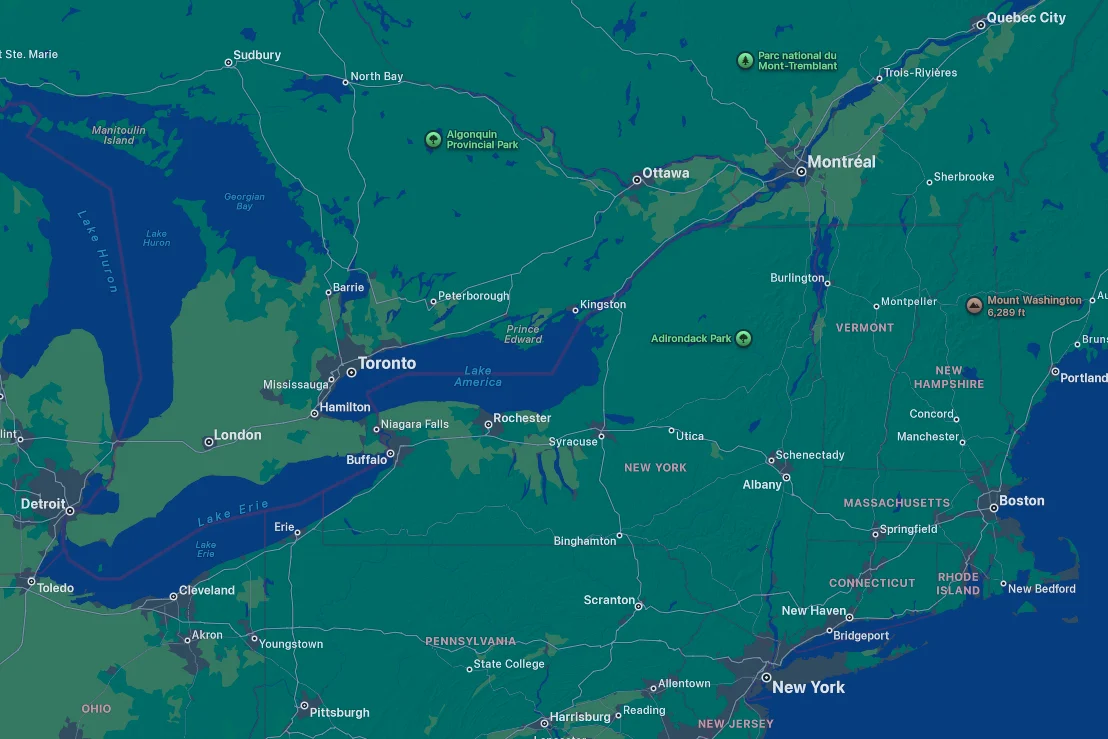
Apple has officially changed the name of Lake Ontario to “Lake America” on its Apple Maps service, mirroring a similar move by Google less than a week prior. This significant alteration comes in direct response to a presidential directive issued by President Trump, marking a swift compliance by major tech companies with the administration’s geographic renaming efforts. The change is poised to reshape how millions of users interact with one of North America’s most iconic bodies of water, albeit with distinct regional variations in its display.
Users of Apple Maps within the United States will now encounter "Lake America" instead of the historically recognized "Lake Ontario" when accessing the service via its website or mobile application. Lake Ontario, one of the five interconnected Great Lakes that form the largest group of freshwater lakes on Earth, holds immense ecological, economic, and cultural significance for both the United States and Canada. However, this renaming initiative is not uniformly applied across all user bases. Apple Maps users residing in Canada will continue to see the traditional name, "Lake Ontario," reflecting the international boundary the lake shares and the differing national perspectives. For those accessing Apple Maps from outside these two nations, the service will display both names, presumably as "Lake Ontario / Lake America," attempting to accommodate the divergent official designations.
The catalyst for this substantial cartographic revision is an executive order signed by President Trump on August 27. This directive mandated that the Interior Department update the lake’s name within the U.S. geographic naming service and other federal databases within a 30-day timeframe. The executive order explicitly articulated the rationale behind the renaming, stating, "In recognition of this flourishing economic resource and its critical importance to our Nation’s economy and its people, I am directing that the Lake officially be renamed as Lake America." This language underscores the administration’s intent to rebrand the lake with a name it believes better reflects its perceived national importance and contribution to the American economy.
This unilateral directive from the U.S. presidency, coupled with the subsequent compliance from technology giants like Apple and Google, has considerably exacerbated an already strained diplomatic relationship between the United States and Canada. The two neighboring countries had recently experienced a breakdown in trade negotiations, and this latest action regarding a shared natural resource is seen by many as a further erosion of bilateral cooperation and mutual respect. Lake Ontario, forming part of the international boundary, has historically been subject to joint management and shared understanding, making a unilateral renaming particularly contentious.
Apple, in line with its typical corporate communication strategy regarding sensitive issues, did not provide a comment when approached for clarification or a statement on its decision. Google Maps, having initiated the change earlier, offered a brief explanation for its compliance last week. The company stated that its policy involves updating geographic names to align with changes in official government sources, specifically referencing the Geographic Names Information System (GNIS). The GNIS, maintained by the U.S. Geological Survey (USGS), serves as the official repository of standardized geographic names for the United States, providing a database that many mapping services utilize for accuracy and consistency within the U.S. context.
However, not all mapping services have adopted the same policy of immediate deference to the U.S. government’s renaming directives. MapQuest, a veteran in the digital mapping landscape, publicly declared its refusal to alter the name of Lake Ontario on its maps. The company cited its preference for continuing to use the name that its users are familiar with, prioritizing user experience and historical accuracy over governmental mandates in this instance. MapQuest also highlighted its consistent stance, noting that it had similarly declined to change the name of the Gulf of Mexico to "Gulf of America" in the preceding year, demonstrating a pattern of independent decision-making regarding geographic nomenclature.
This divergence in approach has had a remarkable impact on the competitive landscape of digital mapping. Apple’s and Google’s actions regarding the renaming of Lake Ontario have inadvertently triggered a significant surge in users for MapQuest. Downloads of the mapping service, often referred to as the "OG" (original gangster) of digital mapping, have skyrocketed in the aftermath of its principled stand. This surge propelled the MapQuest iOS application to the coveted No. 1 position in the U.S. App Store’s Top charts for navigation applications. Notably, as of September 1, MapQuest even surpassed perennial chart-topper ChatGPT, a testament to the strong public reaction and support for its decision.
MapQuest’s resurgence was not limited to Apple’s platform; the application also achieved the No. 6 position overall in Google’s Play Store, encompassing both apps and games. The company itself has been actively engaging with its newfound popularity and reaffirming its stance through social media. In a notable post on X (formerly Twitter), MapQuest shared a GIF of an apple, accompanied by the concise and pointed caption, "Them Too." In another post, featuring a screenshot proudly displaying MapQuest as the No. 1 downloaded app, the company conveyed its commitment to its user base, stating, "The people have spoken. We are working." These messages clearly indicate MapQuest’s awareness of the public sentiment driving its recent success and its intention to uphold its naming policy.
The compliance of Apple and Google with President Trump’s renaming order is not without precedent. Last year, both technology companies similarly altered the name of the Gulf of Mexico to "Gulf of America" on their respective mapping platforms. This change also followed a presidential order issued by Trump, establishing a pattern of these tech giants aligning their geographic data with U.S. federal directives, even when such directives introduce names that deviate significantly from established international and historical nomenclature. This history underscores a broader discussion about the role of private companies in reflecting governmental policy on global platforms and the potential implications for international relations and the preservation of geographic heritage.
When you purchase through links in our articles, we may earn a small commission. This doesn’t affect our editorial independence.
Kirsten Korosec is a reporter and editor who has covered the future of transportation from EVs and autonomous vehicles to urban air mobility and in-car tech for more than a decade. She is currently the transportation editor at TechCrunch and co-host of TechCrunch’s Equity podcast. She is also co-founder and co-host of the podcast, “The Autonocast.” She previously wrote for Fortune, The Verge, Bloomberg, MIT Technology Review and CBS Interactive.
You can contact or verify outreach from Kirsten by emailing [email protected] or via encrypted message at kkorosec.07 on Signal.