 11
11 1
1 2
2 3
3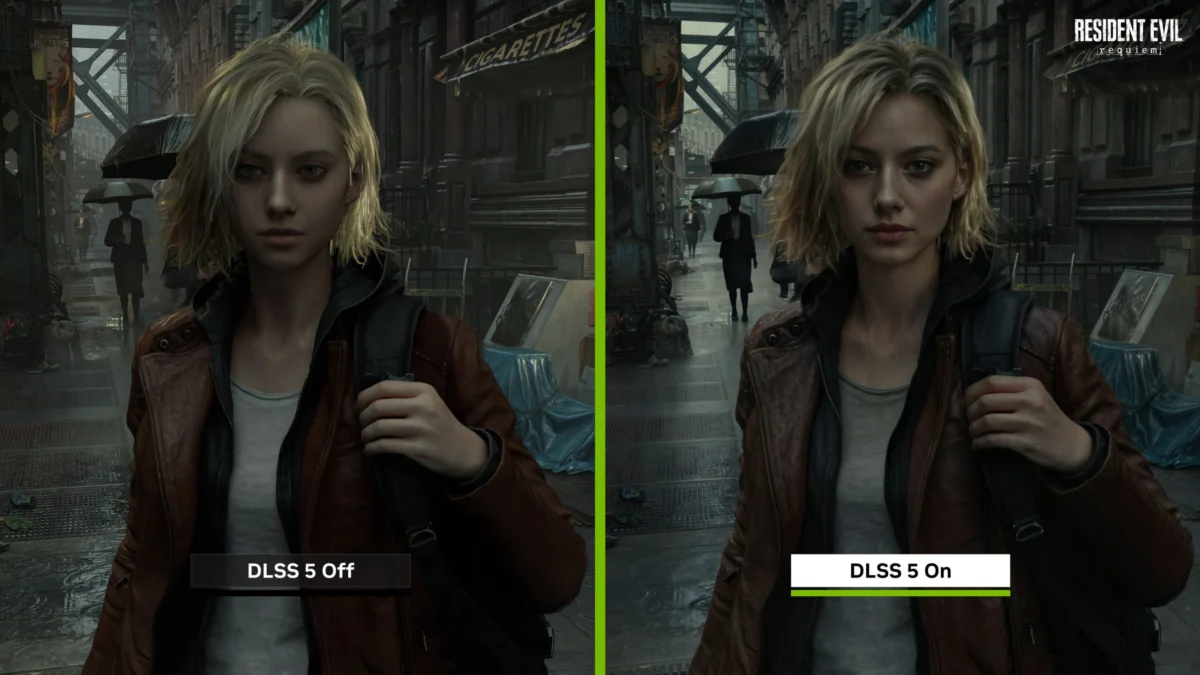
Nvidia recently unveiled a new iteration of its DLSS (Deep Learning Super Sampling) AI upscaling technology, dubbed DLSS 5, at its highly anticipated GPU Technology Conference (GTC), an event often referred to as the "Super Bowl of AI." This latest version marks a significant departure from its predecessors, moving beyond merely boosting frame rates to a more ambitious application: leveraging generative AI to enhance character faces in video games, aiming for heightened realism and detail. However, the demonstration was met with immediate and sharp blowback across social media, with numerous observers finding the resulting visual effect off-putting. Reactions ranged from "outright disgust" to accusations of "AI slop," highlighting a significant divide between Nvidia’s vision and public reception.
DLSS, or Deep-Learning Super-Sampling, is a proprietary feature that Nvidia first introduced with its graphics cards in 2018. Its foundational purpose has traditionally been to improve game performance by rendering titles at a lower internal resolution and then employing AI algorithms to intelligently upscale the image quality to the target display resolution. More advanced iterations of DLSS have further refined this process by dynamically inserting AI-generated frames between traditionally rendered frames, effectively increasing the perceived frame rate. These sophisticated techniques are designed to utilize less computing power compared to rendering every frame at full resolution, thereby allowing for superior gaming performance without unduly taxing a PC’s hardware, all while striving to maintain visual fidelity. Crucially, this feature has always been optional, giving players control over its application.
"From a technical standpoint, it’s quite an achievement," noted Kevin Bates, CEO and creator of the open-source retro gaming handheld Arduboy, in a communication to WIRED. He further expressed his astonishment, stating, "I would have expected a cloud-based rendering service to provide it. The fact they expect to distill it down to what can run on a single [graphics] card later this year is insane." Bates’s comments underscore the formidable engineering feat involved in bringing such complex generative AI capabilities to local GPU hardware.
However, with DLSS 5, Nvidia appears to have crossed a significant generative AI rubicon. Unlike previous versions, which functioned primarily as a performance-enhancing tool for developers to integrate into their games, DLSS 5 manifests as actual visual changes that can alter the aesthetics of a game without the original developers’ explicit creative input or consent. While the technology can still be toggled on or off by the end-user, this fundamental shift has sparked concerns not only among gamers but also within the game development community itself. The implication of an external technology autonomously modifying artistic assets in real-time raises questions about creative control and artistic integrity.
Nvidia showcased the new technology through various game demonstrations, including Capcom’s Resident Evil Requiem, Ubisoft’s Assassin’s Creed, and Bethesda’s Starfield. The company stated that the objective was to improve graphics by generating photorealistic details and sophisticated lighting effects. The demo primarily seemed to enhance lighting, which many detractors likened to the artificial glow emanating from a "ring light" positioned just out of frame. More controversially, character faces became significantly more detailed, in some instances even introducing entirely new facial features not present in the original game assets. The effect was heavily criticized on social media, with users describing the enhanced look as "yassified," "porn faces," and drawing comparisons to the "glamour filters" commonly found on platforms like Instagram or Snapchat, which typically smooth out imperfections and enhance features for a stylized appearance. The gaming community’s disapproval was widespread, with The Verge going so far as to label the effect "motion smoothing, but worse," highlighting its perceived artificiality and undesirable impact on visual quality.
Beyond the aesthetic concerns, the technology also exhibited unexpected graphical artifacts during real-time processing. These glitches were visible even in the official demo video. For example, in a scene from a FIFA game depicting a soccer ball being kicked into a net, the ball displayed strange artifacts, appearing as though a piece of the net was superimposed on the ball’s foreground before it had even entered the goal (visible at the 59-second mark of the demo video). Furthermore, the facial alterations were not always subtle; the female character in Resident Evil Requiem, for instance, presented noticeably different features, including larger eyes, fuller lips, and a completely redesigned nose, fundamentally changing the character’s appearance from the artists’ original vision.
"It devalues an artist’s creativity and intent on a basic level," articulated James Brady, a seasoned video game artist and designer who has contributed to titles such as Call of Duty: Modern Warfare 3. Brady emphasized his concern that "All this takes away from the artist’s original design intent on the character and its shape language, with what pretty much functions on a surface level as a ‘Snapchat filter.’" His comments underscore a core apprehension within the creative industry regarding automated tools that modify artistic output without direct artistic oversight.
Following a day of extensive and overwhelmingly negative public feedback, Nvidia CEO Jensen Huang responded by doubling down on the technology, asserting that gamers were "completely wrong" about DLSS 5. This dismissal of widespread user sentiment is often poorly received by the passionate gaming community. Adding another layer of controversy, developers at Capcom and Ubisoft, whose games were featured in the DLSS 5 demo, reportedly stated they had no prior knowledge of what the tech demo would entail. According to Insider Gaming, these developers discovered the visual modifications at the same time as the general public and were equally surprised by the outcome. Nvidia, Ubisoft, and Capcom did not immediately provide comment when contacted.
"I think the reaction from gamers is understandable," commented Marwan Mahmoud, a game developer at Incrypt. He elaborated on a common developer perspective: "Some games started relying too heavily on these technologies instead of focusing on proper optimization. From a developer perspective, it feels a bit different because you see DLSS as a tool that helps rather than a core solution." This sentiment highlights a growing concern that performance-enhancing technologies might inadvertently lead to less rigorous core game optimization.
A significant point of contention for many, including developers, is the "one-size-fits-all" approach inherent in a technology that can autonomously adjust visuals across a diverse range of game types and artistic styles. "The artist has a style, the artist has an art direction that you’re going to give him, and that’s something that AI kind of doesn’t respect all the time," explained Raúl Izquierdo, an indie game developer based in Mexico. He candidly added, "Maybe I don’t want my characters to be yassified." This encapsulates the conflict between algorithmic standardization and individual artistic expression.
Bates echoed this sentiment, arguing against the notion that every game necessarily needs to achieve photorealistic graphics. This perspective is further supported by game developer Sterling Reames, who has worked at notable studios like Striking Distance Studios and Zynga. Reames succinctly summarized the ultimate desire of the gaming community: "People just want better games. That’s as plainly as I can put it." This suggests that technological advancements should serve to enhance the core gaming experience, rather than imposing potentially unwanted aesthetic changes.
During the GTC presentation, Nvidia chose to run its DLSS 5 demo on its most powerful consumer graphics cards: two GeForce RTX 5090s. This choice of high-end hardware for the demonstration drew criticism regarding the technology’s actual utility for the broader gaming population. If Nvidia’s primary selling point for DLSS 5 had been its ability to conserve computational resources, thereby enabling older or less powerful hardware to render more impressive graphics, the reception might have been entirely different.
"What’s the point if you’re not going to do it on weaker hardware?" Izquierdo questioned. He elaborated on the missed opportunity: "If this were done on an [RTX 2080 graphics card], for instance, I think I would be thinking differently about it. OK, this is for the betterment of gamers’ experiences and everything, not just for selling graphic cards." This criticism points to a perception that DLSS 5, as demonstrated, serves more as a showcase for Nvidia’s cutting-edge AI capabilities and a driver for new hardware sales, rather than a universally beneficial enhancement for the existing user base.
Ultimately, Nvidia’s DLSS 5 demo, and GTC in its broader context, functioned as a powerful display of the company’s formidable presence and influence within the rapidly evolving AI landscape. Bates posits that the intense negative reaction from the public transcends mere dissatisfaction with a graphical feature; it represents a deeper human response to navigating not just the "uncanny valley" – the unsettling feeling elicited by entities that appear almost, but not quite, human – but perhaps even reaching the other side, where AI-generated realism becomes indistinguishable or, worse, overtly artificial and undesirable.
"Right now it’s pretty clearly a thing they are forced to do to demonstrate their prowess as an AI company," Bates observed. Despite the initial backlash, he concluded with a somewhat resigned prediction for the future: "But the truth is, this is going to be the default in a few years, and nobody is even going to think twice about it. It’s Jensen’s world, we’re just living in it." This suggests that while DLSS 5 currently faces significant resistance, its underlying generative AI capabilities might ultimately become an unavoidable and integrated aspect of future gaming experiences, reshaping perceptions of visual fidelity and artistic control in the digital realm.