 11
11
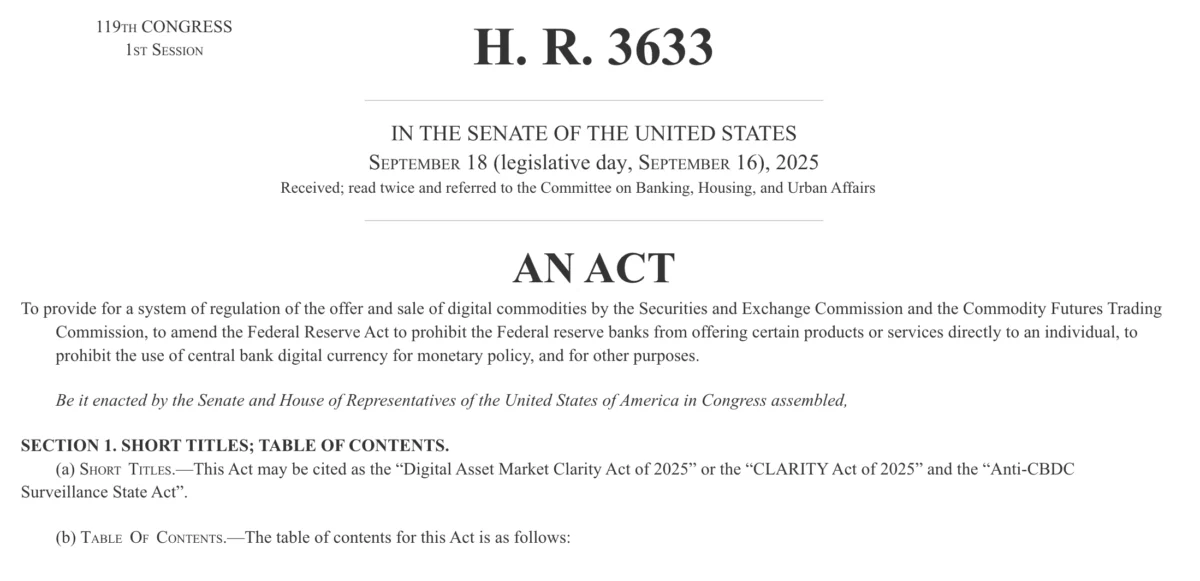
Rumors are circulating that a tentative agreement has been reached between the White House and key U.S. lawmakers regarding stablecoin yields, a development that could significantly advance the CLARITY crypto market structure bill. This potential breakthrough comes after weeks of deliberation and industry scrutiny, aiming to strike a balance between fostering innovation in digital assets and mitigating risks to the traditional financial system.
According to a report published by Politico on Friday, Republican Senator Thom Tillis and Democratic Senator Angela Alsobrooks, both influential members of the Senate Committee on Banking, Housing, and Urban Affairs, have reportedly come to an "agreement in principle." This accord is understood to address the contentious issue of stablecoin yield generation, a point of contention that had previously stalled legislative progress.
Senator Alsobrooks commented on the significance of the purported deal, stating, "I think what it will do is to allow us to protect innovation, but also gives us the opportunity to prevent widespread deposit flight." She further elaborated that the agreement, as it stands, would prohibit stablecoin issuers from offering yield on "passive balances." This specific restriction appears designed to address concerns raised by the banking sector regarding potential outflows of traditional deposits into higher-yielding stablecoin products.
While the broad strokes of the prospective deal have been alluded to, the specific details remain undisclosed. Senator Tillis emphasized the need for thorough vetting by the cryptocurrency industry before the agreement can be considered finalized. This call for industry consultation underscores the complex nature of regulating a rapidly evolving sector and the importance of stakeholder input. Cointelegraph reached out to the White House for further details regarding the prospective deal but had not received a response by the time of publication.

The prospect of a breakthrough on the CLARITY Act has been bolstered by recent statements from prominent figures in the digital asset policy space. Wyoming Senator Cynthia Lummis, a staunch advocate for comprehensive digital asset legislation, expressed optimism during the DC Blockchain Summit on Wednesday, remarking, "We are so close" to passing a robust crypto regulatory framework.
A spokesperson for Senator Lummis confirmed to Cointelegraph on Wednesday that an agreement is anticipated to materialize within "the next few days." The spokesperson also indicated that Senator Lummis is actively engaged in refining the ethical language within the bill, suggesting that considerations around transparency and responsible conduct are a key focus.
The Digital Asset Market Clarity Act of 2025, commonly referred to as the CLARITY Act, represents a significant legislative effort to establish a clear regulatory landscape for the cryptocurrency market. Its progress was widely expected to be smoother, particularly following the enactment of the GENIUS stablecoin framework into law. However, the CLARITY Act encountered a significant roadblock in January. Major industry participants, including the prominent crypto exchange Coinbase, raised concerns about various provisions, most notably whether stablecoin issuers should be permitted to share yield generated from their reserves with token holders.
The banking industry has historically expressed strong opposition to yield-bearing stablecoins. Their primary concerns revolve around the potential for a substantial exodus of bank deposits, especially given that traditional bank deposit yields have remained significantly below 1%. Furthermore, the banking sector fears an erosion of its market share as consumers and businesses are drawn to potentially higher returns offered by regulated stablecoin products.
However, some within the regulatory and governmental sphere have pushed back against these concerns. Patrick Witt, the executive director of the White House Council of Advisors for Digital Assets, has previously stated that these fears are "overblown." Witt has articulated a vision where the legalization and regulation of dollar-pegged, yield-bearing stablecoins could, in fact, inject a wave of fresh capital into the U.S. banking industry, fostering growth and innovation rather than undermining it.

The CLARITY Act’s journey through Congress highlights the intricate interplay between technological innovation, financial stability, and regulatory oversight. The proposed legislation seeks to provide a comprehensive framework that clarifies the roles and responsibilities of various market participants, including issuers of stablecoins, exchanges, and other service providers. The debate over stablecoin yields has been a central point of contention, reflecting differing perspectives on how to balance the benefits of decentralized finance with the need for consumer protection and systemic stability.
The tentative agreement, if finalized and passed, would represent a significant step forward in U.S. crypto regulation. It would provide much-needed clarity for businesses operating in the digital asset space and could foster greater institutional adoption. The prohibition on yield from passive balances, as suggested by Senator Alsobrooks, indicates a compromise that aims to address banking sector concerns while still allowing for the development of innovative stablecoin products.
The coming days will be crucial in determining the fate of the CLARITY Act. The industry’s response to the proposed agreement, along with further legislative negotiations, will shape the future regulatory environment for digital assets in the United States. The successful passage of this bill could set a precedent for other jurisdictions grappling with similar regulatory challenges, marking a pivotal moment in the global evolution of cryptocurrency regulation.