 11
11
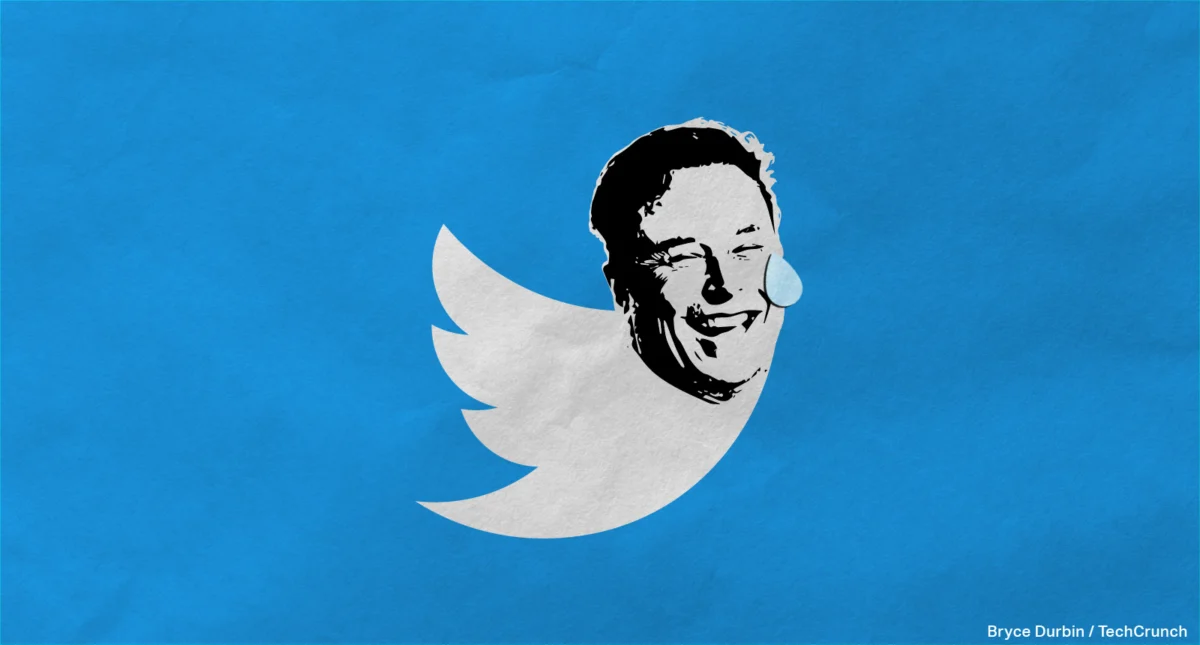
A civil jury in California on Friday, March 20, 2026, delivered a significant verdict against Elon Musk, ruling that he intentionally misled Twitter investors during his tumultuous $44 billion bid to acquire the social media platform in 2022. The decision marks a notable legal setback for the billionaire entrepreneur, who had attempted to withdraw from the deal, prompting a lawsuit from Twitter itself to enforce the acquisition.
The heart of the dispute centered on a series of public statements made by Musk, particularly a tweet on May 13, 2022. In this tweet, posted on the platform he would later rename X, Musk declared: “Twitter deal temporarily on hold pending details supporting calculation that spam/fake accounts do indeed represent less than 5% of users.” This statement, coupled with subsequent public comments questioning Twitter’s user metrics, cast a shadow of doubt over the acquisition’s certainty and, critically, the platform’s underlying value.
Twitter, at the time, consistently maintained that spam and fake accounts constituted less than 5% of its monetizable daily active users (mDAU), a metric it regularly reported to investors. Musk’s public skepticism directly challenged this official figure, suggesting a potentially much higher prevalence of bots. For a social media company heavily reliant on user engagement and advertising revenue, the accuracy of its user base is paramount. A higher percentage of bots could significantly devalue the platform, impacting its perceived reach, advertiser appeal, and overall financial health.
Following Musk’s tweet, Twitter shares experienced a sharp decline, shedding 8% of their value in the days that followed. This immediate market reaction underscored the profound impact of Musk’s public pronouncements on investor confidence. The stock drop particularly affected shareholders who, facing uncertainty, opted to sell their shares during the period of May 13, 2022 (the day of Musk’s pivotal tweet) and October 4, 2022 (the day the acquisition was ultimately finalized).
It was during this volatile period that investor Giuseppe Pampena filed a class-action lawsuit against Musk. Pampena’s legal action was brought on behalf of other former Twitter investors who had incurred losses by selling their shares within this specified window. The lawsuit, filed in the U.S. District Court for the Northern District of California, argued that Musk’s public statements were not merely expressions of genuine concern but rather a deliberate strategy to manipulate Twitter’s stock price. The plaintiff contended that Musk intentionally generated uncertainty about Twitter’s stability and true user base with the aim of artificially driving down its market valuation, thereby creating an opportunity for him to either renegotiate the deal at a lower price or withdraw from it entirely.
Musk’s legal team, in defense, maintained that his concerns regarding the number of bots on the platform were legitimate and expressed in good faith. They argued that he was merely exercising due diligence as an prospective buyer, seeking to verify critical data that could affect the terms of the acquisition. However, after hearing arguments and reviewing evidence, the jury found the plaintiff’s argument more compelling, concluding that Musk’s actions constituted intentional misleading of investors.
The full financial repercussions for Musk are yet to be determined, as the exact amount he will be ordered to pay to the affected former Twitter shareholders has not been set. However, Pampena’s attorney has indicated that the damages could potentially reach as high as $2.6 billion, according to reports from CNBC. While this sum represents a substantial figure, Bloomberg estimates Musk’s net worth to be over $660 billion, suggesting that even a multi-billion dollar payout would not constitute a crippling financial blow to the world’s wealthiest individual.
This recent verdict is not Elon Musk’s first encounter with legal scrutiny over his public statements, particularly those made on social media. In 2018, Musk famously tweeted that he had "secured funding" to take Tesla private at $420 per share, implying a firm plan to buy out public shareholders and delist the electric vehicle company from stock exchanges. This tweet triggered immediate and widespread market reaction and subsequently drew the attention of the U.S. Securities and Exchange Commission (SEC). The SEC alleged that these posts were misleading and charged Musk with securities fraud, asserting that he had made false and misleading statements about the take-private transaction.
The SEC’s action led to a settlement where Musk and Tesla each paid $20 million in penalties, and Musk was required to step down as Tesla’s chairman for three period, among other stipulations. In a separate, but related, class-action lawsuit filed by Tesla shareholders regarding the "funding secured" tweet, Musk had to testify in court. During this testimony, he clarified that the $420 figure was not a mere reference to cannabis slang (420 being widely recognized slang for marijuana) but that he earnestly believed he had secured funding to take Tesla private at that price, which represented a substantial premium over Tesla’s stock price at the time. Despite the SEC’s findings, Musk emerged victorious in this particular shareholder lawsuit, with a jury finding him not liable for misleading investors in that instance. The divergent outcomes in these two cases highlight the nuanced and fact-specific nature of securities litigation.
The 2022 acquisition of Twitter eventually proceeded, albeit under legal duress, with Twitter suing Musk to compel him to complete the deal. After finalizing the acquisition, Musk embarked on a significant transformation of the company. He rebranded Twitter as X, signaling a broader vision for the platform. Subsequently, he merged X with his newer artificial intelligence venture, xAI. According to Musk, the combined entity of X and xAI was valued at an impressive $113 billion. More recently, in February 2026, Musk’s aerospace company, SpaceX, also merged with xAI. Musk has publicly stated that this latest merger was driven by his ambitious desire to build data centers in space, further integrating his diverse technological enterprises.
This latest legal judgment serves as a powerful reminder of the responsibilities that come with market-moving public statements, especially for individuals with significant influence over financial markets. For Elon Musk, a figure whose public persona and social media activity are inextricably linked to his business ventures, the ruling underscores the critical importance of accuracy and transparency in communications that can impact investor decisions and company valuations.